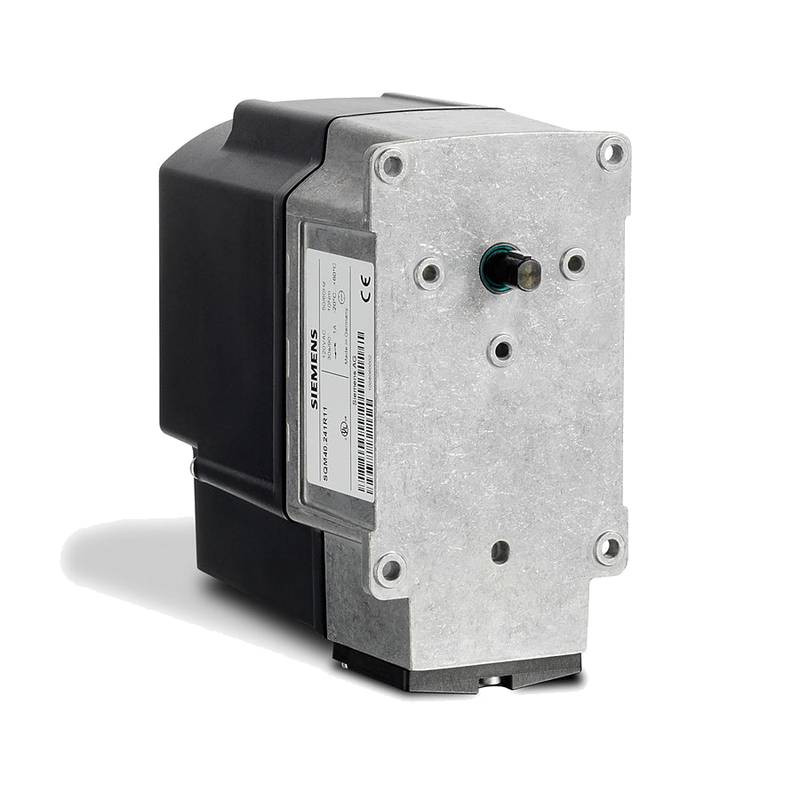
Siemens SQM40.165A21 Linear Modulating Actuator


The Siemens SQM40.165A21 linear modulating actuator is a sophisticated electro-mechanical device engineered for precise control in HVAC and industrial automation systems. It offers a reliable and accurate solution for modulating valve or damper operation, characterized by its robust construction and advanced control capabilities. Key advantages include its high positioning accuracy, robust performance in demanding environments, and seamless integration into complex control architectures. The actuator features a universal power supply, a selectable signal input for flexible integration, and an adjustable stroke length to accommodate diverse applications. Its operating principle is based on converting an analog or digital control signal into precise linear movement, ensuring optimal process control.
| Parameter | Specification |
| :-------------------- | :----------------------------------------------- |
| Actuator Type | Linear Modulating |
| Model | SQM40.165A21 |
| Power Supply | 24/48 VAC, 24 VDC |
| Control Signal | 0-10 V, 2-10 V, 4-20 mA, 0-20 mA, 0-100% PWM |
| Stroke Length | Adjustable (typically 20mm or 40mm, refer to manual) |
| Force Output | Up to 165 N (specific value depends on model variant) |
| Running Time | Selectable (e.g., 150s, 300s, 600s per full stroke) |
| Ambient Temperature | -20 to +50 °C |
| Protection Class | IP54 |
| Mounting | Direct or via bracket |
| Manual Override | Yes |
Core Features & Market Positioning
The Siemens SQM40.165A21 distinguishes itself in the market through its exceptional adaptability and Siemens' renowned reliability. Its selectable control inputs (0-10 V, 2-10 V, 4-20 mA, etc.) and the ability to configure stroke length and running time make it a versatile component, reducing the need for specialized actuators for different tasks. This adaptability positions it as a cost-effective solution for system integrators and end-users alike, offering a high degree of customization without compromising performance. The actuator's robust design, with an IP54 protection rating, ensures dependable operation even in dusty or damp industrial settings, a significant advantage over less protected devices. Its precise linear modulation capability is crucial for applications demanding fine-grained control over fluid flow or air volume, setting it apart from simpler on/off or proportional actuators.
Key Application Scenarios
This linear modulating actuator finds extensive use in building automation, specifically within HVAC systems for precise control of air handling units, VAV boxes, and hydronic balancing valves. In industrial settings, it is frequently employed for controlling fuel-air ratios in combustion processes, managing water treatment systems, and regulating chemical feed rates in process industries. Its ability to accurately position valves and dampers based on continuous control signals makes it ideal for maintaining stable temperatures, pressures, and flow rates, contributing directly to energy efficiency and process optimization. The SQM40.165A21 is particularly well-suited for applications requiring tight control loops where slight adjustments are critical for maintaining desired setpoints.
Practical System Integration Guidance
Integrating the Siemens SQM40.165A21 into existing control systems is streamlined by its flexible input and output options. Wiring typically involves connecting the power supply (24/48 VAC or 24 VDC) and the chosen control signal input (e.g., 0-10V from a PLC or DDC). The actuator's internal DIP switches or software configuration (depending on specific variant and accessories) allow for setting the desired stroke length, running time, and control signal direction. For example, setting the running time to 300 seconds provides a slower, more controlled movement suitable for delicate processes, while a shorter time is beneficial for rapid response applications. Ensure proper grounding and adherence to local electrical codes during installation. The feedback signal, if utilized, provides the control system with the actuator's current position, enabling closed-loop control.
Operation and Risk Mitigation
Operating the SQM40.165A21 involves understanding its response to control signals. During normal operation, the actuator will move to a position corresponding to the input signal's value. A manual override feature is typically present, allowing for direct mechanical positioning of the actuator stem, which is invaluable for maintenance or emergency situations. Risk mitigation focuses on preventing over-travel and ensuring smooth operation. Faults, such as loss of control signal or internal errors, can be indicated through status LEDs or by sending a diagnostic signal to the controller. Common troubleshooting steps include verifying power supply, checking control signal integrity, confirming DIP switch settings, and ensuring the mechanical linkage is not binding. Referencing the official Siemens manual for specific error codes and their resolutions is critical for swift problem-solving.
Scalability & Long-Term Value
The Siemens SQM40.165A21 actuator offers excellent scalability and long-term value due to its compatibility with a wide range of Siemens automation platforms, such as Desigo and OCI, as well as third-party DDC controllers. Its modular design and standard signal interfaces allow for easy replacement or upgrade without requiring extensive system re-engineering. For facilities looking to embrace Industry 4.0 principles, this actuator can be integrated into IIoT frameworks, with position feedback and diagnostic data potentially transmitted for predictive maintenance and advanced analytics. This forward-thinking design ensures that the SQM40.165A21 remains a relevant and valuable component in evolving automation landscapes, offering a robust return on investment through its longevity and adaptability.
Frequently Asked Questions
What is the typical stroke length of the Siemens SQM40.165A21?
The actuator offers adjustable stroke lengths to accommodate various valve and damper sizes. Typical configurations provide either a 20mm or 40mm stroke.
The precise stroke length is configurable through internal settings or accessory modules. Always consult the specific product documentation for exact specifications.
This adjustability ensures versatility, allowing a single actuator model to serve multiple applications without needing different physical units.
How do I wire the Siemens SQM40.165A21 actuator for a 0-10V control signal?
Connect the power supply (24/48 VAC or 24 VDC) to the designated power terminals. For a 0-10VDC control signal, connect the signal source's positive output to the actuator's signal input terminal and the signal source's common to the actuator's common.
Ensure correct polarity for DC power and signal connections to prevent damage. Verify that the control signal is within the actuator's specified range.
The actuator will then modulate its position in direct proportion to the applied 0-10VDC control signal.
What are the main advantages of using the SQM40.165A21 in HVAC systems?
Its precise modulating control ensures optimal airflow and water flow, enhancing energy efficiency and occupant comfort. The actuator's robust construction offers high reliability in demanding building environments.
The universal power supply and selectable control inputs simplify installation and integration with various building management systems. This reduces engineering time and hardware costs.
Its adjustable stroke and running time allow for fine-tuning to specific damper or valve characteristics, ensuring optimal performance and longevity of connected equipment.
Can the Siemens SQM40.165A21 be used with different types of valves?
Yes, the SQM40.165A21 is designed to operate with various linear-acting valves and dampers. Its force output is sufficient for many common industrial and HVAC valve types.
The actuator's adjustable stroke and mounting options allow it to be adapted to different valve stem lengths and configurations. Ensure the valve's operating torque and travel requirements are within the actuator's capabilities.
Proper selection requires matching the actuator's force, stroke, and speed to the specific valve's operational demands for reliable and efficient control.
How is the running time of the SQM40.165A21 configured?
The running time, which defines how long it takes for the actuator to move to its full stroke, is typically configurable via internal DIP switches or software settings. Common options include 150, 300, or 600 seconds.
Selecting a longer running time results in slower, more precise movement, ideal for applications requiring very fine adjustments. Shorter times offer faster response for quicker process adjustments.
The appropriate running time is chosen based on the dynamics of the controlled process and the required speed of response from the valve or damper.
What is the meaning of IP54 protection class for this actuator?
The IP54 rating indicates that the actuator is protected against solid foreign objects larger than 1mm and protected against splashing water from any direction. This ensures operational reliability in industrial environments.
This level of protection makes the SQM40.165A21 suitable for installation in areas that may experience dust ingress or exposure to water spray, common in many HVAC and industrial settings.
It signifies that the actuator is not fully dust-tight but offers a significant level of defense against common environmental contaminants found in its intended applications.
Does the Siemens SQM40.165A21 have a manual override function?
Yes, the SQM40.165A21 is equipped with a manual override feature. This allows for direct mechanical adjustment of the actuator stem position.
The manual override is essential for system maintenance, commissioning, or emergency situations where automated control may not be desired or possible. It typically involves a manual crank or a button to disengage the motor.
Operating the manual override requires careful attention to prevent over-stressing the actuator or the connected valve/damper mechanism.
What kind of feedback signal does the SQM40.165A21 provide?
The actuator can provide a feedback signal that represents its current position. This is typically a 0-10VDC or 4-20mA signal, proportional to the stroke position.
This feedback signal is crucial for closed-loop control systems, allowing the controller to verify the actuator's actual position and make adjustments as needed. It enables precise process monitoring.
By providing position feedback, the SQM40.165A21 facilitates advanced control strategies, diagnostics, and integration into sophisticated automation and SCADA systems.
How does the universal power supply benefit system designers?
The universal power supply, supporting 24/48 VAC and 24 VDC, offers significant flexibility for system designers. It allows the actuator to be used in a wide range of existing electrical installations without requiring voltage converters.
This adaptability simplifies project planning and reduces the need for specialized power distribution or transformers on-site, potentially lowering overall installation costs.
It ensures compatibility with various power sources commonly found in building automation and industrial control panels, making the SQM40.165A21 a highly adaptable component.
What are common troubleshooting steps for the SQM40.165A21?
Begin by verifying that the actuator is receiving the correct power supply voltage and that the control signal is within the expected range and polarity. Check internal DIP switch settings for stroke, timing, and signal direction.
Inspect the mechanical linkage to ensure it is not binding, obstructed, or improperly connected to the valve or damper. Listen for any unusual noises during operation that might indicate mechanical issues.
Consult the official Siemens SQM40.165A21 technical documentation for specific fault codes displayed by status LEDs or diagnostic outputs, and follow the recommended troubleshooting procedures for those codes.