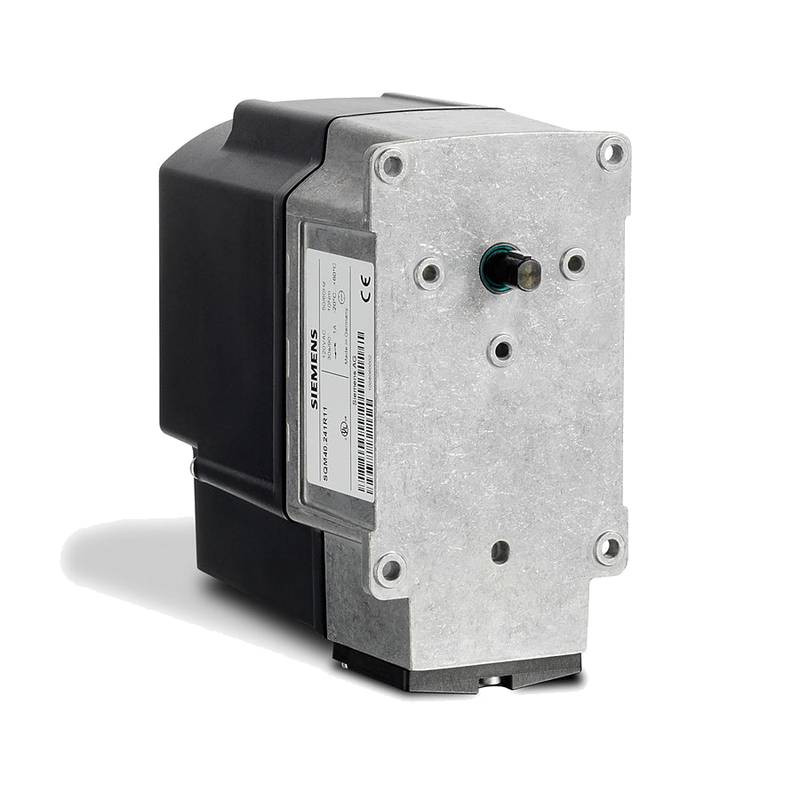
Siemens SQM48.697B9 Ultra Heavy Duty Combustion Control Actuator


The Siemens SQM48.697B9 Ultra Heavy Duty Combustion Control Actuator is engineered for extreme industrial environments, offering unparalleled reliability and precision in demanding combustion applications. This actuator boasts a robust design, ensuring consistent performance under harsh conditions. Its core advantages lie in its exceptional durability, advanced control capabilities, and seamless integration into complex industrial systems. Key technical parameters include a high torque output, precise positioning accuracy, and a wide operating temperature range, making it the definitive choice for critical combustion processes.
Product Specifications
| Feature | Specification |
| :---------------------- | :------------------------------------------ |
| Model | SQM48.697B9 |
| Type | Ultra Heavy Duty Combustion Control Actuator |
| Voltage | 230 V |
| Frequency | 50/60 Hz |
| Torque | High (specific values vary by application) |
| Positioning Accuracy | High precision (specific values vary) |
| Operating Temperature | Wide range (specifics depend on environment)|
| Protection Class | IP65 (typical for heavy-duty variants) |
| Shaft Diameter/Type | Designed for heavy-duty linkages |
| Control Signal | Analog (e.g., 0-10 V) or Digital |
| Duty Cycle | Continuous duty rated |
| Environmental Resistance| Extreme conditions, dust, moisture |
Core Features & Market Positioning
The Siemens SQM48.697B9 distinguishes itself through its "ultra heavy duty" classification, signifying a superior build quality and component selection designed to withstand prolonged operation in aggressive industrial settings. This actuator's advanced internal gearing and robust motor are engineered for maximum lifespan and minimal maintenance, even under constant load cycles. Its market positioning is firmly established as a premium solution for applications where failure is not an option, offering a higher degree of control precision and operational stability compared to standard industrial actuators. The device's inherent resilience and precise control mechanisms position it as a leader in heavy-duty combustion management.
Key Application Scenarios
This actuator is indispensable in critical industrial combustion scenarios. It excels in large-scale industrial boilers, thermal oxidizers, and power generation plants where precise fuel-air ratio control is paramount for efficiency and safety. Its robust construction makes it ideal for petrochemical facilities, cement kilns, and waste-to-energy plants operating in challenging environments. The SQM48.697B9 is also utilized in specialized heavy industries requiring reliable operation of large burner systems, ensuring optimal combustion performance and emissions control.
Practical System Integration Guidance
Integrating the Siemens SQM48.697B9 requires adherence to specific electrical and mechanical guidelines. Typically, the actuator receives control signals (e.g., 0-10 V DC) from a burner management system or PLC, dictating its position. Proper wiring involves connecting the power supply (230V AC) and the control signal lines, ensuring correct polarity and secure connections. Mechanical linkage must be robust, with minimal play, to translate the actuator's precise rotational output into accurate damper or valve adjustments. Pre-commissioning checks should verify mechanical freedom of movement and correct electrical signal reception before initial power-up.
Operation and Risk Mitigation
Safe operation of the SQM48.697B9 is intrinsically linked to correct installation and adherence to burner management system protocols. The actuator is designed with internal safety limits and over-torque protection. However, operational risks can arise from improper linkage, incorrect control signal calibration, or exposure to conditions exceeding its specified environmental ratings. Regular visual inspections of the mechanical linkage and electrical connections are crucial. Users should consult the detailed Siemens manual for specific fault code interpretations and troubleshooting steps, which often relate to loss of control signal, end-of-travel limit switch failures, or internal motor faults.
Scalability & Long-Term Value
The Siemens SQM48.697B9 offers significant long-term value due to its durability and compatibility with Siemens' broader industrial automation ecosystem. While not typically "scaled" in the traditional software sense, its integration into larger plant control systems using protocols like Modbus or PROFIBUS (depending on accompanying interface modules) allows for centralized monitoring and control. This actuator's robust design minimizes the need for frequent replacements, reducing total cost of ownership. Its ability to integrate with advanced burner management systems and potentially IIoT platforms through compatible controllers ensures its relevance in modern, digitized industrial operations.
Frequently Asked Questions
What is the primary function of the Siemens SQM48.697B9 actuator?
The SQM48.697B9 precisely controls fuel and air flow to industrial burners. It ensures optimal combustion by accurately positioning dampers or valves based on control signals. This precise control is vital for efficiency and emissions compliance.
This actuator maintains the correct air-fuel ratio for safe and efficient burning. It's built for demanding, continuous duty cycles in harsh industrial settings. Its robust design guarantees long service life.
It plays a critical role in safety systems, preventing hazardous combustion conditions. The actuator's reliability is paramount in applications like power plants and industrial furnaces.
What are the key technical specifications for the Siemens SQM48.697B9?
It operates on 230V AC with 50/60 Hz frequency. The actuator provides high torque for heavy-duty linkages and offers precise positioning. Its environmental resistance is typically IP65.
This unit is designed for wide operating temperature ranges. It accepts analog (0-10V) or digital control signals. Continuous duty operation is standard.
The SQM48.697B9 features a robust motor and internal gearing for extreme durability. Specific torque and accuracy metrics are application-dependent.
What types of industrial applications is the Siemens SQM48.697B9 suitable for?
This actuator is ideal for large industrial boilers and thermal oxidizers. It's also used in power generation plants and petrochemical facilities. Its heavy-duty nature suits cement kilns and waste-to-energy systems.
It is engineered for reliable operation in challenging environments, resisting dust and moisture. Applications requiring precise control of large burner systems benefit greatly.
The SQM48.697B9 ensures optimal combustion performance and emissions control across various heavy industries. Its versatility makes it a staple in critical combustion processes.
How is the Siemens SQM48.697B9 typically integrated into a control system?
Integration involves receiving control signals from a PLC or burner management system. It translates these signals into precise mechanical movements of dampers or valves. Electrical connections for power and control signals must be secured.
Proper mechanical linkage is crucial for accurate control response. Pre-installation checks ensure free movement and correct signal reception. This ensures accurate fuel-air mixture control.
The actuator's electrical interface typically uses analog (0-10V DC) or digital inputs. Compatibility with Siemens' automation platforms facilitates seamless integration into larger plant networks.
What are common troubleshooting issues or error codes associated with this actuator?
Common issues include loss of control signal or improper calibration. Limit switch failures or internal motor faults can also occur. Referencing the manual for specific fault codes is essential.
Troubleshooting often involves checking electrical connections and signal integrity. Mechanical binding or excessive load on the linkage can cause problems. Ensuring the environment meets specifications is key.
Safety protocols must be followed during troubleshooting. Faults may indicate a need for component replacement or recalibration by a qualified technician. Regular maintenance helps prevent issues.
Can the Siemens SQM48.697B9 be upgraded or integrated with IIoT solutions?
While the actuator itself is hardware, its integration into modern control systems allows for IIoT connectivity. This is achieved through compatible digital communication protocols via advanced controllers. Such integration enables remote monitoring and data analysis.
Its long-term value is enhanced by its compatibility with Siemens' broader automation portfolio. This ensures it can work with newer systems and upgrade paths. The robust design minimizes replacement needs.
Upgrading typically involves enhancing the control system rather than the actuator itself. This allows for advanced diagnostics, predictive maintenance, and optimized performance data collection.
What is the expected lifespan and maintenance requirement for the SQM48.697B9?
The ultra heavy-duty design ensures a long operational lifespan, often exceeding that of standard actuators. Minimal maintenance is required under normal operating conditions. Periodic visual inspections are recommended.
Key maintenance involves ensuring the mechanical linkage remains free of excessive play or binding. Electrical connections should be checked for security. Adhering to operating specifications minimizes wear.
Preventative maintenance, guided by the Siemens manual, can further extend life. In rare cases, internal components may require servicing by authorized personnel. Its durability reduces unplanned downtime.
What safety features are built into the Siemens SQM48.697B9?
The actuator includes internal safety limits to prevent over-travel. It also incorporates over-torque protection to safeguard motor and mechanical components. These features enhance operational safety and component longevity.
Its robust construction contributes to overall system safety by ensuring reliable actuation. Failure of the actuator could lead to uncontrolled combustion, so its design prioritizes dependability. This is critical in hazardous environments.
Emergency shutdown sequences within the burner management system rely on the actuator's predictable response. Its design ensures it functions correctly even during critical operational phases.
How does the torque output of the SQM48.697B9 compare to standard actuators?
The SQM48.697B9 offers significantly higher torque output, essential for operating larger or stiffer dampers and valves. This is a key differentiator for its ultra heavy-duty classification. Standard actuators often lack the power for such demanding tasks.
This enhanced torque ensures positive control and responsiveness, even under high back-pressure conditions. It's crucial for applications where precise, powerful movement is required. The actuator's motor and gearing are specifically designed for this.
The increased torque capacity translates directly to greater reliability in challenging mechanical configurations. It allows for a more robust and less failure-prone linkage system.
What kind of control signals does the SQM48.697B9 support?
The actuator typically supports analog control signals, most commonly 0-10V DC. This allows for proportional positioning of connected dampers or valves. It enables fine-tuning of the air-fuel ratio.
Some variants may also support digital control signals, offering discrete position commands or status feedback. This depends on the specific model and system integration requirements. It allows for integration with various control architectures.
The choice of control signal depends on the sophistication of the burner management system. Accurate signal calibration is crucial for optimal performance and safety.