











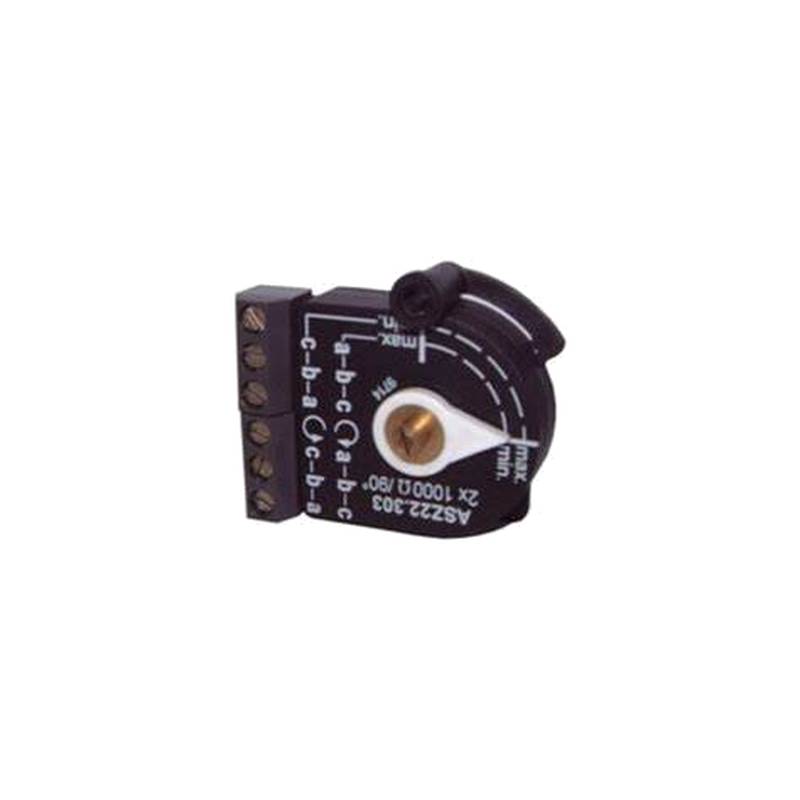
SIEMENS ASZ12.33 Electric Valve Potentiometer ASZ12 Series


The SIEMENS ASZ12.33 Electric Valve Potentiometer, a key component of the ASZ12 Series, offers precise and reliable positioning for industrial control valves. This unit excels in demanding environments due to its robust construction and advanced signal feedback capabilities, ensuring optimal performance and operational efficiency. Key technical parameters include its supply voltage range, output signal type, and mechanical interface, all designed for seamless integration into sophisticated automation systems.
| Feature/Parameter | Specification |
|---|---|
| Product Series | ASZ12 |
| Model Number | ASZ12.33 |
| Type | Electric Valve Potentiometer |
| Output Signal | Variable resistance (potentiometer) |
| Environmental Protection | IP65 (typical for ASZ12 series) |
| Operating Temperature | -30°C to +70°C (typical for ASZ12 series) |
| Supply Voltage | 24 VAC/DC (typical for ASZ12 series) |
| Mechanical Interface | Standard flange/shaft connection |
Core Features & Market Positioning
The SIEMENS ASZ12.33 distinguishes itself through its high-resolution analog output, providing granular feedback on valve position crucial for advanced process control loops. Its integration within the broader Siemens automation ecosystem offers unparalleled compatibility and reliability for users already invested in Siemens platforms like SIMATIC. This potentiometric feedback device is engineered for applications demanding continuous, accurate positional data, setting it apart from simpler on/off limit switches. The ASZ12.33's market position is solidified by Siemens' reputation for industrial durability and long-term support, making it a preferred choice for critical infrastructure and process industries.
Key Application Scenarios
This electric valve potentiometer finds extensive use in process automation across various industries. In the chemical sector, it ensures precise flow control of hazardous materials, enhancing safety and product quality. For water and wastewater treatment plants, the ASZ12.33 facilitates accurate regulation of influent and effluent flows, optimizing plant operations. Furthermore, its application extends to the power generation industry, where it plays a vital role in controlling steam and fuel flow to boilers. Users commonly search for solutions enabling accurate valve positioning for applications involving flow regulation, pressure control, and temperature management.
Practical System Integration Guidance
Integrating the SIEMENS ASZ12.33 into existing control systems is straightforward, leveraging standard industrial wiring practices. The unit typically requires a three-wire connection to provide its variable resistance output to a PLC analog input module or a dedicated process controller. Wiring should adhere to local electrical codes and Siemens' guidelines to ensure electrical safety and signal integrity. For commissioning, it's essential to calibrate the potentiometer's range to match the full stroke of the actuated valve. This calibration ensures that the control system receives accurate position feedback across the entire operational spectrum of the valve, preventing under or over-positioning.
Operation and Risk Mitigation
The ASZ12.33 operates by converting the mechanical position of a valve stem or actuator into a corresponding change in electrical resistance. This analog signal is then interpreted by the control system to determine the valve's precise opening or closing percentage. To mitigate operational risks, regular inspection of the mechanical linkage between the valve and the potentiometer is recommended, ensuring no binding or excessive wear. Environmental protection, typically rated IP65, guards against dust and water ingress, but extreme conditions may necessitate additional protective measures. Fault detection often involves monitoring the resistance signal for unexpected changes or open circuits, which could indicate mechanical failure or electrical discontinuity.
Scalability & Long-Term Value
The ASZ12.33 offers significant long-term value through its compatibility with a wide array of Siemens automation components and its ability to integrate with future digital solutions. As part of the ASZ12 series, it can be seamlessly incorporated into larger systems managed by SIMATIC PLCs, facilitating scalability. Its analog output makes it inherently compatible with IIoT platforms, enabling advanced data analytics and predictive maintenance strategies. This future-proofing ensures that investments in this component remain relevant as industries embrace digital transformation and smart manufacturing.
Frequently Asked Questions
What is the primary function of the SIEMENS ASZ12.33?
The ASZ12.33 serves as an electric valve potentiometer, translating mechanical valve position into an electrical signal. This signal is vital for accurate process control feedback.
It provides continuous analog data, enabling precise adjustments for flow, pressure, or temperature regulation. This high resolution is key for demanding automation tasks.
The device ensures that control systems have real-time, accurate knowledge of the valve's status. This prevents operational errors and optimizes system performance.
How is the SIEMENS ASZ12.33 powered and wired?
This potentiometer typically operates on a 24 VAC or 24 VDC supply voltage. Users must confirm the exact voltage requirement for their specific model.
Wiring involves connecting the potentiometer's output terminals to an analog input channel on a PLC or controller. A three-wire configuration is common for variable resistance feedback.
Always follow Siemens' wiring diagrams and local electrical codes for safe and reliable installation. Proper grounding is also crucial for signal integrity.
What are the environmental considerations for the SIEMENS ASZ12.33?
The ASZ12.33 generally features an IP65 rating, offering protection against dust and low-pressure water jets. This makes it suitable for many industrial environments.
However, prolonged exposure to corrosive chemicals or extreme temperatures outside its operating range can degrade performance. Consider additional enclosures or shielding if needed.
Regular visual inspections can identify potential ingress points or damage. Maintaining the environmental integrity ensures long-term reliability.
What is the output signal type of the SIEMENS ASZ12.33?
The ASZ12.33 produces a variable resistance output. This resistance changes proportionally to the valve's position.
This analog signal is read by control systems to determine the exact degree of valve opening or closing. It's not a digital signal.
The specific resistance range and taper are defined in the product's technical documentation, critical for accurate calibration.
Can the SIEMENS ASZ12.33 be used with non-Siemens control systems?
Yes, the ASZ12.33 can be integrated with various control systems that accept analog resistance inputs. Its output is a standard electrical signal.
Ensure your PLC or DCS has compatible analog input modules capable of reading variable resistance. Configuration will be necessary.
Compatibility depends on the input card's specifications and the ability to properly scale the potentiometer's resistance range within the control software.
What is the typical operating temperature range for this potentiometer?
The ASZ12.33 is designed for robust industrial operation, often supporting temperatures from -30°C to +70°C. Always verify the datasheet for the exact model.
Extreme cold can affect mechanical movement, while high heat may impact electronic component longevity. Adhering to the specified range is key.
Situations exceeding this range may require specialized enclosures or remote mounting to protect the device from thermal stress.
How does the SIEMENS ASZ12.33 provide valve position feedback?
It utilizes a rotary or linear potentiometer element mechanically linked to the valve stem or actuator. As the valve moves, the potentiometer's wiper changes its resistance.
This changing resistance provides a continuous analog signal that directly correlates to the valve's position. It's a direct measurement of displacement.
Control systems read this resistance value and convert it into a percentage or other desired unit of measure for process monitoring and control.
What is the mechanical interface of the SIEMENS ASZ12.33?
The ASZ12.33 typically features a standard shaft or flange connection for mechanical coupling. This allows it to be attached to various valve actuators.
The specific interface dimensions are crucial for ensuring a secure and accurate connection to the valve's operating mechanism. Consult the manual for details.
Proper alignment and secure fastening of the mechanical linkage are vital for reliable signal transmission and to prevent wear.
What does the "ASZ12.33" designation signify?
"ASZ12" identifies the product series, indicating a specific line of valve accessories from Siemens. These series often share common design principles.
The ".33" is a specific model number within the ASZ12 series. It denotes unique features, specifications, or configurations of this particular potentiometer.
Different model numbers within the same series will have variations in performance, interface, or electrical characteristics.
How can I ensure the longevity and reliability of my ASZ12.33?
Regularly inspect the mechanical linkage for wear, proper lubrication, and secure connections to the valve and potentiometer. Prevent binding.
Ensure the device is protected from excessive dust, moisture, and extreme temperatures beyond its specified operating range. Maintain its IP rating.
Periodic checks of the electrical connections and signal output can help identify potential issues early, preventing premature failure.