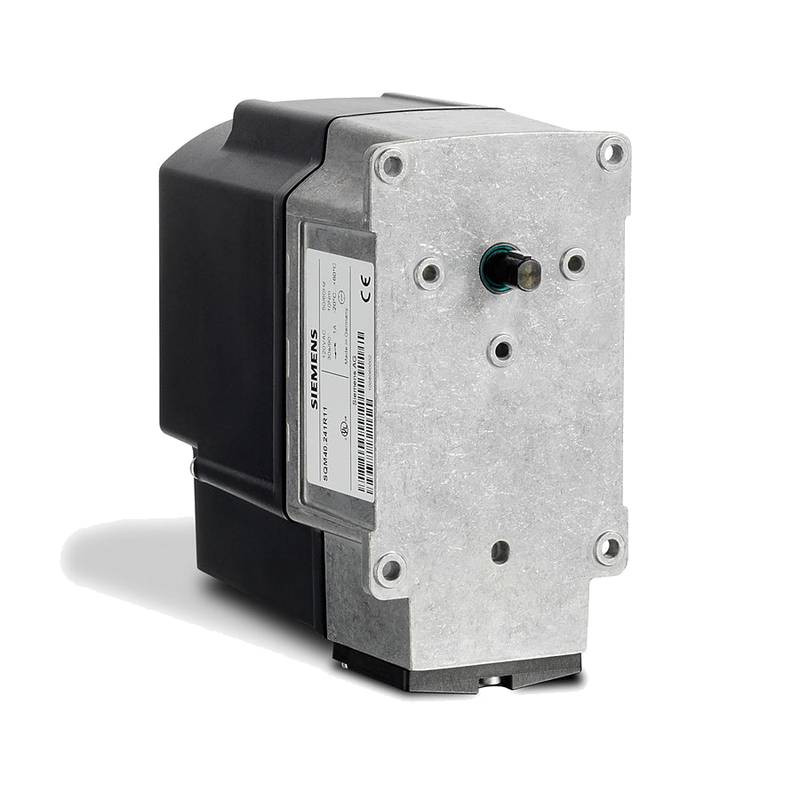












SIEMENS ASZ22.32 Electric Valve Potentiometer 2-Wire


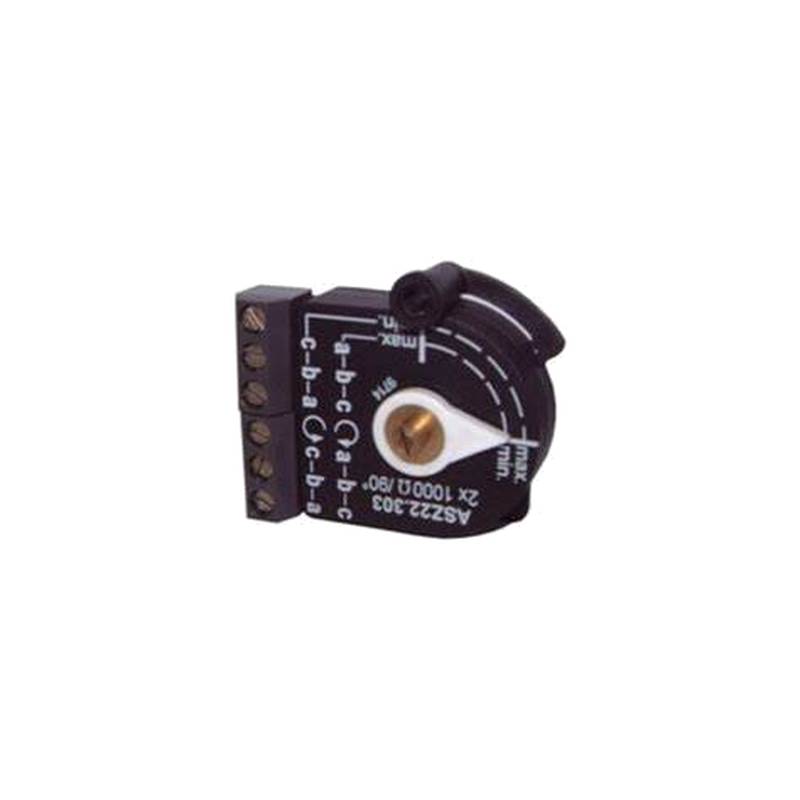
The SIEMENS ASZ22.32 Electric Valve Potentiometer 2-Wire is a critical component for precise valve control in industrial automation. This device excels with its robust design, offering reliable feedback for modulating control applications. Its core advantage lies in providing accurate positional data, enabling optimized process management and enhanced operational efficiency. Key technical specifications include a wide operating temperature range, high resistance accuracy, and a durable construction built for demanding industrial environments.
| Feature | Specification |
| :-------------------------- | :------------------------------------------ |
| Product Type | Electric Valve Potentiometer |
| Model Number | ASZ22.32 |
| Connection Type | 2-Wire |
| Supply Voltage | Typically 24 V AC/DC (verify specific model) |
| Resistance Range | Varies by application (e.g., 100 Ω to 1 kΩ) |
| Mechanical Angle of Rotation | Typically 90° or 135° |
| Environmental Protection | IP65 (or equivalent, verify specific model) |
| Operating Temperature | -20°C to +60°C (typical) |
Core Features & Market Positioning
The SIEMENS ASZ22.32 stands out in the industrial automation market due to its inherent reliability and Siemens' established reputation for quality. Its primary function as a 2-wire potentiometer provides continuous, analog feedback of valve position, differentiating it from simpler on/off switches. This precise positional information is crucial for applications requiring fine-tuned control, such as in chemical processing, power generation, and water treatment. The device integrates seamlessly into existing Siemens control systems and is engineered for longevity in harsh industrial settings, positioning it as a high-value, dependable solution for critical control loops.
Key Application Scenarios
Industrial facilities leverage the SIEMENS ASZ22.32 for a variety of essential control tasks. It is frequently employed in modulating control loops where the exact position of a control valve directly impacts process variables like flow rate, pressure, or temperature. Common scenarios include its use in steam regulation systems for temperature control in manufacturing, precise chemical dosing in refineries, and automated water level management in municipal treatment plants. Its 2-wire configuration simplifies wiring for feedback signals, making it an efficient choice for retrofitting older systems or implementing new, precise valve automation strategies.
Practical System Integration Guidance
Integrating the SIEMENS ASZ22.32 into an industrial control system is a straightforward process for qualified technicians. The 2-wire design typically involves connecting one wire to a stable voltage supply and the other to the input of a PLC or control module, which then interprets the varying resistance as a positional signal. For instance, when used with a Siemens S7 PLC, the potentiometer output would be wired to an analog input module. Configuration within the PLC software would involve scaling the analog input signal to represent the full range of valve travel (e.g., 0-100%). Proper mechanical mounting to the valve stem ensures that the potentiometer's rotation accurately reflects the valve's opening or closing.
Operation and Risk Mitigation
The ASZ22.32 operates by providing a variable resistance output directly proportional to the mechanical angle of its shaft, which is coupled to the valve stem. This analog signal is then read by a control system to determine the valve's precise position. To mitigate operational risks, ensure the potentiometer is correctly mounted and aligned to prevent mechanical stress. Always verify that the supply voltage is within the specified range for the ASZ22.32 model to prevent premature failure. In environments with significant vibration, consider securing connections to prevent signal interruption. Regular visual inspection for signs of wear or damage is recommended.
Scalability & Long-Term Value
The SIEMENS ASZ22.32 electric valve potentiometer offers significant long-term value through its compatibility with Siemens' broader automation ecosystem. Its ability to provide continuous analog feedback makes it suitable for integration into modern Industrial Internet of Things (IIoT) platforms, enabling advanced analytics and predictive maintenance strategies. While not a digital device itself, its signal can be digitized by modern control systems, allowing for remote monitoring and diagnostic capabilities. This ensures that its valuable positional feedback data can be leveraged within evolving digital transformation initiatives, extending its operational lifespan and relevance.
Frequently Asked Questions
What is the primary function of the SIEMENS ASZ22.32?
This device provides precise analog feedback on valve position. It converts the mechanical rotation of a valve stem into an electrical resistance signal. This enables control systems to know the exact opening or closing degree of the valve.
This continuous feedback is vital for modulating control loops. It allows for fine-tuning of process parameters like flow or pressure. Applications range from chemical processing to power generation.
The 2-wire design simplifies installation by reducing wiring complexity. It acts as a crucial sensor in automated industrial processes requiring accurate valve positioning.
How is the SIEMENS ASZ22.32 connected in a 2-wire system?
In a 2-wire configuration, one wire typically connects to the power supply. The other wire carries the variable resistance signal back to the control system. This signal's resistance changes proportionally to the potentiometer's shaft rotation.
The control system, such as a PLC, measures this changing resistance. It then interprets this resistance value as a specific valve position. This forms a closed-loop control signal.
Proper wiring is essential for accurate readings and system stability. Always consult the specific model's datasheet for correct voltage and connection details.
What are the key benefits of using a SIEMENS ASZ22.32 for valve control?
The primary benefit is highly accurate and continuous valve position feedback. This allows for precise process control, optimizing efficiency and product quality. Its robust Siemens construction ensures reliability in demanding industrial environments.
The 2-wire design simplifies wiring and installation, reducing labor costs and potential errors. This makes it an efficient choice for both new installations and retrofits.
It contributes to enhanced operational safety by providing reliable data for automated systems. This minimizes manual intervention and associated risks.
What technical specifications are most important for selecting the ASZ22.32?
Key specifications include the resistance range and power rating. These must match the requirements of the control system and application. The operating temperature range and environmental protection (e.g., IP rating) are crucial for durability.
The mechanical angle of rotation dictates how much valve travel the potentiometer can represent. Ensure this angle aligns with the valve's operational needs. Also, verify the compatible supply voltage for safe operation.
Always cross-reference these specs with your specific control system's capabilities and environmental conditions. This ensures proper integration and long-term performance.
Can the SIEMENS ASZ22.32 be used in hazardous areas?
Standard versions of the ASZ22.32 are typically designed for non-hazardous industrial environments. Use in potentially explosive atmospheres requires specific certifications and intrinsically safe designs. Consult the product documentation for ATEX or similar hazardous area ratings.
If your application involves flammable materials or explosive gases, you must select a potentiometer certified for that zone. Using a non-certified device in such areas poses a significant safety risk and may violate regulations.
Always verify product certifications thoroughly. If a standard ASZ22.32 is the only option, consider additional safety measures or alternative products designed for hazardous zones.
How does the ASZ22.32 differ from a digital valve positioner?
A potentiometer provides an analog resistance signal, a continuous variable. A digital positioner often uses digital communication protocols and may incorporate more advanced diagnostics and control logic internally. The ASZ22.32 is primarily a feedback device.
Digital positioners often offer features like HART communication for remote configuration and diagnostics. They can also provide more precise control independent of external signal conditioning. The ASZ22.32 relies on the connected control system for signal interpretation.
While the ASZ22.32 offers essential positional feedback, digital positioners represent a more integrated and often higher-performance solution for complex valve control needs. The choice depends on application complexity and desired functionality.
What maintenance is required for the SIEMENS ASZ22.32?
Minimal routine maintenance is typically required for the ASZ22.32 due to its robust design. Periodic visual inspection for physical damage or loose connections is recommended. Ensure it remains clean and free from excessive dust or moisture.
The primary maintenance concern is ensuring the mechanical linkage to the valve stem remains properly aligned and free from binding. Any resistance or sticking in the valve mechanism can affect the potentiometer's accurate feedback. Lubrication, if needed, should be applied to the valve stem, not the potentiometer itself.
If signal degradation or erratic readings occur, it may indicate internal wear. In such cases, replacement of the potentiometer is usually the most practical solution.
How can I troubleshoot a malfunctioning ASZ22.32?
Begin by checking the wiring connections for security and correctness. Verify the supply voltage is within the specified range using a multimeter. Measure the resistance across the two wires at different valve positions to check for continuity and proportional change.
If the resistance readings are absent, intermittent, or non-linear, the potentiometer itself may be faulty. Compare the measured resistance values against the expected values based on the valve's mechanical position. Ensure the valve stem is moving freely.
Confirm that the control system input module receiving the signal is functioning correctly and properly configured. Faulty wiring or control system issues can often mimic potentiometer failure.
What is the typical lifespan of a SIEMENS ASZ22.32?
The typical lifespan of a SIEMENS ASZ22.32 is highly dependent on operating conditions and application severity. Under normal industrial use, with proper installation and within specified environmental limits, these potentiometers can last for many years, often exceeding 10-15 years. Factors like frequent actuations, high temperatures, and vibration can reduce its operational life.
Siemens products are generally engineered for durability and longevity in industrial settings. However, potentiometers are mechanical components subject to wear over time, particularly the resistive element and wiper contact. Regular system checks can help identify early signs of degradation.
While a specific number is hard to guarantee, proactive maintenance and avoiding operation outside its design parameters will maximize its service life. If performance degrades, replacement is usually straightforward.
Where can I find the detailed product manual or datasheet for the ASZ22.32?
Detailed product manuals and datasheets for the SIEMENS ASZ22.32 are typically available on the official Siemens Industry Online Support (SIOS) portal. You can usually search for the product number "ASZ22.32" directly on their website. These documents contain comprehensive technical specifications, wiring diagrams, installation instructions, and dimensional drawings.
Alternatively, many industrial distributors that carry Siemens automation products will have links to datasheets on their product pages. If you have purchased the unit through a distributor, they may also be able to provide you with the relevant documentation directly.
Ensure you are accessing the correct datasheet for your specific variant of the ASZ22.32, as minor revisions or regional differences may exist. Always refer to the official Siemens documentation for the most accurate and up-to-date information.