











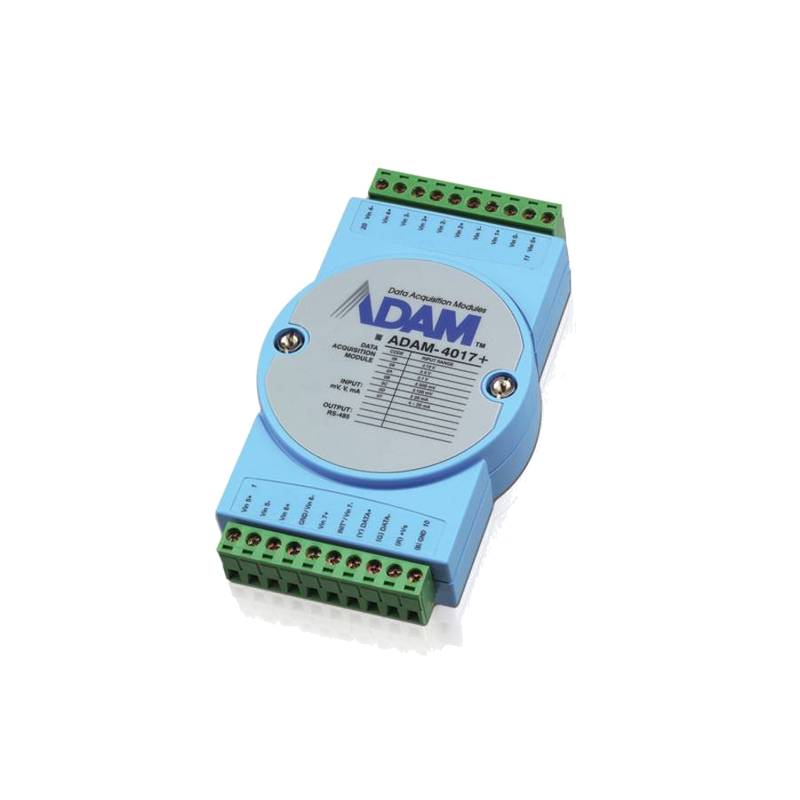
Advantech ADAM-4015-F 7-Channel Thermocouple Input Module


The Advantech ADAM-4015-F is a robust 7-channel thermocouple input module designed for precise temperature monitoring in demanding industrial environments. This module excels with its wide input range supporting various thermocouple types (J, K, T, E, R, S, B, N), high accuracy of ±0.1% FS, and built-in 2 kV isolation for superior protection against electrical noise and surges. Its DIN-rail mountable design and screw terminal connections simplify installation, while its reliable performance makes it a cornerstone for data acquisition and control systems.
Product Specifications
| Feature | Specification |
| :------------------- | :------------------------------------------------------- |
| Channels | 7 Differential Thermocouple Inputs |
| Input Types | J, K, T, E, R, S, B, N |
| Input Range | Selectable per channel (e.g., 0-100mV, 0-50mV) |
| Resolution | 16-bit ADC |
| Accuracy | ±0.1% Full Scale |
| Sampling Rate | 10 samples/second (max) |
| Isolation | 2 kV DC |
| Communication | RS-485 |
| Baud Rate | 1200 bps to 115200 bps |
| Power Consumption| 1.4 W @ 24 VDC |
| Operating Temp. | -25 to 70°C |
| Dimensions | 120 x 67 x 33 mm |
| Mounting | DIN-rail |
Core Features & Market Positioning
The Advantech ADAM-4015-F distinguishes itself through its high channel density for thermocouple inputs, offering significant cost savings and space efficiency in complex monitoring setups. Its support for a broad spectrum of thermocouple types eliminates the need for multiple specialized modules, providing unparalleled flexibility for diverse industrial applications. The integrated 2 kV isolation is a critical differentiator, safeguarding sensitive control systems from ground loops and transient voltages common in harsh industrial settings. This combination of versatility, protection, and density positions the ADAM-4015-F as a leading choice for engineers seeking reliable and cost-effective temperature data acquisition solutions.
Key Application Scenarios
This thermocouple input module is indispensable in various industrial sectors. In chemical processing, it provides precise temperature readings for reactors, distillation columns, and pipelines, ensuring optimal reaction conditions and safety. The power generation industry relies on the ADAM-4015-F for monitoring boiler temperatures, turbine exhaust, and furnace conditions, critical for operational efficiency and predictive maintenance. Furthermore, in metal processing and manufacturing, it tracks the temperature of furnaces, kilns, and molten metal, vital for quality control and preventing material defects. Its ability to handle extreme temperatures and noisy environments makes it ideal for oil and gas exploration and refining as well.
Practical System Integration Guidance
Integrating the Advantech ADAM-4015-F into an existing system is straightforward. The module connects to a host controller or PC via its RS-485 interface, typically using Modbus RTU protocol. Wiring involves connecting the thermocouple leads directly to the screw terminals on the module, ensuring correct polarity for each channel. For initial setup, users can employ Advantech's ADAM Utility software or any Modbus-compatible SCADA or PLC system. When configuring, specifying the correct thermocouple type and input range for each channel via software commands is crucial for accurate readings. The DIN-rail mount simplifies physical installation within control cabinets.
Operation and Risk Mitigation
Operating the ADAM-4015-F requires attention to proper thermocouple connection and configuration. Incorrect wiring or selection of thermocouple type will lead to erroneous readings. To mitigate risks, always verify thermocouple polarity before connection and ensure the selected type in the software matches the physical thermocouple installed. The module's robust design offers protection, but extreme ambient temperatures outside the specified range (-25 to 70°C) can affect performance and longevity. Regular checks of connections and system logs for any communication errors or unusual temperature fluctuations are recommended for proactive fault detection.
Scalability & Long-Term Value
The ADAM-4015-F offers excellent scalability, allowing users to expand their temperature monitoring network by daisy-chaining multiple ADAM-4015-F modules and other ADAM-4000 series devices over the RS-485 bus. This modular approach ensures that systems can grow organically as monitoring needs increase, without requiring a complete overhaul. Its compatibility with standard Modbus RTU protocol means seamless integration with a vast array of PLCs, SCADA systems, and data loggers from various manufacturers. For those embracing Industry 4.0 initiatives, the ADAM-4015-F can serve as a foundational element, feeding critical temperature data into IIoT platforms for advanced analytics, remote monitoring, and predictive maintenance strategies.
Frequently Asked Questions (FAQs)
1. How do I select the correct thermocouple type for the ADAM-4015-F?
Choosing the right thermocouple type is critical for accurate temperature measurement. You must match the physical thermocouple probe installed in your process to the corresponding type (e.g., Type K, Type J) configured within the ADAM-4015-F's software settings.
Consulting the thermocouple's datasheet or process requirements will confirm the optimal type for your specific temperature range and application environment. This ensures the module interprets the voltage signal correctly according to established industry standards.
Incorrect type selection will result in significantly inaccurate temperature readings, potentially leading to process deviations, product defects, or safety hazards.
2. What is the maximum number of ADAM-4015-F modules that can be daisy-chained on an RS-485 network?
The RS-485 serial communication standard supports a theoretical maximum of 32 devices without repeaters. However, the practical limit for the ADAM-4015-F series can be higher depending on cable quality, termination, and network traffic.
Advantech generally recommends a maximum of 128 devices when using RS-485 repeaters, ensuring reliable communication over longer distances or with more modules. Always consider signal degradation and implement proper termination resistors at the network's endpoints.
Careful network design, including segmenting the network if necessary and using shielded twisted-pair cabling, will maximize the number of modules you can effectively integrate while maintaining data integrity.
3. Does the ADAM-4015-F module require a separate power supply?
Yes, the ADAM-4015-F module requires a stable DC power supply, typically ranging from 12 to 36 VDC. The module's specifications indicate a typical power consumption of 1.4W at 24VDC.
Ensure your power supply is adequately rated to handle the total current draw of all connected ADAM modules and any other devices on the same power rail. Overloading the power supply can lead to unstable operation or module failure.
Proper power distribution and fusing within your control panel are essential for reliable and safe operation of the entire data acquisition system.
4. What is the significance of the 2 kV isolation on the ADAM-4015-F?
The 2 kV DC isolation provides a robust electrical barrier between the thermocouple input channels and the RS-485 communication interface/power supply. This feature is crucial in industrial environments prone to electrical noise and ground loops.
This isolation prevents ground potential differences from interfering with measurement accuracy and protects the module and connected control systems from high-voltage transients or surges. It enhances system reliability and longevity.
By separating the measurement circuitry from the control side, the isolation significantly reduces the risk of damage to sensitive electronics and ensures cleaner, more accurate temperature readings.
5. Can I use different thermocouple types on the same ADAM-4015-F module?
Yes, the ADAM-4015-F is designed with flexibility in mind. Each of its seven channels can be independently configured to accept different thermocouple types (J, K, T, E, R, S, B, N).
This allows you to connect a variety of temperature sensors to a single module, accommodating diverse process requirements without needing multiple specialized input devices. This feature optimizes cost and simplifies wiring.
When configuring, ensure that the software setting for each channel accurately reflects the specific thermocouple type connected to it for precise data acquisition.
6. What software is needed to configure and communicate with the ADAM-4015-F?
Advantech provides a free utility software called "ADAM Utility" which simplifies the configuration and testing of ADAM-4015-F modules. This software allows you to set communication parameters, select thermocouple types, and calibrate channels.
Alternatively, the ADAM-4015-F supports the Modbus RTU communication protocol over RS-485. This means you can integrate the module into existing SCADA systems, PLCs, or custom applications that support Modbus master functionality.
Programming libraries for various development environments (e.g., C++, Python, LabVIEW) are often available to facilitate direct communication and data acquisition from the module.
7. What is the accuracy of the ADAM-4015-F, and does it vary by thermocouple type?
The Advantech ADAM-4015-F generally boasts a high accuracy of ±0.1% of the full-scale input range. This accuracy is maintained across the supported thermocouple types, provided the module is correctly configured and calibrated.
It's important to note that while the module's internal ADC provides consistent resolution and accuracy, the overall system accuracy also depends on the quality and calibration of the thermocouple probes themselves.
For critical applications, performing system-level calibration with known temperature references is recommended to achieve the highest possible measurement precision.
8. What are the environmental operating limits for the ADAM-4015-F?
The ADAM-4015-F is engineered for industrial use and operates within a temperature range of -25°C to 70°C (-13°F to 158°F). It also has specific humidity operating limits, typically up to 90% non-condensing.
Adhering to these environmental specifications is crucial for ensuring the module's longevity and reliable performance. Operating outside these limits can lead to reduced accuracy, component degradation, or outright failure.
Always ensure the module is installed in an enclosure or location that provides adequate protection from extreme temperatures, direct sunlight, corrosive atmospheres, and excessive moisture.
9. How does the RS-485 communication interface work with the ADAM-4015-F?
RS-485 is a serial communication standard that uses two wires (A and B) for differential signaling, enabling robust data transmission over longer distances and in noisy environments. The ADAM-4015-F uses this interface to communicate with master devices like PLCs or PCs.
The communication typically follows the Modbus RTU protocol, where the ADAM-4015-F acts as a Modbus slave device. The master device polls the slave for data (temperature readings) or sends commands to configure the module.
Correct wiring (A to A, B to B) and proper termination (usually 120-ohm resistors at the network ends) are essential for establishing a reliable RS-485 communication link.
10. Can the ADAM-4015-F be used for very low or very high-temperature measurements?
The ADAM-4015-F can measure a wide range of temperatures, but its capability is dictated by the specific thermocouple type connected and its corresponding temperature range. For instance, Type K thermocouples can measure from -200°C to 1250°C, while Type R and S are suited for much higher temperatures.
It is essential to select a thermocouple type that matches the extreme temperature range of your application. The ADAM-4015-F itself provides the high-resolution analog-to-digital conversion to accurately read the voltage output from these varied thermocouple types.
Always refer to the specifications of both the ADAM-4015-F module and the chosen thermocouple to ensure they collectively meet the requirements of your high or low-temperature measurement needs.