











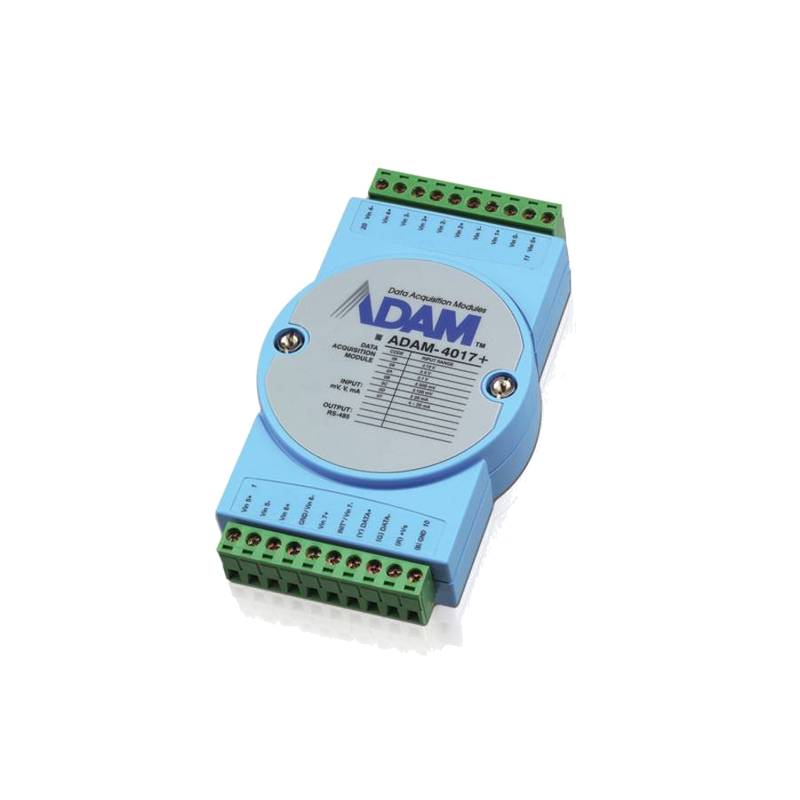
Advantech ADAM-4069-B 4-Channel Digital Input Module


The Advantech ADAM-4069-B is a robust 8-channel power relay output module designed for demanding industrial applications requiring reliable on/off control. It features a high relay contact rating of 5A at 250 VAC and 30 VDC, making it suitable for switching a variety of loads, including lights, fans, and alarm systems. The module supports both Modbus/RTU and ASCII communication protocols, ensuring seamless integration into existing automation networks. Its compact design, DIN-rail mountability, and wide operating temperature range (-10°C to +70°C) further enhance its versatility and deployment in diverse industrial environments. Additionally, the ADAM-4069-B incorporates system and communication watchdog timers for enhanced operational stability.
Product Specifications
| Feature | Specification |
| :-------------------------- | :---------------------------------------------- |
| Number of Output Channels | 8 |
| Relay Type | 4 x Form A, 4 x Form C |
| Contact Rating (Resistive) | 5A @ 250 VAC, 5A @ 30 VDC |
| Power Input | 10V to 30V DC |
| Power Consumption | 2.2W @ 24V DC (typical), 2.3W @ 24V DC (max) |
| Communication Protocols | Modbus/RTU, ASCII command |
| Interface | RS-485 |
| Watchdog Timer | System and Communication |
| Operating Temperature | -10°C to +70°C |
| Breakdown Voltage | 1,000V AC (50/60Hz) |
| Relay Off/On Time | 5.6ms / 5ms |
| Maximum Operating Speed | 6 operations/min |
| Connectors | 2 x plug-in terminal blocks (#14 ~ 28 AWG) |
| Certifications | CE, FCC (stated on some datasheets) |
| Hazardous Environment Rating| Class 1, Division 2 approved |
Core Features & Market Positioning
The Advantech ADAM-4069-B distinguishes itself in the market through its robust build quality and versatile relay configurations, offering both Form A (normally open) and Form C (changeover) contacts. This flexibility allows for a wider range of control applications compared to modules with only one type of relay. Its high contact rating is a significant advantage for directly controlling higher-power devices without the need for intermediate relays. The inclusion of dual communication protocols (Modbus RTU and ASCII) enhances its compatibility with diverse SCADA systems and legacy equipment. Furthermore, its approval for use in Class 1, Division 2 hazardous locations positions it as a reliable choice for critical infrastructure and process control in potentially explosive atmospheres.
Key Application Scenarios
The ADAM-4069-B finds extensive use in scenarios demanding reliable remote switching and control. Common applications include:
Industrial Automation: Controlling machinery, actuators, pumps, and lighting systems on factory floors. Building Automation: Managing HVAC systems, lighting schedules, and security alarms in commercial and residential buildings. Security Systems: Activating sirens, locks, or notification systems based on input triggers. Process Control: On/off control for valves, heaters, and other process equipment in industries like water treatment, chemical processing, and manufacturing. Remote Monitoring and Control: Integrating with SCADA systems for supervisory control of distributed assets.
Practical System Integration Guidance
Integrating the ADAM-4069-B into an existing system typically involves RS-485 communication setup and power supply considerations. For Modbus communication, ensure the master device (PLC, HMI, or SCADA system) and the ADAM-4069-B are configured with the same baud rate, data bits, parity, and stop bits. The module's address can be configured; it's crucial to assign unique Modbus addresses to each module on the bus.
Powering the module requires a stable 10-30 VDC supply. Wiring involves connecting the RS-485 communication lines (A and B) to the master controller and providing the necessary power. Older models might require a specific initialization sequence using an "INIT" switch or terminal to set Modbus parameters if they are factory-configured for ASCII protocol. When connecting to devices, ensure the relay contact ratings are not exceeded to prevent damage.
Operation and Risk Mitigation
The ADAM-4069-B is designed for straightforward operation, primarily controlled via commands sent over its communication interface. Risks are primarily associated with electrical connections and exceeding the relay's specifications. Always ensure power is disconnected before making or breaking connections to prevent electrical shock or equipment damage. Verify that the load connected to the relays does not exceed the 5A contact rating to prevent premature failure or hazardous conditions.
Troubleshooting communication issues often involves verifying RS-485 wiring, ensuring correct Modbus addresses, and confirming that baud rates and other communication parameters match between the master and the ADAM-4069-B. A system watchdog timer helps the module automatically recover from communication timeouts, enhancing reliability. For troubleshooting, Advantech provides utility software like ADAM.EXE and ADAM.NET Utility, which can aid in configuration and diagnostics.
Scalability & Long-Term Value
The Advantech ADAM-4000 series, to which the ADAM-4069-B belongs, offers a scalable solution for expanding I/O capabilities. Additional ADAM modules can be easily integrated into an RS-485 network, allowing for a modular approach to system growth. The module's adherence to standard industrial protocols like Modbus ensures compatibility with a wide range of automation hardware and software platforms, protecting investment in existing systems. Its robust design and Advantech's reputation for quality contribute to its long-term value and reliability in industrial control applications. The integration with IIoT platforms is often achieved through gateway devices that bridge the RS-485 network to Ethernet or wireless protocols, enabling remote data access and control for Industry 4.0 initiatives.
---
Frequently Asked Questions
What are the key advantages of the Advantech ADAM-4069-B?
The primary advantage is its robust 8-channel power relay output, capable of handling significant loads up to 5A at 250 VAC. It offers flexibility with both Form A and Form C relay types.
It supports dual communication protocols, Modbus RTU and ASCII, ensuring broad compatibility with various industrial automation systems. The module is also rated for hazardous environments (Class 1, Division 2), enhancing safety in critical applications.
The device includes system and communication watchdog timers for improved operational reliability and automatic recovery from errors. Its wide operating temperature range ensures performance in challenging conditions.
How do I wire the Advantech ADAM-4069-B for a Modbus RTU connection?
For Modbus RTU, connect the RS-485 A and B lines from your master device to the corresponding terminals on the ADAM-4069-B. Ensure proper power supply (10-30V DC) is connected.
Verify that the baud rate, data bits, parity, and stop bits are identically configured on both the master and the ADAM-4069-B. Assign a unique Modbus address to the ADAM-4069-B if it's part of a multi-drop network.
If the module is factory-configured for ASCII, it may need to be reconfigured for Modbus using Advantech's utility software or a specific initialization command. Consult the manual for exact procedures.
What are the typical applications for the Advantech ADAM-4069-B module?
This module is ideal for controlling on/off devices in industrial settings, such as motors, pumps, and lights. Its high relay rating makes it suitable for switching higher power loads.
It's commonly used in building automation for managing HVAC systems, lighting, and security alarms, as well as in security systems for triggering alerts or locking mechanisms.
The module's Class 1, Division 2 rating makes it suitable for control applications in potentially hazardous industrial environments like oil and gas facilities or chemical plants.
What is the maximum current and voltage rating for the relays on the ADAM-4069-B?
The relays on the Advantech ADAM-4069-B have a resistive contact rating of 5 Amperes. This rating applies to both AC and DC loads.
For AC applications, the maximum voltage the contacts can switch is 250 VAC. For DC applications, the maximum voltage is 30 VDC.
It is crucial to not exceed these ratings to ensure the longevity and reliable operation of the module and to prevent electrical hazards.
How does the watchdog timer feature on the ADAM-4069-B improve system reliability?
The system watchdog timer is a hardware watchdog that resets the module if it becomes unresponsive due to software issues, ensuring a reboot and return to a functional state.
The communication watchdog timer monitors the communication link. If communication with the master is lost for a defined period, it can trigger a pre-defined action, such as returning relays to a safe state.
These timers provide a layer of automatic fault detection and recovery, significantly reducing downtime and enhancing the overall stability of automated systems.
Can the Advantech ADAM-4069-B be integrated into IIoT solutions?
Yes, the ADAM-4069-B can be part of an IIoT solution. It typically connects to an industrial gateway device that translates its RS-485 Modbus communication to Ethernet or wireless protocols (like MQTT).
The gateway then forwards the relay status and commands to an IIoT platform in the cloud or on-premises for data logging, analysis, and remote control.
This enables remote monitoring and control of the connected devices, supporting predictive maintenance, operational efficiency, and smart manufacturing initiatives.
What is the difference between Form A and Form C relays in the ADAM-4069-B?
Form A relays are single-pole, single-throw (SPST) normally open (NO) contacts. When energized, they close the circuit.
Form C relays are single-pole, double-throw (SPDT) contacts. They have a common terminal, a normally closed (NC) terminal, and a normally open (NO) terminal.
This allows Form C relays to switch between two different circuits or to provide both normally open and normally closed switching logic using a single relay.
How is the Modbus address configured on the ADAM-4069-B?
The Modbus address is typically set during the initial configuration of the module. This can be done using Advantech's ADAM.NET Utility or similar configuration software.
For modules factory-set to ASCII, a special initialization command or switch setting might be required to enter Modbus configuration mode. Consult the specific manual for your module version.
Each ADAM-4069-B on an RS-485 network must have a unique Modbus address to be individually addressed and controlled by the master device.
What is the operating temperature range for the Advantech ADAM-4069-B?
The Advantech ADAM-4069-B is designed to operate within an industrial temperature range of -10°C to +70°C (14°F to 158°F).
This wide operating temperature range allows the module to be deployed in various environments, from cold storage areas to moderately heated industrial spaces.
Ensuring adequate ventilation and avoiding direct exposure to extreme heat sources will help maintain optimal performance and longevity within this specified range.
What is the warranty period for the Advantech ADAM-4069-B?
Advantech typically provides a two-year warranty for its ADAM-4000 series products, including the ADAM-4069-B.
This warranty covers defects in materials and workmanship from the original date of purchase. It is important to retain proof of purchase for warranty claims.
The warranty does not cover products that have been subjected to misuse, abuse, accident, or improper installation, or those that have been repaired or altered by unauthorized personnel.