Advantech ADAM-4056SO-B 6-Channel Open Collector Output Module


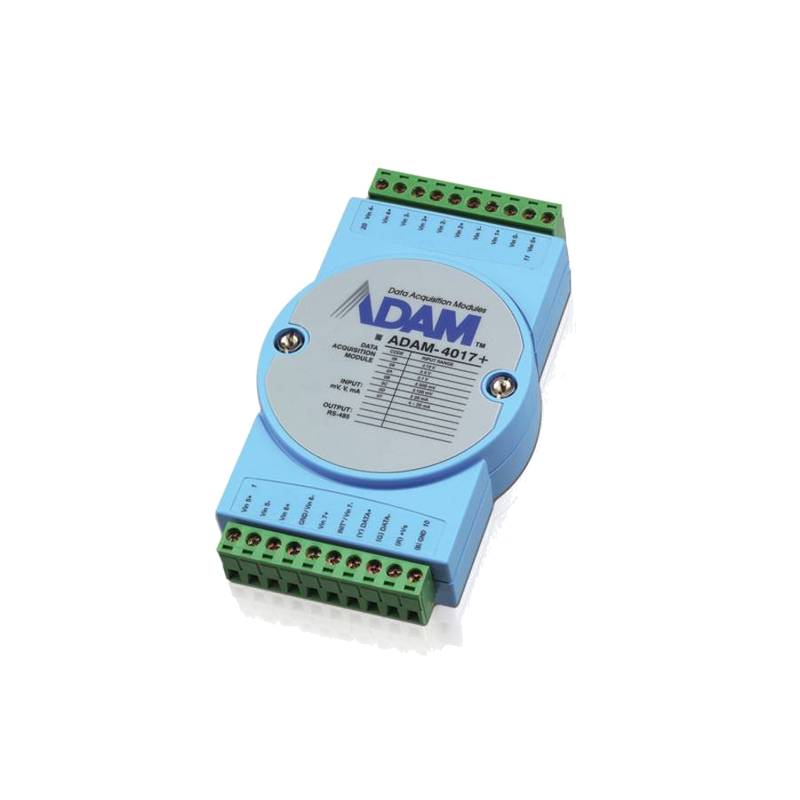
The Advantech ADAM-4056SO-B 6-Channel Open Collector Output Module is a robust solution designed for industrial automation, offering reliable digital output control for a variety of applications. With its 6 open collector outputs, wide operating temperature range, and flexible power input, this module excels in harsh environments. Its key advantages lie in its solid-state design for longevity and its compatibility with standard industrial communication protocols, making it a valuable asset for system integrators and automation engineers.
Product Specifications
| Feature | Specification |
| :-------------------------- | :------------------------------------------------ |
| Digital Output Channels | 6 x Open Collector Outputs |
| Output Voltage Rating | 30 VDC |
| Output Current Rating | 50 mA per channel |
| Input Voltage Range | 12-30 VDC |
| Power Consumption | 2.3 W @ 24 VDC |
| Operating Temperature | -25°C to +70°C (-13°F to +158°F) |
| Storage Temperature | -40°C to +85°C (-40°F to +185°F) |
| Humidity | 10-95% RH (non-condensing) |
| Isolation Voltage | 2500 VDC |
| Dimensions | 70 mm x 120 mm x 32 mm (2.76" x 4.72" x 1.26") |
| Mounting | DIN-rail, Wall, or Rack mounting |
| Communication Protocol | Modbus RTU over RS-485 |
Core Features & Market Positioning
The Advantech ADAM-4056SO-B distinguishes itself in the competitive industrial automation landscape through its high-reliability open collector outputs, ideal for switching inductive loads like relays and solenoids without requiring external driver circuitry. Its inherent surge protection and robust construction position it as a go-to module for demanding environments where consistent performance is paramount. The module's integration with the widely adopted Modbus RTU protocol further solidifies its market appeal, ensuring seamless communication within diverse SCADA and PLC systems. This focus on durability and interoperability makes the ADAM-4056SO-B a cost-effective and dependable choice for critical control tasks.
Key Application Scenarios
The Advantech ADAM-4056SO-B finds extensive application in discrete manufacturing, building automation, and environmental monitoring. Its 6 open collector outputs are perfectly suited for controlling small actuators, indicator lights, or triggering alarms in production lines. In building management systems, it can be employed to manage ventilation fans, pump controls, or access gates. For remote monitoring, the module efficiently handles the activation of warning sirens or status signaling devices based on sensor inputs, all manageable via its RS-485 interface.
Practical System Integration Guidance
Integrating the ADAM-4056SO-B into an industrial control system is straightforward, leveraging its standard Modbus RTU communication over an RS-485 serial bus. Wiring involves connecting the power supply (12-30 VDC) to the designated terminals and linking the RS-485 A(+) and B(-) terminals to the master controller's bus. The open collector outputs require careful consideration; each output can sink up to 50 mA at 30 VDC, making them suitable for driving low-power devices directly or acting as input to higher-voltage relays. For configuration, Advantech's ADAM Utility software or custom Modbus communication libraries can be used to set the module's Modbus address and baud rate, typically enabling direct control of output states through function codes 05 (write single output) or 15 (write multiple outputs).
Operation and Risk Mitigation
Proper operation of the Advantech ADAM-4056SO-B hinges on adhering to its electrical specifications to prevent damage and ensure system stability. Exceeding the 50 mA per channel output current or the 30 VDC output voltage rating can lead to module failure or damage to connected devices. Ground loops are a common concern in RS-485 networks; ensuring a common ground reference or utilizing shielded twisted-pair cabling can mitigate communication issues and noise. In environments with significant electrical noise, physical separation of data cables from high-power lines is recommended. Overloading the outputs is a primary risk; always verify the current draw of the connected load before commissioning to avoid exceeding the module's capabilities.
Scalability & Long-Term Value
The Advantech ADAM-4056SO-B offers considerable scalability and long-term value by seamlessly integrating into larger distributed I/O architectures. Multiple ADAM-4056SO-B modules, along with other ADAM series devices, can be daisy-chained on a single RS-485 bus, managed by a central controller, allowing for expansion of digital output points as system requirements grow. Its compatibility with prevalent industrial protocols ensures that it remains a relevant component even as control systems evolve towards Industry 4.0 initiatives and IIoT platforms, where data acquisition and remote control are increasingly critical. The module's robust design and Advantech's commitment to product longevity provide a stable foundation for long-term automation investments.
Frequently Asked Questions
What is an open collector output on the ADAM-4056SO-B?
An open collector output allows the module to sink current to ground. It essentially acts like a switch that can pull a signal line low.
This configuration offers flexibility for connecting various external components and loads. It's designed to handle specific voltage and current ratings for reliable switching.
How do I wire the ADAM-4056SO-B for 6-channel output control?
Connect your 12-30 VDC power supply to the module's power terminals. Then, wire each open collector output to your chosen load, ensuring the load is connected between the output terminal and the positive power supply.
Each output terminal connects to the negative side of the load, allowing the module to sink current and complete the circuit. Always verify that your load's requirements are within the module's 50 mA and 30 VDC limits.
Can the ADAM-4056SO-B be used with PLCs?
Yes, the ADAM-4056SO-B is designed for PLC integration. Its Modbus RTU protocol over RS-485 is widely supported by most industrial PLCs.
You will typically configure the PLC's communication module to act as a Modbus master. The ADAM-4056SO-B will then be configured as a Modbus slave device on the same bus.
The PLC can then read status and write to the digital outputs on the ADAM-4056SO-B using standard Modbus function codes.
What is the maximum current rating per channel for the ADAM-4056SO-B?
The Advantech ADAM-4056SO-B features a maximum current rating of 50 mA per channel. This specification is crucial for selecting appropriate loads.
Exceeding this 50 mA limit can cause the output transistor to overheat and fail, potentially damaging the module. Always check the current draw of your solenoids, relays, or indicator lights.
If your load requires more current, use the ADAM-4056SO-B to control an intermediate relay or contactor that can handle the higher current.
What is the operating voltage range for the ADAM-4056SO-B?
The ADAM-4056SO-B operates with a DC input voltage range from 12 VDC to 30 VDC. This wide range offers flexibility in power source selection.
Ensure your power supply is stable and within this specified range to guarantee proper module function. It's also important to consider the power requirements of the connected loads.
When connecting multiple ADAM modules, ensure your power supply can adequately support the total current draw of all devices.
How is the ADAM-4056SO-B mounted in an industrial panel?
The ADAM-4056SO-B supports multiple mounting options for flexible installation. It can be mounted directly onto a standard 35mm DIN-rail.
Alternatively, it can be affixed to a wall or a rack using the provided mounting holes and appropriate hardware. This versatility simplifies integration into various control panel layouts.
Proper mounting ensures the module is securely positioned and allows for adequate ventilation, which is important for maintaining optimal operating temperature.
What communication protocol does the ADAM-4056SO-B use?
The ADAM-4056SO-B utilizes the Modbus RTU communication protocol. This is a widely recognized standard in industrial automation.
Communication is established over an RS-485 serial interface, which supports multi-drop configurations for connecting multiple devices. The RS-485 provides robust, noise-resistant data transmission.
Modbus RTU allows the module to easily interface with various PLCs, HMIs, and SCADA systems, simplifying system design and integration.
What is the typical application for an open collector output module like the ADAM-4056SO-B?
Open collector output modules are commonly used for switching low-power devices. This includes driving small relays, indicator lights, or buzzers.
They are also suitable for signaling purposes, such as triggering alarms or status lights based on process conditions. The ability to sink current offers unique circuit design possibilities.
Furthermore, they can be used to interface with input circuits of other devices that require a simple contact closure to ground.
What is the environmental operating temperature range for this module?
The Advantech ADAM-4056SO-B is designed for industrial environments and operates across a wide temperature range. It functions reliably between -25°C and +70°C.
This extended temperature range allows for deployment in locations with significant temperature fluctuations, such as unconditioned enclosures or outdoor installations. Always ensure adequate ventilation.
For long-term storage or transport, the module can withstand even wider temperatures, from -40°C to +85°C, indicating its robust construction.
Does the ADAM-4056SO-B offer isolation?
Yes, the ADAM-4056SO-B provides 2500 VDC isolation. This is a critical safety and reliability feature in industrial settings.
The isolation protects the module and connected control systems from voltage transients and ground loops. It enhances the overall robustness of the automation setup.
This electrical isolation helps prevent damage to sensitive equipment and ensures more stable communication and control signals.