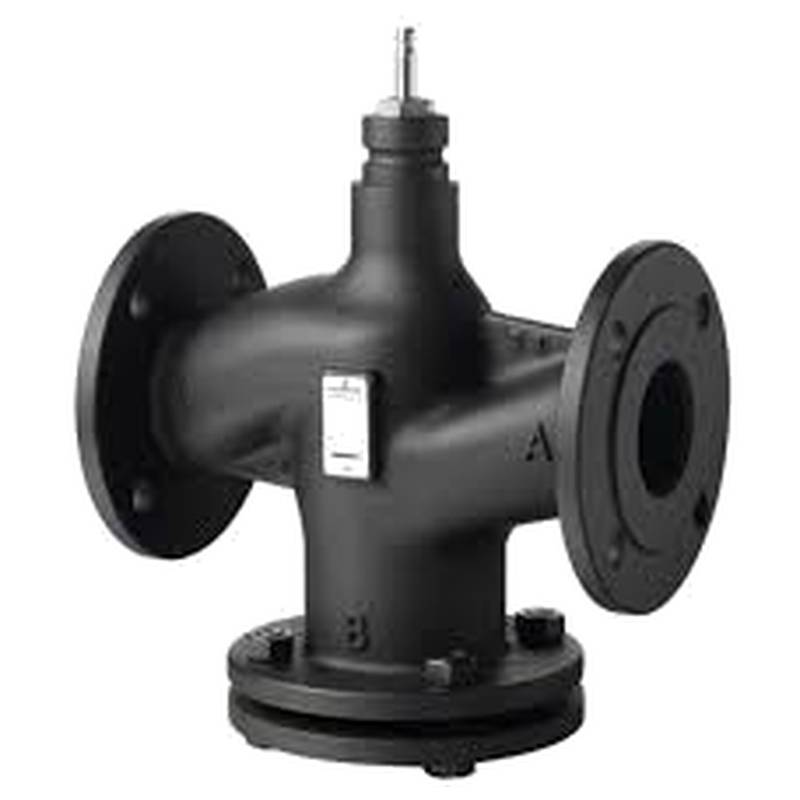
SIEMENS VVF53.125-220K Globe Valve DN125 kvs 220


The SIEMENS VVF53.125-220K is a robust DN125 globe valve engineered for precise flow control in demanding industrial applications. This valve stands out with its exceptional KVS rating of 220, signifying a high flow capacity essential for large-scale HVAC, district heating, and industrial process systems. Its robust construction ensures reliability and longevity, making it a preferred choice for engineers seeking dependable performance. The VVF53.125-220K’s accurate modulation capabilities contribute to optimized energy consumption and system efficiency, directly impacting operational costs and environmental footprint.
SIEMENS VVF53.125-220K Globe Valve: Specifications and Advantages
The SIEMENS VVF53.125-220K globe valve offers a compelling blend of performance and durability, ideal for critical flow regulation tasks. Its precise engineering ensures optimal system performance across various demanding environments.
| Feature | Specification |
| :------------------------ | :------------------------------------------ |
| Product Type | Globe Valve |
| Manufacturer | SIEMENS |
| Model Number | VVF53.125-220K |
| Nominal Diameter (DN) | 125 |
| Flow Coefficient (KVS) | 220 |
| Connection Type | Flanged |
| Pressure Rating | PN16 (typical for this series and DN) |
| Actuator Compatibility | Designed for SIEMENS actuators |
| Body Material | Cast Iron (typically GG25 for this series) |
| Seat Material | EPDM (typically for VVF53 series) |
| Maximum Temperature | 130 °C (typical for VVF53 series) |
| Maximum Differential Pressure | 250 kPa (typical for VVF53 series) |
The VVF53.125-220K excels due to its high KVS value of 220, enabling substantial flow rates essential for large building services and industrial processes. Its flanged connection ensures secure and reliable integration into existing pipework. The valve's design prioritizes accurate throttling, facilitating precise temperature and pressure control within complex systems. This accuracy translates directly into improved energy efficiency and reduced operational wear on ancillary equipment.
Core Features and Market Positioning
The SIEMENS VVF53.125-220K is positioned as a high-performance, industrial-grade control valve, distinguished by its superior flow handling capabilities and Siemens' reputation for engineering excellence. Its KVS of 220 is a significant differentiator, allowing it to manage larger volumes of fluid compared to many competitors in the same nominal diameter class. This makes it particularly attractive for applications where robust flow capacity and precise regulation are paramount. The valve's compatibility with a range of Siemens actuators further solidifies its integration into sophisticated building automation and process control systems.
The robust construction, typically featuring a cast iron body and durable internal components, provides excellent longevity even under continuous operation in challenging environments. This reliability is a key factor in its market appeal, reducing the total cost of ownership through minimized maintenance and downtime. Siemens' commitment to quality assurance means the VVF53.125-220K meets stringent industry standards, offering engineers confidence in its performance and safety.
Key Application Scenarios
The SIEMENS VVF53.125-220K globe valve finds its most impactful applications in large-scale commercial and industrial settings where precise flow control of heating and cooling media is critical. Its high KVS value of 220 makes it exceptionally well-suited for main distribution lines in district heating networks, ensuring consistent temperature delivery to multiple end-users. In large commercial buildings, it is extensively used in central plant rooms to regulate water flow to major air handling units (AHUs) and fan coil units, thereby optimizing indoor climate control and energy consumption.
Within industrial processes, this valve is deployed in applications requiring substantial fluid throughput and fine-tuned control. This includes managing cooling water for large machinery, controlling steam flow in process heating loops, or regulating the distribution of industrial fluids where precise volume management is essential for product quality and operational efficiency. Its compatibility with automated control systems ensures seamless integration into Building Management Systems (BMS) or SCADA platforms for centralized monitoring and adjustment.
Practical System Integration Guidance
Integrating the SIEMENS VVF53.125-220K globe valve into a control system requires careful consideration of actuator selection and wiring. The valve is designed to work with Siemens' range of electro-mechanical or electro-hydraulic actuators, which provide the necessary torque and stroke for precise positioning. Actuator selection should be based on the required control signal (e.g., 0-10 V, 4-20 mA), fail-safe position (fail-open or fail-closed), and the dynamic characteristics of the system.
Proper installation involves ensuring the valve is mounted in the correct orientation within the pipeline, typically with the stem pointing upwards, to prevent debris accumulation in the seat. Flange connections must be correctly gasketed and torqued according to industry best practices to ensure a leak-free seal and to withstand the system's operating pressure. For control signal wiring, adhere strictly to the actuator manufacturer's documentation, paying close attention to polarity and signal types to ensure accurate valve response.
Commissioning involves calibrating the actuator to the valve's full stroke and ensuring the control system recognizes the valve's position feedback accurately. This may involve setting end-stop limits and dead bands within the actuator or controller settings. Performing a flow test after integration is recommended to verify that the valve is achieving the desired flow rates at various control signal levels and that system temperatures or pressures are responding as expected.
Operation and Risk Mitigation
The SIEMENS VVF53.125-220K globe valve is designed for reliable operation, but effective risk mitigation involves understanding potential issues and implementing preventive measures. Over-tightening of valve packing can lead to increased actuator load and reduced valve stroke, potentially causing control inaccuracies or premature actuator failure. Conversely, under-tightened packing can result in external leakage. Regular visual inspection of the stem seal area for any signs of leakage is crucial.
Cavitation can occur if the pressure drop across the valve exceeds the vapor pressure of the fluid, leading to noise, vibration, and internal damage. This is more likely in systems with high differential pressures. To mitigate this, ensure the valve is correctly sized for the application and consider installing it with adequate upstream and downstream straight pipe runs to achieve stable flow profiles. The maximum differential pressure for the VVF53 series is typically around 250 kPa, and exceeding this limit can lead to premature wear or failure.
System contamination is another risk; ensure all pipework is thoroughly flushed before system startup to remove debris that could lodge in the valve seat, preventing proper closure or causing internal damage. Regular filter maintenance in the system upstream of the valve will also help protect its internal components. Following the manufacturer's recommended maintenance schedule for actuator and valve servicing is paramount for ensuring long-term, trouble-free operation.
Scalability & Long-Term Value
The SIEMENS VVF53.125-220K offers significant long-term value through its robust design and compatibility within the broader Siemens automation ecosystem. Its ability to integrate with advanced digital control platforms, including those supporting the Industrial Internet of Things (IIoT), allows for enhanced performance monitoring, predictive maintenance, and remote diagnostics. This future-proofs the investment by enabling adaptation to evolving smart building and smart manufacturing strategies.
While the VVF53.125-220K itself is a physical component, its scalability lies in its interoperability. It can be a critical element in larger, distributed control architectures where multiple valves work in concert to manage complex industrial processes or extensive HVAC networks. Systems can be scaled by adding more VVF53.125-220K valves or similar Siemens control devices, managed by a centralized control system that benefits from the consistent performance and communication protocols inherent in Siemens products.
The inherent durability and quality of SIEMENS industrial products like this globe valve contribute to a lower total cost of ownership. Reduced maintenance requirements, extended service life, and optimized system efficiency due to precise control all add up to long-term economic benefits. Furthermore, its ability to interface with modern digital twins and data analytics platforms allows for continuous process optimization, maximizing the return on investment over the operational life of the equipment.
Frequently Asked Questions (FAQs)
What is the primary function of a SIEMENS VVF53.125-220K globe valve?
This valve serves as a precise flow control device in industrial and commercial HVAC systems. It modulates the flow of water or other media to maintain desired temperature or pressure setpoints, ensuring system stability. Its high KVS rating allows for substantial flow rates in large-scale applications.
The VVF53.125-220K is crucial for optimizing energy efficiency by accurately regulating fluid volumes. It prevents over-circulation, which can lead to wasted energy and uncomfortable conditions. This precise control is vital for comfort in buildings and for process integrity in industrial settings.
Engineers specify this model for its reliability, robust construction, and compatibility with Siemens automation platforms. It's a core component in building management systems and process control loops requiring accurate and repeatable flow modulation.
How does the KVS value of 220 benefit my system?
A KVS of 220 signifies a high flow capacity for a DN125 valve. This means the valve can pass a large volume of fluid at a given pressure drop, essential for large heating or cooling circuits. It allows for more dynamic system response and ensures adequate capacity for peak demand scenarios.
This high flow coefficient reduces the need for multiple smaller valves or larger pipe sizes in certain applications. It simplifies system design and can lead to cost savings in installation and material. It ensures that the valve is not a bottleneck in systems requiring significant fluid throughput.
For applications like district heating mains or large industrial cooling loops, this KVS value guarantees that the valve can effectively manage the required flow. It ensures that central plant equipment operates efficiently without being starved of or overwhelmed by the working fluid.
What types of actuators are compatible with the SIEMENS VVF53.125-220K?
The VVF53.125-220K is designed for seamless integration with Siemens' own range of electric actuators. These include models that operate on standard control signals like 0-10 VDC or 4-20 mA, offering flexibility in system design.
Actuators for this valve typically provide precise positioning and can be specified with fail-safe functionality, ensuring the valve moves to a predetermined position (open or closed) in case of power loss. This is critical for safety and operational continuity in many industrial processes.
When selecting an actuator, consider the valve's torque requirements, stroke length, and the specific control system's output signals. Always consult the SIEMENS actuator datasheets for exact compatibility and installation guidelines for the VVF53.125-220K.
What is the maximum operating pressure and temperature for this valve?
The SIEMENS VVF53.125-220K globe valve typically operates with a pressure rating of PN16, which corresponds to a maximum allowable working pressure of 16 bar (approximately 232 psi) at ambient temperatures. This rating is standard for industrial flanged valves of this size and class.
For temperature, the valve series usually has a maximum operating temperature of around 130°C (266°F). This is suitable for most standard heating applications. However, it's crucial to verify the specific temperature and pressure limitations for the exact model and its associated sealing materials.
Exceeding these specified pressure or temperature limits can lead to valve failure, leakage, or reduced performance. Always refer to the official SIEMENS product documentation for the precise operational envelope of your installed valve.
Can the SIEMENS VVF53.125-220K be used in steam applications?
While the VVF53 series is primarily designed for water and glycol mixtures in HVAC systems, its suitability for steam depends heavily on the specific model variant and its temperature/pressure ratings. High-temperature applications, especially those involving steam, often require specialized valve designs and materials.
Typically, a maximum operating temperature of 130°C would limit its use to low-pressure steam systems or saturated steam where temperatures do not exceed this threshold. For higher pressure or superheated steam, different valve series with higher temperature and pressure capabilities are generally recommended by SIEMENS.
It is essential to consult the detailed technical specifications and application notes from SIEMENS for the VVF53.125-220K to confirm its suitability for any steam service. Using the valve outside its designed parameters can result in premature failure and safety hazards.
What are the common installation considerations for this globe valve?
Installation requires the valve to be oriented correctly within the pipeline, usually with the stem pointing upwards to prevent sediment buildup on the seat. Ensure the pipeline is clean and free from debris before installation to avoid damaging the valve internals.
The flanged connections must be properly aligned with the mating pipe flanges. Use appropriate gaskets and tightening sequences for the bolts to ensure a secure, leak-proof seal that can withstand the system's operating pressure. Avoid over-tightening, which can damage the flanges or gaskets.
The valve should be installed with adequate straight pipe runs upstream and downstream to ensure stable flow conditions for accurate control and to prevent cavitation or excessive turbulence. Consult the SIEMENS installation manual for specific recommendations on pipe lengths and any required support structures.
How do I troubleshoot a SIEMENS VVF53.125-220K valve that isn't closing properly?
If the valve is not closing fully, first check if there is any physical obstruction preventing the disc from seating, such as debris in the pipeline or sediment buildup on the valve seat. Ensure the system has been properly flushed.
Verify that the actuator is receiving the correct control signal and is capable of reaching the full closed position. Check the actuator's calibration, stroke limits, and for any mechanical binding or interference that might be preventing full closure.
Consider the possibility of internal valve wear or damage to the seat if the obstruction is not found. If the valve has been in service for a long time or has been subjected to harsh conditions, internal components may need inspection or replacement.
What maintenance is required for the VVF53.125-220K valve?
Regular visual inspections for external leaks around the stem packing and flange connections are recommended. Ensure the actuator is functioning correctly and that its electrical connections are secure and free from corrosion.
While these valves are generally low-maintenance, periodic checks of the actuator's calibration and system response are advisable, especially if control performance degrades. If the system experiences significant water hammer or vibration, inspect the valve for any signs of internal damage.
For extended service life, ensure the system's water quality is maintained and that filters are cleaned or replaced regularly to prevent debris from entering the valve. Follow SIEMENS' recommended service intervals for actuators, which may include lubrication or functional tests.
Can this valve be integrated into smart building systems (IIoT)?
Yes, the SIEMENS VVF53.125-220K is designed to be integrated into modern control systems, including those that support IIoT initiatives. Its compatibility with digital communication protocols through its associated actuators allows for data exchange with Building Management Systems (BMS) or SCADA.
This integration enables remote monitoring of valve status, flow rates, and operational parameters, as well as remote diagnostics and adjustments. Such capabilities are fundamental for optimizing building performance and implementing predictive maintenance strategies.
By leveraging IIoT capabilities, building operators can gain deeper insights into system performance, identify inefficiencies, and proactively address potential issues before they impact comfort or operations.
What is the typical lifespan of a SIEMENS VVF53.125-220K globe valve?
The lifespan of a SIEMENS VVF53.125-220K globe valve is generally long, often exceeding 15-20 years in typical HVAC applications when properly installed and maintained. This longevity is attributed to the robust construction and high-quality materials used by SIEMENS.
Factors such as the quality of the system fluid, operating pressures and temperatures, and the frequency of valve cycling can influence its actual service life. Harsh conditions or improper installation can shorten this lifespan considerably.
Adhering to recommended maintenance schedules, ensuring correct system flushing, and operating within the valve's specified parameters are key to maximizing its operational longevity and ensuring consistent performance throughout its service life.