SIEMENS VVF53.125-250 Two-Way Valve DN125 kvs 250 VVF53


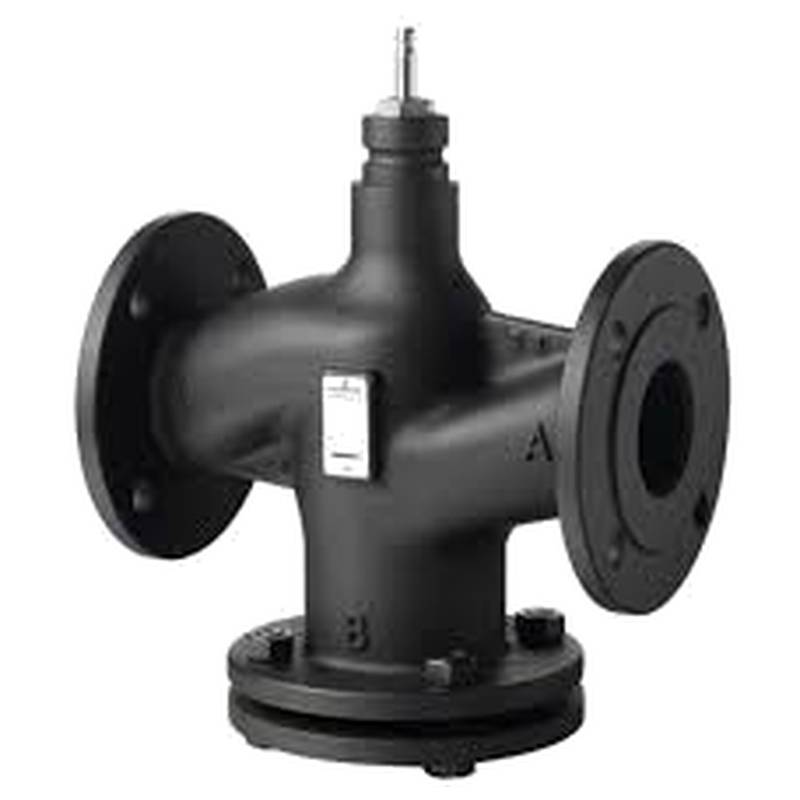
The SIEMENS VVF53.125-250 Two-Way Valve, a robust DN125 control valve with a kvs of 250, stands as a pivotal component for precise fluid regulation in demanding industrial environments. Its design prioritizes reliability, operational efficiency, and seamless integration within complex HVAC and building automation systems. Key advantages include its high control accuracy, durable construction for extended service life, and compatibility with various actuator types, ensuring versatility across a broad spectrum of applications. The core features of the VVF53.125-250 encompass its precision flow control capabilities, exceptional sealing performance, and adaptability to differential pressures. These attributes position it as a superior choice for engineers seeking dependable and high-performance solutions for climate control and process management.
Product Specifications
| Parameter | Specification |
| :-------------------- | :------------------------------------------ |
| Product Type | Two-Way Control Valve |
| Manufacturer | SIEMENS |
| Model | VVF53.125-250 |
| Nominal Diameter (DN) | 125 |
| Flow Coefficient (kvs)| 250 m³/h |
| Connection Type | Flanged |
| Material | Cast Iron (GG25) |
| Pressure Rating | PN16 |
| Temperature Range | -20 to 150 °C |
| Actuator Type | Mechanical or electric actuators |
| Control Type | Proportional |
| Sealing | Soft-seated |
| Application | Heating, ventilation, and air conditioning |
Core Features & Market Positioning
The SIEMENS VVF53.125-250 distinguishes itself through its exceptional flow control characteristics and robust construction. Engineered for demanding industrial applications, it offers superior accuracy in maintaining desired flow rates, which is critical for energy efficiency and process stability in HVAC and building automation. Its cast iron body (GG25) and PN16 pressure rating signify a commitment to durability and longevity, even under challenging operating conditions. The valve's soft-seated design ensures excellent sealing capabilities, minimizing leakage when closed and contributing to system integrity. This combination of precision, durability, and reliable sealing places the VVF53.125-250 as a preferred component for engineers prioritizing long-term performance and operational security over initial cost. Its market positioning is firmly rooted in providing a dependable, high-value solution for critical fluid control tasks.
Key Application Scenarios
The SIEMENS VVF53.125-250 is optimally suited for a range of critical applications within building services and industrial processes. Its primary use is in heating, ventilation, and air conditioning (HVAC) systems where precise temperature control is paramount. This includes large-scale commercial buildings, hospitals, and data centers that require consistent and reliable climate management. Furthermore, the valve finds application in industrial fluid control systems, managing the flow of water or other compatible media for process cooling, heating, or other regulated operations. The DN125 size and kvs 250 rating make it ideal for high-flow scenarios, such as controlling chilled water or hot water loops in district heating networks or large industrial facilities. Its ability to handle differential pressures up to its rating ensures stable operation in systems with significant head variations.
Practical System Integration Guidance
Integrating the SIEMENS VVF53.125-250 into existing or new systems requires careful consideration of actuator selection and piping. The valve is designed to be compatible with a variety of Siemens actuators, including electro-mechanical and electric types, which must be selected based on the required torque, stroke length, and control signal (e.g., 0-10V, 4-20mA). Proper mounting ensures that the valve operates in the intended flow direction, typically indicated by an arrow on the valve body. For flanged connections, ensure that mating flanges, gaskets, and bolts conform to PN16 standards to guarantee a secure and leak-free seal. Commissioning involves verifying the correct installation of the actuator and its linkage to the valve stem, followed by calibration to ensure the valve stroke accurately corresponds to the actuator's control signal, thereby achieving the desired flow regulation.
Operation and Risk Mitigation
Operating the SIEMENS VVF53.125-250 involves ensuring that it is correctly matched with its actuator and that the system's operating parameters remain within the specified limits for temperature and pressure. Regular visual inspections for external leaks or damage are recommended. Maintenance should primarily focus on ensuring the actuator operates smoothly and that the valve stem moves freely. While the VVF53.125-250 is designed for reliability, common issues can arise from system contamination leading to debris accumulation, which may impede valve movement or sealing. To mitigate risks, it is advisable to install strainers upstream of the valve in systems prone to particulate matter. Adherence to the manufacturer's recommended operating temperature range (-20 to 150 °C) and pressure rating (PN16) is crucial to prevent premature failure or safety hazards.
Scalability & Long-Term Value
The SIEMENS VVF53.125-250 offers significant long-term value through its inherent durability and compatibility with advanced control strategies. As building management systems evolve towards greater digitalization and the Industrial Internet of Things (IIoT), valves like the VVF53.125-250, when paired with intelligent actuators, can be integrated into smart building platforms. This integration allows for remote monitoring, predictive maintenance, and optimization of energy consumption based on real-time data. While the valve itself is a mechanical component, its interchangeability with various modern Siemens actuators ensures that systems can be upgraded without requiring a full valve replacement. This forward-thinking design philosophy enhances the scalability of fluid control solutions and extends the economic lifespan of the installed infrastructure, making it a sound investment for facilities requiring adaptive and future-proof operational capabilities.
FAQs
1. What is the primary function of the SIEMENS VVF53.125-250 valve?
The SIEMENS VVF53.125-250 is a two-way control valve used for precise regulation of fluid flow. It plays a crucial role in HVAC and industrial process systems. Its primary function is to modulate the amount of fluid entering or leaving a specific zone or process.
This control is essential for maintaining desired temperature setpoints, ensuring optimal system performance, and conserving energy. The valve's design allows for proportional control, meaning its opening is directly related to the control signal it receives.
Its robust construction makes it suitable for demanding applications, providing reliable and accurate flow management over its operational lifespan. It is engineered to handle specific pressure and temperature ranges.
2. What are the key technical specifications of the SIEMENS VVF53.125-250?
The valve features a nominal diameter (DN) of 125 and a flow coefficient (kvs) of 250 m³/h. It is designed for PN16 pressure ratings and operates within a temperature range of -20 to 150 °C.
The body is constructed from durable cast iron (GG25), ensuring longevity in industrial environments. It utilizes soft-seated sealing for effective closure and minimal leakage.
The VVF53.125-250 is a proportional control valve and requires either a mechanical or electric actuator for operation, allowing for flexibility in system design.
3. What types of actuators can be used with the SIEMENS VVF53.125-250 valve?
This valve is designed to be compatible with various Siemens actuators, offering flexibility for system integration. Both mechanical and electric actuators can be employed, depending on specific control requirements and system architecture.
The choice of actuator will depend on factors such as the required torque, stroke length, response time, and the type of control signal available (e.g., 0-10V, 4-20mA). Siemens provides a range of options to suit diverse applications.
Proper selection and installation of the actuator are critical for ensuring accurate valve positioning and effective flow regulation. It is advisable to consult the actuator datasheets for compatibility and mounting instructions.
4. What are the main application areas for the SIEMENS VVF53.125-250 valve?
The SIEMENS VVF53.125-250 is predominantly used in HVAC systems for precise temperature and flow control. Its DN125 size and kvs 250 rating make it suitable for high-flow applications in large commercial buildings, hospitals, and data centers.
Beyond HVAC, it is also employed in industrial processes requiring reliable fluid management, such as cooling water loops or heating circuits. Its robust design allows it to handle various industrial media within its specified parameters.
District heating networks and large-scale facility management are common scenarios where this valve ensures efficient energy distribution and precise climate control.
5. How should the SIEMENS VVF53.125-250 valve be installed?
Installation involves ensuring the valve is correctly oriented according to the flow direction indicated on the body. For flanged connections, appropriate PN16-rated gaskets, bolts, and mating flanges must be used to achieve a secure and leak-proof seal.
The valve should be mounted such that its stem is accessible for actuator connection and potential maintenance. It is essential to avoid overtightening bolts, which can warp the flange or damage the gasket.
Before connecting the actuator, ensure the valve is in a suitable position (e.g., partially open) to prevent damage during initial linkage. Proper alignment between the valve stem and the actuator is crucial for smooth operation.
6. What is the typical operating temperature range for this valve?
The SIEMENS VVF53.125-250 valve is designed to operate within a temperature range of -20 to 150 °C. This broad range accommodates both low-temperature applications, such as chilled water systems, and higher-temperature processes like hot water or steam applications within its pressure limits.
Adhering to this specified temperature range is critical for maintaining the integrity of the valve's materials, particularly the soft-seated seal, and ensuring consistent performance. Exceeding these limits can lead to material degradation and operational failure.
It is important to consider the ambient temperature as well as the fluid temperature when specifying and operating the valve to ensure its long-term reliability and safety.
7. Can the SIEMENS VVF53.125-250 valve be used in high-pressure systems?
The SIEMENS VVF53.125-250 valve has a pressure rating of PN16. This indicates it is suitable for systems operating at pressures up to 16 bar (approximately 232 psi) at room temperature.
This rating is generally suitable for many standard heating, cooling, and moderate industrial process applications. However, it is not designed for very high-pressure industrial services that exceed 16 bar.
For applications with pressures significantly above PN16, alternative valve models with higher pressure ratings must be selected to ensure safe and reliable operation.
8. What are common troubleshooting issues with this type of valve?
Common issues can include valve leakage when closed, or restricted or erratic movement of the valve stem. Leakage often stems from debris lodged in the seat or a worn soft seal.
Erratic movement may be caused by insufficient actuator torque, misalignment, or internal obstruction within the valve body. System contamination, leading to sludge or particulate buildup, is a frequent culprit for operational problems.
Troubleshooting involves checking actuator function, ensuring clean fluid within the system, and inspecting the valve internals for obstructions or damage if the problem persists.
9. How does the kvs value of 250 affect the valve's performance?
The kvs value represents the flow rate of water in m³/h that will pass through the valve with a pressure drop of 1 bar across it. A kvs of 250 indicates that this valve is designed for high-flow applications.
This high flow capacity allows it to effectively regulate large volumes of fluid, making it suitable for main supply lines in HVAC systems or industrial processes with substantial fluid throughput requirements.
When selecting a control valve, the kvs value is crucial for ensuring it can meet the system's maximum flow demand while also providing adequate control accuracy at lower flow rates.
10. Is the SIEMENS VVF53.125-250 suitable for integration with digital building management systems?
Yes, the SIEMENS VVF53.125-250 can be integrated with digital building management systems when paired with compatible smart actuators. These actuators provide the necessary electronic interfaces for communication.
Integration allows for remote monitoring of valve status, position feedback, and diagnostic data, enabling advanced control strategies and predictive maintenance. This enhances operational efficiency and reduces downtime.
By connecting to platforms like Siemens Desigo or other IIoT solutions, the valve becomes part of a smart building ecosystem, contributing to optimized energy management and overall system performance.