SIEMENS VVF53.25-6.3 Two-Way Globe Valve DN25 kvs 6.3


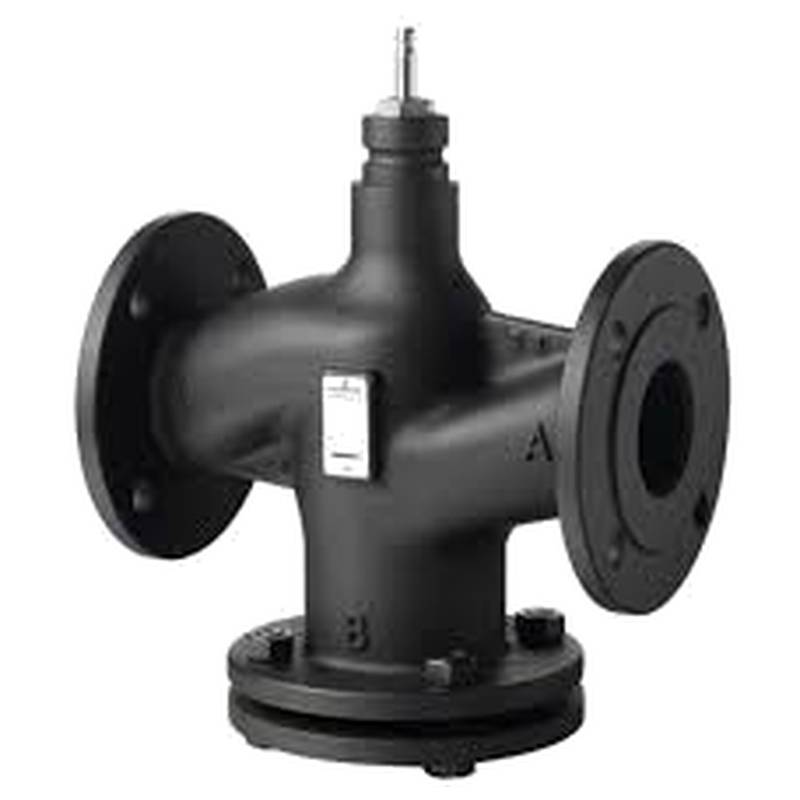
The SIEMENS VVF53.25-6.3 Two-Way Globe Valve DN25, kvs 6.3, stands as a robust and precise solution for demanding fluid control applications in industrial settings. This valve excels in providing accurate flow regulation and reliable shut-off, characterized by its durable construction and advanced Siemens engineering. With a nominal diameter (DN) of 25 and a flow coefficient (kvs) of 6.3, it is engineered for optimal performance in heating, ventilation, and air conditioning (HVAC) systems, as well as various process control loops where precise temperature and flow management are paramount. Its key advantages include exceptional sealing capabilities, a wide operating temperature range, and seamless integration into automated control systems, making the SIEMENS VVF53.25-6.3 a preferred choice for engineers seeking efficiency and long-term operational integrity.
Product Specifications
| Parameter | Specification |
| :-------------------- | :----------------------------------------------- |
| Product Type | Two-Way Globe Valve |
| Manufacturer | SIEMENS |
| Model Number | VVF53.25-6.3 |
| Nominal Diameter (DN) | 25 mm |
| Flow Coefficient (kvs)| 6.3 m³/h |
| Connection Type | Flanged (typically, depending on specific variant) |
| Actuator Interface | Designed for compatible Siemens actuators |
| Body Material | Cast iron (typically, subject to specific variant) |
| Seat Material | EPDM (typically, subject to specific variant) |
| Max Differential Pressure | Consult datasheet for specific variant |
| Max Operating Temperature | Consult datasheet for specific variant |
| Max Operating Pressure | Consult datasheet for specific variant |
Core Features & Market Positioning
The SIEMENS VVF53.25-6.3 differentiates itself through its direct-mount capability with a range of Siemens actuators, simplifying installation and reducing potential points of failure. This integration ensures responsive and precise control, a critical factor in maintaining stable system parameters. The valve's robust construction, often featuring cast iron bodies and durable internal components, positions it as a reliable workhorse capable of withstanding the rigors of industrial environments. Its specific kvs value of 6.3 is carefully chosen to offer a balanced flow rate suitable for a wide array of HVAC and process applications, avoiding oversizing or undersizing that can lead to inefficiency or imprecise control. Siemens' reputation for quality and innovation further solidifies the VVF53.25-6.3's market standing as a high-performance, dependable valve solution.
Key Application Scenarios
This SIEMENS VVF53.25-6.3 globe valve is ideally suited for regulating the flow of water in closed-loop heating and cooling systems within commercial buildings, industrial facilities, and district heating networks. Its precision control makes it invaluable for maintaining stable supply and return temperatures in air handling units (AHUs) and fan coil units, ensuring optimal thermal comfort and energy efficiency. Furthermore, the VVF53.25-6.3 finds application in process industries for controlling media flow in various manufacturing stages, such as in food and beverage production, chemical processing, and pharmaceutical manufacturing, where accurate temperature and flow regulation are critical for product quality and process repeatability. Its robust design also lends itself to applications requiring reliable shut-off capabilities.
Practical System Integration Guidance
Integrating the SIEMENS VVF53.25-6.3 typically involves direct mounting onto a compatible Siemens actuator, such as those from the MP series or similar, using the standardized interface provided. Ensure the valve and actuator are correctly aligned and secured to prevent stress on the mounting mechanism. For electrical connections, refer to the specific actuator's wiring diagram, which will detail power supply, control signal inputs (e.g., 0-10 VDC, 4-20 mA), and feedback signals. Proper grounding is essential for safe and reliable operation. Commissioning involves verifying actuator stroke, direction of operation, and ensuring the control signal correctly modulates the valve. Always confirm compatibility between the valve's pressure and temperature ratings and the system's operating conditions.
Operation and Risk Mitigation
Operating the SIEMENS VVF53.25-6.3 requires adherence to specified system parameters, particularly maximum differential pressure, temperature, and fluid compatibility, to prevent premature wear or failure. Regular visual inspection for leaks or signs of corrosion is recommended. In systems where freezing is a risk, ensure proper insulation or draining procedures are in place. While specific fault codes are typically associated with the control actuator rather than the valve itself, common issues might include actuator failure to move, erratic valve positioning, or leaks. Troubleshooting usually involves checking the actuator's power supply, control signal, and mechanical linkage. Always disconnect power before performing any maintenance or inspection.
Scalability & Long-Term Value
The SIEMENS VVF53.25-6.3 offers excellent long-term value through its compatibility with Siemens' broader building automation and industrial control platforms. Its integration into digital systems, often facilitated by smart actuators, allows for advanced diagnostics, remote monitoring, and data logging, contributing to predictive maintenance strategies and overall operational efficiency. This supports scalability by enabling seamless expansion of control networks and integration with IIoT solutions. The robust construction ensures a long service life, minimizing the need for frequent replacements and reducing total cost of ownership. Compatibility with established Siemens actuator families ensures future upgrade paths are readily available.
Frequently Asked Questions
What is the primary function of the SIEMENS VVF53.25-6.3 valve?
The SIEMENS VVF53.25-6.3 serves as a two-way globe control valve, precisely regulating fluid flow in HVAC and industrial process systems. It is engineered for accurate modulation of water or other compatible media.
This valve is designed to provide reliable shut-off capabilities, ensuring system integrity when closed. Its core purpose is to maintain desired flow rates and temperatures within a system.
Its primary function is to balance flow and temperature in heating and cooling loops, air handling units, and process control applications. It achieves this through precise positioning by a connected actuator.
What are the typical applications for a SIEMENS VVF53.25-6.3 DN25 valve?
This valve is commonly used in commercial building HVAC systems for controlling water flow to heating and cooling coils in AHUs and fan coil units. It is also found in district heating and cooling networks.
In industrial settings, the VVF53.25-6.3 is applied in process control loops for applications requiring precise media flow regulation. This includes industries like food and beverage, pharmaceutical, and chemical manufacturing.
Its DN25 size and kvs 6.3 rating make it suitable for a broad spectrum of applications where controlled fluid dynamics are essential for operational efficiency and product quality.
How is the SIEMENS VVF53.25-6.3 valve controlled?
The SIEMENS VVF53.25-6.3 is designed to be operated by compatible Siemens electronic actuators. These actuators translate control signals into precise valve stem movements.
Control signals, typically analog (e.g., 0-10 VDC or 4-20 mA), are fed to the actuator, which then modulates the valve opening to achieve the desired flow rate.
The actuator communicates with a Building Management System (BMS) or a Programmable Logic Controller (PLC) to receive these control signals based on system demand.
What is the significance of the kvs 6.3 rating for this valve?
The kvs value of 6.3 m³/h indicates the volume of water in cubic meters per hour that will flow through the valve at a pressure drop of 1 bar. This is a key parameter for system design and flow calculation.
A kvs of 6.3 is a specific flow coefficient chosen to optimize performance for a particular range of flow rates and pressure drops in HVAC and process applications.
This rating helps engineers accurately size the valve within a system, ensuring efficient energy use and precise control without causing excessive pressure loss or turbulence.
What materials is the SIEMENS VVF53.25-6.3 valve typically constructed from?
The valve body is typically manufactured from robust cast iron, providing durability for industrial environments. This material offers good resistance to corrosion and mechanical stress.
Internal components, such as the seat and stem, are made from materials selected for their compatibility with the intended media and operating conditions. EPDM is a common seat material.
Specific material compositions may vary slightly depending on the exact variant of the VVF53.25-6.3. Always refer to the product datasheet for precise material specifications.
What are the typical connection types for this SIEMENS globe valve?
The SIEMENS VVF53.25-6.3 is commonly available with flanged connections, offering a secure and reliable method for integrating into piping systems. Flanges allow for easy disassembly for maintenance.
Other connection types might be available depending on the specific product variant or regional availability. However, flanged connections are standard for this DN25 size in industrial applications.
When installing, ensure the correct flange standards and gasket materials are used to guarantee a leak-free seal and maintain system integrity.
What kind of maintenance is recommended for the VVF53.25-6.3?
Routine visual inspections for any external signs of leakage or physical damage are recommended. Ensure the actuator linkage is moving freely without obstruction.
Periodic functional checks to verify correct operation and response to control signals are advised. This helps to identify potential issues early before they impact system performance.
While the valve itself is generally low-maintenance, ensure that connected actuators and associated control systems are maintained according to their respective guidelines.
What are the maximum operating limits for the SIEMENS VVF53.25-6.3?
The maximum operating pressure, temperature, and differential pressure are critical parameters that depend on the specific variant of the VVF53.25-6.3 valve. These limits must be strictly adhered to.
Exceeding these specified limits can lead to valve damage, reduced performance, and potential system failures. Always consult the official product datasheet for the exact specifications.
These limits are determined by the materials used in the valve's construction and its design, ensuring safe and reliable operation within defined operational envelopes.
Can the SIEMENS VVF53.25-6.3 valve be used with steam?
The standard SIEMENS VVF53.25-6.3, typically designed for water-based HVAC systems, is generally not suitable for direct steam service. Steam applications often require specialized high-temperature and high-pressure globe valves.
Using this valve with steam could lead to premature failure of seals, body material degradation, and unsafe operating conditions due to steam's unique properties.
For steam control, it is essential to select valves specifically engineered for steam applications, which will have different material specifications and design considerations.
How does the VVF53.25-6.3 integrate with Siemens building automation systems?
The VVF53.25-6.3 integrates via its compatible Siemens actuator, which connects to the building automation system's controllers. This allows for centralized control and monitoring.
The actuator receives commands from the BMS and translates them into precise valve positioning. It can also provide feedback on the valve's position and operational status back to the BMS.
This integration facilitates features like energy management, setpoint adjustments, scheduling, and alarm handling, all managed through the unified Siemens automation platform.