











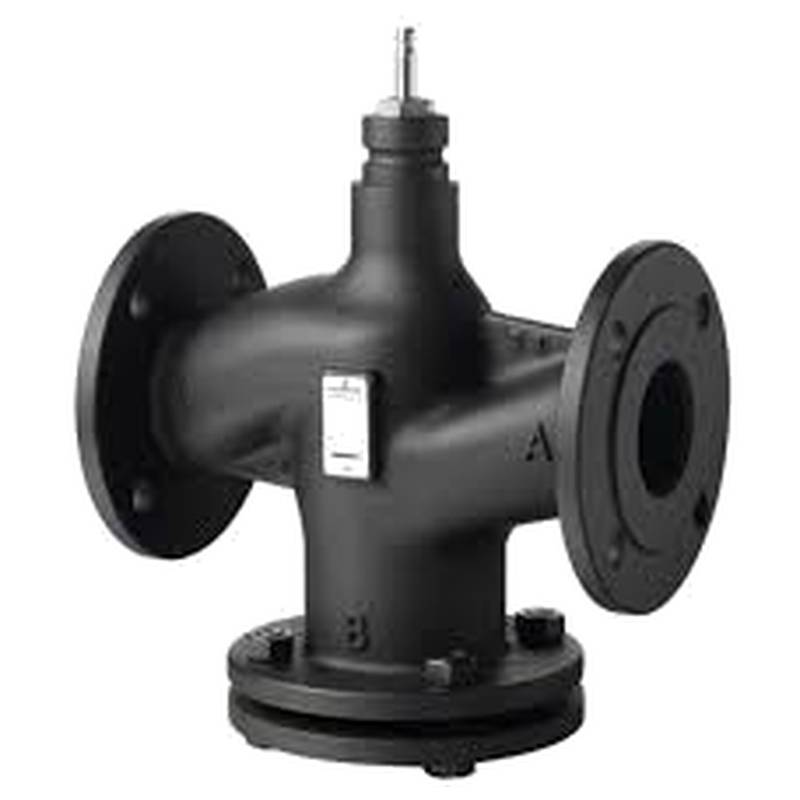
SIEMENS VVF53.40-16 Two-Way Globe Valve DN40 kvs 16


The SIEMENS VVF53.40-16 is a high-performance two-way globe valve designed for precise flow control in demanding industrial applications. Boasting a DN40 nominal size and a KVS rating of 16, this valve excels in applications requiring accurate regulation of water or other neutral fluids. Its robust construction and advanced design ensure reliable operation and longevity, making it a preferred choice for HVAC systems, building automation, and process control where efficiency and dependability are paramount. The VVF53.40-16 offers superior sealing capabilities and a substantial operating temperature range, positioning it as a valuable component for sophisticated fluid management systems.
SIEMENS VVF53.40-16: Product Specifications
| Parameter | Specification |
| :----------------- | :-------------------------------------------- |
| Product Type | Two-Way Globe Valve |
| Manufacturer | SIEMENS |
| Model Number | VVF53.40-16 |
| Nominal Size (DN) | 40 |
| KVS Value | 16 |
| Connection Type | Flanged |
| Body Material | Cast Iron |
| Seat Material | EPDM |
| Working Pressure | PN16 |
| Temperature Range | -10...+120 °C |
| Actuator Mounting | Direct mount with standard connection |
| Actuation | Requires separate actuator (e.g., SKP/SKU) |
| Flow Characteristic| Equal percentage |
| Sealing | Tight shut-off |
Core Features & Market Positioning
The SIEMENS VVF53.40-16 distinguishes itself through its robust cast iron body and EPDM seat material, providing excellent chemical resistance and durability for water-based systems. Its equal percentage flow characteristic ensures precise control across the entire stroke, a critical advantage in applications where fine-tuning is essential. This characteristic means that the change in flow rate is proportional to the change in valve position, allowing for more stable and predictable system performance compared to linear characteristic valves. Positioned as a reliable and accurate flow control solution, the VVF53.40-16 competes effectively in the building automation and industrial process sectors by offering a blend of high performance, durability, and SIEMENS's reputation for quality engineering. The valve's flanged connection further enhances its suitability for high-pressure applications and straightforward installation within existing pipework.
Key Application Scenarios
This two-way globe valve is ideally suited for a multitude of demanding applications. In HVAC systems, it is commonly employed for controlling the flow of heating and cooling water to air handling units, fan coil units, and radiators, ensuring optimal thermal comfort and energy efficiency. Building automation systems frequently integrate the VVF53.40-16 for precise temperature regulation in commercial buildings, educational institutions, and healthcare facilities. Furthermore, its robust design and precise control capabilities make it a suitable choice for various industrial process control loops where accurate fluid management is critical, such as in chemical processing or manufacturing where precise temperature or flow rates are maintained. The DN40 size and KVS 16 rating are particularly well-suited for medium-flow applications requiring a substantial valve authority.
Practical System Integration Guidance
Integrating the SIEMENS VVF53.40-16 into existing systems is facilitated by its standard flanged connection, compatible with PN16 pipework. The valve requires a separate actuator, typically a SIEMENS SKP or SKU series electric actuator, which mounts directly to the valve body. Wiring of the actuator will depend on the specific model chosen and the control system; generally, this involves connecting power, control signals (e.g., 0-10V or 4-20mA), and feedback signals if applicable. Commissioning involves ensuring the actuator is correctly oriented and coupled to the valve stem, followed by calibration of the control signal to achieve the desired stroke at specific setpoints. For optimal performance, ensure the fluid is free of significant particulate matter to prevent seat wear.
Operation and Risk Mitigation
Operating the SIEMENS VVF53.40-16 requires a compatible actuator that provides precise positioning. Risks associated with operation primarily stem from incorrect actuator selection, improper installation, or controlling fluids outside the specified temperature or pressure limits. To mitigate risks, always verify that the selected actuator's torque and stroke capabilities match the valve's requirements and the system's operating conditions. Ensure the valve is installed in the correct flow direction, as indicated by the arrow on the body, and that connections are properly sealed to prevent leaks. Regular inspection for external damage or signs of wear, particularly on the valve seat and stem, is advisable. While this valve is designed for tight shut-off, it's crucial to understand its limitations and implement secondary safety measures if absolute zero leakage is critical.
Scalability & Long-Term Value
The SIEMENS VVF53.40-16 offers excellent long-term value through its durable construction and compatibility with SIEMENS's broader portfolio of automation and control components. Its integration into modern IIoT platforms is facilitated when paired with intelligent actuators that provide data feedback on position, status, and diagnostics. This allows for remote monitoring, predictive maintenance, and optimization of fluid control processes, contributing to the digitalization of industrial operations. While the valve itself is a mechanical component, its ability to interface with advanced control systems ensures it remains a relevant part of scalable and future-proof building and industrial automation architectures. The availability of spare parts and SIEMENS's global support network further enhances its long-term investment value.
Frequently Asked Questions
What is the maximum operating pressure for the SIEMENS VVF53.40-16?
The SIEMENS VVF53.40-16 is rated for a maximum working pressure of PN16. This designation indicates it is designed to withstand pressures up to 16 bar (approximately 232 psi) at or below its specified operating temperature range. Adhering to this pressure limit is crucial for safe and reliable operation and to prevent potential component failure.
This pressure rating makes it suitable for many standard industrial and commercial fluid systems. Exceeding this pressure can lead to leaks or catastrophic failure, so system design must account for this crucial parameter.
What type of fluid can be controlled with the VVF53.40-16?
The SIEMENS VVF53.40-16 is designed for controlling water or other neutral fluids. Its EPDM seat material provides good resistance to a wide range of water chemistries commonly found in HVAC systems. It is not intended for use with aggressive chemicals, high-viscosity fluids, or abrasive media.
Careful consideration of the fluid's properties is essential before installation. Using incompatible fluids can damage the valve's internal components, particularly the seat and stem packing, leading to performance degradation and leaks.
How is the SIEMENS VVF53.40-16 actuated?
The SIEMENS VVF53.40-16 is a valve body that requires a separate actuator for operation. SIEMENS typically recommends their SKP or SKU series electric actuators, which are designed for direct mounting onto the valve. The actuator translates electrical control signals into the mechanical motion required to open or close the valve.
The selection of the actuator depends on factors such as the required torque, stroke speed, control signal type (e.g., 0-10V, 4-20mA), and environmental conditions. Proper actuator-to-valve mounting ensures accurate positioning and reliable flow control.
What is the KVS value of the VVF53.40-16, and why is it important?
The KVS value of the SIEMENS VVF53.40-16 is 16. This value represents the flow rate in cubic meters per hour (m³/h) of water at a temperature of 20°C that will pass through the valve when there is a pressure drop of 1 bar across it, with the valve fully open. It is a critical parameter for sizing the valve correctly within a system.
A higher KVS value indicates a greater flow capacity for a given pressure drop. Engineers use the KVS value, along with the system's required flow rate and available pressure drop, to select the appropriate valve size and ensure efficient and accurate flow control without excessive energy loss.
What are the advantages of the equal percentage flow characteristic?
The SIEMENS VVF53.40-16 features an equal percentage flow characteristic. This means that for equal increments of valve stem travel, the rate of flow change is proportionally the same, regardless of the valve opening. This characteristic provides better control at low flow rates and maintains a stable control loop over a wider range of operation.
Compared to linear characteristics, equal percentage offers superior modulation and stability, especially in systems with varying pressure conditions. It ensures that the valve can effectively manage flow precisely, preventing hunting or oscillations in the control system, and leading to more consistent process outcomes.
What is the temperature range for this valve?
The SIEMENS VVF53.40-16 operates effectively within a temperature range of -10°C to +120°C. This broad range accommodates both heating and cooling applications common in HVAC and some industrial processes. Maintaining operation within these limits is crucial for the longevity and performance of the valve's internal components, particularly the EPDM seat.
Operating outside this specified range can compromise the integrity of the valve seals and materials. For instance, extreme cold could lead to embrittlement, while temperatures exceeding the maximum might degrade the EPDM material, causing leaks or reduced control accuracy.
Can the VVF53.40-16 be used in steam applications?
No, the SIEMENS VVF53.40-16 is not designed for steam applications. Its EPDM seat material and overall construction are optimized for liquid service, specifically water or neutral fluids, within the specified temperature and pressure limits. Steam applications typically require specialized valves with materials that can withstand higher temperatures and pressures, as well as different sealing mechanisms.
Using this valve with steam would likely lead to rapid degradation of the EPDM seal, resulting in leakage and potential safety hazards. SIEMENS offers specific valve series designed for steam service that should be consulted for such requirements.
What type of connection does the VVF53.40-16 have?
The SIEMENS VVF53.40-16 features a flanged connection. This type of connection involves bolting the valve to mating flanges on the pipework, creating a robust and leak-resistant seal. The specific flange standard is typically PN16, which is common in European industrial and building services applications.
Flanged connections are preferred for larger pipe sizes and higher pressure applications, offering a secure and easily maintainable joint. They are essential for ensuring the integrity of the piping system and preventing fugitive emissions or fluid loss.
What does DN40 signify for this valve?
DN40 refers to the nominal diameter of the valve, which is 40 millimeters. This is a standard metric size designation used in piping and valve industries. It indicates the approximate internal diameter of the valve's body and its compatibility with pipes and fittings of the same nominal size.
The DN size is critical for ensuring proper flow capacity and mechanical fit within the system. A DN40 valve is suitable for medium-flow applications, balancing throughput with the need for precise control.
How does the equal percentage flow characteristic differ from a linear characteristic?
A linear flow characteristic valve provides a flow rate that is directly proportional to the valve stem travel. If you move the stem 10% of its stroke, the flow changes by 10% of its maximum. In contrast, an equal percentage valve provides a flow change that is proportional to the current flow rate.
This means that for every equal increment of stem movement, the flow rate increases by a constant percentage of the current flow rate. This results in a much more sensitive control at low openings and a flatter response curve, making it ideal for applications where precise flow modulation is needed across a wide range of demands.