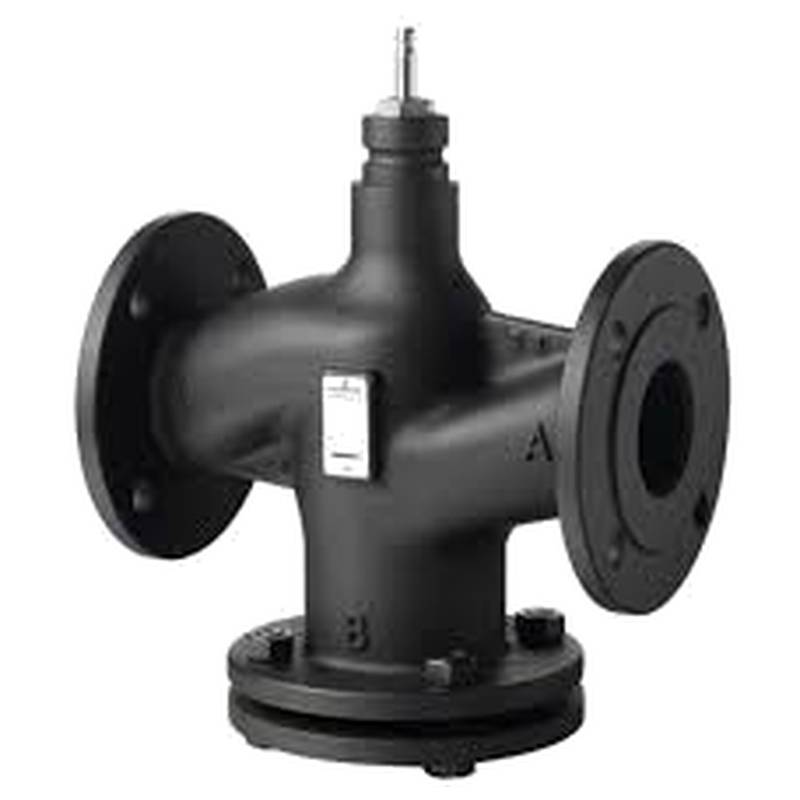
SIEMENS VVF53.80-100K Two-Way Flanged Valve DN80 kvs 100K


The Siemens VVF53.80-100K is a robust, two-way flanged valve designed for precise control in demanding HVAC and industrial applications. This DN80 valve boasts a KVS of 100, ensuring significant flow capacity, and features pressure compensation for stable performance under varying differential pressures. Its cast iron body construction with stainless steel trim offers durability and resistance to a wide range of media, including water, brine, and even steam, across a temperature range of -20 to 220°C. Operating at a nominal pressure of PN25, the VVF53.80-100K is a reliable choice for boilers, district heating systems, refrigeration plants, and air handling units, functioning effectively as both a control and shutoff valve.
Product Specifications
| Specification | Value |
| :------------------------ | :--------------------------------------------------------------------------- |
| Product Name | SIEMENS VVF53.80-100K Two-Way Flanged Valve |
| Valve Type | Two-way, Seat Valve |
| Nominal Diameter (DN) | 80 mm |
| Flow Coefficient (KVS) | 100 m³/h |
| Nominal Pressure (PN) | PN 25 |
| Connection Type | Flanged (to ISO 7005) |
| Body Material | Cast iron EN-GJL-250 |
| Trim Material | Stainless steel |
| Operating Temperature | -20 °C to 220 °C |
| Pressure Compensation | Yes |
| Applications | Water, chilled water, low/high temperature water, brine, heat transfer oils, saturated/superheated steam |
| Rangeability | >100 |
| Leakage Rate | 0...0.01 % of KVS value |
| Stroke | 40 mm (for DN65 and above) |
Core Features & Market Positioning
The Siemens VVF53.80-100K stands out in the market due to its pressure-compensated design, which is crucial for maintaining precise flow control even when system pressures fluctuate significantly. This feature directly translates to enhanced system efficiency and reduced wear on components. Its robust construction, rated for PN25 and capable of handling temperatures up to 220°C, positions it as a reliable component in high-demand industrial and HVAC systems. The valve's compatibility with a broad spectrum of fluids, including steam, further broadens its applicability and differentiates it from standard water-only valves. Siemens' reputation for quality and engineering excellence underpins its market position as a dependable solution for critical fluid control applications.
Key Application Scenarios
This DN80 flanged valve is ideally suited for a range of demanding applications. In building services, it excels in controlling flow within district heating and cooling networks, ensuring optimal temperatures and energy efficiency. Its robust design makes it a suitable choice for HVAC systems in large commercial buildings, industrial plants, and data centers, managing chilled water and hot water circuits effectively. Furthermore, its capability to handle heat transfer oils and saturated or superheated steam opens up applications in industrial process control where precise temperature management is paramount. The VVF53.80-100K is also deployed in boiler plants and refrigeration facilities, acting as a critical control or shutoff element within these essential systems.
Practical System Integration Guidance
Integrating the Siemens VVF53.80-100K into existing systems is streamlined by its standard flanged connections compliant with ISO 7005. For optimal performance, it is essential to ensure that the valve is installed in the correct flow direction, typically indicated by an arrow on the valve body, and that the mating flange surfaces are clean and free from contaminants. While specific actuator compatibility and wiring details depend on the chosen actuator, Siemens typically offers a range of actuators designed to work seamlessly with the VVF53 series. It's crucial to consult the actuator's documentation for precise wiring and commissioning instructions, ensuring correct signal inputs (e.g., 0-10V, 4-20mA) and power supply are provided. When operating with media below -5°C, a stem heating element may be required, and the stem sealing gland might need replacement to ensure integrity.
Operation and Risk Mitigation
Proper operation of the Siemens VVF53.80-100K is key to ensuring system reliability and longevity. The valve is designed to operate within its specified pressure and temperature limits (PN25 and -20 to 220°C) to prevent failure. Regular visual inspections for leaks or physical damage are recommended. In systems with aggressive media or extreme temperatures, adhering to material compatibility guidelines is essential. Troubleshooting typically involves diagnosing actuator response and ensuring correct signal inputs. While specific fault codes are actuator-dependent, common issues might relate to actuator failure to move, incorrect positioning, or loss of control signal. For maintenance, ensuring the system is de-pressurized and drained before any intervention is a critical safety precaution.
Scalability & Long-Term Value
The Siemens VVF53.80-100K offers significant long-term value through its robust design and compatibility with advanced control systems. Its high KVS value and precise flow control capabilities contribute to energy efficiency, reducing operational costs over the valve's lifespan. While the valve itself is a discrete component, its integration into larger Building Management Systems (BMS) or Industrial Internet of Things (IIoT) platforms allows for enhanced monitoring, predictive maintenance, and system optimization. Siemens' commitment to product development suggests that this valve series is likely to remain supported and compatible with future control technologies, ensuring a degree of future-proofing for installations.
FAQs
What is the primary function of the Siemens VVF53.80-100K valve?
The Siemens VVF53.80-100K is primarily a two-way control valve. Its main function is to regulate the flow of various fluids in HVAC and industrial systems. It can also serve as a shutoff valve when needed.
This valve precisely manages fluid volume based on control signals. It is integral to maintaining desired temperatures and system parameters in complex hydronic systems. Its design ensures accurate flow delivery under varying pressure conditions.
Its applications span from controlling water flow in heating and cooling circuits to managing steam in industrial processes. This versatility makes it a critical component in numerous building and plant operations.
What are the key technical specifications of the VVF53.80-100K?
This Siemens valve features a DN80 nominal diameter, providing substantial flow capacity with a KVS of 100 m³/h. It operates at a nominal pressure of PN25, making it suitable for robust industrial applications.
The valve body is constructed from cast iron (EN-GJL-250), and it is designed for flanged connections conforming to ISO 7005 standards. Its operating temperature range is broad, from -20°C to 220°C.
A significant feature is its pressure compensation capability, allowing for stable control even with high differential pressures. It handles fluids such as water, brine, heat transfer oils, and steam.
What types of fluids can the Siemens VVF53.80-100K valve handle?
The VVF53.80-100K is versatile and designed to handle a wide array of fluids. This includes various types of water, such as chilled water, and low to high-temperature water circuits.
It is also suitable for brine solutions and heat transfer oils, common in industrial cooling and heating applications. Furthermore, the valve can manage both saturated and superheated steam.
This broad compatibility ensures its reliable performance across diverse industrial processes and HVAC applications. However, specific considerations apply for operation below -5°C.
What is the significance of the KVS value of 100 for this valve?
The KVS value of 100 m³/h indicates the volume of water in cubic meters that will flow through the valve per hour with a pressure drop of 1 bar (100 kPa). This high KVS value signifies a large flow capacity.
A higher KVS value means the valve can pass a greater volume of fluid for a given pressure drop. This is essential for applications requiring significant flow rates, such as in large HVAC systems or industrial processes.
The KVS value is a critical parameter for sizing control valves. A KVS of 100 ensures that the Siemens VVF53.80-100K can meet the demands of high-flow applications where precise modulation is still required.
What does "pressure compensated" mean for this valve?
A pressure-compensated valve means it is designed to maintain a consistent flow rate regardless of fluctuations in system pressure. This is achieved through internal mechanisms within the valve.
This feature is crucial for applications requiring precise flow control. It ensures that the valve's response to control signals is linear and predictable, even when the differential pressure across the valve changes.
The pressure compensation in the VVF53.80-100K enhances system stability, improves temperature control accuracy, and can reduce wear on downstream components by preventing excessive flow surges.
What are the typical applications for the Siemens VVF53.80-100K?
This valve is commonly used in industrial settings and complex HVAC systems. Its robust design and high flow capacity make it ideal for district heating plants and refrigeration facilities.
It plays a vital role in air handling units (AHUs) and heating groups, controlling water flow for temperature regulation. Its ability to handle steam also allows for use in steam distribution systems.
The VVF53.80-100K is a control or shutoff valve in boiler plants, cooling towers, and various industrial process loops. Its versatility supports both open and closed hydraulic circuits.
What is the material of the valve body and trim?
The valve body of the Siemens VVF53.80-100K is constructed from cast iron, specifically EN-GJL-250. This material provides good strength and durability for industrial applications.
The internal components, or trim, are made from stainless steel. This choice of material offers excellent resistance to corrosion and wear, ensuring longevity in contact with various fluids.
The combination of cast iron for the body and stainless steel for the trim provides a robust and reliable solution for demanding fluid control applications.
Can this valve be used for steam applications?
Yes, the Siemens VVF53.80-100K is suitable for steam applications. It can handle both saturated and superheated steam, as indicated in its product specifications.
This capability extends its use beyond typical water-based HVAC systems into industrial processes that utilize steam for heating or power. The valve's operating temperature range up to 220°C is conducive to steam service.
When used with steam, it's important to ensure all system parameters, including pressure and temperature, remain within the valve's operational limits for safe and efficient performance.
What are the connection type and pressure rating of this valve?
The Siemens VVF53.80-100K features flanged connections, designed to meet the ISO 7005 standard. This provides a secure and reliable mechanical seal in piping systems.
The nominal pressure rating for this valve is PN25. This signifies that the valve is designed to withstand pressures up to 25 bar (approximately 2500 kPa) at its rated temperature.
The flanged design ensures easy installation and maintenance by allowing the valve to be bolted directly into the pipeline, facilitating a secure system connection.
What is the operating temperature range for the VVF53.80-100K?
The valve is engineered to operate effectively across a wide temperature spectrum. Its operational range for media temperature is from -20°C to 220°C.
This broad temperature capability makes it suitable for applications involving both cryogenic fluids (down to -20°C) and high-temperature services, such as steam or hot water circuits.
It is important to note that for temperatures below -5°C, specific considerations for stem sealing glands and potential stem heating elements may apply.