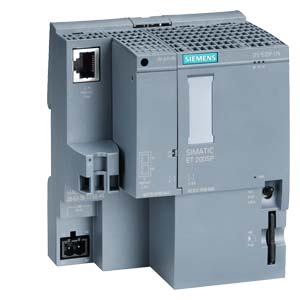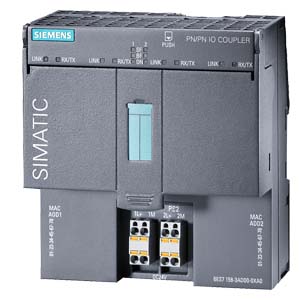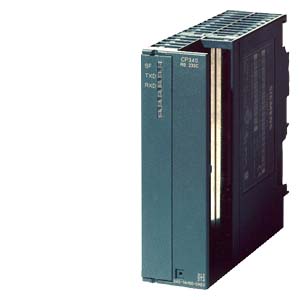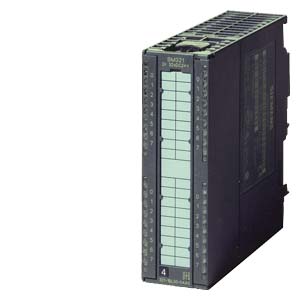












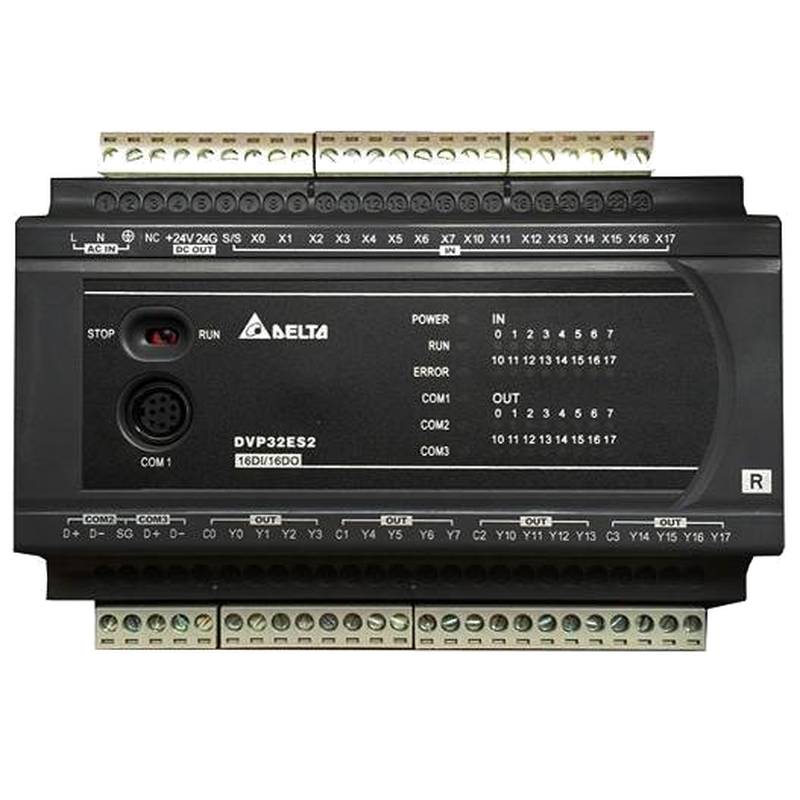
Delta DVP80ES200R PLC de projet d'automatisation de sortie de relais à grande échelle 80 points


Le Delta DVP80ES200R est un automate à sortie relais robuste et à grande échelle conçu pour les projets d'automatisation industrielle exigeants. Cette centrale offre une densité d'E/S importante, des performances fiables et des capacités d'extension flexibles, ce qui en fait un choix idéal pour le contrôle de machines complexes et l'automatisation des processus. Ses nombreux points de sortie relais permettent un contrôle direct sur une large gamme d'équipements industriels, simplifiant le câblage et réduisant le besoin de relais externes dans de nombreuses applications. Les principaux avantages incluent sa vitesse de traitement élevée, sa mémoire étendue pour une logique complexe et sa large compatibilité avec divers protocoles de communication, garantissant une intégration transparente dans divers environnements industriels. La série DVP-ES2, à laquelle appartient ce modèle, est reconnue pour sa rentabilité et son fonctionnement fiable dans des conditions difficiles.
Spécifications du produit
| Fonctionnalité | Spécification |
| :--------------------- | :------------------------------------------------ |
| Modèle | DVP80ES200R |
| Points d'entrée | 48 |
| Points de sortie | 32 sorties relais |
| Alimentation | 100-240VAC |
| Max. Étapes du programme | 16 000 pas |
| Ports de communication | RS-232, RS-485 |
| Comptages à grande vitesse | 4 canaux 200 kHz (ou 4 canaux 100 kHz + 2 canaux 10 kHz) |
| Sortie d'impulsion | 2 canaux 100 kHz (ou 2 canaux 10 kHz) |
| Dimensions (L x H x P) | 230 x 90 x 75 mm |
| Montage | Rail DIN |
Caractéristiques principales et positionnement sur le marché
The Delta DVP80ES200R distinguishes itself in the industrial automation market through its high density of relay outputs, a critical factor for controlling numerous actuators, contactors, and indicators in large-scale machinery. This eliminates the need for extensive external relay panels, saving cabinet space, wiring time, and reducing potential points of failure. Its robust processing capabilities, supported by 16K program steps, allow for sophisticated logic and complex sequence control, positioning it as a superior choice over smaller PLCs for demanding applications. The inclusion of built-in RS-232 and RS-485 ports facilitates straightforward integration with SCADA systems, HMIs, and other intelligent devices, enhancing its value proposition in modern industrial networks. Delta's reputation for producing reliable and cost-effective automation solutions further solidifies the DVP80ES200R's competitive edge.
Scénarios d'application clés
This versatile PLC is ideally suited for a wide array of industrial automation tasks. Its 80-point configuration and substantial relay output capacity make it an excellent fit for controlling complex conveyor systems in manufacturing and logistics, managing large HVAC systems in building automation, and orchestrating multi-zone process control in chemical plants or food processing facilities. Packaging machinery, printing presses, and textile manufacturing equipment often benefit from the DVP80ES200R's ability to handle numerous discrete outputs and inputs for precise operational sequencing. Furthermore, it serves as a capable controller for large injection molding machines and plastic processing equipment, where the reliable switching of high-current loads via its relay outputs is paramount.
Guide pratique d’intégration du système
Integrating the Delta DVP80ES200R into an industrial system begins with careful consideration of its power requirements; the 100-240VAC input ensures flexibility in global installations. Wiring of the 48 digital inputs and 32 relay outputs requires adherence to electrical safety standards, with clear labeling for each point to prevent errors. For digital inputs, a common configuration involves connecting sensors such as proximity switches, limit switches, and push buttons, ensuring appropriate voltage levels (e.g., 24VDC) are supplied and common grounds are established. The relay outputs are rated for specific AC/DC voltage and current, and it's crucial to ensure these ratings are not exceeded by the connected loads, typically contactors for motors or solenoid valves. Program development is typically done using Delta's ISPSoft software, which supports ladder logic, function block, and structured text programming. Establishing communication via RS-232 or RS-485 requires selecting the correct protocol (e.g., Modbus RTU) and configuring the communication parameters (baud rate, parity, stop bits) in both the PLC and the connected master device.
Opération et atténuation des risques
Operating the Delta DVP80ES200R involves ensuring it is installed in an environment that meets its operational temperature and humidity specifications to prevent premature failure. Proper grounding of the PLC chassis and all connected equipment is essential to mitigate electrical noise and protect against transient voltage surges, which are common in industrial settings. During maintenance or programming, always follow lockout/tagout procedures before interacting with the physical wiring or components connected to the PLC's outputs to prevent unexpected equipment startup. Common troubleshooting for this PLC often involves checking input status lights to verify sensor readings, monitoring output status lights to confirm the PLC is attempting to energize loads, and reviewing the PLC's internal status registers for error codes via the programming software. Faults related to output overcurrent can often be addressed by verifying the connected load's power consumption against the relay's rating or by adding appropriately sized external overload protection.
Évolutivité et valeur à long terme
The Delta DVP80ES200R offers significant scalability, allowing for expansion of its I/O capabilities through Delta's proprietary communication modules. This means that as an automation project grows or requires additional inputs or outputs, the existing PLC can often be retained by adding specific expansion cards, thereby protecting the initial investment in programming and hardware. Its compatibility with various industrial communication protocols, such as Modbus TCP/IP when using appropriate communication modules, ensures it can be integrated into modern IIoT platforms and Industry 4.0 initiatives. This allows for remote monitoring, data acquisition, and predictive maintenance capabilities, extending the long-term value of the automation system. The DVP-ES2 series is known for its longevity and consistent performance, making it a reliable backbone for systems expected to operate for many years.
Questions fréquemment posées
Quel est le nombre maximum de modules d'extension pouvant être connectés au Delta DVP80ES200R ?
The Delta DVP80ES200R can typically support a certain number of expansion modules, usually specified by Delta's documentation. These modules can expand the PLC's digital and analog input/output capabilities significantly. Adding modules allows users to tailor the PLC's I/O count precisely to project requirements without replacing the base unit.
The specific limit often depends on the type of expansion modules used and the PLC's internal processing capacity. Referencing the official Delta DVP-ES2 series user manual is crucial for exact specifications. This ensures compatibility and avoids overloading the PLC's communication bus.
L’expansion permet des systèmes d’automatisation évolutifs, s’adaptant à de nouvelles machines ou à des changements de processus au fil du temps. Cette approche modulaire offre une voie de mise à niveau rentable par rapport à la migration vers un système PLC entièrement nouveau.
Comment effectuer une réinitialisation d'usine sur l'automate Delta DVP80ES200R ?
A factory reset typically involves a specific procedure outlined in the PLC's manual. It often requires special jumper settings or a sequence of button presses while powering up the unit. Such resets revert all user programs and settings to their default states.
Il est essentiel de sauvegarder le programme existant avant de tenter une réinitialisation d'usine. Cette procédure ne doit être effectuée que si d'autres méthodes de dépannage ont échoué, car elle efface toutes les configurations personnalisées et la logique opérationnelle. L'automate devra être reprogrammé à partir de zéro après une réinitialisation.
Effectuer une réinitialisation d'usine peut résoudre des problèmes logiciels persistants ou des données de programme corrompues qui entravent le fonctionnement normal. Assurez-vous que vous disposez de la version correcte du micrologiciel et du logiciel de programmation, prêts à remettre en service l'automate.
Quels protocoles de communication le Delta DVP80ES200R prend-il en charge dès le départ ?
L'automate Delta DVP80ES200R est équipé de ports de communication RS-232 et RS-485 intégrés. Ces ports prennent principalement en charge les protocoles de communication série. Modbus RTU est un protocole largement utilisé qui peut être implémenté sur ces interfaces série.
Ces ports série standard permettent à l'API de communiquer avec des interfaces homme-machine (IHM), des variateurs de fréquence (VFD) et d'autres appareils industriels. Il permet également la communication avec les systèmes de contrôle de supervision et d'acquisition de données (SCADA) pour la surveillance et le contrôle. La configuration de ces protocoles se fait via le logiciel de programmation.
For more advanced communication, such as Ethernet/IP or Modbus TCP/IP, optional communication modules would be required. These add-on modules significantly enhance the PLC's connectivity options for integration into modern industrial networks.