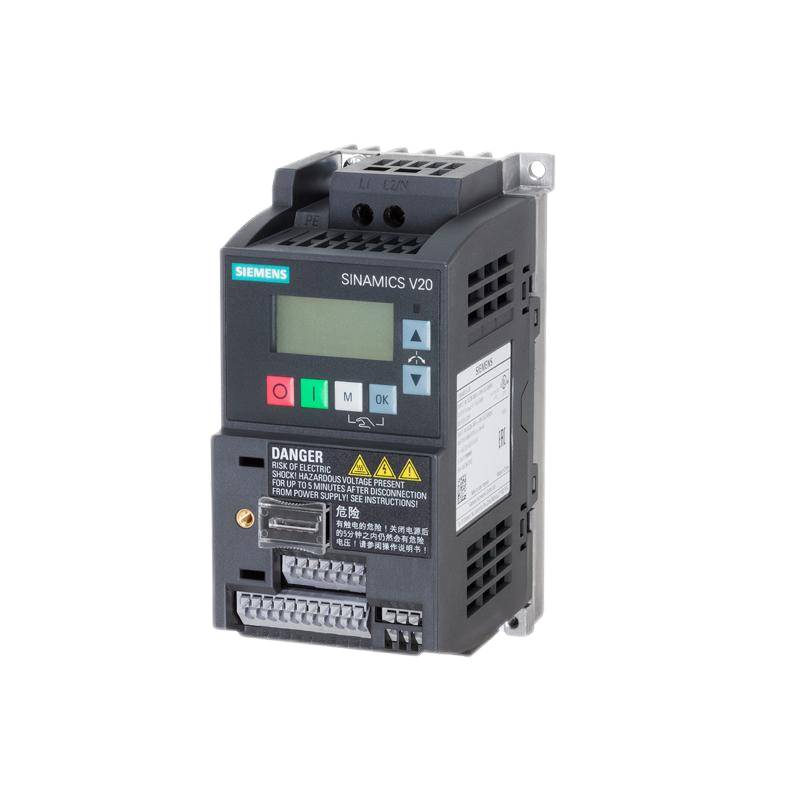












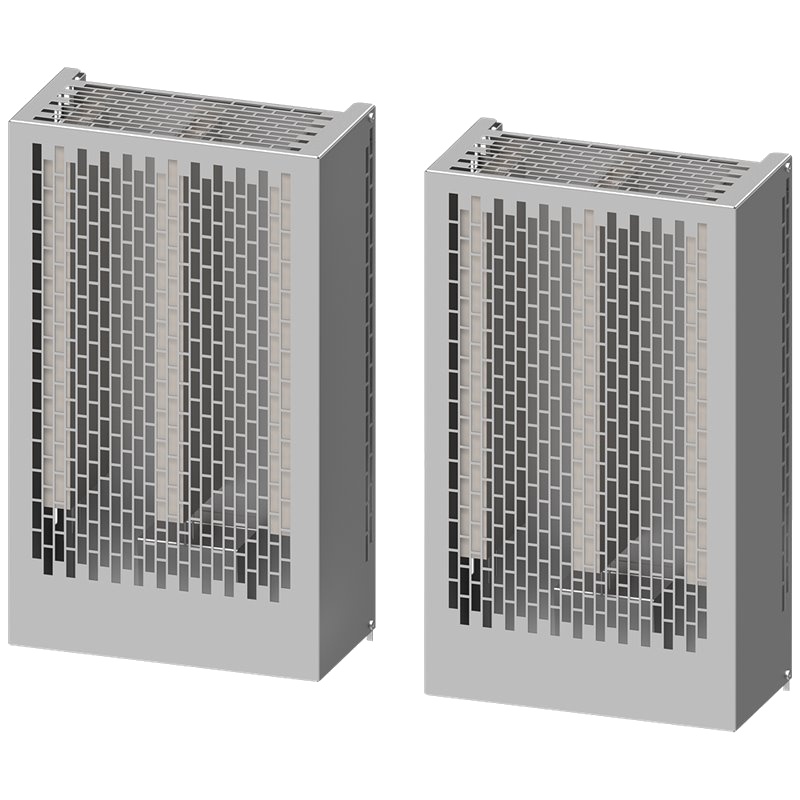
SIEMENS 6SL3201-0BE14-3AA0 SINAMICS Braking Resistor 380V-480V 840 Ohm 110W 2200W for FSA


The SIEMENS 6SL3201-0BE14-3AA0 SINAMICS braking resistor is a critical component designed to dissipate excess energy generated during the deceleration of motor drives. Engineered for robustness and reliability, this unit offers significant advantages in protecting variable frequency drives (VFDs) and improving overall system stability. Key technical parameters include an operating voltage range of 380V-480V, a nominal resistance of 840 Ohms, and a continuous power rating of 110W, with a peak power handling capacity of 2200W, specifically for FSA (Full Scale Acceleration) applications.
Product Specifications
| Parameter | Value |
| :--------------- | :----------- |
| Manufacturer | Siemens |
| Series | SINAMICS |
| Part Number | 6SL3201-0BE14-3AA0 |
| Type | Braking Resistor |
| Voltage Range | 380V-480V |
| Resistance | 840 Ohm |
| Continuous Power | 110W |
| Peak Power | 2200W |
| Application | FSA (Full Scale Acceleration) |
| Protection Class | IP20 |
| Connection Type | Screw Terminal |
| Dimensions (HxWxD) | 180 x 112 x 120 mm |
| Weight | Approx. 3.5 kg |
Core Features & Market Positioning
The SIEMENS 6SL3201-0BE14-3AA0 distinguishes itself through its high peak power capability, essential for applications demanding rapid deceleration. Its robust construction ensures longevity in demanding industrial environments, a hallmark of Siemens' commitment to quality and reliability. Positioned as a premium solution, it integrates seamlessly with Siemens SINAMICS drive systems, offering optimized performance and simplified integration compared to third-party components. This focus on system compatibility and performance under stress makes it a preferred choice for critical applications where drive protection and operational consistency are paramount.
Key Application Scenarios
This braking resistor is ideally suited for applications involving frequent starts, stops, and speed changes, such as those found in material handling systems, cranes, hoists, and conveyor belts. In these scenarios, the resistor effectively dissipates the regenerative energy fed back into the drive during deceleration, preventing overvoltage within the drive's DC bus. This protection is crucial for maintaining the integrity of the VFD and ensuring smooth, controlled motion, thereby minimizing downtime and production interruptions. Its suitability for FSA applications underscores its capability in high-dynamic industrial processes.
Practical System Integration Guidance
Integrating the SIEMENS 6SL3201-0BE14-3AA0 into a SINAMICS drive system is straightforward, typically involving direct connection to the DC bus terminals of the compatible SINAMICS converter. Ensure proper grounding of the resistor and the drive system according to local electrical codes and manufacturer guidelines. For precise integration, consult the specific SINAMICS drive's manual to confirm compatibility and recommended wiring practices. The resistor is designed for panel mounting and requires adequate ventilation to prevent overheating, maintaining its rated performance.
Operation and Risk Mitigation
During operation, the braking resistor becomes active when the SINAMICS drive generates regenerative energy, effectively converting electrical energy into heat. It is crucial to ensure that the resistor's continuous and peak power ratings are not exceeded to prevent thermal damage or premature failure. Proper ventilation is paramount; do not install the resistor in confined spaces without sufficient airflow. Regular inspection for signs of thermal stress or physical damage is recommended. In case of faults, check the drive's diagnostics for overvoltage alarms, which can indicate issues with the braking resistor or its connection.
Scalability & Long-Term Value
The SIEMENS 6SL3201-0BE14-3AA0 is designed for compatibility within the broader Siemens SINAMICS ecosystem, allowing for straightforward integration with various SINAMICS drive families. This inherent compatibility ensures that as automation needs evolve, the braking solution can be scaled or adapted without requiring a complete system overhaul. Its robust design and Siemens' reputation for product longevity contribute to significant long-term value by minimizing maintenance costs and ensuring reliable operation throughout the asset's lifecycle, supporting seamless upgrades and integration with emerging Industrial IoT (IIoT) platforms.
Frequently Asked Questions
1. What is the primary function of the SIEMENS 6SL3201-0BE14-3AA0 braking resistor?
Its main role is to safely dissipate excess energy generated by a motor drive during deceleration. This prevents dangerous overvoltage within the drive's DC bus. It converts regenerative electrical energy into heat.
This energy dissipation is critical for protecting the variable frequency drive (VFD) from damage and ensuring smooth, controlled stopping of the motor. Without it, rapid stops could lead to drive failure.
The resistor is specifically designed for applications with frequent braking, such as cranes or elevators, where managing regenerative energy is a constant requirement for system stability.
2. What are the key technical specifications for the 6SL3201-0BE14-3AA0?
This resistor operates within a voltage range of 380V to 480V and has a nominal resistance of 840 Ohms. It can handle a continuous power load of 110W.
Crucially, it boasts a peak power rating of 2200W, making it suitable for high-demand Full Scale Acceleration (FSA) applications requiring significant energy dissipation.
Other specifications include an IP20 protection class and screw terminal connections, ensuring secure and reliable electrical interfaces for industrial environments.
3. How do I correctly install the SIEMENS 6SL3201-0BE14-3AA0 braking resistor?
Installation typically involves connecting the resistor directly to the DC bus terminals of a compatible SINAMICS converter. Always refer to the specific drive's manual for precise wiring diagrams.
Ensure the resistor is properly grounded according to local electrical standards and manufacturer recommendations for safety and optimal performance. Proper grounding is essential for preventing electrical hazards.
The unit is designed for panel mounting and requires adequate ventilation. Avoid enclosed spaces to prevent overheating and ensure it operates within its designed temperature limits for longevity.
4. What types of industrial applications commonly use this braking resistor?
This resistor is ideal for applications with frequent motor braking and acceleration cycles. Examples include material handling, such as cranes, hoists, and elevators.
It is also widely used in conveyor systems and automated manufacturing lines where precise and rapid speed control, including deceleration, is essential for process efficiency.
Any system employing a variable frequency drive (VFD) that experiences significant regenerative energy feedback during operation can benefit from this protection.
5. Can this braking resistor be used with VFDs from manufacturers other than Siemens?
While primarily designed for seamless integration with Siemens SINAMICS drives, some compatibility with other VFDs may be possible if they support external braking resistors and meet the voltage and resistance requirements.
However, using it with non-Siemens drives may not offer the same level of optimized performance or simplified integration. It's crucial to verify electrical compatibility thoroughly.
For guaranteed performance and to maintain warranty conditions, it is always recommended to use the SIEMENS 6SL3201-0BE14-3AA0 with compatible Siemens SINAMICS drives.
6. What is the significance of the 2200W peak power rating for FSA applications?
The 2200W peak power rating signifies the resistor's ability to handle very high bursts of energy for short durations. This is critical for Full Scale Acceleration (FSA) applications.
FSA scenarios involve rapid motor acceleration and deceleration, generating substantial regenerative energy. The high peak rating ensures the resistor can safely absorb these transient energy spikes without damage.
This capability directly contributes to the drive's ability to perform dynamic maneuvers reliably and safely, preventing overvoltage even under the most demanding operational conditions.
7. What are the potential risks if the braking resistor is not properly implemented or maintained?
Improper installation or exceeding the resistor's power ratings can lead to overheating, potentially causing damage to the resistor itself or nearby components. This can also be a fire hazard.
Overvoltage within the drive's DC bus is a significant risk. If the resistor cannot dissipate energy effectively, the VFD may shut down with an overvoltage fault, leading to unexpected system stops and production losses.
Failure to manage regenerative energy can also result in premature wear and tear on the drive components, reducing their lifespan and increasing long-term maintenance costs for the automation system.
8. How does this resistor contribute to system stability and drive protection?
It actively manages the energy flow within the drive system by providing a path for excess energy during deceleration. This prevents overvoltage conditions that could damage the drive's internal components.
By maintaining the DC bus voltage within safe operating limits, the resistor ensures the VFD can function reliably, even under heavy braking loads, leading to more stable and predictable motor control.
This protection is crucial for extending the operational life of the variable frequency drive and minimizing costly unplanned downtime, thereby enhancing the overall reliability of the automated process.
9. What is the typical lifespan and maintenance schedule for this SIEMENS braking resistor?
With proper installation, operation within specified limits, and adequate ventilation, these resistors are designed for a long operational lifespan. Siemens components are known for their durability in industrial settings.
Routine maintenance typically involves visual inspections for signs of thermal stress, physical damage, or loose connections. There are generally no active components requiring regular servicing on the resistor itself.
The lifespan is significantly influenced by the frequency and intensity of braking cycles, as well as environmental conditions. Proactive monitoring of drive faults can also indicate potential issues with the resistor.
10. Does the SIEMENS 6SL3201-0BE14-3AA0 integrate with Industrial IoT (IIoT) solutions?
While the braking resistor itself is a passive component, its integration within a SINAMICS drive system allows it to benefit from the IIoT capabilities of the drive. The drive can monitor its operational status and parameters.
Data regarding drive performance, including braking events and potential faults related to energy management, can be collected and transmitted by the SINAMICS drive. This enables predictive maintenance and process optimization.
Therefore, indirectly, through the intelligent SINAMICS drive platform, the braking resistor contributes to an IIoT-enabled environment by being part of a system that provides valuable operational data for advanced analytics and remote monitoring.