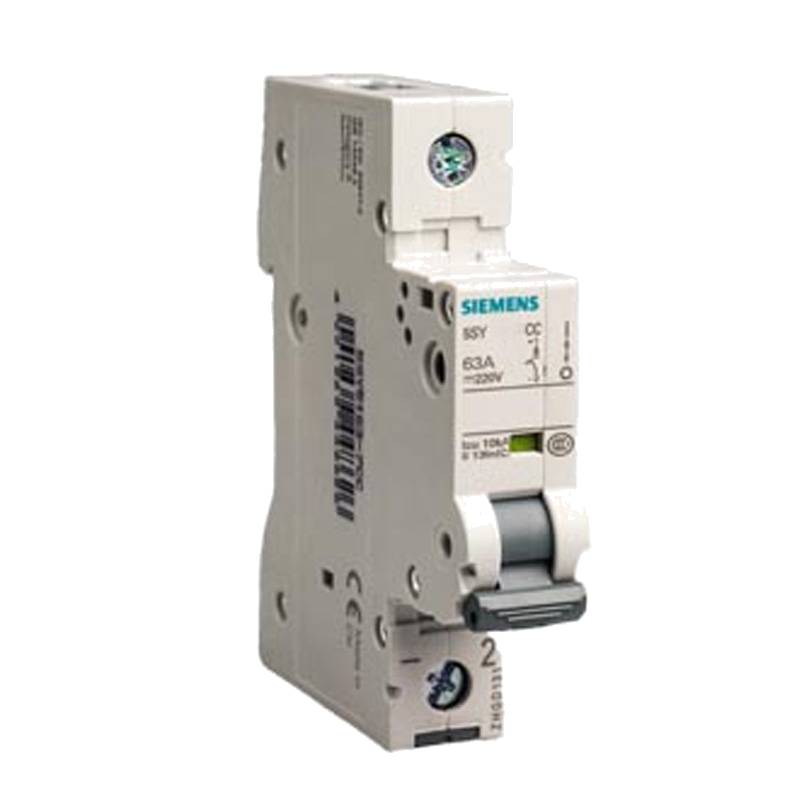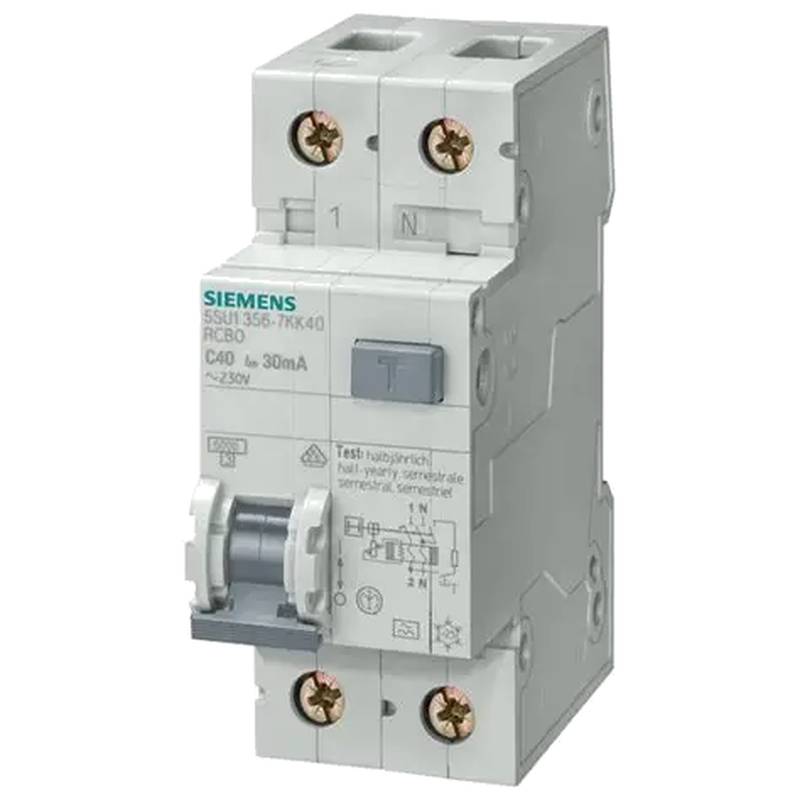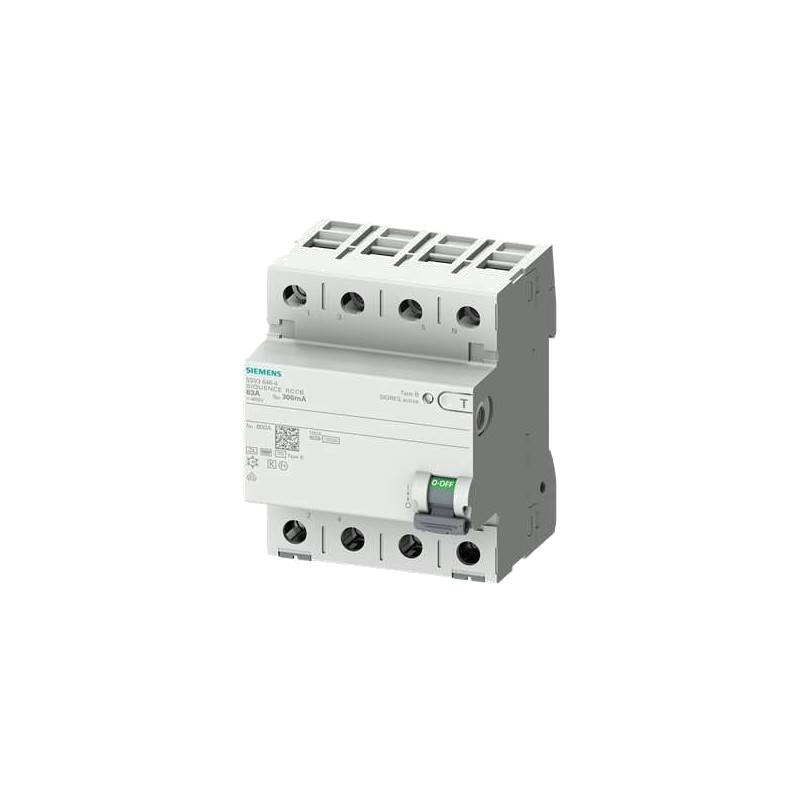












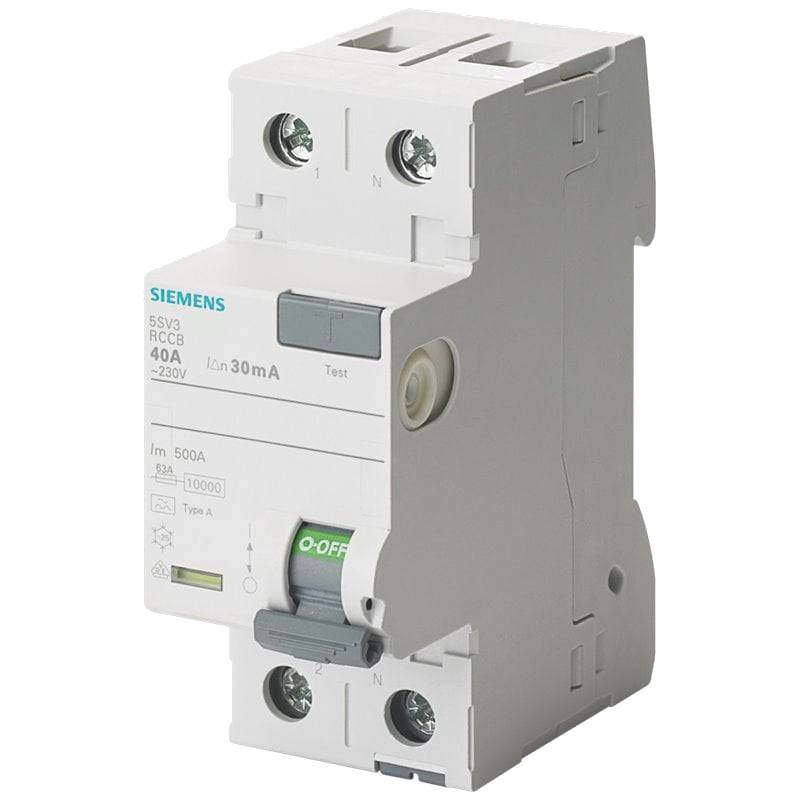
Siemens 5SV3617-8 Miniature Circuit Breaker 2P 80A 300mA


The Siemens 5SV3617-8 Miniature Circuit Breaker (MCB) is a highly reliable two-pole, 80 Amp, 300 milliampere residual current device designed for robust electrical protection in demanding industrial and commercial environments. This MCB excels in safeguarding circuits against overcurrents and earth faults, offering enhanced safety and operational continuity. Its compact design and adherence to stringent international standards ensure seamless integration into various electrical distribution systems. Key advantages include its high breaking capacity, robust construction for durability, and precise tripping characteristics that minimize nuisance tripping while ensuring rapid fault clearance.
Siemens 5SV3617-8 MCB: Product Specifications
| Specification | Value |
| :----------------------- | :------------------------------------------ |
| Product Type | Miniature Circuit Breaker (MCB) |
| Poles | 2 |
| Rated Current (In) | 80 A |
| Residual Current (IΔn) | 300 mA |
| Breaking Capacity (Icn) | 6 kA |
| Tripping Characteristic | Type B |
| Voltage Rating (Ue) | 400 V AC |
| Frequency | 50/60 Hz |
| Terminal Type | Screw terminals |
| Mounting Type | DIN rail (35 mm) |
| Protection Class | IP20 (enclosure), IP40 (installed) |
| Operating Temperature | -25°C to +45°C |
| Standards Compliance | IEC/EN 60898-1, IEC/EN 61009-1 |
| Dimensions (H x W x D) | Approx. 88 mm x 35 mm x 70 mm |
Core Features & Market Positioning
The Siemens 5SV3617-8 stands out in the market due to its superior tripping reliability and rapid fault detection, crucial for preventing damage to sensitive equipment and ensuring personnel safety. Its Type B tripping characteristic is specifically engineered for applications where inrush currents are common, such as those involving inductive loads, without compromising protection against persistent overload and short-circuit conditions. This makes it a preferred choice for engineers seeking a dependable solution for circuit protection in complex electrical installations. The robust construction and high breaking capacity of 6 kA provide an added layer of security against severe fault events.
Key Application Scenarios
This Siemens MCB is ideally suited for a wide array of industrial and commercial applications. It is commonly deployed in power distribution boards for manufacturing facilities, data centers, and building management systems where reliable protection against both overcurrents and residual currents is paramount. Its 300mA sensitivity makes it effective for protecting general power circuits and preventing fire hazards caused by persistent earth leakage currents. Furthermore, it is integral to systems requiring compliance with specific safety regulations for electrical installations, offering peace of mind for facility managers and electrical contractors.
Practical System Integration Guidance
Integrating the Siemens 5SV3617-8 MCB into existing electrical systems is straightforward due to its standard DIN rail mounting and familiar terminal configurations. Installation requires securing the MCB onto a 35mm DIN rail, followed by connecting the line and neutral conductors to the designated terminals, observing proper polarity. For optimal performance and safety, ensure that the upstream protective device's rating does not exceed the MCB's capacity and that all connections are terminated securely to prevent overheating. It is essential to adhere to local electrical codes and best practices during installation.
Operation and Risk Mitigation
The primary function of the Siemens 5SV3617-8 MCB is to automatically interrupt electrical circuits when an overcurrent (overload or short circuit) or an earth fault exceeding 300mA occurs. This rapid disconnection prevents overheating of wiring, insulation damage, and potential fires. In the event of a fault, the MCB will trip, requiring manual resetting. Common troubleshooting involves identifying the cause of the trip (e.g., appliance malfunction, wiring fault) before resetting. Always ensure the circuit is de-energized before attempting any inspection or reset procedures to mitigate electrical shock risks.
Scalability & Long-Term Value
The Siemens 5SV3617-8 MCB is designed for long-term reliability and compatibility within Siemens' comprehensive range of electrical protection devices. Its modular design allows for easy replacement or expansion within standard distribution boards. While MCBs themselves are not typically "upgraded" in the traditional sense, their consistent performance and adherence to IEC standards ensure that systems protected by them remain compliant and safe over their operational lifespan. For integration with modern digital solutions, the MCB can be incorporated into smart electrical panels that feature remote monitoring capabilities, indirectly enabling connection to IIoT platforms for enhanced system oversight.
Frequently Asked Questions (FAQs)
Q1: What is the primary purpose of the Siemens 5SV3617-8 MCB?
The Siemens 5SV3617-8 MCB provides essential overcurrent protection for electrical circuits. It safeguards against damage from overloads and short circuits, preventing potential fires.
This device also offers residual current protection, detecting earth faults of 300mA. This feature is critical for preventing electric shock hazards and protecting equipment.
Its robust design ensures reliable operation in demanding industrial and commercial settings, contributing to overall electrical system safety and stability.
Q2: Can the Siemens 5SV3617-8 be used for residential applications?
While designed for industrial use, its specifications are suitable for certain high-demand residential circuits. It offers robust protection beyond standard residential MCBs.
However, residential installations typically use MCBs with lower current ratings and residual current sensitivities, such as 30mA. Always consult local electrical codes for compliance.
For general residential circuits, simpler MCBs without residual current detection might be more common and cost-effective, though this model provides superior protection.
Q3: What does "2P 80A 300mA" mean for the Siemens 5SV3617-8?
"2P" indicates that the circuit breaker has two poles, meaning it interrupts both the live and neutral conductors simultaneously. This is crucial for complete circuit isolation.
"80A" specifies the rated current, which is the maximum continuous current the breaker can safely handle without tripping under normal conditions.
"300mA" denotes the residual current sensitivity; it will trip if it detects an earth leakage current of 300 milliamperes or more, providing significant earth fault protection.
Q4: How do I reset the Siemens 5SV3617-8 after it trips?
First, identify and rectify the cause of the circuit trip to prevent immediate re-tripping. This might involve unplugging appliances or checking for faults.
Ensure the operating lever is in the "OFF" position. Then, firmly push the lever upwards to the "ON" position to reset the breaker.
If the breaker trips again immediately after resetting, do not force it. This indicates an persistent fault that requires professional electrical inspection.
Q5: What is the breaking capacity (kA) of this MCB?
The Siemens 5SV3617-8 MCB has a breaking capacity of 6 kA. This refers to the maximum fault current it can interrupt safely without sustaining damage.
A higher breaking capacity is essential for systems with a higher potential for fault currents, such as those closer to the power source or in industrial settings.
This 6 kA rating ensures adequate protection against short-circuit events in many common commercial and industrial distribution systems.
Q6: Is the Siemens 5SV3617-8 compatible with other Siemens electrical components?
Yes, this MCB is designed to be fully compatible with Siemens' extensive range of switchgear and distribution boards. It utilizes standard DIN rail mounting.
It integrates seamlessly with other Siemens protection devices, such as RCDs and surge protection devices, within a common electrical panel.
Siemens products are engineered for system integration, ensuring reliable performance and interoperability within a complete Siemens electrical infrastructure.
Q7: What does the Type B tripping characteristic signify?
Type B tripping characteristics are designed for circuits with low inrush currents, typically resistive loads or those with minimal inductive components. This refers to its magnetic trip threshold.
Type B MCBs typically trip between 3 to 5 times their rated current for short circuits. This offers protection for general lighting and socket circuits.
For applications with higher inrush currents, such as motors or transformers, Type C or Type D characteristics would be more appropriate to prevent nuisance tripping.
Q8: Can I install the Siemens 5SV3617-8 myself, or do I need an electrician?
While the installation process is mechanically straightforward, electrical work inherently carries risks. It is strongly recommended to have a qualified electrician perform the installation.
Electricians ensure compliance with all local electrical codes and safety standards, which are crucial for preventing electrical hazards and ensuring proper functionality.
Improper installation can lead to electrical hazards, fire risks, and void the product's warranty. Professional installation guarantees safety and reliability.
Q9: What is the environmental operating temperature range for this MCB?
The Siemens 5SV3617-8 MCB is designed to operate reliably within an ambient temperature range of -25°C to +45°C. This covers a broad spectrum of industrial environments.
Operating outside this specified range can affect the breaker's performance and lifespan. Extreme cold might affect mechanical components, while excessive heat can impact tripping accuracy.
Ensuring adequate ventilation around the installed MCB helps maintain optimal operating temperatures and prolongs its service life.
Q10: How does the 300mA residual current protection work?
The 300mA residual current protection detects imbalances between the live and neutral conductors. This imbalance indicates current flowing to earth via an unintended path.
When this leakage current reaches 300mA, the internal mechanism of the MCB triggers, rapidly disconnecting the power supply to prevent potential hazards.
This level of protection is primarily for fire prevention and protection of equipment, whereas 30mA RCDs are typically used for enhanced personnel safety against electric shock.