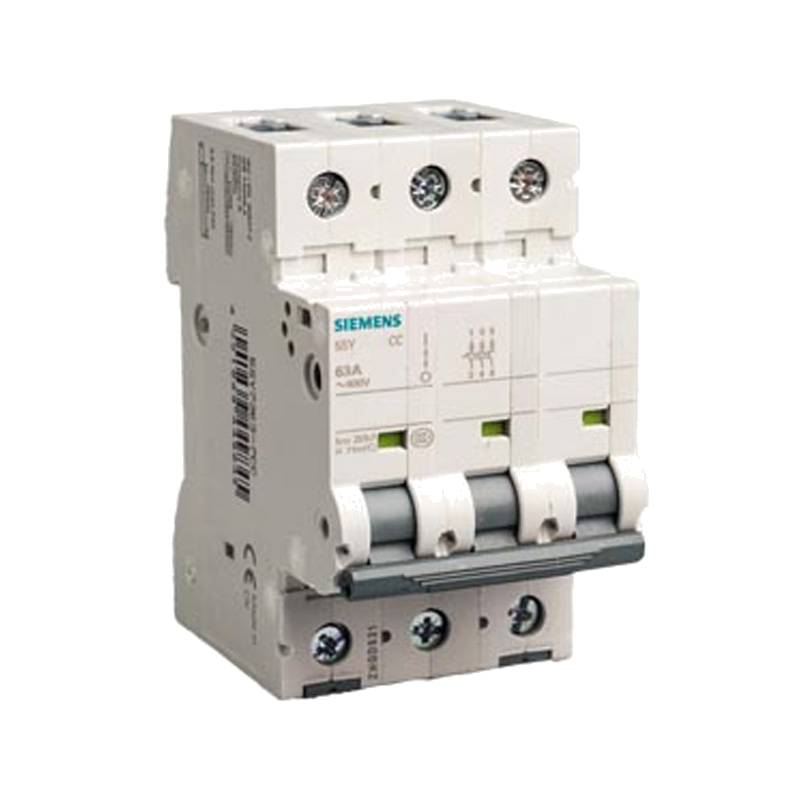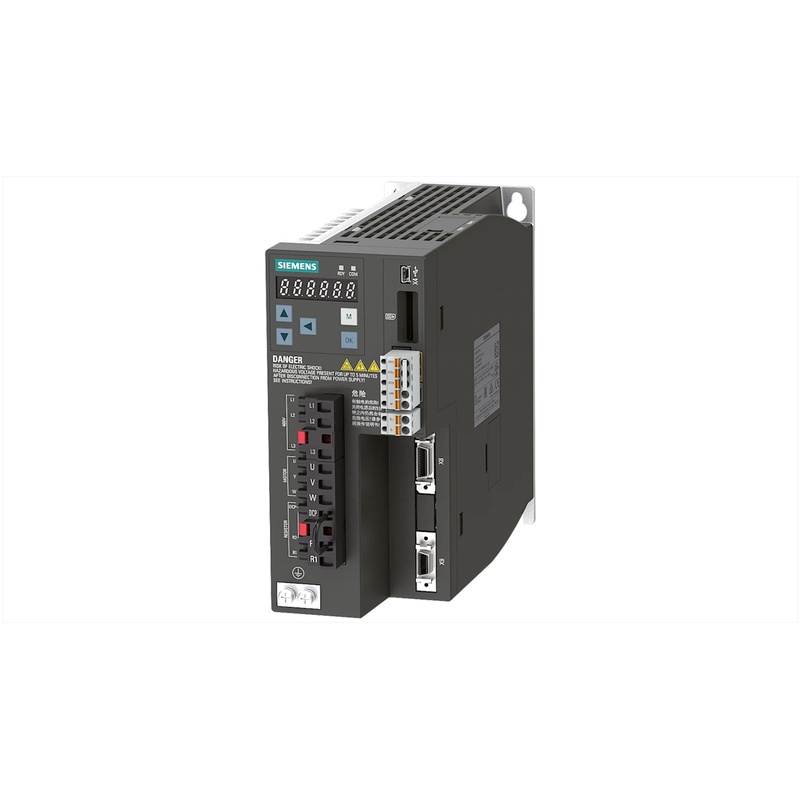












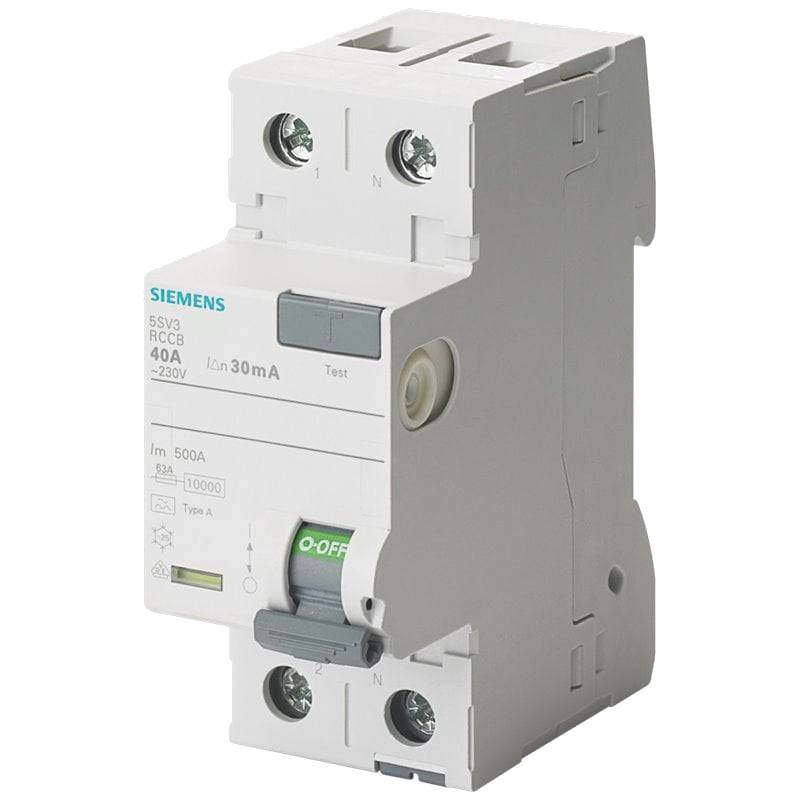
Siemens 5SV3622-4 Double Pole Miniature Circuit Breaker 2P 25A 300mA


The Siemens 5SV622-4 is a high-performance 2-pole, 25A, 300mA miniature circuit breaker (MCB) designed for robust electrical protection in demanding industrial and commercial applications. This device offers superior fault current interruption, enhanced safety through its residual current detection, and reliable operation, making it a cornerstone for safeguarding sensitive equipment and personnel. Its compact design and adherence to stringent international standards ensure seamless integration into diverse electrical panels and systems. Key advantages include its quick tripping mechanism, preventing damage from overcurrents and short circuits, and its high breaking capacity, ensuring safety even under severe fault conditions. The integrated RCD functionality provides essential protection against earth leakage faults, a critical requirement in many environments.
Siemens 5SV622-4: Product Specifications
| Feature | Specification |
| :---------------------- | :------------------------------------------------ |
| Product Type | Miniature Circuit Breaker (MCB) with RCD |
| Poles | 2 |
| Rated Current (In) | 25A |
| Rated Residual Current | 300mA |
| Breaking Capacity (Icn) | 6 kA |
| Rated Voltage (Un) | 400V AC |
| Frequency | 50/60 Hz |
| Tripping Curve | Type C |
| Insulation Voltage (Ui) | 500V |
| Terminal Type | Screw Terminal |
| Mounting | DIN Rail (35mm) |
| Protection Class | IP20 |
| Operating Temperature | -25°C to +45°C |
| Certifications | IEC/EN 60898-1, IEC/EN 61009-1 |
Core Features & Market Positioning
The Siemens 5SV622-4 distinguishes itself through its robust construction and advanced protection capabilities. Its Type C tripping characteristic ensures it can handle moderate inrush currents typical of inductive loads without nuisance tripping, while still providing rapid protection against short circuits. The 300mA residual current sensitivity is optimized for fire protection and enhanced safety against indirect contact in various industrial settings. This MCB is positioned as a reliable, high-quality protective device that offers significant value by combining MCB and RCD functions in a single unit, reducing panel space and installation complexity. Siemens' reputation for engineering excellence and long-term product durability further solidifies its market standing as a preferred choice for critical electrical installations.
Key Application Scenarios
This Siemens miniature circuit breaker is ideally suited for a wide array of industrial and commercial applications requiring reliable overcurrent, short-circuit, and earth leakage protection. It is frequently deployed in main distribution boards, sub-distribution boards, and control panels within factories, manufacturing facilities, and commercial buildings. Specific use cases include protecting circuits for motors, transformers, lighting systems, and power outlets where the risk of earth faults or high inrush currents exists. Its 25A rating and 300mA sensitivity make it an excellent choice for circuits supplying machinery, HVAC equipment, and sensitive electronic loads that demand robust, combined protection.
Practical System Integration Guidance
Integrating the Siemens 5SV622-4 into an electrical system is straightforward due to its standard DIN rail mounting and terminal configurations. Installers should ensure the MCB is mounted vertically on a 35mm DIN rail, securing it firmly. Wiring involves connecting the line and neutral conductors to the designated input terminals and then connecting the output terminals to the downstream circuit loads. It is imperative to observe the correct polarity for the line and neutral connections, especially for the residual current function to operate correctly. Before energizing, verify all connections are tight and that the breaker is in the "OFF" position. Regular testing of the RCD function using the integrated test button is crucial for ongoing safety compliance.
Operation and Risk Mitigation
The Siemens 5SV622-4 operates by continuously monitoring the current flow between the line and neutral conductors. If an imbalance occurs, indicative of an earth fault (current leaking to ground), the residual current device (RCD) function trips the breaker almost instantaneously, disconnecting the power supply. The Type C tripping curve means it will trip at currents between 5 to 10 times its rated current (25A), protecting against short circuits and significant overloads while allowing for temporary, higher inrush currents. To mitigate risks, always ensure the correct MCB is selected for the load and wiring, perform regular insulation resistance tests on the protected circuits, and conduct periodic functional tests of the MCB's tripping mechanism. Proper lockout/tagout procedures must be followed during maintenance.
Scalability & Long-Term Value
The Siemens 5SV622-4 offers excellent long-term value through its compatibility with the broader Siemens SENTRON system, allowing for seamless integration with other protective devices, busbars, and enclosures. Its modular design facilitates easy replacement or upgrades if circuit requirements change. While this specific model is a fixed-parameter device, its reliability and durability, backed by Siemens' extensive testing and quality control, ensure a long operational lifespan, minimizing the need for frequent replacements. This contributes to reduced maintenance costs and a more stable electrical infrastructure. For future-proofing, its adherence to international standards ensures compatibility with evolving grid requirements and emerging safety regulations.
Frequently Asked Questions
What is the primary function of a Siemens 5SV622-4 MCB?
The Siemens 5SV622-4 acts as a dual-purpose protective device. It safeguards electrical circuits against overcurrents and short circuits with its miniature circuit breaker function. Simultaneously, its integrated residual current device (RCD) provides essential protection against earth leakage faults. This combined functionality enhances safety and prevents damage to equipment.
What types of loads are best protected by the Siemens 5SV622-4's Type C tripping curve?
The Type C tripping curve is designed for circuits with moderate inrush currents. This makes it ideal for inductive loads such as electric motors, transformers, and solenoids. It allows for temporary current surges during startup without causing nuisance tripping. However, it still provides rapid disconnection for short circuits and overloads.
How often should the residual current function of the Siemens 5SV622-4 be tested?
It is crucial to test the residual current function regularly to ensure its reliability. Manufacturers typically recommend monthly testing using the integrated test button. This periodic test verifies that the RCD mechanism is functioning correctly and will trip when an earth leakage fault occurs.