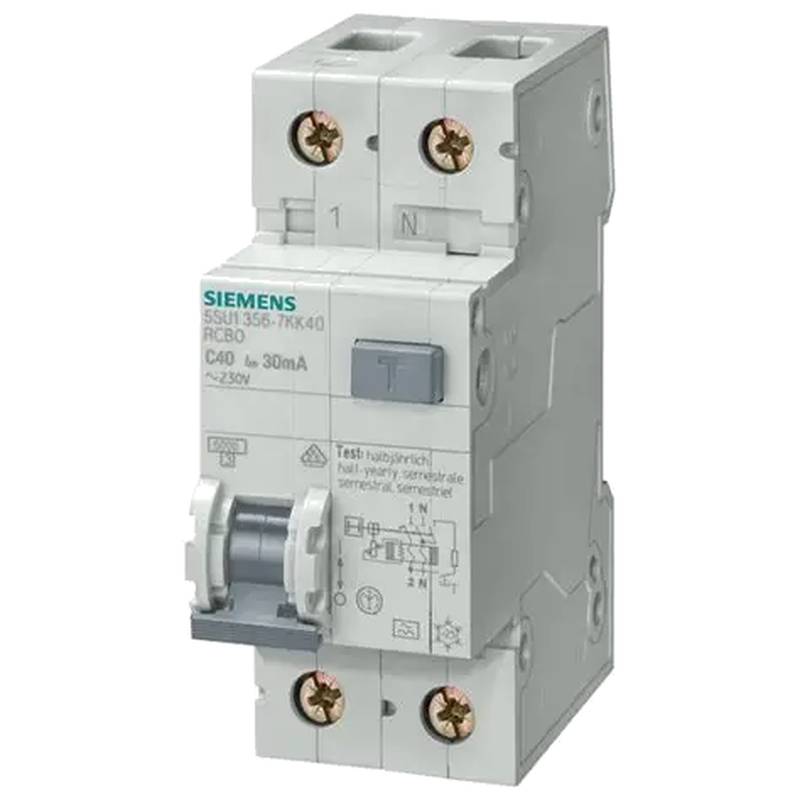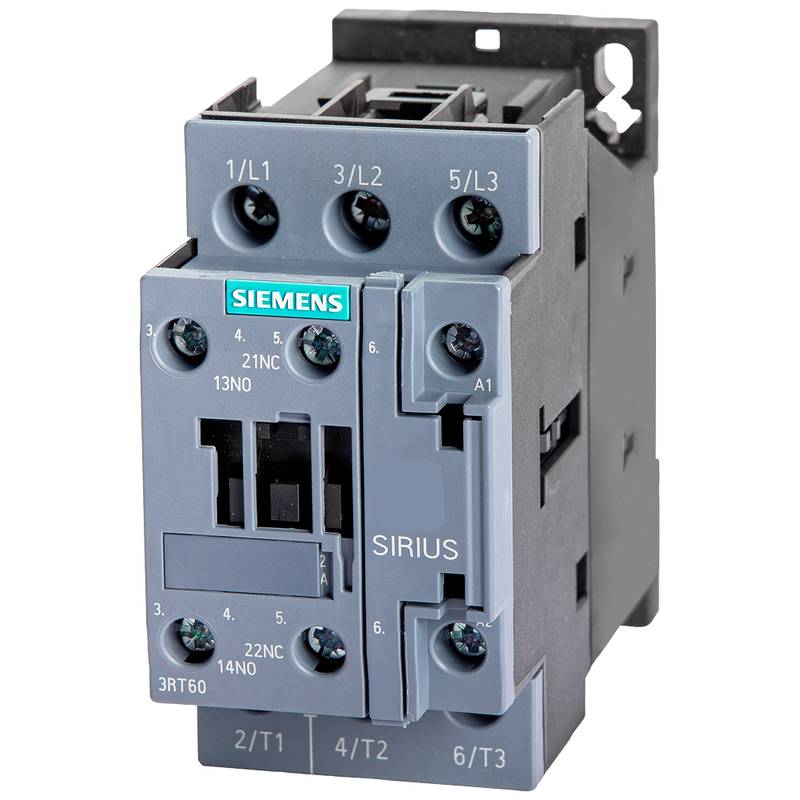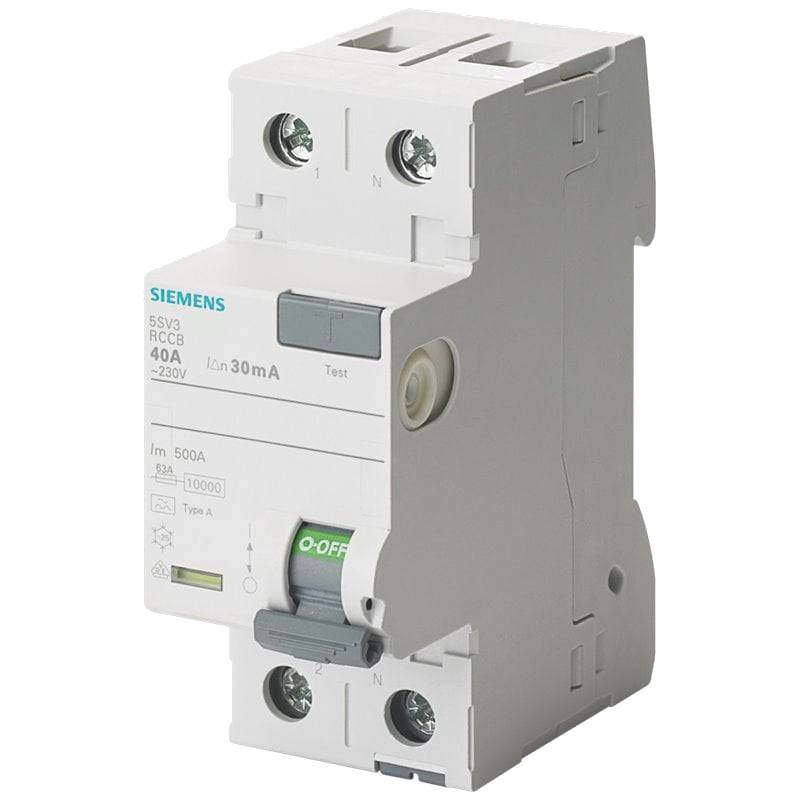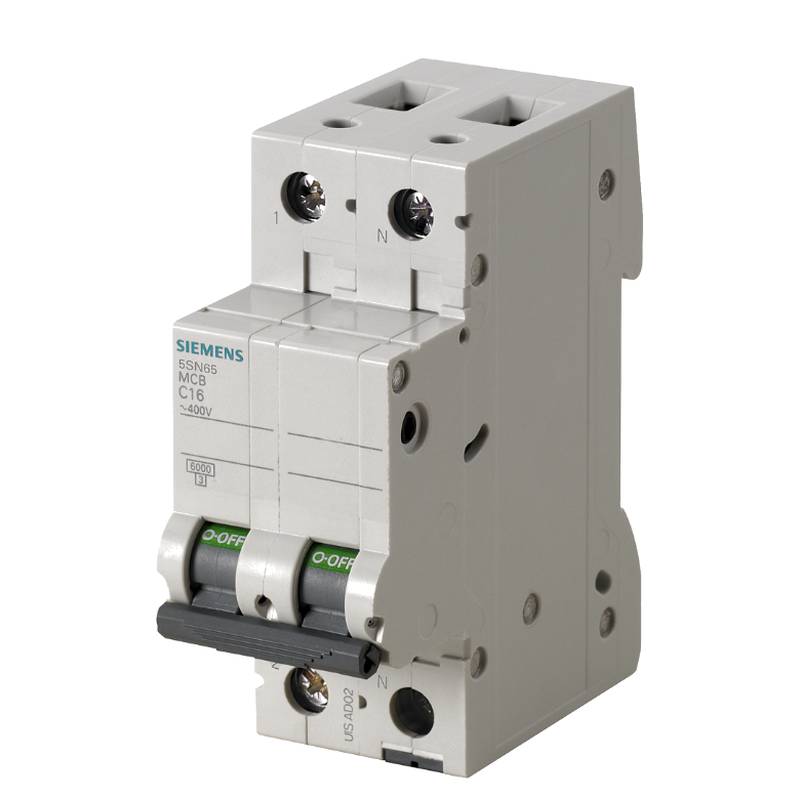












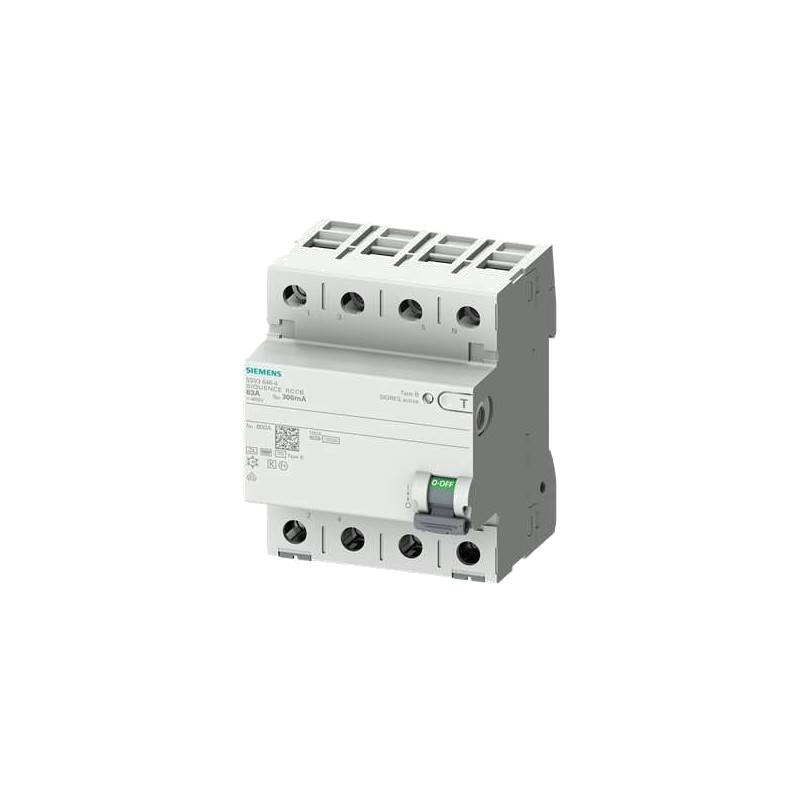
Siemens 5SV3446-6 Leakage protection switch 4P 63A 100mA


The Siemens 5SV3446-6 is a four-pole, 63A, 100mA residual current circuit breaker (RCCB) engineered for robust electrical protection in demanding industrial environments. This device offers essential safety by detecting and interrupting fault currents, preventing electric shock and fire hazards. Its key advantages include high breaking capacity, reliable tripping characteristics, and compliance with stringent international safety standards. Technical parameters such as its rated voltage, frequency, and sensitivity are critical for ensuring effective protection in diverse electrical installations.
Siemens 5SV3446-6: Product Specifications
| Parameter | Specification |
| :---------------------- | :--------------------------------- |
| Product Type | Residual Current Circuit Breaker (RCCB) |
| Poles | 4P |
| Rated Current (In) | 63A |
| Rated Residual Current | 100mA |
| Rated Voltage (Ue) | 400V AC |
| Frequency | 50/60 Hz |
| Tripping Type | Type A |
| Protection Class | IP20 (device), IP40 (enclosure) |
| Ambient Temperature | -25°C to +45°C |
| Conformance Standards | IEC/EN 61008-1 |
Core Features & Market Positioning
The Siemens 5SV3446-6 distinguishes itself through its Type A tripping characteristic, making it suitable for detecting both sinusoidal alternating currents and pulsating direct residual currents, a crucial feature for modern industrial machinery with complex electronics. Its robust construction ensures reliable performance even under harsh environmental conditions, a hallmark of Siemens' commitment to industrial-grade equipment. Compared to standard RCCBs, the 4-pole configuration provides comprehensive protection for three-phase systems, isolating all live conductors simultaneously, thus enhancing safety and operational integrity in critical applications. This positioning as a reliable, high-performance protective device for three-phase industrial circuits underscores its value in preventing electrical hazards and ensuring operational continuity.
Key Application Scenarios
This 4-pole, 63A, 100mA residual current protection device is ideally suited for safeguarding three-phase power distribution systems within industrial facilities, manufacturing plants, and commercial buildings. Its primary role is in protecting personnel from indirect contact with live parts, particularly in areas where the risk of electric shock is elevated, such as workshops, server rooms, and control cabinets. Furthermore, the Siemens 5SV3446-6 is instrumental in preventing fires caused by earth faults, making it an indispensable component in machinery with high energy consumption or complex motor control systems. It is commonly integrated into main distribution boards and sub-distribution panels to provide downstream circuit protection.
Practical System Integration Guidance
Integrating the Siemens 5SV3446-6 into an existing electrical system requires careful consideration of terminal capacity and proper wiring practices. For a 4-pole device, ensure that all four incoming live conductors (L1, L2, L3, and potentially a neutral or a fourth live conductor in specific configurations) and the corresponding outgoing conductors are correctly terminated at the designated screw terminals. It is imperative to connect the earth continuity conductor of the protected circuit to the main earthing terminal of the distribution board, not directly to the RCCB. Pre-installation checks should confirm that the system's prospective short-circuit current does not exceed the breaking capacity of the 5SV3446-6. A pre-connection test, often involving a dedicated test button on the device, should be performed after installation to verify its correct operation before energizing the protected circuit.
Operation and Risk Mitigation
The Siemens 5SV3446-6 operates by continuously monitoring the current flowing through its internal circuitry. If an imbalance is detected—indicating that current is escaping the intended circuit, typically through a fault to earth—it rapidly trips, disconnecting all live conductors. This rapid interruption is crucial for preventing electric shock and mitigating fire risks associated with earth faults. To mitigate risks, ensure regular testing using the integrated test button (typically recommended monthly) to verify the health of the tripping mechanism. Overload protection is generally provided by a separate miniature circuit breaker (MCB) upstream or integrated into a residual current device with overcurrent protection (RCBO). Always ensure the device is correctly rated for the circuit's load and fault current potential.
Scalability & Long-Term Value
The Siemens 5SV3446-6 offers excellent scalability within Siemens' broader SENTRON protection, switching, measuring, and monitoring devices portfolio. Its standard modular design allows for seamless integration into existing Siemens distribution boards and control panels, facilitating future expansions or upgrades to more comprehensive protection schemes. Compatibility with other Siemens components ensures that as systems evolve towards greater automation and digital integration, the fundamental safety provided by this RCCB remains a core element. While not inherently an IIoT device, its reliable operation contributes to overall system stability, a prerequisite for successful digital transformation initiatives in industrial settings.
Frequently Asked Questions (FAQs)
1. What is the primary function of the Siemens 5SV3446-6?
This device provides residual current protection. It detects earth faults and rapidly disconnects power. This prevents electric shock hazards.
It safeguards against electrical fires caused by leakage currents. It ensures personnel safety in industrial environments. It protects equipment from damage.
The 4-pole design offers comprehensive protection for three-phase systems. It ensures all live conductors are isolated simultaneously.
2. Can the Siemens 5SV3446-6 be used in residential applications?
While technically capable, it's optimized for industrial use. Its 100mA sensitivity is typically for fire protection.
Residential applications often use 30mA for personal protection. This device is designed for robust three-phase industrial loads.
For residential use, consult local electrical codes. Other Siemens RCCB variants may be more suitable.
3. What does "Type A" tripping characteristic mean for this switch?
Type A indicates it detects AC and pulsating DC residual currents. This is vital for modern equipment. Many industrial devices produce such currents.
This makes it versatile for various machinery. It offers broader protection than Type AC RCCBs. It ensures safety in complex electrical setups.
It provides reliable tripping for a wider range of fault types. This enhances overall electrical system safety.
4. How do I properly install the Siemens 5SV3446-6 in a three-phase panel?
Connect L1, L2, L3, and Neutral/L4 to input terminals. Ensure correct phase rotation. Terminate outgoing conductors securely.
Verify that incoming voltage matches the device rating. Ensure the system's fault current capacity is within limits. Use appropriate torque for terminal connections.
Always perform a test trip after installation. Consult the installation manual for detailed wiring diagrams. Follow local electrical regulations.
5. What is the significance of the 100mA residual current rating?
100mA is a standard sensitivity for fire protection. It triggers at a higher leakage current than personal protection devices. This minimizes nuisance tripping.
It's ideal for protecting circuits where fire risk is a concern. It offers protection against more significant earth faults. It complements upstream overcurrent protection.
This rating is common in industrial distribution. It balances safety with operational continuity. It adheres to specific safety standards.
6. What kind of overcurrent protection is needed with the Siemens 5SV3446-6?
This device does not provide overcurrent protection itself. You need a separate MCB or fuse. This protects against overload and short circuits.
The upstream protective device must be correctly rated. It should be coordinated with the RCCB's breaking capacity. Consider an RCBO for combined protection.
Properly selecting upstream protection is crucial. It ensures full circuit safety. Consult system design guidelines.
7. How often should I test the Siemens 5SV3446-6?
Regular testing is mandatory for safety. Test using the integrated test button monthly. This verifies the tripping mechanism.
Perform tests after any maintenance or system modifications. Keep a log of test dates and results. This ensures ongoing reliability.
Test before re-energizing a circuit after repairs. This confirms operational readiness. It's a critical safety procedure.
8. What is the breaking capacity of the Siemens 5SV3446-6?
The breaking capacity is crucial for fault interruption. It indicates the maximum fault current the device can safely interrupt. This information is vital for system design.
Consult the product datasheet for the exact breaking capacity. Ensure your system's prospective fault current is below this value. This prevents device damage during a fault.
Properly specified breaking capacity ensures safety. It protects downstream equipment and personnel. It meets regulatory requirements.
9. Can I use the Siemens 5SV3446-6 for motor protection?
Yes, it's suitable for protecting three-phase motor circuits. It detects earth faults associated with motor operation. This is crucial for motor safety.
Combined with motor starters and overload relays, it enhances safety. It helps prevent electrical fires originating from motor faults. It protects personnel from shock.
Ensure its rating is appropriate for the motor's starting current. Type A sensitivity is beneficial for motors with electronic drives.
10. Where can I find the detailed technical datasheet for this product?
Detailed technical specifications are available. Refer to the official Siemens product documentation. Siemens provides comprehensive datasheets online.
Search for "Siemens 5SV3446-6 datasheet" on the Siemens website. These documents contain all essential parameters. They are crucial for correct application.
Always use the most current version of the datasheet. It ensures accurate installation and operation. It provides essential compliance information.