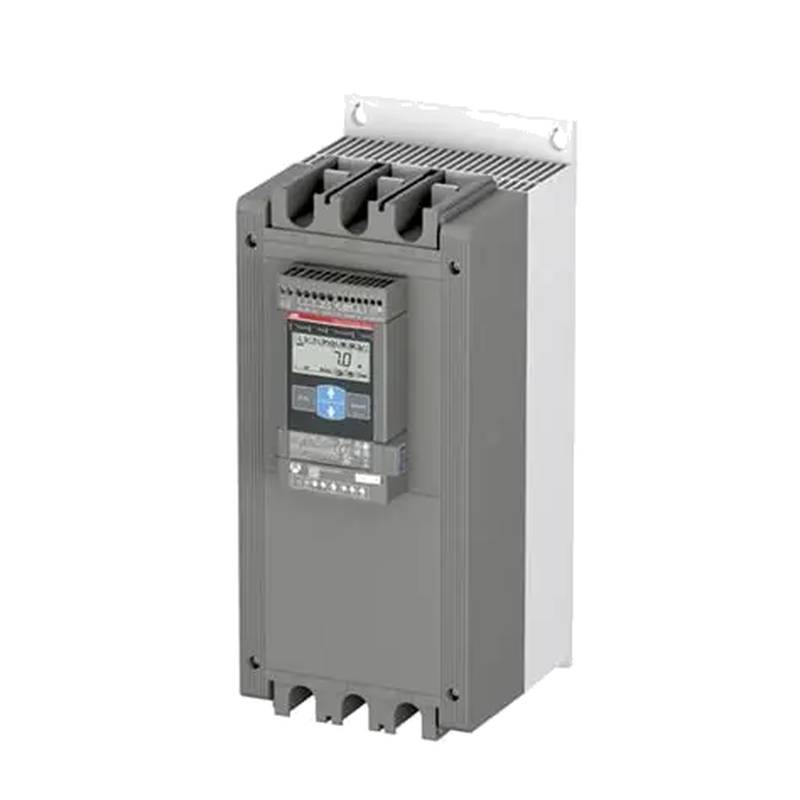













SCHNEIDER ATS22D17Q 17A 3 Phase Soft Starter


The SCHNEIDER ATS22D17Q is a robust 3-phase soft starter designed to provide smooth, controlled acceleration and deceleration for electric motors, significantly reducing mechanical stress and electrical inrush current. This 17A, 400V unit offers advanced motor control capabilities, making it an ideal solution for demanding industrial applications. Key advantages include extended motor lifespan, reduced power system disturbances, and enhanced operational efficiency. Core features encompass integrated bypass, advanced motor protection, and a user-friendly interface for straightforward setup and monitoring. The ATS22D17Q is engineered for reliability and performance in a wide range of industrial environments.
Product Specifications
| Specification | Value |
| :--------------------- | :---------------------------------- |
| Model | ATS22D17Q |
| Rated Current | 17 A |
| Number of Phases | 3 |
| Voltage Rating | 400 V |
| Control Voltage | 230 V |
| Starting Method | Soft Start |
| Bypass | Integrated |
| Overload Protection | Yes |
| Communication Options | Modbus RTU |
| Enclosure Rating | IP20 |
| Dimensions (H x W x D) | 230 x 140 x 162 mm |
| Ambient Temperature | -10°C to 50°C |
Core Features & Market Positioning
The SCHNEIDER ATS22D17Q distinguishes itself through its integrated bypass contactor, which eliminates the need for external components and simplifies installation while minimizing energy loss during continuous operation. Its advanced motor protection functions, including overload and thermal protection, safeguard valuable equipment and prevent costly downtime. Positioned as a high-reliability, cost-effective solution, the ATS22D17Q competes effectively against traditional direct-on-line (DOL) starters and other soft starter brands by offering superior motor control and extended equipment life. The inclusion of Modbus RTU communication further enhances its value, enabling seamless integration into modern industrial automation and IIoT systems.
Key Application Scenarios
This 3-phase soft starter is exceptionally well-suited for applications where smooth motor acceleration is paramount. It is frequently deployed in pump and fan control systems to prevent water hammer and reduce mechanical strain on seals and couplings. The ATS22D17Q is also ideal for conveyor systems, crushers, and mixers, where high starting torques can be damaging to equipment and the power supply. Its ability to manage inrush currents makes it valuable in facilities with limited power capacity or sensitive electrical grids. Industries such as water treatment, food and beverage processing, and material handling commonly benefit from its precise motor control and protective features.
Practical System Integration Guidance
Integrating the SCHNEIDER ATS22D17Q into a three-phase power system is streamlined due to its compact design and integrated bypass. Ensure the incoming power supply and motor connections are correctly wired according to the terminal markings and the provided user manual. For optimal performance, configure the starter's parameters, such as acceleration time, initial torque, and motor nominal current, using the front panel keypad or via Modbus communication. For instance, to set acceleration time to 5 seconds, navigate to the parameter menu and adjust the corresponding setting. The integrated bypass ensures that once the motor reaches full speed, it bypasses the soft starter circuitry, reducing heat generation and energy consumption.
Operation and Risk Mitigation
Operating the SCHNEIDER ATS22D17Q involves straightforward control via its keypad or external start/stop signals. Its inherent design mitigates risks associated with high inrush currents, sudden mechanical shocks, and electrical transients that can damage motors and associated machinery. Common troubleshooting involves checking for overload conditions, incorrect parameter settings, or power supply issues. Fault codes, such as "OL" for overload or "TH" for thermal protection, are clearly indicated on the display, guiding maintenance personnel towards the specific issue. Adhering to the installation and operating guidelines, particularly regarding ambient temperature and ventilation, is crucial for preventing premature failure and ensuring safe operation.
Scalability & Long-Term Value
The SCHNEIDER ATS22D17Q offers excellent long-term value by extending motor and mechanical component lifespan, thereby reducing maintenance and replacement costs. While the ATS22 series is a distinct product line, Schneider Electric's ecosystem allows for integration with other drives and automation components within their broader portfolio, facilitating system expansion. For IIoT integration, the built-in Modbus RTU communication port enables remote monitoring, diagnostics, and control, aligning with the growing trend of smart manufacturing and predictive maintenance strategies. This connectivity allows for data logging and analysis, providing insights to optimize operational performance and plan for future upgrades.
FAQs
What is the primary function of the SCHNEIDER ATS22D17Q?
It acts as a soft starter for 3-phase electric motors. It controls motor speed during startup and shutdown.
This reduces mechanical stress and electrical inrush current. This extends the lifespan of motors and driven equipment.
Its main goal is to provide smooth acceleration and deceleration. It prevents sudden jolts that can damage machinery.
How do I install the SCHNEIDER ATS22D17Q?
Ensure power is disconnected before wiring. Connect motor and line power to the designated terminals.
Follow the wiring diagram in the user manual precisely. Verify all connections are secure and correctly phased.
Mount the unit in a suitable location with adequate ventilation. Ensure it meets IP20 enclosure requirements.
What are the main advantages of using the ATS22D17Q over a DOL starter?
It significantly reduces high starting currents. This lessens the electrical load on the power supply.
It provides smooth acceleration, preventing mechanical shock. This protects belts, gears, and other sensitive components.
This leads to longer motor life and lower maintenance costs. It also minimizes voltage dips on the power grid.
Can the ATS22D17Q be used for variable speed applications?
No, this model is a soft starter, not a variable frequency drive (VFD). It controls acceleration/deceleration only.
It provides fixed acceleration and deceleration profiles. It does not offer continuous speed control like a VFD.
For variable speed, a separate VFD from Schneider Electric would be required. This starter focuses on start/stop transitions.
What is the typical power rating for the SCHNEIDER ATS22D17Q?
This specific model, ATS22D17Q, is rated for 17 Amps. It is designed for 3-phase motors.
The unit operates on a 400V power supply. Always confirm motor nameplate data against starter limits.
It's crucial to select the correct starter size for the motor load. Undersizing can lead to nuisance tripping or damage.
Does the ATS22D17Q offer motor protection features?
Yes, it includes integrated motor overload protection. It also provides thermal protection to prevent overheating.
These features help safeguard the motor from damage. They are crucial for ensuring equipment reliability and longevity.
Other protection settings can be configured via the keypad. This enhances the starter's versatility.
What does "integrated bypass" mean for this soft starter?
It means a bypass contactor is built directly into the soft starter unit. This simplifies wiring and reduces installation space.
Once the motor reaches full speed, the bypass closes. This allows the motor to run directly from the mains power.
Bypass operation reduces energy loss and heat dissipation within the soft starter. It also minimizes voltage drop across the starter.
How do I connect the ATS22D17Q for Modbus communication?
Connect the Modbus RTU A/B (RS485) terminals to your communication network. Ensure correct polarity.
Configure the Modbus address and baud rate within the starter's parameters. Refer to the manual for default settings.
This allows for remote monitoring and control of the starter. It facilitates integration into SCADA or PLC systems.
What are common troubleshooting steps for the ATS22D17Q?
Check for displayed fault codes and consult the manual. Common issues include overload, phase loss, or communication errors.
Verify all power and motor connections are secure. Ensure the control voltage supply is stable and correct.
Confirm that all parameters are set correctly for the specific motor and application. Reset the starter after addressing the fault.
What is the warranty period for this product?
Warranty information is typically provided by the distributor or reseller. Schneider Electric products generally have a standard warranty.
Contact your point of purchase for specific warranty terms and duration. Proof of purchase is usually required for claims.
Refer to the official Schneider Electric website or product documentation for general warranty policies.