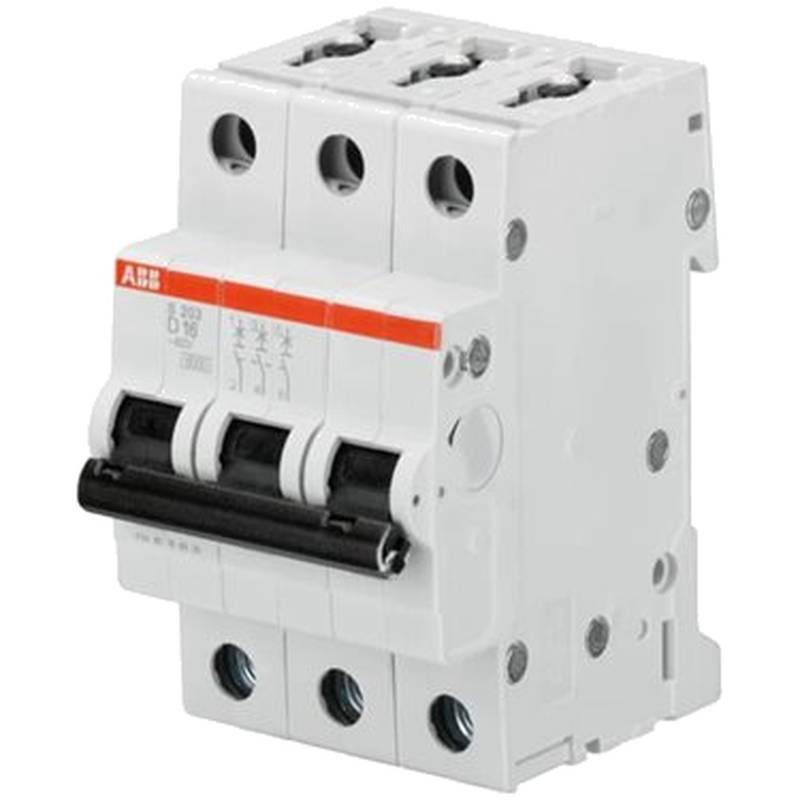












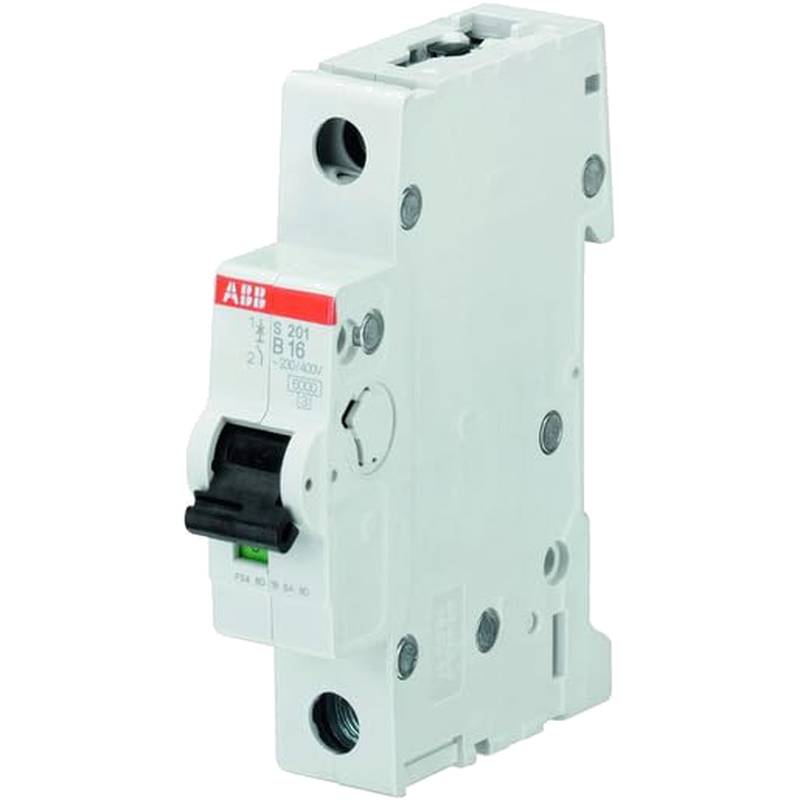
ABB S201M-C2 High Performance MCB C Curve Protection Unit 2A


The ABB S201M-C2 High Performance Miniature Circuit Breaker (MCB) is engineered for superior protection in demanding electrical installations. This single-pole, 2-amp unit, featuring a C-curve tripping characteristic, offers robust defense against overcurrents and short circuits. Its high breaking capacity ensures reliable operation and enhanced safety across a spectrum of commercial and industrial applications. With a focus on performance and durability, the S201M-C2 is designed for seamless integration into modern electrical systems, providing dependable circuit protection where it matters most.
Product Specifications
| Feature | Specification |
| :----------------------- | :------------------------------------------ |
| Product Series | S200M |
| Number of Poles | 1 |
| Rated Current (I n) | 2 A |
| Tripping Characteristic | C |
| Rated Breaking Capacity | 10 kA (IEC/EN 60947-2) |
| Voltage Rating (U n) | 230/400 V AC |
| Frequency | 50/60 Hz |
| Terminal Type | Cage Clamp |
| Mounting | DIN Rail (35 mm) |
| Protection Type | Overcurrent and Short Circuit |
| Ambient Temperature Range| -25 to +55 °C |
| Degree of Protection | IP20 |
| Compliance | IEC/EN 60898-1, IEC/EN 60947-2 |
Core Features & Market Positioning
The ABB S201M-C2 distinguishes itself through its "M" series designation, signifying enhanced performance and a higher breaking capacity of 10 kA, exceeding the standard for many residential applications and positioning it firmly within the industrial and commercial sectors. The C-curve tripping characteristic is specifically designed to handle inrush currents common in inductive loads, such as motors and transformers, without nuisance tripping, while still providing rapid protection against short circuits. This makes the S201M-C2 a preferred choice for applications where equipment reliability is paramount and rapid fault interruption is critical for preventing damage. Its robust construction and adherence to stringent international standards (IEC/EN 60898-1, IEC/EN 60947-2) underscore its reputation for quality and dependability in the competitive MCB market.
Key Application Scenarios
The versatility of the ABB S201M-C2 makes it suitable for a wide array of applications. In industrial settings, it is frequently employed for the protection of control circuits, lighting systems, and smaller motor loads where inductive characteristics are present. Commercial buildings utilize the S201M-C2 for protecting power distribution boards and specific circuits within HVAC systems or other equipment that may experience transient inrush currents. Its 2A rating also makes it ideal for sensitive electronic equipment protection and branch circuit protection in areas demanding precise current control and high fault-clearing capability. Common user searches often revolve around protecting specific motor types or ensuring reliable operation of inductive loads, areas where the C-curve excels.
Practical System Integration Guidance
Integrating the ABB S201M-C2 into existing or new electrical panels is straightforward due to its standard 35 mm DIN rail mounting. The unit features cage clamp terminals, accommodating a wide range of conductor sizes, simplifying wiring and ensuring secure connections. For proper installation, ensure the circuit breaker is de-energized before making any connections. The line conductor should be connected to the top terminal and the load to the bottom terminal. Always verify that the system's operating voltage and frequency are within the MCB's specified limits (230/400 V AC, 50/60 Hz). Adhering to local electrical codes and best practices for wiring and termination is crucial for safe and reliable operation.
Operation and Risk Mitigation
The S201M-C2 operates by automatically interrupting the electrical circuit when the current exceeds a predefined level due to an overload or a short circuit. The C-curve characteristic ensures that the breaker will trip at currents between 5 and 10 times the rated current, providing a balance between sensitivity and tolerance for inrush. To mitigate risks, always ensure the correct breaker rating is selected for the load and wiring. Avoid tampering with the internal mechanisms, as this can compromise safety and void the warranty. In case of frequent tripping, investigate the cause, which could be an overloaded circuit, a faulty appliance, or a short circuit, rather than simply replacing the breaker. Regular inspection of connections and the breaker's physical condition can also prevent potential issues.
Scalability & Long-Term Value
The ABB S201M-C2, as part of the S200M series, offers excellent compatibility with other ABB components and is designed for integration into modular distribution boards, allowing for straightforward system expansion. While MCBs themselves are primarily protective devices rather than active components in IIoT solutions, their reliability is foundational for connected systems. Ensuring stable power delivery through robust protection like that offered by the S201M-C2 is essential for the long-term health and performance of any automated or digitally integrated industrial process. Its durable construction and ABB's commitment to quality ensure a long service life, minimizing the need for premature replacements and contributing to overall system stability and cost-effectiveness.
FAQs
What is the breaking capacity of the ABB S201M-C2?
The ABB S201M-C2 boasts a significant breaking capacity of 10 kA according to IEC/EN 60947-2 standards. This high rating is crucial for safely interrupting fault currents during short-circuit events. It ensures that the circuit breaker can effectively isolate the faulty section of the circuit without sustaining damage.
This robust breaking capacity makes the S201M-C2 suitable for demanding industrial and commercial applications where fault currents can be substantial. It provides an essential layer of safety by preventing electrical fires and protecting downstream equipment. It is a key differentiator from lower-rated MCBs.
The 10 kA capability signifies that the unit is built to withstand and interrupt a considerable amount of energy. This is a critical parameter for engineers designing electrical protection systems to meet safety regulations and ensure system integrity.
What does the 'C' curve on the ABB S201M-C2 mean for motor protection?
The 'C' curve tripping characteristic on the S201M-C2 is specifically designed to accommodate the high inrush currents often associated with starting electric motors. It allows for a temporary surge of current upon motor startup without tripping the breaker prematurely. This prevents nuisance tripping during normal operation.
This characteristic ensures that the motor receives sufficient current to start and accelerate effectively. The breaker will only trip if the current exceeds 5 to 10 times the rated current, indicating a genuine overload or a short circuit. This selectivity is vital for motor applications.
For motor protection, the C-curve offers a good balance, providing rapid response to short circuits while tolerating the brief, high currents during motor start-up. This is a key advantage over B-curve breakers in many motor-driven systems.
Can the ABB S201M-C2 be used in residential or domestic applications?
While the S201M-C2 is highly capable, its 10 kA breaking capacity and C-curve characteristic are often specified for commercial or industrial environments. Residential applications typically utilize MCBs with lower breaking capacities and B-curve characteristics. However, specific code requirements or the presence of inductive loads in a home might necessitate its use.
It is generally considered over-specified for basic domestic lighting and socket circuits, where a 6 kA breaking capacity and B-curve would suffice. Using a C-curve in a residential setting is permissible if required by the installation's specific electrical characteristics and safety assessments. Always consult local wiring regulations.
The primary consideration for residential use would be ensuring it aligns with the overall system design and protective coordination. For most standard home circuits, simpler MCBs are more common and cost-effective.
What is the rated current of the ABB S201M-C2 and what does it protect?
The ABB S201M-C2 has a rated current of 2 Amps (2A). This indicates the maximum continuous current the circuit breaker can safely carry without tripping. It is designed to protect electrical circuits and equipment from damage caused by overcurrents and short circuits.
At 2A, this MCB is typically used for protecting lower-power circuits and sensitive electronic equipment. Examples include control circuits, small instrumentation, specific lighting circuits, or individual components that draw minimal current. It offers precise protection for such loads.
The 2A rating means that any current significantly exceeding this value, especially for extended periods (overload) or instantaneously (short circuit), will trigger the breaker's trip mechanism. This safeguards both the wiring and the connected devices from overheating and failure.
How do I install the ABB S201M-C2 MCB on a DIN rail?
Installation involves clipping the MCB onto a standard 35 mm DIN rail found in most electrical distribution boards. Ensure the power supply to the intended location is completely switched off for safety. Align the MCB's mounting clip with the rail and push down firmly until it snaps into place.
Connect the incoming power conductor to the top terminal and the outgoing load conductor to the bottom terminal. Use the appropriate size and type of wire for the 2A rating, ensuring secure connections with the cage clamp terminals. Double-check wiring polarity and tightness.
After wiring, carefully close the distribution board cover. Restore power to the circuit and test the MCB's operation by pressing the test button (if applicable) or by observing its behavior under load. Always follow local electrical codes and safety procedures.
What are the key advantages of the S200M series MCBs like the S201M-C2?
The S200M series, including the S201M-C2, offers a high breaking capacity of 10 kA, providing superior protection against severe short circuits. They are designed with enhanced performance features and robust construction for reliability in demanding environments. The M designation signifies these advanced capabilities.
These MCBs feature cage clamp terminals for easier and more secure wiring connections, accommodating a wider range of conductor sizes. They are compliant with multiple international standards, ensuring global applicability and adherence to strict safety requirements. This broad compliance is a significant advantage.
The S200M series also typically offers excellent tripping selectivity, which is crucial in complex installations to ensure only the affected circuit trips, minimizing disruption. Their compact design allows for efficient use of space within electrical panels.
What kind of loads is the ABB S201M-C2 best suited for with its C-curve rating?
The C-curve rating of the S201M-C2 makes it ideal for circuits with moderate inrush currents, such as those powering fluorescent lighting with ballasts, solenoid coils, or small to medium-sized motors. These loads draw a higher current momentarily when switched on.
This breaker prevents nuisance tripping during the startup phase of such equipment. It ensures reliable operation for inductive and capacitive loads that experience temporary current peaks. This makes it a versatile choice for commercial and light industrial applications.
However, for larger motors or equipment with very high starting currents, a D-curve MCB might be more appropriate. The C-curve strikes a balance, offering good protection without unnecessary interruptions for typical inductive loads.
Is the ABB S201M-C2 compatible with smart home or IIoT systems?
The S201M-C2 is a conventional mechanical circuit breaker and does not inherently possess smart capabilities for direct IIoT integration. Its role is to provide fundamental electrical protection, ensuring the stable power supply required for smart devices and systems. Reliability is key for IIoT.
To integrate its protection into a smart system, external monitoring devices or smart relays would be needed. These auxiliary devices can detect the status of the MCB (e.g., tripped or closed) and report it to a central system. The MCB itself acts as a reliable safety device.
Therefore, while not a "smart" device, its dependable operation is a crucial prerequisite for the successful and safe functioning of any advanced, connected electrical infrastructure. It forms the foundational safety layer.
What is the operating temperature range for the ABB S201M-C2?
The ABB S201M-C2 operates reliably within an ambient temperature range of -25°C to +55°C. This wide operating window ensures consistent performance across various environmental conditions, from cold storage facilities to warmer industrial settings. Such resilience is important.
Maintaining performance within this range is critical for accurate tripping and long-term durability. Operating outside these specified temperatures can affect the breaker's protective characteristics and lifespan. Always ensure adequate ventilation around the unit.
Adherence to the specified temperature limits is a key factor in preventing premature failure and ensuring safety. This range covers most common installation environments encountered in industrial and commercial applications.
What standards does the ABB S201M-C2 comply with?
The ABB S201M-C2 complies with key international standards, including IEC/EN 60898-1 and IEC/EN 60947-2. These certifications ensure the product meets rigorous safety, performance, and quality benchmarks set by global regulatory bodies. Compliance is paramount for safety.
IEC/EN 60898-1 generally pertains to circuit breakers for household and similar installations, while IEC/EN 60947-2 covers low-voltage switchgear and controlgear, specifically for circuit breakers. This dual compliance highlights its suitability for a broad range of applications.
Meeting these standards signifies that the S201M-C2 has undergone extensive testing for its electrical characteristics, mechanical durability, and safety features, providing assurance to users and specifiers.