











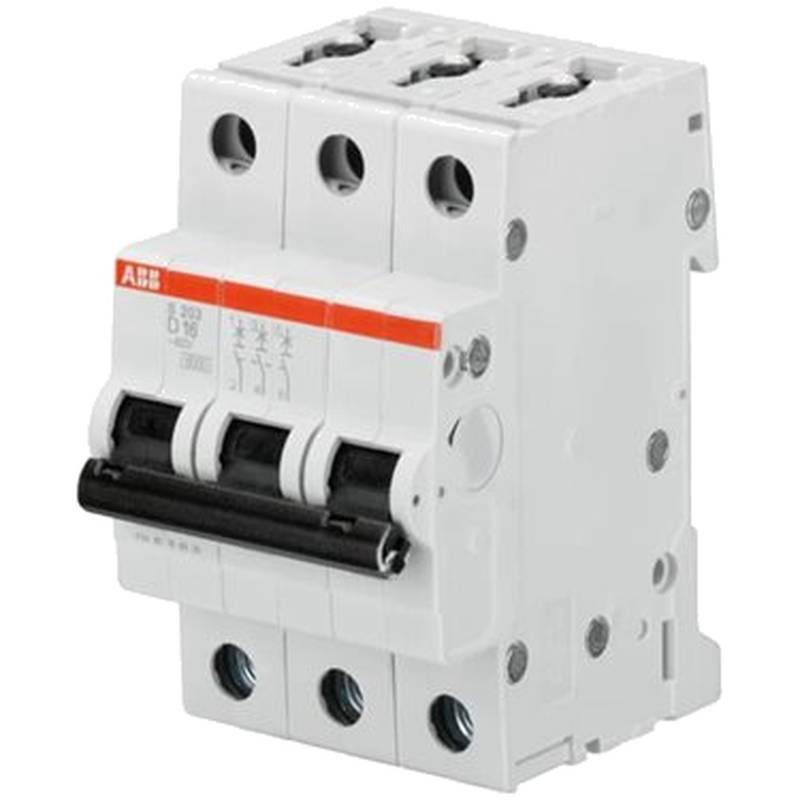
ABB S203-D50 50A D Curve Three Pole Protection


The ABB S203-D50 50A D Curve Three Pole Protection device stands as a robust solution for safeguarding electrical installations against overcurrents and short circuits. Its core advantages lie in its high breaking capacity, reliable tripping characteristics defined by the D-curve, and a durable three-pole configuration suitable for demanding industrial environments. With a rated current of 50A and a breaking capacity of 6kA, this circuit breaker ensures comprehensive protection for a variety of applications.
Product Specifications
| Feature | Specification |
| :------------------- | :---------------------------------- |
| Product Type | Miniature Circuit Breaker (MCB) |
| ABB Series | S200 |
| Number of Poles | 3 (Three-pole) |
| Rated Current (In) | 50 A |
| Tripping Curve | D-curve |
| Breaking Capacity (Icn)| 6 kA |
| Rated Voltage (Un) | 400 V AC |
| Frequency | 50/60 Hz |
| Protection Degree | IP20 |
| Terminal Type | Screw Terminals |
| Mounting Type | DIN Rail (35mm) |
| Dimensions (HxWxD) | 88mm x 52.5mm x 69mm |
| Ambient Temperature | -25 °C to 55 °C |
| Compliance Standards | IEC/EN 60898-1, IEC/EN 60947-2 |
Core Features & Market Positioning
The ABB S203-D50 distinguishes itself through its D-curve tripping characteristic, specifically engineered for applications with high inrush currents, such as those found with transformers, motors, and certain lighting systems. Unlike standard B or C curves, the D-curve allows for significantly higher short-term overcurrents before tripping, preventing nuisance tripping during motor startups or inductive load energization. This makes it a preferred choice in sectors requiring robust protection for inductive loads, positioning the S203-D50 as a premium, reliable component for heavy-duty electrical systems. Its 6kA breaking capacity provides a solid level of protection against short-circuit events, meeting the stringent safety requirements of industrial and commercial installations.
Key Application Scenarios
This three-pole circuit breaker is ideally suited for protecting circuits supplying inductive loads such as electric motors, transformers, and specialized lighting ballasts. Its D-curve characteristic is paramount in preventing premature tripping caused by the high inrush currents typical of these devices during startup. Consequently, the ABB S203-D50 finds extensive use in motor control centers, industrial automation systems, power distribution panels in manufacturing plants, and commercial buildings with significant HVAC or machinery loads. It ensures uninterrupted operation for essential equipment while maintaining a high degree of electrical safety.
Practical System Integration Guidance
Integrating the ABB S203-D50 into an electrical system is straightforward, leveraging standard DIN rail mounting for quick and secure installation. The device features clearly marked screw terminals for connecting the incoming power supply and outgoing loads across its three poles. Proper wiring involves connecting the phase conductors to the load side terminals and the protected circuits to the line side terminals. It is crucial to ensure that the incoming supply voltage and frequency align with the breaker's specifications (400V AC, 50/60 Hz). For three-phase applications, each phase conductor must be routed through a separate pole of the S203-D50 to ensure complete protection. Adherence to local electrical codes and standards during installation is mandatory for safe and compliant operation.
Operation and Risk Mitigation
The primary function of the ABB S203-D50 is to automatically disconnect the electrical circuit when an overcurrent or short circuit condition is detected, thereby preventing damage to connected equipment and mitigating fire hazards. The D-curve’s time-delay feature allows for temporary high currents, such as motor start-up surges, without tripping, while still providing rapid interruption for dangerous short circuits. Users should be aware that nuisance tripping can still occur if the connected load consistently exceeds the 50A rating, indicating a potential overload that requires investigation or system adjustment. In the event of a fault, visually inspect the circuit and the breaker for any signs of damage before attempting to reset it. Always ensure that the source of the fault is identified and rectified before re-energizing the circuit.
Scalability & Long-Term Value
The ABB S200 series, to which the S203-D50 belongs, offers excellent compatibility with a wide range of ABB's modular DIN-rail devices, facilitating seamless integration and expansion of protection schemes. This inherent compatibility ensures that as system requirements evolve, additional protection devices, control components, or monitoring modules can be added without significant redesign. For organizations embracing Industry 4.0 initiatives, the S200 series can be part of a larger smart grid or IIoT ecosystem, working alongside smart meters and remote monitoring units to provide comprehensive data on circuit status and energy consumption, thereby enhancing operational efficiency and predictive maintenance capabilities.
Frequently Asked Questions (FAQs)
What is a D-curve circuit breaker?
A D-curve circuit breaker is designed to handle high inrush currents. It trips when the current is between 10 to 20 times the rated current. This makes it ideal for inductive loads like motors and transformers.
This characteristic prevents nuisance tripping during normal startup surges. It offers a balance between sensitivity and immunity to transient overcurrents. The D-curve is a critical feature for specific industrial applications.
Users benefit from enhanced equipment reliability by avoiding unnecessary shutdowns. It ensures continuous operation of machinery with high starting current demands. Proper selection of the tripping curve is vital for optimal system performance.
What is the breaking capacity of the ABB S203-D50?
The ABB S203-D50 features a breaking capacity of 6 kA. This means it can safely interrupt fault currents up to 6000 Amperes. It provides robust protection against short circuits.
This level of protection is suitable for most residential, commercial, and light industrial applications. It ensures safety and prevents damage to electrical installations. Always verify that this capacity meets local electrical codes.
A higher breaking capacity offers greater safety margins in fault situations. It is a critical parameter for circuit breaker selection. The 6 kA rating is a standard and reliable performance level.
How do I wire a three-pole circuit breaker?
Wire each of the three incoming phase conductors to the line terminals of each pole. Then, connect the outgoing circuit conductors to the corresponding load terminals. Ensure all connections are secure.
Double-check the voltage and current ratings match your system requirements. Always disconnect power before performing any wiring. Consult a qualified electrician if you are unsure about the process.
Proper wiring ensures effective overcurrent protection for the entire circuit. Incorrect connections can lead to equipment failure or safety hazards. Follow established electrical safety protocols diligently.
Can the ABB S203-D50 be used for motor protection?
Yes, the D-curve characteristic makes it suitable for motor protection. It tolerates the high inrush current during motor startup. This prevents nuisance tripping.
It offers protection against overloads and short circuits for the motor. However, it should be used in conjunction with overload relays for comprehensive motor protection. This ensures safety and longevity.
For precise motor protection, consider using ABB's dedicated motor protection relays. These offer adjustable trip settings for various motor sizes and operating conditions. The S203-D50 serves as a crucial upstream protective device.
What are the dimensions of the S203-D50?
The ABB S203-D50 measures approximately 88mm in height, 52.5mm in width, and 69mm in depth. These dimensions are standard for modular DIN rail devices. This allows for easy integration into distribution boards.
Its compact size enables efficient use of space within electrical enclosures. This is particularly beneficial in crowded panels. The standardized dimensions ensure compatibility with most mounting systems.
The width of 52.5mm corresponds to three standard modules (3 x 18mm). This is a common configuration for three-pole breakers. Its form factor is designed for practical electrical installations.
Where is the ABB S203-D50 typically installed?
This circuit breaker is commonly installed in main distribution boards and sub-distribution panels. It is suitable for industrial, commercial, and some residential applications. Its role is upstream protection of circuits.
It is mounted on a standard 35mm DIN rail for easy and secure installation. The enclosure should be clean and dry to maintain the IP20 protection degree. Ensure adequate ventilation around the breaker.
Key areas of installation include motor control centers, and protection of circuits with transformers or inductive loads. Its robust design ensures reliable performance in various environments.
What is the rated voltage for the S203-D50?
The rated voltage (Un) for the ABB S203-D50 is 400 V AC. This is a standard voltage for many three-phase power systems in Europe and other regions. It is essential to match the breaker's rating to the system voltage.
Using the breaker on a system with a voltage significantly higher than 400V AC could lead to failure and safety hazards. Conversely, using it on a lower voltage system is generally acceptable but may not be optimal. Always verify system voltage before installation.
The 400V AC rating ensures reliable operation within the specified parameters. This voltage rating is crucial for safe and effective circuit protection. It aligns with common industrial power distribution standards.
How does a D-curve differ from a C-curve breaker?
A C-curve breaker trips between 5 to 10 times its rated current. A D-curve breaker trips between 10 to 20 times its rated current. This makes D-curve superior for high inrush currents.
C-curve is suitable for general-purpose applications with moderate inductive loads. D-curve is specifically designed for loads with very high, short-duration inrush currents, like motors. Selecting the correct curve is crucial.
The primary difference is the tolerance for temporary overcurrents during startup. D-curve offers more immunity to nuisance tripping for such loads compared to C-curve. This ensures operational continuity.
Can I replace a C-curve breaker with a D-curve breaker of the same rating?
Yes, you can generally replace a C-curve breaker with a D-curve breaker if the current rating and voltage are the same. However, consider the application carefully.
A D-curve breaker will provide the same overcurrent and short-circuit protection as a C-curve breaker for lower current levels. It will offer greater tolerance for inrush currents. This can be beneficial if nuisance tripping was an issue.
Ensure the new D-curve breaker meets all safety codes and regulations for your specific installation. If unsure, consult a qualified electrician to confirm compatibility and safety.
What safety precautions should I take when working with circuit breakers?
Always de-energize the circuit completely before working on any circuit breaker. Use a voltage tester to confirm the absence of power. Wear appropriate personal protective equipment (PPE).
Ensure that the circuit breaker's rating is appropriate for the load and wiring. Do not attempt to bypass or modify the circuit breaker. Follow all local electrical codes and regulations.
If you are not a qualified electrician, it is best to hire a professional for installation, maintenance, or repair work. Incorrect handling can lead to electrical shock or fire hazards. Safety should always be the top priority.