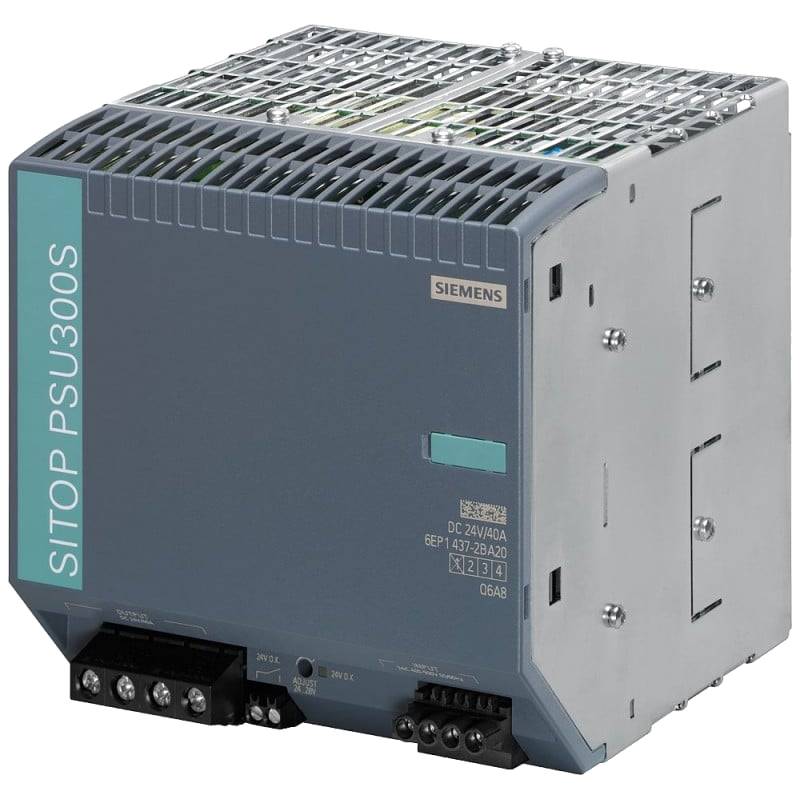












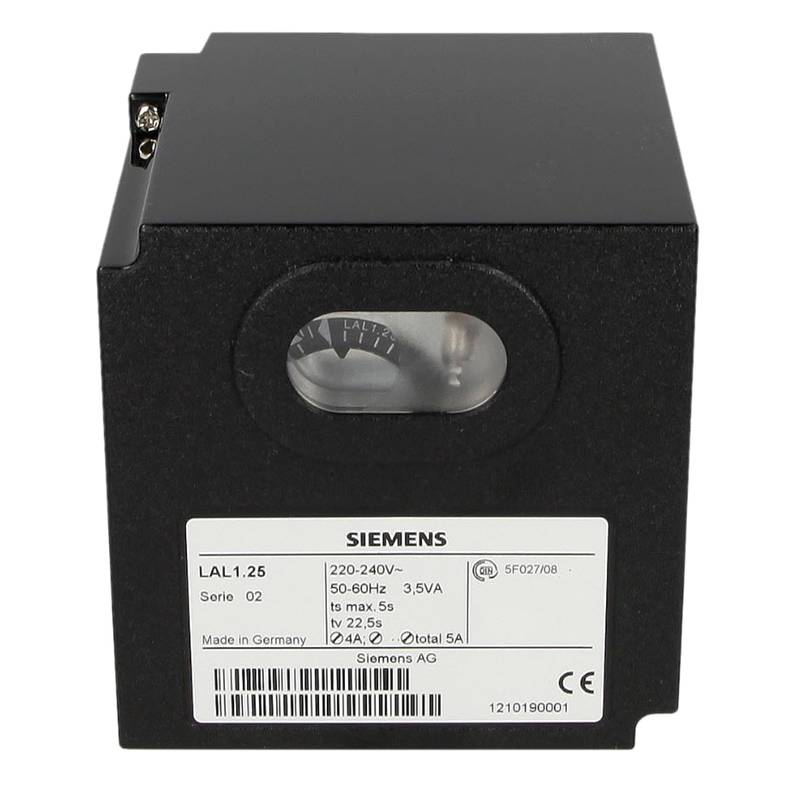
SIEMENS LDU11.323A27 Burner Control Unit 230V LDU11


The SIEMENS LDU11.323A27 Burner Control Unit, operating at 230V, represents a pivotal component for industrial combustion applications, offering robust safety, reliability, and precise control. This unit distinguishes itself through its advanced flame monitoring capabilities, automatic ignition sequence management, and comprehensive diagnostic features. Key technical parameters include a supply voltage of 230V AC, a specific operating temperature range crucial for industrial environments, and direct compatibility with various burner types and safety accessories. Its design prioritizes operational efficiency and adherence to stringent safety standards, making it a preferred choice for engineers and facility managers seeking dependable burner management solutions.
SIEMENS LDU11.323A27 Burner Control Unit: Specifications and Advantages
The SIEMENS LDU11.323A27 Burner Control Unit is engineered for sophisticated combustion management, embodying Siemens' commitment to industrial automation and safety. Its core advantages lie in its integrated safety functions, user-friendly interface, and extensive diagnostic capabilities, which streamline maintenance and troubleshooting. The unit’s technological differentiation stems from its advanced internal logic that ensures a safe and efficient ignition and operation sequence, minimizing risks associated with combustion processes. Its market positioning is firmly established as a high-reliability component for demanding industrial settings, recognized for its durability and performance.
| Parameter | Specification |
| :---------------------- | :--------------------------- |
| Product Type | Burner Control Unit |
| Model Number | LDU11.323A27 |
| Supply Voltage | 230V AC |
| Frequency | 50/60 Hz |
| Flame Detection | Ionization or UV sensor |
| Ignition Control | Integrated |
| Operating Temperature | -20°C to +60°C (typical) |
| Humidity | Max. 95% RH, non-condensing |
| Protection Class | IP40 (device), IP20 (terminals) |
| Dimensions (W x H x D) | Approx. 145 x 101 x 135 mm |
| Weight | Approx. 0.7 kg |
| Compliance Standards | EN 676, EN 298, etc. |
Core Features and Market Positioning
The SIEMENS LDU11.323A27 excels with its pre-purge and post-purge functionality, essential for clearing combustion chambers and ensuring safe restarts. Its integrated flame safeguard system actively monitors flame presence, triggering immediate shutdown in case of flame failure, thereby preventing hazardous situations. The unit supports both intermittent and continuous ignition modes, offering flexibility for various burner configurations. Furthermore, its internal diagnostic LEDs provide immediate visual feedback on operational status and fault conditions, significantly reducing downtime and simplifying troubleshooting for technicians. This combination of advanced safety, operational flexibility, and diagnostic clarity positions the LDU11.323A27 as a superior choice in the industrial burner control market, favored for its reliability and compliance with international safety standards.
Key Application Scenarios
The SIEMENS LDU11.323A27 Burner Control Unit finds extensive application across various industrial sectors where precise and safe combustion is paramount. It is ideally suited for controlling single or multi-burner systems in industrial boilers, process heaters, and thermal oxidizers. In manufacturing facilities, it ensures the stable operation of furnaces used in metal processing, glass production, and ceramics. The unit's robust design also makes it a reliable component for heating systems in commercial buildings and power generation plants, where consistent performance and adherence to safety regulations are critical. Its versatility allows integration into systems fueled by natural gas, LPG, or oil, making it adaptable to diverse fuel sources and operational requirements.
Practical System Integration Guidance
Integrating the SIEMENS LDU11.323A27 Burner Control Unit into existing or new systems requires careful attention to wiring and configuration to ensure optimal safety and performance. Proper grounding of the unit and associated flame detectors is crucial to prevent electrical interference and ensure reliable flame signal detection. The unit typically interfaces with an ignition transformer, fuel solenoid valves, and a fan motor, all of which must be correctly wired according to the LDU11.323A27's terminal layout and the overall burner system design. When installing, it's vital to adhere to the specified ambient temperature and humidity limits to guarantee longevity and prevent operational failures. Following the manufacturer's wiring diagrams and safety guidelines meticulously during installation and commissioning is paramount.
Operation and Risk Mitigation
Safe operation of the SIEMENS LDU11.323A27 Burner Control Unit hinges on understanding its operational sequences and potential fault indicators. The unit executes a precisely timed sequence: pre-ignition checks, ignition trial with fuel supply, flame establishment, and then full operation. Post-operation includes post-purge to clear residual gases. Risk mitigation is embedded through its flame monitoring, which immediately de-energizes fuel valves upon flame loss. Critical error codes, often indicated by specific LED flash patterns, require consulting the product manual for precise interpretation and corrective actions. Common issues include flame failure due to incorrect fuel-air mixture, faulty ignition, or sensor contamination, all of which the LDU11.323A27 is designed to detect and manage safely.
Scalability & Long-Term Value
The SIEMENS LDU11.323A27 Burner Control Unit offers significant long-term value through its compatibility with Siemens' broader automation platforms and its robust, durable design. While not inherently a digitally connected device in the IIoT sense, its reliable performance and adherence to established industrial communication protocols facilitate integration into SCADA or DCS systems for remote monitoring and data logging. For facilities seeking to enhance their smart manufacturing capabilities, the LDU11.323A27 can serve as a foundational control element, with its operational status signals being fed into higher-level supervisory systems. Its established reliability and Siemens' commitment to long product lifecycles ensure that systems built around the LDU11.323A27 can maintain operational integrity for many years, offering a secure and dependable investment.
Frequently Asked Questions
1. What is the primary function of the SIEMENS LDU11.323A27?
The LDU11.323A27 acts as a safety device for industrial burners. It precisely controls the ignition sequence and monitors for flame presence. Its main goal is to ensure safe and efficient combustion by preventing unsafe start-ups or operation.
It manages the timing for pre-purging, ignition trials, and post-purging cycles. The unit also continuously supervises the flame during operation. If the flame is lost, it immediately shuts off the fuel supply.
This comprehensive control and safety monitoring makes it essential for preventing hazardous conditions in boilers and furnaces.
2. How does the SIEMENS LDU11.323A27 detect a flame?
This control unit typically employs either an ionization probe or a UV scanner for flame detection. The ionization probe measures the electrical conductivity of the flame. A UV scanner detects ultraviolet radiation emitted by the flame.
The choice between these detection methods depends on the specific burner design and fuel type. Both methods provide a signal to the LDU11.323A27, confirming that combustion is occurring safely.
If the detected signal deviates from expected parameters or is absent when expected, the control unit initiates a safety shutdown.
3. What are the key benefits of using the LDU11.323A27 in an industrial setting?
A primary benefit is enhanced operational safety through its integrated flame safeguard system. This minimizes risks of fuel accumulation and explosions. The unit also ensures efficient burner operation by precisely managing ignition and combustion sequences.
Its diagnostic features, often indicated by LED signals, simplify troubleshooting and reduce downtime. This leads to increased productivity and lower maintenance costs.
The unit’s robust construction and adherence to international standards like EN 676 provide reliability and compliance for demanding industrial environments.
4. Can the SIEMENS LDU11.323A27 be used with different types of burners?
Yes, the LDU11.323A27 is designed for versatility and can control various single or multi-burner configurations. It is compatible with burners fueled by natural gas, LPG, or oil. Its flexible programming allows adaptation to different burner sizes and fuel inputs.
The unit supports both intermittent pilot ignition and main burner ignition sequences. This adaptability makes it suitable for applications such as industrial boilers, process heaters, and furnaces.
Proper selection of flame detectors and ignition transformers is key to successful integration with specific burner systems.
5. What are the typical installation requirements for the LDU11.323A27?
Installation requires careful attention to electrical wiring, ensuring all connections are secure and according to the manufacturer's diagram. Proper grounding of the unit and associated components is critical for reliable operation and safety. The unit must be installed within its specified operating temperature and humidity range.
Mounting should be in a location protected from excessive dust, moisture, and vibration. Ensure adequate ventilation around the unit to prevent overheating. Follow all local electrical codes and safety regulations during installation.
The LDU11.323A27 connects to ignition transformers, fans, and fuel valves. Ensure these components are correctly specified and wired.
6. How does the LDU11.323A27 handle potential faults or errors?
The unit incorporates comprehensive self-diagnostic capabilities to detect operational faults. It uses a system of flashing LEDs to indicate specific error codes, which correspond to different issues like flame failure or system malfunctions. These codes help technicians quickly identify the problem area.
Upon detecting a critical fault, such as flame loss during operation, the LDU11.323A27 immediately initiates a safe shutdown sequence. This involves closing the fuel supply valves and de-energizing the ignition.
Consulting the official Siemens LDU11.323A27 technical manual is essential for interpreting specific fault codes and understanding recommended troubleshooting steps.
7. What is the typical supply voltage for the SIEMENS LDU11.323A27?
The SIEMENS LDU11.323A27 operates on a standard industrial supply voltage of 230V AC. It is designed to function within a frequency range of 50/60 Hz, common in most electrical grids worldwide. Ensuring the correct voltage is supplied is critical for its proper functioning and longevity.
Incorrect voltage supply can lead to malfunction, damage to the unit, or failure to ignite the burner. Always verify the available power supply matches the unit's requirements before connecting.
This 230V AC specification makes it widely compatible with standard industrial power infrastructure.
8. What is the significance of pre-purge and post-purge cycles?
Pre-purge is a crucial safety step where the combustion chamber is cleared of any residual flammable gases before ignition. This prevents potential explosions during the start-up sequence. The LDU11.323A27 controls the fan and airflow for a specified duration to achieve this.
Post-purge, occurring after the burner has shut down, serves to cool the combustion chamber and remove any remaining combustion byproducts. This helps to prolong the life of the burner components and the system.
Both cycles are automatically managed by the LDU11.323A27 as part of its programmed safety sequence, ensuring a clean and safe operational environment.
9. How does the LDU11.323A27 contribute to energy efficiency?
The LDU11.323A27 contributes to efficiency by ensuring optimal combustion conditions. Precise control over the ignition sequence and flame monitoring prevents wasted fuel during start-up. It also helps maintain a stable flame during operation, promoting complete fuel combustion.
By accurately managing fuel and air ratios, the unit minimizes incomplete combustion, which can otherwise lead to reduced heat output and increased emissions. This optimized combustion process maximizes the energy extracted from the fuel.
Its reliable performance ensures the burner operates as intended, avoiding inefficient operation due to faulty control or flame instability.
10. Is the SIEMENS LDU11.323A27 compatible with IIoT or smart factory systems?
While the LDU11.323A27 itself is not an IIoT device, it can be integrated into IIoT frameworks through external interfaces. Its operational status and fault signals can be fed into SCADA or DCS systems. These higher-level systems can then enable remote monitoring and data analytics.
This integration allows facility managers to track burner performance, predict maintenance needs, and optimize operations within a smart factory environment. Data collection can inform energy management strategies and process improvements.
The unit’s robust control foundation provides a reliable input for more advanced digital integration, enhancing overall system intelligence.