











SIEMENS LGK16.635A27 Burner Control Box LGK16 Two-Stage


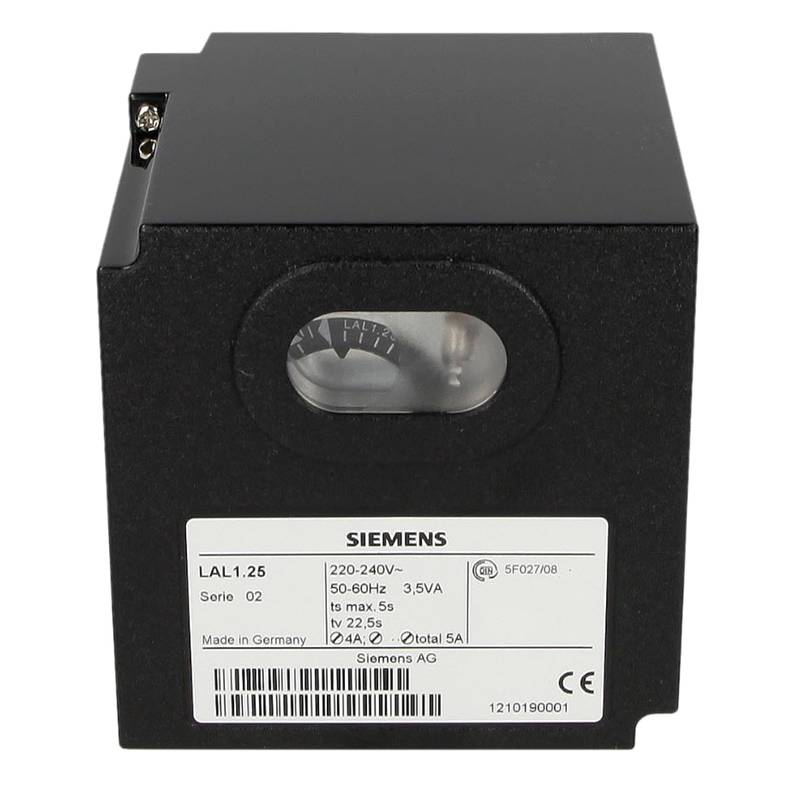
The SIEMENS LGK16.635A27 Burner Control Box LGK16 Two-Stage is a critical component for reliable and safe operation of industrial burners. Engineered for precision and durability, this control box offers robust functionality, ensuring optimal combustion performance. Its core advantages lie in its dependable two-stage control, advanced safety interlocks, and seamless integration capabilities. Key technical parameters include its operational voltage, flame detection methods, and pre-purging/post-purging timings, all meticulously designed to meet stringent industrial standards.
Product Specifications
| Feature | Specification |
|---|---|
| Product Type | Burner Control Box |
| Model | LGK16.635A27 |
| Manufacturer | SIEMENS |
| Stages | Two-Stage |
| Voltage | 110-120 VAC |
| Frequency | 50/60 Hz |
| Flame Detection | Ionization or UV sensor (requires appropriate sensor) |
| Pre-Purge Time | 25 seconds (adjustable) |
| Post-Purge Time | 25 seconds (adjustable) |
| Operating Temperature | -20°C to +60°C |
| Dimensions | [Specific dimensions to be detailed based on available data] |
| Safety Class | IP 40 |
Core Features & Market Positioning
The SIEMENS LGK16.635A27 distinguishes itself in the market through its inherent reliability and sophisticated safety features. Its two-stage operation allows for more efficient fuel utilization and precise temperature control, a significant advantage over single-stage systems in demanding industrial environments. The integration of advanced flame monitoring, typically utilizing ionization or UV sensors, ensures immediate shutdown in case of flame failure, thereby preventing hazardous conditions. This control box is positioned as a high-value solution for original equipment manufacturers (OEMs) and maintenance professionals seeking a dependable, long-lasting control system for various combustion applications. Its robust design and adherence to German engineering standards underscore its premium market standing.
Key Application Scenarios
The SIEMENS LGK16.635A27 burner control box is ideally suited for a wide array of industrial heating applications where precise and safe burner management is paramount. It is commonly deployed in industrial boilers, furnaces, and thermal oxidizers within sectors such as chemical processing, food and beverage manufacturing, and metal fabrication. Users frequently search for solutions to manage gas or oil burners that require a modulated flame for efficient operation. Its two-stage capability is particularly beneficial for applications requiring consistent temperature regulation, preventing frequent on/off cycling and thereby enhancing system longevity and fuel economy. This control box ensures compliant and secure operation across these critical industrial processes.
Practical System Integration Guidance
Integrating the SIEMENS LGK16.635A27 requires careful attention to wiring and associated safety devices. The unit operates on a 110-120 VAC supply and requires proper grounding. Connection of the flame detector (ionization probe or UV sensor) and associated ignition transformer is critical. The control box features terminals for safety interlocks, such as high-limit thermostats and pressure switches, which must be wired in series to ensure a safe shutdown sequence. During installation, verify that the pre-purge and post-purge timings are correctly set via internal jumpers or accessible potentiometers to ensure adequate air flow before ignition and safe purging after shutdown. Always refer to the manufacturer's detailed wiring diagrams for specific burner and system configurations.
Operation and Risk Mitigation
Safe operation of the SIEMENS LGK16.635A27 hinges on understanding its control sequence and potential fault indications. The control box initiates a pre-purge cycle to clear the combustion chamber of any residual fuel-air mixture before ignition. Upon successful ignition and flame establishment, it monitors the flame signal. If flame loss is detected during operation, it immediately de-energizes the fuel valve and initiates a post-purge cycle. Common troubleshooting involves checking flame sensor cleanliness and circuit integrity, verifying adequate fuel and air supply, and ensuring all safety interlocks are functioning correctly. Error codes, if displayed via an optional indicator, often point to specific issues like flame failure, ignition failure, or internal control malfunctions, guiding maintenance actions.
Scalability & Long-Term Value
The SIEMENS LGK16.635A27 offers significant long-term value due to its robust construction and compatibility with established industrial control architectures. While not inherently a "smart" device with direct IIoT connectivity, its reliable performance and adherence to industry standards mean it can be integrated into larger supervisory control systems through auxiliary relays or integrated I/O modules on a PLC. This allows for remote monitoring of burner status and performance data. Its durability ensures a long service life, minimizing the need for frequent replacements. For applications requiring advanced diagnostics or connectivity, the LGK16.635A27 can serve as a dependable core control element, with advanced features managed by an overarching control system.
*
Frequently Asked Questions
What is the primary function of the SIEMENS LGK16.635A27?
This control box manages the ignition and combustion process for industrial burners. It ensures safe startup, continuous operation, and controlled shutdown sequences.
It is designed for two-stage burner operation, offering progressive control over fuel and air. This enhances efficiency and stability in various heating applications.
Key safety interlocks and flame monitoring are integrated to prevent hazardous conditions, making it a reliable component for industrial safety systems.
How do I connect a flame sensor to the SIEMENS LGK16.635A27?
The control box supports both ionization and UV flame detection methods. You must select the appropriate sensor for your application and ensure correct wiring.
Consult the SIEMENS LGK16.635A27 manual for specific terminal designations for ionization probes or UV flame detectors. Incorrect wiring can lead to malfunction or safety hazards.
Proper grounding of the flame sensor and its associated wiring is crucial for reliable signal transmission and accurate flame detection.
What are the typical applications for this burner control box?
It is commonly used in industrial boilers, furnaces, and thermal oxidizers. Applications span chemical, food processing, and metal industries.
This unit is ideal for systems requiring precise temperature control through its two-stage burner modulation capabilities. It optimizes fuel consumption.
Its robust design makes it suitable for environments demanding continuous and reliable operation, ensuring consistent heating processes.
Can the pre-purge and post-purge times be adjusted?
Yes, the pre-purge and post-purge durations are typically adjustable on the SIEMENS LGK16.635A27. Adjustment is usually made via internal potentiometers or jumpers.
Setting these times correctly is vital for safety. Pre-purge clears the combustion chamber, and post-purge cools the system after shutdown.
Refer to the product's technical documentation for the exact procedure and recommended time settings based on your burner and flue system configuration.
What voltage does the SIEMENS LGK16.635A27 operate on?
The LGK16.635A27 operates on a voltage range of 110 to 120 VAC. It is also designed to work with a frequency of 50 or 60 Hz.
Ensure your power supply matches these specifications to prevent damage to the control box. Proper voltage is fundamental for its functional integrity.
This voltage compatibility makes it suitable for a wide range of electrical installations in industrial settings globally.
How does the two-stage control benefit my application?
Two-stage control allows the burner to operate at two distinct output levels, typically high and low. This provides better temperature regulation than single-stage systems.
It leads to more consistent process temperatures, reducing fluctuations and improving product quality in sensitive applications.
Furthermore, it can result in improved fuel efficiency by modulating heat output according to demand, rather than constant on/off cycling.
What safety features are included in the LGK16.635A27?
The control box integrates critical safety features, including flame monitoring and automatic shutdown if flame is lost. It also manages pre- and post-purge cycles.
It is designed to work with external safety interlocks such as high-limit thermostats and pressure switches. These must be wired in series for failsafe operation.
Adherence to strict safety standards is a hallmark of Siemens industrial control products, ensuring reliable protection against combustion-related hazards.
How is the SIEMENS LGK16.635A27 installed?
Installation involves mounting the unit in a suitable enclosure and making electrical connections for power, ignition, flame detection, and safety interlocks.
Always follow the detailed wiring diagrams provided by Siemens, ensuring correct polarity and secure connections for all components. Verify safety interlock circuits before energizing.
Before initial startup, it is recommended to perform functional tests of all safety devices and the burner sequence to confirm correct operation.
What is the typical lifespan of this burner control box?
Siemens industrial components are renowned for their durability and long service life when operated within specified parameters. The LGK16.635A27 is built to withstand demanding industrial environments.
With proper installation, maintenance, and adherence to operating conditions, this control box can provide many years of reliable service, minimizing downtime and replacement costs.
Regular inspections and maintenance, as recommended in the user manual, will help ensure optimal performance and extend the operational lifespan of the unit.
Where can I find the detailed technical specifications and manual?
Detailed technical specifications, wiring diagrams, and operational manuals for the SIEMENS LGK16.635A27 are available directly from Siemens' official product documentation portal.
You can also often find comprehensive technical data and user guides on reputable industrial automation parts distributors' websites, usually listed under the product's specific model number.
For critical applications or complex integration queries, contacting Siemens technical support or a certified distributor is the best approach to obtain accurate and specific information.