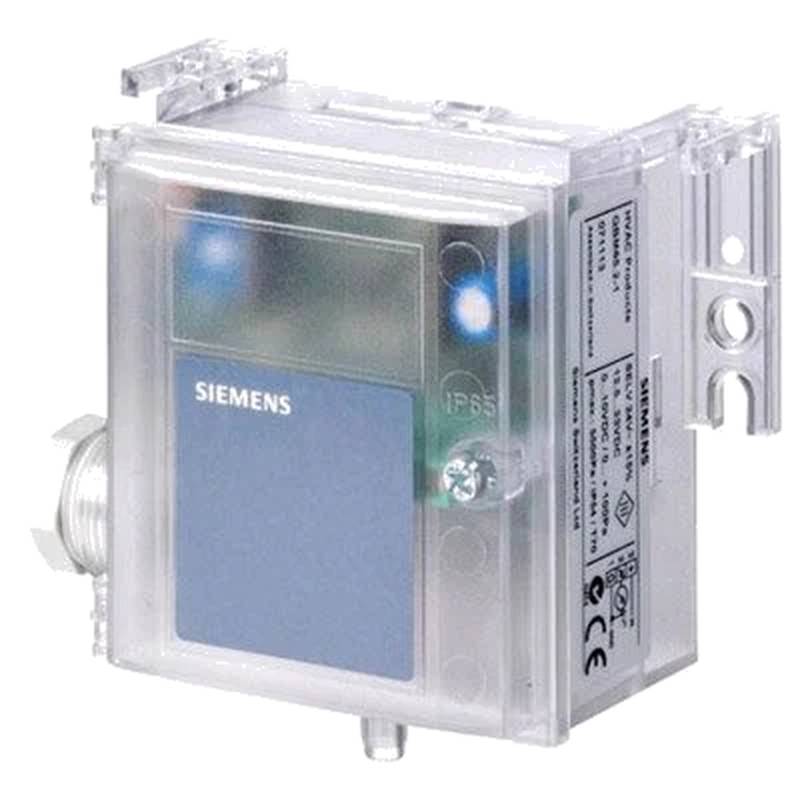
SIEMENS QBM2030-1U Differential Pressure Sensor $\pm 100$ Pa


The SIEMENS QBM2030-1U Differential Pressure Sensor, with a range of ±100 Pa, stands as a critical component for precise air pressure monitoring in HVAC and building automation systems. This device excels through its robust design, high accuracy, and seamless integration capabilities. Key technical specifications include a measuring range of ±100 Pa, an output signal of 0-10 V DC, and power supply requirements of 24 V AC/DC. Its operational temperature range spans from -20 to +50 °C, ensuring reliability in diverse environmental conditions. The QBM2030-1U is engineered for durability and ease of use, making it a preferred choice for professionals seeking dependable differential pressure measurement solutions.
Core Features & Market Positioning
The SIEMENS QBM2030-1U differentiates itself in the market through its superior accuracy and reliability, essential for critical applications like ventilation control and filter monitoring. Its advanced sensor technology ensures consistent performance, minimizing drift and maximizing operational efficiency. This sensor is a cornerstone of modern Building Management Systems (BMS), offering a cost-effective yet high-performance solution that aligns with SIEMENS' reputation for industrial innovation and quality. Its competitive advantage lies in its precise measurement capabilities and the assurance of a trusted brand in automation technology.
Key Application Scenarios
Professionals widely deploy the SIEMENS QBM2030-1U differential pressure sensor in numerous applications where accurate air pressure measurement is paramount. It is integral to maintaining optimal airflow in cleanrooms and laboratories, ensuring containment and product integrity. In HVAC systems, it plays a vital role in monitoring the pressure drop across air filters, triggering alerts for replacement and optimizing system performance. Furthermore, the sensor is employed in variable air volume (VAV) box control, enabling precise regulation of airflow to different zones within a building. Its utility also extends to monitoring pressure in ductwork, fan performance analysis, and over/under pressure applications in industrial processes.
Practical System Integration Guidance
Integrating the SIEMENS QBM2030-1U into existing systems is streamlined by its standard output signals and straightforward wiring. The sensor typically connects using a three-wire configuration: power supply (24 V AC/DC), ground, and the 0-10 V DC output signal. For analog input modules in PLCs or BMS controllers, direct connection is usually possible. Proper commissioning involves ensuring the sensor is oriented correctly, typically vertically, and allowing for a stabilization period before taking readings. Calibration is often performed by setting the zero point when no pressure difference is present or by referencing known pressure values within the controlled environment. Ensure proper shielding of the signal cable in electrically noisy environments to maintain signal integrity.
Operation and Risk Mitigation
Operating the SIEMENS QBM2030-1U differential pressure sensor requires adherence to its specified environmental and electrical parameters to prevent damage and ensure longevity. Avoid exposing the sensor to pressures exceeding its ±100 Pa range, as this can lead to irreversible damage and inaccurate readings. Installation in areas with excessive dust or moisture should be avoided unless proper environmental protection is in place. During maintenance, disconnect power before any physical intervention. Common troubleshooting involves checking power supply voltage, verifying wiring connections, and ensuring the sensor is not subjected to external vibrations or extreme temperatures outside its operating range. Faulty readings often stem from obstructions in the pressure ports or calibration drift, which can be rectified through recalibration or port cleaning.
Scalability & Long-Term Value
The SIEMENS QBM2030-1U offers significant long-term value due to its compatibility with the broader SIEMENS Desigo™ CC platform and other open-standard automation systems. This compatibility ensures seamless integration into new or existing BMS, allowing for centralized monitoring and control. Its robust construction and proven reliability contribute to a long operational lifespan, minimizing replacement costs. As building automation trends evolve towards IIoT and data-driven insights, the QBM2030-1U provides a foundation for smart building solutions, enabling advanced analytics and predictive maintenance by feeding accurate differential pressure data into digital platforms.
Frequently Asked Questions
What is the accuracy of the SIEMENS QBM2030-1U?
The SIEMENS QBM2030-1U offers a high degree of accuracy crucial for sensitive applications. Its precision ensures reliable data for HVAC control.
This sensor is designed for demanding environments where exact pressure differentials are vital. It minimizes measurement errors.
Users can expect consistent and repeatable readings, critical for system stability and energy efficiency.
How do I wire the QBM2030-1U sensor?
The QBM2030-1U typically uses a three-wire connection for its 0-10 V DC output. Power is supplied via 24 V AC/DC.
Connect the power supply to the appropriate terminals and the signal output to your control system's analog input. Always refer to the product manual for exact pinouts.
Proper wiring is essential for accurate data transmission and to prevent damage to the sensor or connected equipment.
What are the typical applications for this differential pressure sensor?
This sensor is ideal for monitoring air filters in HVAC systems to optimize replacement schedules. It's also used for VAV box control and duct pressure monitoring.
Cleanroom and laboratory environments benefit from its precise airflow control capabilities. It ensures critical pressure differentials are maintained.
Industrial processes requiring accurate air pressure monitoring for safety or efficiency also utilize this SIEMENS device.
Can the QBM2030-1U be calibrated in the field?
Yes, field calibration is possible to ensure continued accuracy over time. Zero point calibration is a common procedure.
This involves setting the reference pressure when no differential is present. Consult the product's technical documentation for detailed calibration steps.
Regular calibration helps maintain system performance and prevents false alarms or control deviations.
What is the operating temperature range of the QBM2030-1U?
The sensor operates reliably within a broad temperature range from -20 to +50 °C. This makes it suitable for various environments.
This wide range ensures consistent performance in both cold and moderately warm conditions typical of industrial settings. It avoids malfunctions due to temperature fluctuations.
Adhering to this range is crucial for maintaining the sensor's accuracy and extending its operational lifespan.
What does the ±100 Pa measuring range signify?
The ±100 Pa range means the sensor can accurately detect pressure differences from -100 Pascals to +100 Pascals. This is a sensitive measurement.
This range is suitable for applications where subtle changes in air pressure need to be monitored, such as filter status or room pressurization. It offers fine granularity.
It indicates the maximum positive or negative deviation from atmospheric pressure that the sensor is designed to measure effectively.
How does the 0-10 V DC output work?
The 0-10 V DC output is an analog signal proportional to the measured differential pressure. It's a standard industrial signal.
A lower pressure difference typically corresponds to a lower voltage (e.g., 0 V), while a higher pressure difference corresponds to a higher voltage (e.g., 10 V). The exact mapping is defined in the product specs.
This signal is easily interpreted by most PLCs, BMS, and data acquisition systems for monitoring and control purposes.
Is the QBM2030-1U compatible with non-SIEMENS systems?
Yes, its standard output signals allow for integration with many third-party control systems. It adheres to common protocols.
The 0-10 V DC analog output is a widely adopted standard, facilitating interoperability with various automation platforms. This ensures flexibility.
For specific compatibility queries, it is always best to consult the technical documentation or SIEMENS support.
What maintenance is required for this sensor?
Basic maintenance involves keeping the pressure ports clear of dust and debris. Inspect for any physical damage.
Regular calibration checks, especially after significant environmental changes or system adjustments, are recommended for sustained accuracy. This ensures reliable operation.
Avoid using solvents or abrasive materials on the sensor; use a soft, dry cloth for cleaning. Ensure power is off during any cleaning or inspection.
Where can I find the full technical specifications for the QBM2030-1U?
Full technical specifications are available in the official SIEMENS product datasheet or manual. These documents provide comprehensive details.
You can typically download these documents from the SIEMENS building technologies website or by contacting their sales representatives. They are the authoritative source.
These datasheets cover all parameters, including accuracy, response time, power consumption, and environmental ratings for the QBM2030-1U.