











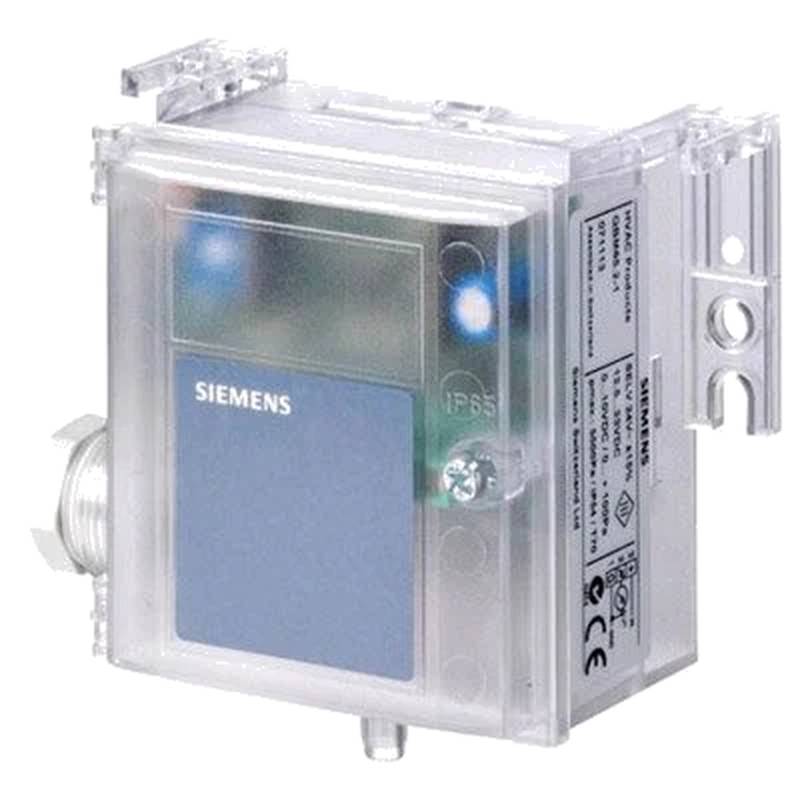
SIEMENS QBM2030-5 Differential Pressure Sensor 500 Pa HVAC


The SIEMENS QBM2030-5 Differential Pressure Sensor 500 Pa HVAC is a precision instrument engineered for reliable pressure monitoring in demanding building automation systems. This sensor excels in applications requiring accurate detection of minute pressure variations, offering significant advantages in optimizing HVAC performance and ensuring occupant comfort. Its core strengths lie in its robust design, high accuracy, and seamless integration capabilities, making it an indispensable component for modern intelligent buildings. Key technical parameters include a measuring range of 0 to 500 Pascals (Pa), a highly precise accuracy of ±2 Pa, and a fast response time of less than 250 milliseconds, ensuring immediate reaction to pressure changes.
Product Specifications
| Feature | Specification |
| :---------------------- | :------------------------------------------- |
| Model | QBM2030-5 |
| Manufacturer | SIEMENS |
| Measurement Range | 0…500 Pa |
| Accuracy | ±2 Pa |
| Response Time | < 250 ms |
| Output Signal | 0…10 VDC (standard) |
| Operating Temperature | -20…+50 °C |
| Storage Temperature | -40…+70 °C |
| Ingress Protection | IP54 |
| Power Supply | 24 VAC/VDC ±20% |
| Mounting | Direct wall mounting or with adapter plate |
| Connection Type | Screw terminals |
| Media | Non-corrosive, dry air or non-flammable gases |
| Overpressure | Max. 5000 Pa |
Core Features & Market Positioning
The SIEMENS QBM2030-5 distinguishes itself through its exceptional accuracy and rapid response time, critical for maintaining stable HVAC operations. Its 0-500 Pa measurement range is finely tuned for typical differential pressure applications within ventilation systems, such as filter monitoring, fan control, and zone pressure regulation. The sensor's robust IP54 rating ensures reliable performance even in environments with dust and moisture, a significant advantage over less protected alternatives. Its positioning as a high-quality, dependable component within the SIEMENS Desigo building management ecosystem further enhances its value, offering guaranteed compatibility and integrated functionality for advanced control strategies. This sensor is engineered for professionals who demand precision, reliability, and seamless integration in critical building services.
Key Application Scenarios
This differential pressure sensor finds extensive use in a variety of HVAC applications where precise airflow and pressure control are paramount. It is ideal for monitoring the condition of air filters in air handling units (AHUs), triggering alerts or automatically adjusting fan speeds as filters become clogged, thereby maintaining air quality and energy efficiency. Furthermore, the QBM2030-5 is instrumental in maintaining optimal pressure differentials in critical environments such as operating rooms, laboratories, and cleanrooms, preventing cross-contamination. It also plays a vital role in variable air volume (VAV) systems, enabling precise airflow regulation to individual zones and contributing to personalized comfort and energy savings. Its applicability extends to fan static pressure control and duct pressure monitoring, ensuring consistent airflow throughout the entire HVAC network.
Practical System Integration Guidance
Integrating the SIEMENS QBM2030-5 into an HVAC control system is a straightforward process, typically involving a 24 VAC/VDC power supply connected to the designated terminals. The sensor's 0-10 VDC analog output signal can be directly interfaced with most modern Building Management Systems (BMS) or Programmable Logic Controllers (PLCs). For installation, the sensor should be mounted in a location representative of the pressure being measured, ensuring secure connections to the pressure ports using appropriate tubing. Proper polarity for the power supply is crucial. When configuring the BMS, the input signal range (0-10 VDC) must be mapped to the corresponding pressure range (0-500 Pa) to ensure accurate readings. Calibration may be performed via the BMS, or by applying a known pressure and adjusting the offset if necessary.
Operation and Risk Mitigation
The SIEMENS QBM2030-5 operates by measuring the pressure difference between its two ports. For typical HVAC applications, one port is connected to the higher pressure side and the other to the lower pressure side of the system being monitored. The sensor converts this pressure differential into a standardized 0-10 VDC output signal, which is then interpreted by the connected control system. Overpressure protection is a key feature, with the sensor capable of withstanding up to 5000 Pa without damage, safeguarding against accidental high-pressure events. To mitigate operational risks, ensure that the media being measured is clean, dry, and non-corrosive, as specified. Avoid exposing the sensor to extreme temperatures outside its specified operating range, and verify electrical connections before applying power to prevent short circuits. Regular visual inspection of the sensor and its tubing for any signs of damage or blockage is recommended.
Scalability & Long-Term Value
The SIEMENS QBM2030-5 offers significant long-term value through its robust construction and compatibility with the broader SIEMENS building automation ecosystem. Its standard 0-10 VDC output ensures compatibility with a wide array of existing control platforms, allowing for straightforward retrofitting or upgrades. For projects requiring advanced digital integration, the QBM2030-5 can be paired with digital transmitters or gateway devices that convert its analog signal into digital protocols like BACnet or Modbus, enabling seamless integration with IIoT platforms for enhanced data analytics, predictive maintenance, and remote monitoring capabilities. This inherent flexibility ensures that the sensor remains a valuable asset even as building control technologies evolve, supporting scalable solutions that adapt to future demands.
Frequently Asked Questions
Q1: What is the primary function of the SIEMENS QBM2030-5 sensor?
The QBM2030-5 sensor accurately measures differential pressure within HVAC systems. It is designed to detect minute pressure variations crucial for system optimization. This precise measurement aids in maintaining airflow, monitoring filter status, and controlling zone pressures effectively.
This sensor plays a critical role in ensuring optimal performance and energy efficiency in ventilation and air conditioning setups. Its readings inform automated control processes, leading to improved building environments. It is a fundamental component for sophisticated building management.
It provides a reliable analog output signal that translates pressure changes into actionable data for control systems. This direct interface simplifies integration and ensures quick response to environmental shifts. The sensor is a key enabler of smart building technology.
Q2: What are the key advantages of using the SIEMENS QBM2030-5 in HVAC applications?
Its high accuracy of ±2 Pa ensures precise control over critical pressure differentials. This leads to optimized airflow and improved indoor air quality. It significantly contributes to energy efficiency by enabling fine-tuned system operation.
The sensor boasts a rapid response time of less than 250 ms, allowing for immediate reaction to dynamic pressure changes. This is vital for stable operation in variable air volume systems. It prevents system instability and ensures occupant comfort.
With an IP54 rating, the QBM2030-5 offers robust protection against dust and moisture ingress. This ensures reliable operation in diverse environmental conditions. Its durability minimizes maintenance needs and extends operational life.
Q3: What is the measurement range and accuracy of the SIEMENS QBM2030-5?
The sensor features a precise measurement range from 0 to 500 Pascals (Pa). This range is specifically tailored for common differential pressure monitoring needs in HVAC. It allows for detailed observation of subtle pressure shifts.
Its accuracy is rated at ±2 Pa, providing highly reliable and consistent readings. This level of precision is essential for sensitive applications like cleanrooms or operating theaters. It guarantees that control actions are based on true system conditions.
This combination of range and accuracy makes the QBM2030-5 ideal for applications demanding fine control. It allows for sophisticated adjustments to fan speeds or damper positions. The sensor supports highly optimized HVAC performance.
Q4: How is the SIEMENS QBM2030-5 typically installed and wired?
Installation involves direct wall mounting or using an adapter plate for flexible positioning. Secure the sensor firmly in the desired location representative of the measured pressure. Ensure clear access to the pressure ports.
Wiring requires connecting the power supply (24 VAC/VDC ±20%) to the appropriate terminals. The 0-10 VDC output signal is then connected to the input of the building management system or controller. Verify correct polarity for safe operation.
Proper connection to pressure ports using suitable tubing is critical for accurate readings. Ensure tubing is free from kinks or blockages. The sensor's screw terminals provide a secure electrical connection point.
Q5: What are the typical applications for the SIEMENS QBM2030-5?
This sensor is commonly used for monitoring air filter status in AHUs and VAV boxes. It detects pressure drop across filters, signaling the need for replacement or cleaning. This maintains optimal airflow and IAQ.
It is essential for maintaining precise pressure differentials in critical environments such as operating rooms and cleanrooms. This prevents air leakage and contamination. It ensures sterile or controlled atmospheric conditions.
The QBM2030-5 also facilitates fan static pressure control and duct pressure monitoring. It helps regulate airflow consistently throughout the HVAC network. This is crucial for system balance and energy efficiency.
Q6: What is the output signal of the SIEMENS QBM2030-5, and how is it used?
The sensor provides a standard analog output signal of 0-10 VDC. This voltage output is directly proportional to the measured differential pressure. It represents the pressure reading in a format easily understood by control systems.
This 0-10 VDC signal interfaces seamlessly with most modern Building Management Systems (BMS) and PLCs. The control system interprets this signal to adjust fan speeds, damper positions, or trigger alarms. It enables automated responses to pressure changes.
When integrating, the control system's input must be configured to map the 0-10 VDC range to the sensor's 0-500 Pa pressure range. This ensures accurate interpretation of the pressure data for effective control strategies. It's a key step for proper calibration.
Q7: What are the operating temperature and environmental protection ratings of this sensor?
The SIEMENS QBM2030-5 operates reliably within a temperature range of -20 to +50 °C. This broad operating window ensures performance in typical indoor building environments. It is designed for consistent function under normal conditions.
The sensor features an Ingress Protection (IP) rating of IP54. This rating signifies protection against dust ingress and splashing water. It allows for installation in areas where light moisture or dust may be present.
This environmental robustness makes it suitable for a variety of installation sites within HVAC systems. It contributes to the sensor's longevity and reliable performance in non-ideal conditions. It reduces the risk of environmental damage.
Q8: Can the SIEMENS QBM2030-5 be used with non-air media?
The sensor is specifically designed and rated for use with non-corrosive, dry air. It is also suitable for other non-flammable gases. Using it with liquids or corrosive substances will likely cause damage.
It is crucial to adhere to the specified media types for optimal performance and sensor longevity. Contaminants or aggressive gases can affect accuracy or lead to outright failure. Always verify the media compatibility.
Always ensure the air or gas being measured is free from excessive moisture or particulates. While IP54 offers some protection, the internal sensing elements are sensitive to direct contact with incompatible substances. This avoids internal sensor damage.
Q9: What is the overpressure rating for the SIEMENS QBM2030-5?
The SIEMENS QBM2030-5 sensor can withstand a maximum overpressure of 5000 Pa. This significant tolerance protects the sensor from damage due to sudden, unexpected pressure spikes. It ensures the sensor remains operational after transient events.
This feature is vital in HVAC systems where pressure fluctuations can occur. It provides a safety margin against accidental overloads that might otherwise compromise the sensor's integrity. It is a key aspect of its robust design.
Even with this overpressure capability, it's best practice to operate the sensor within its intended measurement range for sustained accuracy. Prolonged exposure to pressures near the maximum limit may affect long-term calibration stability. Operate within the 0-500 Pa range for best results.
Q10: How does this sensor contribute to energy efficiency in HVAC systems?
By accurately monitoring differential pressures, the sensor enables precise control of fan speeds and airflow. This prevents over-ventilation and reduces unnecessary fan energy consumption. It ensures systems operate only as needed.
It aids in optimizing filter performance by indicating clogging accurately. This ensures air handlers operate efficiently and maintains desired airflow, preventing performance degradation. This prolongs filter life and reduces replacement costs.
The QBM2030-5 supports dynamic control in VAV systems, adjusting airflow to specific zones as required. This avoids conditioning unoccupied spaces or over-conditioning occupied ones. This targeted approach significantly cuts down on overall energy usage.