











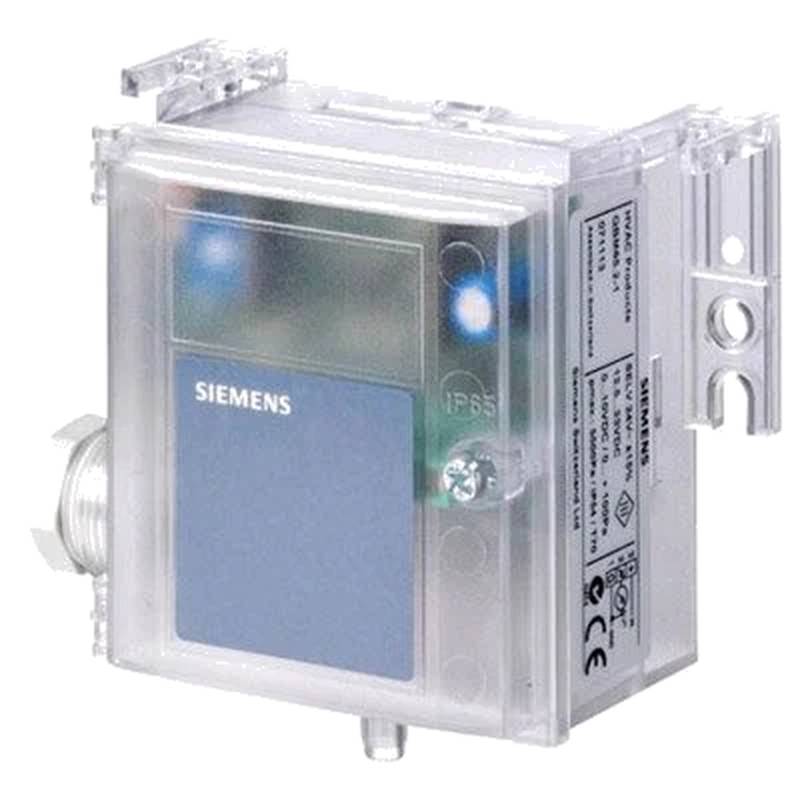
SIEMENS QBM3020-5 Differential Pressure Sensor 500 Pa HVAC


The SIEMENS QBM3020-5 Differential Pressure Sensor, with its precise 500 Pa range, stands as a cornerstone for advanced HVAC system monitoring and control. This robust sensor excels in delivering critical air pressure data, enabling optimized airflow management, energy efficiency, and enhanced indoor air quality across diverse commercial and industrial environments. Its inherent advantages lie in its reliable accuracy, durable construction, and seamless integration capabilities, making it a preferred choice for demanding applications. The QBM3020-5 boasts a rapid response time, minimal drift, and a versatile output signal, crucial for real-time adjustments in complex building management systems.
Product Specifications
| Parameter | Value |
| :------------------------ | :---------------------------------- |
| Product Type | Differential Pressure Sensor |
| Model | QBM3020-5 |
| Measuring Range | 0…500 Pa |
| Output Signal | 0…10 V DC (3-wire) |
| Accuracy | ±1.5 % of full scale |
| Operating Temperature | -20…+50 °C |
| Power Supply | 15…24 V DC |
| Housing Material | ABS plastic |
| Connection Type | Screw terminals |
| Ingress Protection | IP54 |
| Dimensions (H x W x D) | 75 x 75 x 30 mm |
Core Features & Market Positioning
The SIEMENS QBM3020-5 differentiates itself through its exceptional precision in the 500 Pa range, a critical band for many HVAC applications like filter monitoring and fan control. Its design prioritizes long-term stability and resistance to environmental factors, ensuring reliable performance even in challenging industrial settings. This sensor is engineered to meet stringent building automation standards, offering a competitive edge through its combination of accuracy, ease of use, and integration flexibility with leading Building Management Systems (BMS). Its market positioning is firmly established as a high-value, dependable component for ensuring optimal HVAC operational efficiency and occupant comfort.
Key Application Scenarios
The QBM3020-5 is exceptionally well-suited for monitoring static and differential pressures in a wide array of HVAC applications. This includes critical tasks such as ensuring proper ventilation in cleanrooms, monitoring the pressure drop across air filters to optimize maintenance schedules, and controlling fan speeds for energy efficiency in variable air volume (VAV) systems. It is also integral to maintaining safe pressure differentials in laboratory fume hoods and operating theaters, where precise air control is paramount. Furthermore, its utility extends to monitoring duct static pressure and controlling airflow in commercial kitchens and industrial exhaust systems, thereby safeguarding air quality and operational integrity.
Practical System Integration Guidance
Integrating the SIEMENS QBM3020-5 into existing HVAC systems is straightforward, thanks to its standard 0-10 V DC output and simple wiring requirements. The sensor utilizes a 3-wire connection, typically requiring connections for power supply (positive and negative) and the output signal. Installation involves mounting the sensor in a location representative of the pressure to be measured, often with tubing connected to the high and low-pressure ports using the provided fittings. For optimal accuracy, ensure the tubing is airtight and runs directly from the measurement point to the sensor. Commissioning typically involves verifying the output signal against known pressure conditions or through a connected BMS, where parameters can be configured for specific control loops.
Operation and Risk Mitigation
Proper operation of the SIEMENS QBM3020-5 relies on adherence to its specified operating temperature range and power supply requirements to prevent component damage or inaccurate readings. Users should consistently check for leaks in the connected pressure tubing, as these are a common source of measurement errors. Avoiding over-pressurization beyond the 500 Pa limit is crucial to maintain sensor integrity. While the QBM3020-5 is designed for robustness, potential issues can include signal drift due to extreme environmental conditions or prolonged exposure to contaminants, necessitating periodic recalibration or inspection of the sensing diaphragm.
Scalability & Long-Term Value
The QBM3020-5 offers significant long-term value due to its compatibility with a wide range of SIEMENS building automation platforms and other standard BMS protocols. Its reliable performance minimizes the need for frequent replacements, contributing to lower operational costs. For facilities looking to enhance their smart building capabilities, this sensor can be a crucial node in an IIoT (Industrial Internet of Things) infrastructure, feeding data into advanced analytics platforms for predictive maintenance and energy optimization. The sensor's ability to integrate seamlessly with evolving digital control strategies ensures its relevance and utility as building systems are upgraded or expanded over time.
Frequently Asked Questions
What is the primary function of the SIEMENS QBM3020-5 sensor?
The QBM3020-5 is primarily used to measure and monitor differential air pressure within HVAC systems. It provides critical data for controlling airflow, ensuring filter efficiency, and maintaining safe building environments. This sensor is engineered for precision and reliability in demanding building automation applications.
This device plays a vital role in optimizing energy consumption by allowing for dynamic adjustments to fan speeds based on real-time pressure readings. It also contributes to superior indoor air quality by enabling precise ventilation control. The sensor's accurate measurements are indispensable for maintaining desired atmospheric conditions in specialized areas like cleanrooms or laboratories.
Its robust design ensures long-term operational stability and minimizes the need for frequent maintenance or replacement. The QBM3020-5’s accurate data output facilitates proactive system management, preventing potential issues before they impact building performance or occupant comfort.
What is the measurement range and accuracy of the SIEMENS QBM3020-5?
The SIEMENS QBM3020-5 sensor accurately measures differential air pressure within a range of 0 to 500 Pascals (Pa). This specific range is ideal for many standard HVAC applications requiring precise pressure monitoring. Its accuracy is specified at ±1.5% of the full scale, ensuring reliable and trustworthy readings.
This level of precision is critical for applications such as monitoring air filter loading, controlling variable air volume (VAV) boxes, and maintaining pressure differentials in cleanrooms or fume hoods. Consistent and accurate measurements are key to maintaining optimal system performance and energy efficiency.
The sensor's calibration is designed to provide this specified accuracy across its entire operating range. Users can rely on these specifications for designing control strategies and ensuring that HVAC systems operate as intended, preventing costly errors.
How is the SIEMENS QBM3020-5 sensor wired and integrated into an HVAC system?
The QBM3020-5 is a 3-wire sensor, typically requiring a 15-24 V DC power supply. Connections are made via screw terminals, usually involving one connection for the positive power supply, one for the negative power supply, and a third for the 0-10 V DC analog output signal. Ensure correct polarity during wiring to prevent damage to the sensor.
Integration involves connecting pressure sensing ports to the relevant points in the ductwork or system using appropriate tubing. The high-pressure port (labeled 'P1' or 'high') and the low-pressure port (labeled 'P2' or 'low') should be connected to areas with the respective pressure influences. Proper sealing of tubing connections is crucial for accurate differential pressure readings.
Once physically installed and wired, the sensor's 0-10 V DC output signal can be connected to a Building Management System (BMS) input module or a dedicated controller. Configuration within the BMS will involve mapping the input signal to the desired pressure units (Pascals) and setting control parameters based on the sensor's specifications and application requirements.