











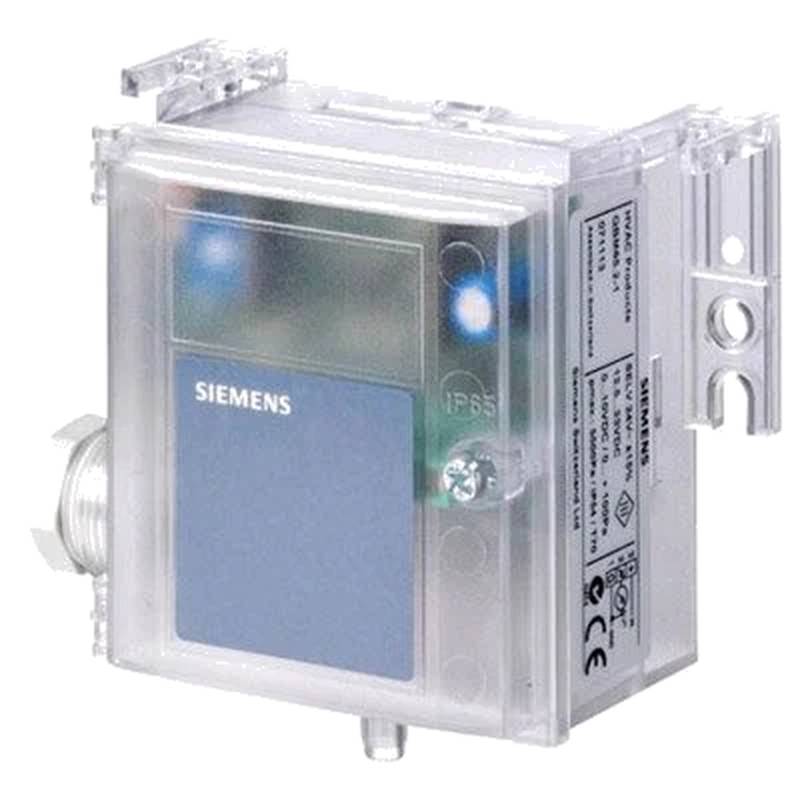
SIEMENS QBM3120-25 Differential Pressure Sensor 2500 Pa HVAC Control


The SIEMENS QBM3120-25 is a high-precision differential pressure sensor engineered for robust HVAC control applications, offering an impressive measurement range of 0 to 2500 Pa. This device excels in providing accurate and reliable differential pressure readings, crucial for optimizing building performance, energy efficiency, and occupant comfort. Its core advantages lie in its exceptional accuracy, durable construction, and seamless integration into modern building automation systems. The QBM3120-25 features a user-selectable pressure range, ensuring versatility across various HVAC setups. Its technical specifications include a ±0.5% FS accuracy, a 0-10 VDC output signal, and an operating temperature range of -20 to +50°C, making it a dependable choice for demanding industrial environments.
Product Specifications
| Parameter | Specification |
| :------------------------- | :------------------------------------------ |
| Product Type | Differential Pressure Sensor |
| Model | QBM3120-25 |
| Measuring Range (selectable) | 0…2500 Pa |
| Accuracy | ±0.5% FS (Full Scale) |
| Output Signal | 0…10 VDC |
| Power Supply | 24 VAC/VDC |
| Operating Temperature | -20 … +50 °C |
| Housing Material | ABS |
| Ingress Protection | IP54 |
Core Features & Market Positioning
The SIEMENS QBM3120-25 stands out in the HVAC control market due to its sophisticated sensing technology and Siemens' established reputation for quality and reliability. Its ability to provide highly accurate differential pressure measurements, even under challenging environmental conditions, positions it as a preferred component for sophisticated Building Management Systems (BMS). The sensor's user-selectable range offers significant flexibility, reducing the need for multiple sensor types and simplifying inventory management for installers and facility managers. Unlike some competitors, the QBM3120-25 incorporates advanced calibration features and a robust housing designed to withstand typical industrial environments, ensuring a longer service life and consistent performance. This makes it an ideal choice for critical applications where precise airflow and pressure control are paramount, such as maintaining static pressure in air ducts, monitoring filter status, or controlling fan speeds.
Key Application Scenarios
The SIEMENS QBM3120-25 differential pressure sensor is indispensable in a variety of HVAC control applications. It is widely deployed for static pressure control in air handling units (AHUs), ensuring consistent airflow to different zones within a building. Facility managers rely on it for filter monitoring, signaling when filters require replacement based on increased pressure drop, thereby maintaining air quality and system efficiency. Its utility extends to cleanroom pressure monitoring, where maintaining precise positive or negative pressure differentials is critical for preventing contamination. Furthermore, the QBM3120-25 is used in variable air volume (VAV) box control, enabling precise airflow regulation to individual spaces for optimal thermal comfort and energy savings. These applications highlight the sensor's versatility in ensuring optimal performance and energy efficiency across diverse building types, from commercial offices to healthcare facilities and laboratories.
Practical System Integration Guidance
Integrating the SIEMENS QBM3120-25 into an existing HVAC control system is straightforward. The sensor utilizes a standard 0-10 VDC output signal, compatible with most modern BMS controllers and PLCs. Wiring involves connecting the power supply (24 VAC/VDC) to the appropriate terminals and routing the output signal to the controller's analog input. For commissioning, it is essential to ensure the sensor is mounted in the correct orientation and that the pressure ports are connected to the high and low-pressure sides of the system being monitored, typically with appropriate tubing. The user-selectable pressure range can be adjusted via DIP switches or software, depending on the specific model variant and controller capabilities. Referencing the Siemens installation manual for the QBM3120-25 will provide detailed wiring diagrams and configuration steps tailored to specific control system architectures, ensuring optimal setup and performance.
Operation and Risk Mitigation
Proper operation of the SIEMENS QBM3120-25 differential pressure sensor is key to its longevity and the integrity of the HVAC system it controls. Users should ensure that the pressure ports are free from obstructions and that the connected tubing is secure to prevent leaks. The sensor is designed for continuous operation within its specified environmental and electrical parameters. Common troubleshooting involves verifying power supply, checking output signal continuity, and confirming correct port connections. Incorrect installation, such as reversed pressure port connections, can lead to erroneous readings or system control failures. While the QBM3120-25 is robust, exposure to excessive pressure spikes or non-compatible media can damage the sensing element. Regular visual inspection and periodic functional checks are recommended to mitigate operational risks and ensure sustained accuracy.
Scalability & Long-Term Value
The SIEMENS QBM3120-25 differential pressure sensor offers excellent scalability and long-term value within modern building automation frameworks. Its standard 0-10 VDC output ensures broad compatibility with existing Siemens control systems and third-party BMS platforms, facilitating seamless integration into both new installations and upgrade projects. This interoperability allows facility managers to progressively enhance their building's intelligence and control capabilities without requiring complete system overhauls. Furthermore, as buildings increasingly adopt Industrial Internet of Things (IIoT) solutions, sensors like the QBM3120-25 serve as critical data acquisition points, providing real-time pressure data that can be leveraged for advanced analytics, predictive maintenance, and energy optimization strategies. The inherent reliability and precision of Siemens products contribute to a reduced total cost of ownership through minimized downtime and maintenance requirements.
FAQs
What is the primary function of the SIEMENS QBM3120-25?
The QBM3120-25 is designed to measure the difference in air pressure between two points. This allows HVAC systems to precisely control airflow, static pressure, and monitor component status.
It is a key component for maintaining optimal building environments and energy efficiency. Its accurate readings enable intelligent system adjustments.
This differential pressure data is crucial for applications like filter status monitoring and VAV box control within building automation.
How do I select the correct pressure range for the QBM3120-25?
The sensor features user-selectable pressure ranges, adjustable via DIP switches or software configuration. Consult the product manual for specific instructions on setting the desired range, such as 0-1000 Pa or 0-2500 Pa.
Ensure the selected range aligns with the HVAC system's operational requirements to avoid over-ranging or insufficient resolution. Incorrect selection can lead to inaccurate control.
Proper range selection is vital for accurate performance and to prevent potential sensor damage from exceeding operational limits.
What type of output signal does the SIEMENS QBM3120-25 provide?
This differential pressure sensor outputs a standard 0-10 VDC signal. This analog output is universally compatible with most building automation controllers and PLCs.
The 0-10 VDC signal provides a linear representation of the measured differential pressure. Higher voltage typically indicates higher pressure.
This standardized output ensures easy integration into existing or new control systems without requiring specialized interfaces.
Can the QBM3120-25 be used for monitoring filter status in an HVAC system?
Yes, the QBM3120-25 is ideally suited for monitoring HVAC filter status. As filters clog, the resistance to airflow increases, leading to a higher differential pressure across them.
The sensor detects this increased pressure drop and its output signal can be used by the BMS to trigger alerts for filter replacement. This optimizes air quality and system efficiency.
Monitoring filter status proactively prevents system strain and ensures optimal air filtration, contributing to a healthier indoor environment.
What are the typical installation considerations for the QBM3120-25?
Install the sensor in a location representative of the pressure differential you wish to measure, ensuring protection from direct environmental extremes. Securely connect pressure sensing tubes to the appropriate ports.
Ensure correct polarity for power supply connections and that the output signal wiring is routed to the correct input on the controller. Verify correct port assignment (high/low pressure).
Proper installation is crucial for accurate readings; incorrect port connections will result in erroneous data, impacting HVAC system performance and control.
What is the operating temperature range for this sensor?
The SIEMENS QBM3120-25 operates reliably within a temperature range of -20 to +50 degrees Celsius. This broad range makes it suitable for various indoor HVAC environments.
Operating the sensor outside these specified temperature limits may affect its accuracy and potentially cause damage or premature failure.
Adhering to the recommended operating temperature ensures consistent performance and extends the sensor's lifespan in demanding applications.
How does the QBM3120-25 contribute to energy efficiency in HVAC systems?
By providing accurate differential pressure data, the QBM3120-25 enables precise control of fan speeds and airflow. This prevents over-conditioning and reduces unnecessary energy consumption.
Optimized airflow management ensures that the HVAC system operates only as much as needed, directly contributing to reduced electricity usage and lower operational costs.
Accurate control also helps maintain desired comfort levels with minimal energy input, aligning with green building standards and sustainability goals.
What does "2500 Pa" signify in the product name?
"2500 Pa" indicates the maximum differential pressure the sensor is calibrated to measure accurately. Pa stands for Pascals, the SI unit of pressure.
This specific model is capable of measuring pressure differences up to 2500 Pascals, allowing for effective monitoring in applications with significant airflow resistance.
The sensor's measurement range is a critical specification to ensure it is suitable for the intended HVAC application's pressure requirements.
Is the QBM3120-25 compatible with Siemens Desigo or other BMS platforms?
Yes, the QBM3120-25, with its standard 0-10 VDC output, is designed for broad compatibility with Siemens Desigo and most other major Building Management Systems. This ensures flexibility in integration.
Its analog output makes it a universal component that can be easily incorporated into various control strategies and data acquisition platforms, regardless of the manufacturer.
This interoperability simplifies upgrades and allows for seamless integration into existing or new building automation infrastructure, offering long-term value.
What is the IP rating of the SIEMENS QBM3120-25 and what does it mean?
The QBM3120-25 has an IP54 ingress protection rating. This means it is protected against dust ingress to a harmful degree and protected against splashing water from any direction.
This level of protection makes it suitable for installation in typical HVAC plant rooms and air handling units where some dust and moisture may be present.
The IP54 rating ensures the sensor's durability and reliable operation in a variety of potentially challenging environmental conditions found in industrial settings.