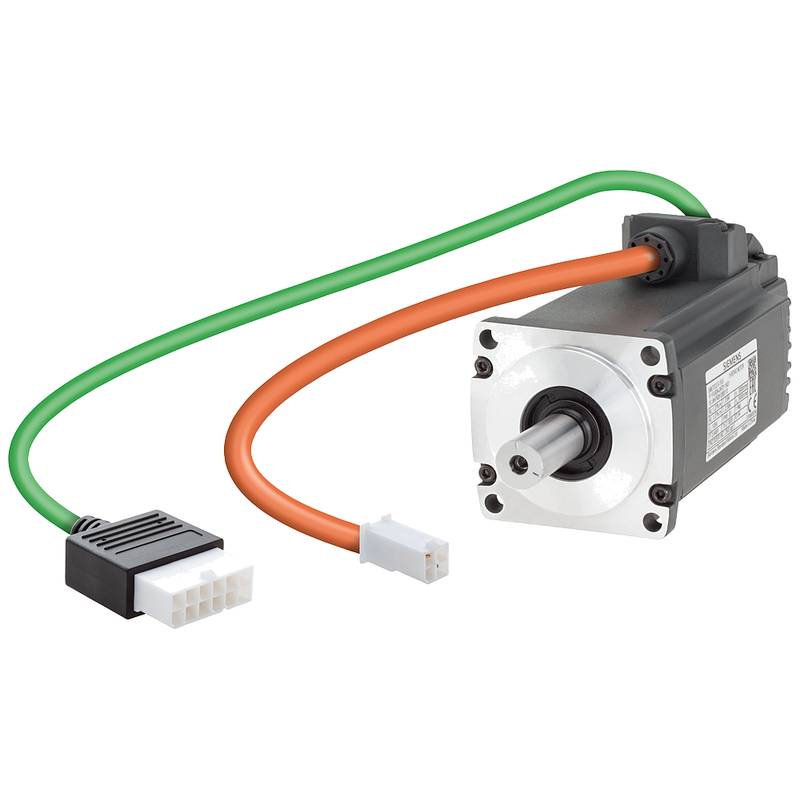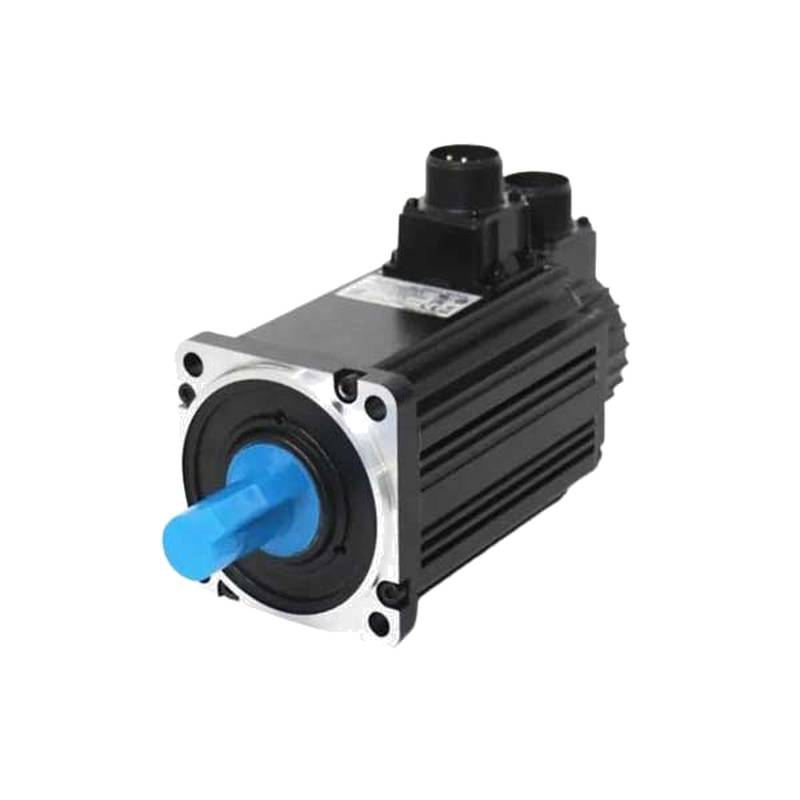












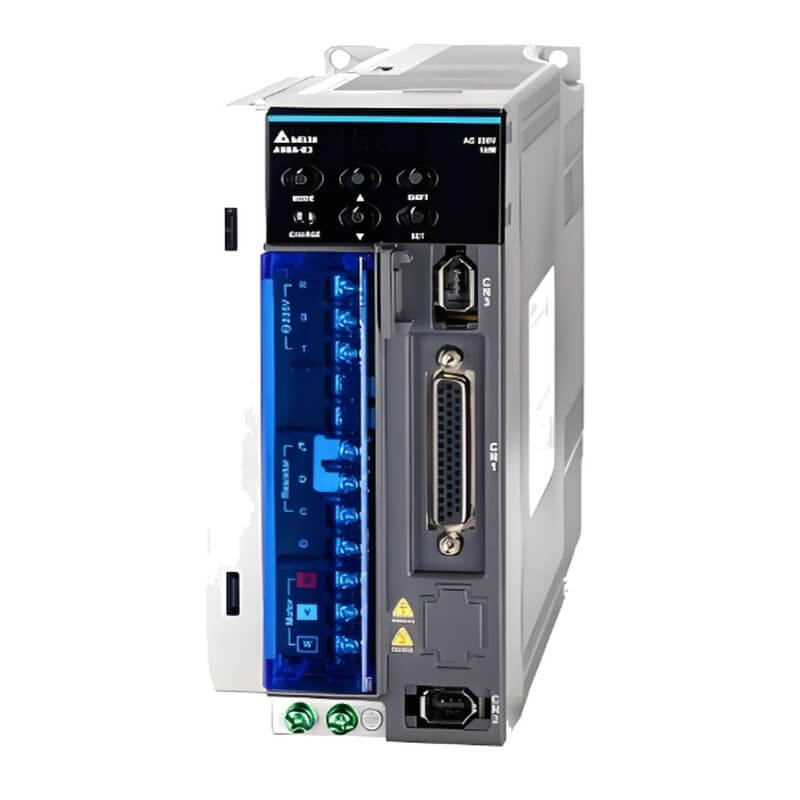
Delta ASD-E3-1521-E Standard Medium High Power Servo Drive for Automation


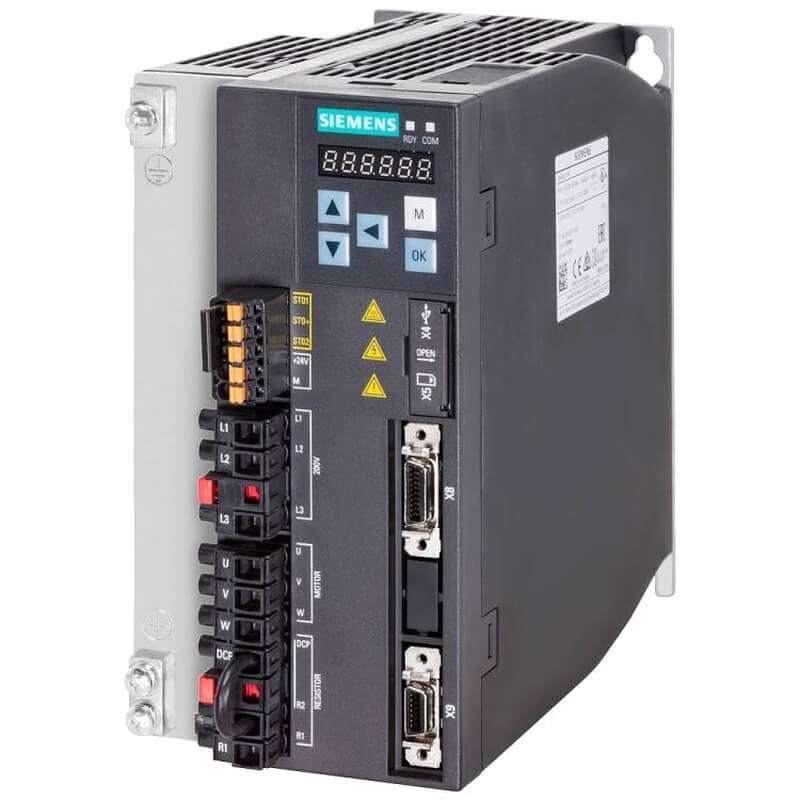
The Delta ASD-E3-1521-E Standard Medium High Power Servo Drive for Automation delivers robust performance and advanced features for demanding industrial applications. This servo drive is engineered for precision, reliability, and efficiency, making it a cornerstone for modern automated systems. Key advantages include its high response frequency of up to 2500Hz, ensuring rapid and accurate motion control, and its IP65 protection rating, which guarantees stable operation even in harsh environments. The ASD-E3-1521-E also offers versatile communication options, including pulse control and RS485, with specific models supporting EtherCAT, facilitating seamless integration into complex automation networks. Its 12Nm rated torque and compatibility with Delta's ECM-E3 series servo motors provide a powerful and cohesive motion control solution.
Product Specifications
| Feature | Specification |
| :----------------------- | :-------------------------------------------- |
| Model | ASD-E3-1521-E |
| Rated Torque | 12 Nm |
| Power Segment | 100W - 3kW (E3 series) |
| Response Frequency | Up to 2500Hz |
| Excitation Mode | Permanent Magnet |
| Protection Level | IP65 |
| Communication Interface | Pulse Control, RS485 (EtherCAT optional) |
| Input Voltage | 200-230 VAC (3-Phase) |
| Output Current (Continuous) | 8.3 Arms |
| Output Current (Max.) | 24.3 Arms |
| Drive Resolution | 24-bit (16,777,216 p/rev) |
| Control Method | SVPWM |
| Tuning Mode | Auto / Manual |
| Position Control Mode | Pulse + Direction, A/B Phase, CCW/CW Pulse |
| Max. Output Pulse Frequency | 4 Mpps (Pulse + Direction/CCW+CW) |
| Speed Control Mode | Analog (-10 to +10 VDC), Internal Register |
| Torque Control Mode | Analog (-10 to +10 VDC), Parameter Settings |
| Bandwidth | 2.5 kHz |
| Compatibility | Delta ECM-E3 series servo motors |
| Software Support | ASDA-Soft (Configuration, Auto-tuning) |
Core Features & Market Positioning
The Delta ASD-E3-1521-E distinguishes itself in the competitive servo drive market through its superior performance-to-size ratio and advanced control capabilities. It offers enhanced precision with a 24-bit encoder resolution, enabling extremely accurate positioning crucial for high-tolerance manufacturing processes. Compared to previous generations like the ASDA-A2 series, the E3 series boasts a higher response bandwidth (2.5 kHz for E3 vs. 3.1 kHz for A3 series, but still a significant leap from older generations) and finer control for demanding applications. Its compatibility with both E3 and A2 series motors provides flexibility for upgrades and new installations. The inclusion of features like auto-tuning, vibration suppression, and system diagnosis simplifies setup and maintenance, positioning the ASD-E3-1521-E as a user-friendly yet powerful solution for automation integrators. The "E" suffix indicates its suitability for use with single-phase power supplies in models up to 1.5kW, adding to its versatility.
Key Application Scenarios
The robustness and precision of the Delta ASD-E3-1521-E servo drive make it an ideal choice for a wide array of industrial automation applications. Its high-speed and accurate motion control are paramount in packaging machinery, where precise indexing and rapid cycle times are essential. In semiconductor manufacturing, the drive's fine positioning capabilities ensure the delicate handling and placement of components. The robotics industry benefits from its smooth operation and high torque-to-inertia ratio for dynamic manipulator movements. Furthermore, the ASD-E3-1521-E is well-suited for machine tools, textile machinery, printing equipment, and material handling systems that require consistent, reliable, and high-performance motion control. Its IP65 rating also makes it suitable for environments where dust or water ingress is a concern.
Practical System Integration Guidance
Integrating the Delta ASD-E3-1521-E into existing or new automation systems is streamlined through its thoughtful design and comprehensive documentation. For system integrators, understanding the CN1 wiring (control signal interface) is critical. This typically includes connections for digital inputs (DI), digital outputs (DO), analog inputs (AI), and communication ports. The drive supports various command sources, including external pulse trains (Pulse + Direction, A/B Phase) and analog voltage inputs (-10 to +10 VDC) for speed and torque control. The ASDA-Soft configuration software, compatible with Windows operating systems, provides an intuitive platform for parameter setting, auto-tuning, system diagnosis, and motion programming, significantly reducing commissioning time. For communication-intensive applications, the availability of EtherCAT on certain E3-E models simplifies network integration. Proper grounding is essential for safety and performance; it is recommended to use copper wire with a cross-sectional area of at least 10 mm² or aluminum wire of at least 16 mm² for grounding.
Operation and Risk Mitigation
Safe and efficient operation of the Delta ASD-E3-1521-E requires adherence to best practices and understanding potential fault conditions. The drive features a Safe Torque Off (STO) function, a critical safety mechanism that prevents unexpected machine movement by reliably disabling motor torque. Users must ensure that emergency stop functionality is always accessible and tested before operation. When powering up, it's crucial to verify that the motor is not already rotating due to inertia or other external forces. Common troubleshooting involves checking parameter settings, wiring integrity, and motor connections. The user manual provides detailed information on error codes and diagnostic messages, enabling rapid identification of issues. For instance, ensuring that the "CHARGE" indicator is off before performing inspection or maintenance is a vital safety step to avoid residual voltage hazards.
Scalability & Long-Term Value
The Delta ASD-E3-1521-E offers significant long-term value through its scalability and integration capabilities within the broader Delta automation ecosystem. Its compatibility with Delta's ECM-E3 series servo motors, and in some cases, previous ASDA-A2 or A3 series motors, allows for phased upgrades and system expansion without complete overhauls. The availability of features like DC Bus Sharing in some Delta servo drive series (though not explicitly detailed for all E3 models, it's a common Delta technology) enables energy regeneration between multiple drives, reducing overall power consumption and enhancing system efficiency. For facilities moving towards Industry 4.0, the EtherCAT communication option on select E3-E models provides a robust platform for integration with higher-level control systems, SCADA, and IIoT platforms, enabling advanced data acquisition, remote monitoring, and predictive maintenance strategies. The ASDA-Soft software further aids in managing and optimizing these systems over their lifecycle.
Frequently Asked Questions (FAQs)
Q1: What are the main advantages of the Delta ASD-E3-1521-E servo drive?
The Delta ASD-E3-1521-E offers a high response frequency up to 2500Hz for precise motion control. It boasts an IP65 protection rating, ensuring reliable operation in challenging industrial environments. This drive provides versatile communication options like pulse control and RS485.
Its compact design and compatibility with Delta's ECM-E3 series motors make it a flexible choice for various automation needs. The inclusion of advanced features like auto-tuning simplifies integration and enhances performance.
The drive supports single-phase power for models up to 1.5kW, increasing its applicability in diverse electrical setups. Its 24-bit encoder resolution ensures exceptional positioning accuracy for demanding tasks.
Q2: What types of motors are compatible with the Delta ASD-E3-1521-E?
The Delta ASD-E3-1521-E is designed to be compatible with Delta's ECM-E3 series servo motors. This ensures optimal performance and seamless integration.
Some Delta servo drive series, including ASDA-A3, are noted to be compatible with previous ASDA-A2 series motors. This offers upgrade flexibility for existing systems.
Always consult the official Delta documentation for the specific ASD-E3-1521-E model to confirm precise motor compatibility and any limitations.
Q3: How do I connect the Delta ASD-E3-1521-E servo drive for system integration?
System integration primarily involves understanding the CN1 control signal wiring. This includes connections for digital inputs, digital outputs, and analog signals.
The drive supports external pulse trains (e.g., Pulse + Direction) and analog voltage inputs for speed and torque control. Refer to the user manual for detailed wiring diagrams.
For networked applications, models with EtherCAT support simplify integration into broader automation systems. Proper grounding is also essential for safe and effective operation.
Q4: What are the key safety features of the Delta ASD-E3-1521-E?
A critical safety feature is the Safe Torque Off (STO) function, which reliably prevents unexpected motor movement. This is vital for personnel safety during maintenance or emergencies.
Users must ensure that emergency stop mechanisms are always accessible and functional before operating the machine. Verify that the motor is not rotating upon power application.
Adhering to wiring guidelines, proper grounding, and following maintenance procedures outlined in the user manual are crucial for mitigating operational risks.
Q5: What is the role of ASDA-Soft software with the ASD-E3-1521-E?
ASDA-Soft is Delta's configuration software that streamlines the setup and operation of the servo drive. It allows for easy parameter adjustment and system diagnostics.
The software facilitates advanced functions such as auto-tuning and vibration suppression, optimizing machine performance. It provides a user-friendly interface for efficient commissioning.
It also supports motion programming and system monitoring, contributing to the overall management and lifecycle of the automation system.
Q6: Can the Delta ASD-E3-1521-E be used with a single-phase power supply?
Models within the ASDA-E3 series, specifically up to 1.5kW, are designed to operate with a single-phase power supply. This enhances their flexibility for various installation environments.
The "E" designation often signifies compatibility with single-phase input for lower power models within the series. Always verify the specific model number and its specifications.
For higher power ratings or three-phase requirements, a three-phase power source is necessary. Consult the product datasheet for definitive power input specifications.
Q7: What is the response bandwidth of the Delta ASD-E3-1521-E?
The Delta ASD-E3-1521-E features a response bandwidth of 2.5 kHz. This is a significant improvement over older generations, enabling faster and more precise motion control.
This higher bandwidth allows for quicker settling times, which directly translates to increased productivity in automated processes. It ensures the drive can accurately follow dynamic command signals.
Compared to some other Delta series, like the ASDA-A3 which has 3.1 kHz, the E3 series still offers robust performance suitable for many demanding applications.
Q8: How does the IP65 rating benefit the ASD-E3-1521-E in industrial applications?
The IP65 rating signifies that the drive is protected against dust ingress and low-pressure water jets from any direction. This ensures operational reliability in challenging environments.
This protection is crucial for applications in manufacturing plants, workshops, or outdoor settings where dust, moisture, or accidental splashes may occur. It prevents damage and downtime.
By offering a robust enclosure, the IP65 rating contributes to the long-term durability and stable performance of the Delta ASD-E3-1521-E servo drive.
Q9: What is the significance of the 24-bit encoder resolution?
A 24-bit encoder resolution means the drive can detect 16,777,216 discrete positions per motor revolution. This enables extremely precise motion control and positioning.
This high resolution is critical for applications requiring micro-level accuracy, such as in semiconductor manufacturing, precision assembly, or advanced machining. It minimizes positioning errors.
The detailed feedback from the 24-bit encoder allows for superior performance, especially at low speeds, and ensures smooth, stable operation throughout the entire speed range.
Q10: How does the ASD-E3-1521-E support IIoT integration?
The availability of EtherCAT communication on select ASD-E3-E models is key for IIoT integration. EtherCAT is a high-performance industrial Ethernet protocol.
This enables seamless connectivity to industrial PCs, PLCs, and cloud-based platforms for data acquisition, remote monitoring, and diagnostics. It forms the backbone of smart factory initiatives.
Integration via EtherCAT allows for advanced analytics, predictive maintenance scheduling, and real-time performance optimization, aligning the drive with Industry 4.0 principles.