











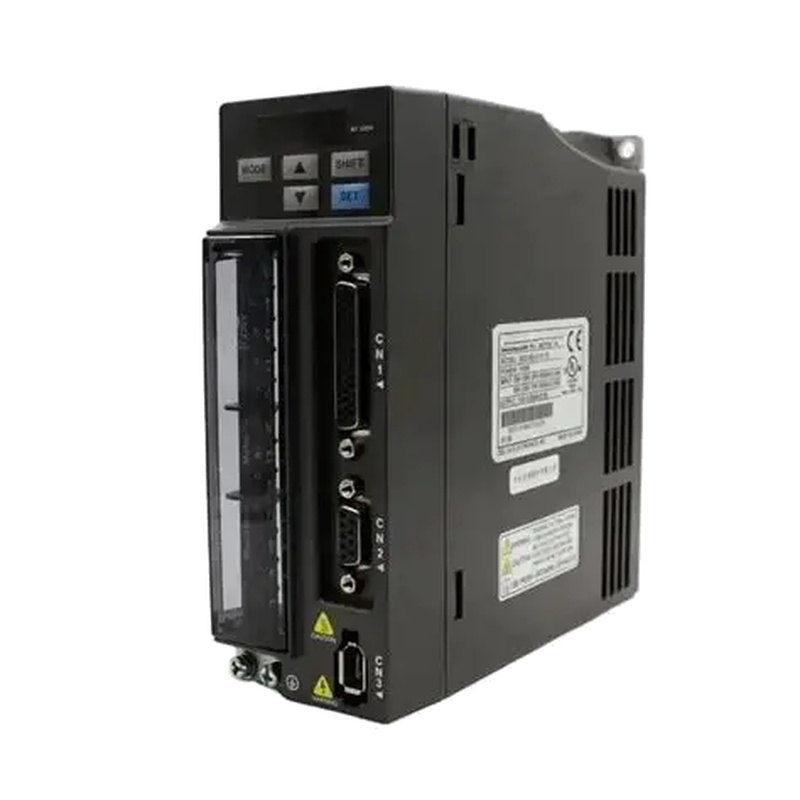
Delta ASD-B3-1521-M Low Voltage 3-Phase Servo for Packaging Machinery


The Delta ASD-B3-1521-M low voltage 3-phase servo drive is engineered for demanding applications within the packaging machinery sector, offering exceptional precision, rapid response, and robust performance. Its core advantages lie in its advanced control algorithms, high torque density, and seamless integration capabilities, making it a superior choice for automated packaging solutions. Key technical parameters include a rated voltage of 200-240V AC, an output current of 15.2A, and a maximum output power of 3.0kW, ensuring ample capacity for high-performance packaging operations. This drive is designed to elevate efficiency and reliability in high-speed, intricate packaging processes.
Product Specifications
| Parameter | Value |
| :-------------------- | :------------------------------------ |
| Model | ASD-B3-1521-M |
| Rated Voltage | 200-240V AC |
| Phase | 3-Phase |
| Rated Output Current | 15.2A |
| Max Output Current | 45.6A (3 sec) |
| Rated Output Power | 3.0kW |
| Max Output Power | 3.0kW |
| Encoder Type | Absolute Encoder Supported |
| Communication Interface | MODBUS RS-485, CANopen, EtherNet/IP |
| Protection Class | IP20 |
| Operating Temperature | 0°C to 55°C |
| Dimensions (H x W x D)| 240mm x 150mm x 190mm |
Core Features & Market Positioning
The Delta ASD-B3-1521-M servo drive distinguishes itself through its sophisticated motion control capabilities, particularly its high-speed positioning and smooth operation, which are critical for packaging machinery demanding intricate movements and precise timing. Its advanced built-in auto-tuning function simplifies setup and optimizes performance for various load conditions, reducing commissioning time significantly. Furthermore, the drive's compatibility with absolute encoders ensures no loss of position data during power interruptions, enhancing operational continuity and accuracy in demanding packaging lines. This combination of advanced control, ease of use, and reliability positions the ASD-B3-1521-M as a high-value solution for manufacturers seeking to boost productivity and minimize downtime.
Key Application Scenarios
In the packaging industry, the Delta ASD-B3-1521-M servo drive excels in automated vertical form-fill-seal (VFFS) machines, providing the precise control needed for film pulling, sealing jaws, and product feeding operations. Its high torque and fast response are also invaluable in horizontal form-fill-seal (HFFS) machines for accurate product insertion and bag sealing. Furthermore, it is ideally suited for high-speed capping and labeling machines, ensuring consistent product presentation and efficient throughput. The drive's versatility extends to case erectors and erector-sealer machines, where its robust performance facilitates high-volume production demands.
Practical System Integration Guidance
Integrating the Delta ASD-B3-1521-M servo drive into a packaging system involves careful attention to wiring and parameter configuration. It is essential to use shielded motor cables and encoder cables to minimize electromagnetic interference, especially in environments with high electrical noise common in industrial settings. Proper grounding of the drive and motor is paramount for safety and optimal performance. For communication, select the appropriate interface (e.g., EtherNet/IP, CANopen) based on the host controller and configure the network settings meticulously. The initial setup often requires performing the auto-tuning function to match the servo drive's parameters to the inertia and load characteristics of the connected mechanics, ensuring optimal dynamic response and stability.
Operation and Risk Mitigation
Safe operation of the Delta ASD-B3-1521-M servo drive mandates adherence to all electrical codes and best practices. Ensure that the drive is installed in a well-ventilated area to prevent overheating, as exceeding operational temperature limits can lead to faults and reduced lifespan. Always disconnect power before performing any maintenance or wiring adjustments. Common operational issues can include motor overload alarms, which may indicate incorrect parameter settings, excessive load, or inadequate motor cooling. Fault code analysis, detailed in the product manual, is crucial for diagnosing and resolving problems promptly. For instance, an over-current fault might require a review of acceleration/deceleration settings or mechanical binding.
Scalability & Long-Term Value
The Delta ASD-B3-1521-M servo drive offers excellent scalability and long-term value through its flexible communication options and compatibility with Delta's broader automation ecosystem. Its support for various industrial fieldbuses like EtherNet/IP and CANopen allows for seamless integration into existing or future networked control architectures, facilitating easy upgrades and expansion of packaging lines. This interoperability is key for adopting Industry 4.0 principles, enabling data exchange for performance monitoring, predictive maintenance, and advanced process optimization. The drive's robust design and Delta's commitment to product development ensure that it remains a relevant and efficient component for years to come.
Frequently Asked Questions
Q1: What encoder types does the ASD-B3-1521-M support?
The Delta ASD-B3-1521-M servo drive supports a variety of encoder types, with a particular emphasis on absolute encoders. This ensures precise position feedback and eliminates the need for re-homing after power cycles. It can interface with popular absolute encoder protocols commonly used in industrial automation.
Q2: How do I perform auto-tuning on the ASD-B3-1521-M?
Auto-tuning is initiated through the drive's keypad or via communication commands. The process calibrates the drive's control parameters to match the inertia and load of the connected servo motor and mechanics. It's a critical step for achieving optimal performance and stability.
Q3: What are the main advantages of using this servo drive in packaging machines?
Key advantages include high precision positioning, rapid response times, and smooth motion control, essential for delicate packaging tasks. Its robust torque output and advanced features like auto-tuning enhance efficiency and reduce setup complexity.
Q4: What communication protocols are available for the ASD-B3-1521-M?
This servo drive offers multiple communication options, including MODBUS RS-485, CANopen, and EtherNet/IP. This flexibility allows for easy integration into various automation architectures and host control systems.
Q5: How does the ASD-B3-1521-M handle power interruptions?
With support for absolute encoders, the drive retains its positional information even after power loss. This feature prevents the need for time-consuming re-homing procedures, significantly improving operational uptime and accuracy.
Q6: What is the typical power rating of the ASD-B3-1521-M?
The Delta ASD-B3-1521-M has a rated output power of 3.0kW. It also features a high peak current capability, allowing it to handle transient load demands effectively.
Q7: What safety features are incorporated into the ASD-B3-1521-M?
The drive includes standard protection mechanisms against overcurrent, overvoltage, undervoltage, and overheating. It also supports safety functions likeSTO (Safe Torque Off) in specific configurations, enhancing personnel and machinery safety.
Q8: Can the ASD-B3-1521-M be used with different motor types?
While optimized for Delta servo motors, the ASD-B3-1521-M can often be configured to work with other compatible 3-phase servo motors. Proper motor parameter configuration and tuning are essential for optimal operation.
Q9: What are common fault codes for this servo drive?
Common fault codes include overcurrent (e.g., FL/OL), over-temperature (e.g., FL/OH), and encoder errors. Referencing the user manual is crucial for identifying specific codes and their resolutions.
Q10: What is the IP rating and operating temperature range for this model?
The ASD-B3-1521-M has an IP20 protection rating, meaning it is protected against solid objects larger than 12.5mm but not against water. It operates reliably within an ambient temperature range of 0°C to 55°C.