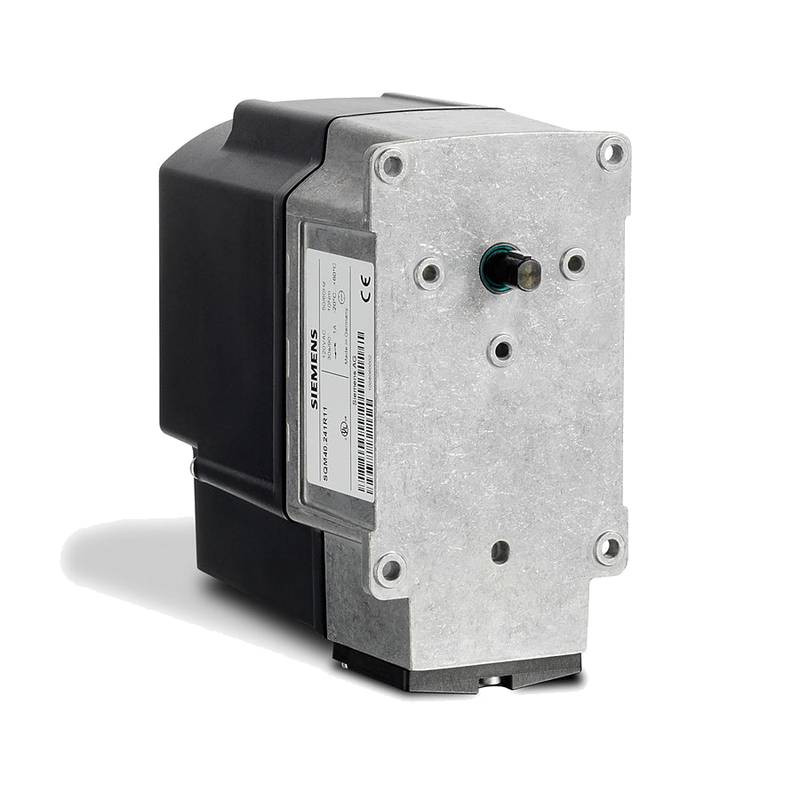
Siemens SQM40.265A20 High Efficiency Combustion Control Actuator


The Siemens SQM40.265A20 High Efficiency Combustion Control Actuator stands as a cornerstone for precise and reliable burner management in industrial applications. This actuator is engineered for optimal performance, delivering exceptional efficiency and robust control over combustion processes. Its core advantages lie in its high precision, durability, and seamless integration capabilities. Key technical parameters include a supply voltage of AC 24 V, a control signal input of 0-10 V DC or 4-20 mA, and a torque rating of 20 Nm, enabling it to handle demanding operational requirements. The SQM40.265A20 features a robust design, ensuring longevity and minimal maintenance even in harsh industrial environments.
Product Specifications
| Feature | Specification |
| :------------------- | :------------------------ |
| Supply Voltage | AC 24 V |
| Control Signal Input | 0-10 V DC / 4-20 mA |
| Torque | 20 Nm |
| Angle of Rotation | 90° / 95° |
| Protection Class | IP54 |
| Operating Temperature| -20...+50 °C |
| Weight | 1.6 kg |
Core Features & Market Positioning
The Siemens SQM40.265A20 distinguishes itself through its advanced electronic position feedback and internal diagnostics, providing real-time operational status and facilitating proactive maintenance. This level of integrated intelligence positions it as a superior choice for applications demanding stringent safety and efficiency standards. Its ability to accept a dual control signal input (0-10 V DC or 4-20 mA) offers significant flexibility in system design, accommodating various control system architectures and retrofitting scenarios. The actuator's high torque output ensures reliable operation even with larger or more complex damper systems, a critical factor in maintaining stable combustion and preventing operational issues. Compared to less sophisticated actuators, the SQM40.265A20 offers enhanced precision in fuel-air ratio control, directly contributing to reduced fuel consumption and lower emissions.
Key Application Scenarios
This high-efficiency combustion control actuator is ideally suited for a wide array of industrial heating applications. It is a critical component in controlling air dampers and fuel valves for industrial boilers, furnaces, kilns, and thermal oxidizers. Industries benefiting from the SQM40.265A20 include chemical processing, food and beverage manufacturing, metal fabrication, and power generation, where precise temperature control and efficient fuel utilization are paramount. Its robust design makes it suitable for environments where dust, moisture, and temperature fluctuations are common. The actuator's ability to deliver precise positioning is essential for maintaining optimal combustion conditions, thereby improving thermal efficiency and reducing the environmental impact of industrial processes.
Practical System Integration Guidance
Integrating the Siemens SQM40.265A20 actuator into existing or new control systems is streamlined due to its flexible input options and clear wiring schematics. For electrical connections, ensure the supply voltage is correctly wired to the AC 24 V terminals. The control signal input should be connected to the appropriate terminals for either 0-10 V DC or 4-20 mA, depending on the signal provided by the burner management system or PLC. Proper grounding is essential for reliable operation and signal integrity. The actuator's mechanical mounting typically involves a direct coupling to the damper shaft, often secured with set screws. Ensure the angle of rotation (90° or 95°) is configured correctly to match the damper's operational range.
Operation and Risk Mitigation
Safe and efficient operation of the Siemens SQM40.265A20 actuator relies on adherence to installation guidelines and proper system configuration. During operation, the actuator precisely modulates the fuel and air supply based on the control signal, maintaining the desired air-fuel ratio. Internal diagnostics continuously monitor performance, alerting operators to potential issues before they escalate. Key risk mitigation strategies include regular inspection of mechanical linkages for wear or obstruction and verifying electrical connections for security and corrosion. In the event of an operational fault, error codes may be indicated through specific LED patterns on the actuator or reported via communication protocols, enabling swift troubleshooting and corrective action.
Scalability & Long-Term Value
The Siemens SQM40.265A20 actuator is designed for long-term value and can be a key element in upgrading existing combustion control systems. Its compatibility with various burner management systems and PLCs, owing to its standard control signal inputs, ensures it can be integrated into a wide range of automation platforms. For facilities looking to embrace Industry 4.0 principles, the SQM40.265A20 can be part of a connected system, providing valuable operational data for predictive maintenance and process optimization. While not directly an IIoT device, its precise control and diagnostic capabilities contribute to the overall intelligence and efficiency of a digitally integrated industrial environment.
FAQs
What is the primary function of the Siemens SQM40.265A20?
The Siemens SQM40.265A20 is an actuator designed for precise control of combustion processes. It accurately positions air dampers and fuel valves to maintain optimal air-fuel ratios in industrial burners. This ensures efficient fuel utilization and safe, stable operation of heating equipment.
This actuator is crucial for modulating the flow of air and fuel in systems like boilers and furnaces. Its key role is to respond to control signals from a burner management system. By doing so, it maintains the precise mix required for efficient and clean combustion, preventing issues like incomplete burning or excessive fuel waste.
Its application extends to a variety of industrial settings requiring reliable and repeatable control over combustion. This includes industries such as chemical processing, power generation, and manufacturing where consistent thermal output is essential. The actuator's robust design ensures it can perform under demanding environmental conditions.
What are the key technical specifications of the SQM40.265A20?
The Siemens SQM40.265A20 operates on an AC 24 V supply voltage. It accepts control signals in either 0-10 V DC or 4-20 mA formats, offering flexibility in system integration. The actuator provides a torque of 20 Nm for reliable damper or valve actuation.
Further specifications include a protection class of IP54, safeguarding it against dust and water ingress. It is designed to operate within a temperature range of -20°C to +50°C and has a weight of approximately 1.6 kg. The angle of rotation is selectable at 90° or 95°.
These specifications highlight its suitability for demanding industrial environments where durability and precise control are paramount. The combination of torque, voltage, and ingress protection makes it a robust choice for various combustion control applications.
How is the Siemens SQM40.265A20 integrated into a control system?
Integration involves connecting the actuator to a power source providing AC 24 V and to the control signal output of a burner management system or PLC. Wiring must be done carefully according to the provided schematics, ensuring correct terminal connections for the chosen control signal type. Mechanical mounting typically involves direct attachment to the damper or valve shaft.
Proper grounding is essential for signal integrity and operational safety. The actuator's angle of rotation needs to be set to match the specific requirements of the damper or valve it is controlling. This ensures the full operational range is utilized effectively without mechanical strain.
The flexibility of its control signal inputs (0-10 V DC or 4-20 mA) allows it to interface with a wide variety of control platforms, simplifying retrofitting and new system designs. This adaptability is a key advantage for seamless system integration.
What are the main advantages of using the SQM40.265A20?
A primary advantage is its high precision in controlling combustion, leading to improved fuel efficiency and reduced emissions. The actuator's robust construction ensures longevity and reliability in challenging industrial environments. Its dual control signal input offers significant flexibility in system design and compatibility.
The SQM40.265A20 incorporates internal diagnostics, providing real-time status monitoring and enabling proactive maintenance, which minimizes downtime. This advanced feature helps in early detection of potential issues, preventing costly failures and ensuring continuous operation.
Its market positioning is reinforced by its ability to deliver consistent performance under varying conditions, making it a preferred choice for critical combustion control applications. The high torque rating further ensures it can effectively manage larger or more resistant dampers and valves.
In which industrial applications is the SQM40.265A20 commonly used?
This actuator is extensively used in industrial boilers and furnaces for precise control of air and fuel. It is also vital in kilns, thermal oxidizers, and other combustion-based heating equipment across various manufacturing sectors. Chemical processing plants and power generation facilities frequently employ this actuator.
Its application ensures optimal thermal efficiency and adherence to environmental regulations by maintaining precise combustion parameters. The robust design makes it suitable for environments with dust, humidity, and temperature fluctuations commonly found in heavy industry.
Industries such as food and beverage processing, metal fabrication, and waste incineration benefit from the actuator's reliability and accurate control. Anywhere consistent and efficient thermal energy generation is required, the SQM40.265A20 proves to be an invaluable component.
Does the SQM40.265A20 offer any diagnostic capabilities?
Yes, the Siemens SQM40.265A20 is equipped with internal diagnostic functions. These capabilities continuously monitor the actuator's performance and operational status. This allows for early detection of potential faults or deviations from normal operating parameters.
The diagnostic information can often be accessed through visual indicators on the actuator itself or transmitted to a central control system. This proactive approach to monitoring helps in identifying issues before they lead to process disruptions or equipment damage, facilitating timely maintenance.
These integrated diagnostics are a key feature that enhances the reliability and maintainability of the actuator. They contribute significantly to reducing unscheduled downtime and ensuring the overall efficiency and safety of the combustion process it controls.
What is the torque rating of the Siemens SQM40.265A20?
The Siemens SQM40.265A20 actuator delivers a torque of 20 Nm. This torque rating is sufficient for actuating a wide range of industrial dampers and fuel valves with precision and reliability. It ensures that the actuator can overcome resistance and maintain accurate positioning even under load.
A 20 Nm torque output is considered robust for many industrial combustion control applications. It allows for the control of relatively large air intake dampers or fuel shut-off valves, critical for maintaining the correct air-fuel ratio. This capability is essential for ensuring stable and efficient burner operation.
This specific torque value makes the SQM40.265A20 a versatile component, suitable for applications where significant force is required for actuation. It contributes to the actuator's overall effectiveness in maintaining precise control over the combustion process, preventing issues like flame instability.
What types of control signals can the SQM40.265A20 accept?
The Siemens SQM40.265A20 is designed to accept two common types of control signals: 0-10 V DC and 4-20 mA. This dual-input capability provides flexibility, allowing it to be integrated with a variety of control systems, whether they utilize voltage or current-based signaling.
This versatility is a significant advantage for system designers and maintenance engineers. It means the actuator can be easily adapted to existing infrastructure or specified for new installations regardless of the control system's specific output type. This reduces the need for signal converters in many cases.
By supporting both standard analog signal types, the SQM40.265A20 ensures broad compatibility with modern and legacy control hardware. This makes it a practical and cost-effective choice for many industrial automation projects requiring precise burner control.
What is the environmental protection rating of this actuator?
The Siemens SQM40.265A20 actuator features an IP54 protection class rating. This rating signifies that the actuator is protected against the ingress of solid foreign objects greater than 1.0 mm, such as wires or tools, and is also protected against splashing water from any direction.
An IP54 rating makes this actuator suitable for installation in many industrial environments where dust and moisture are present. It ensures that the internal components are shielded from common environmental contaminants that could impair performance or lead to premature failure.
This level of protection contributes to the actuator's overall durability and reliability, reducing the need for additional protective enclosures in many typical applications. It underscores the actuator's design for robust operation in demanding industrial settings.
Can the SQM40.265A20 be used in high-temperature industrial environments?
The SQM40.265A20 is designed to operate within an ambient temperature range of -20°C to +50°C. While this covers a broad spectrum of typical industrial conditions, it is important to ensure the actuator is not exposed to temperatures exceeding its specified limits.
For applications where ambient temperatures might go beyond +50°C, special considerations or alternative solutions may be necessary. Proper ventilation and installation away from direct heat sources are crucial to maintain the actuator within its operational temperature envelope.
Adhering to the specified operating temperature range is vital for ensuring the long-term reliability and performance of the Siemens SQM40.265A20 actuator, preventing thermal stress on its internal components and electronics.