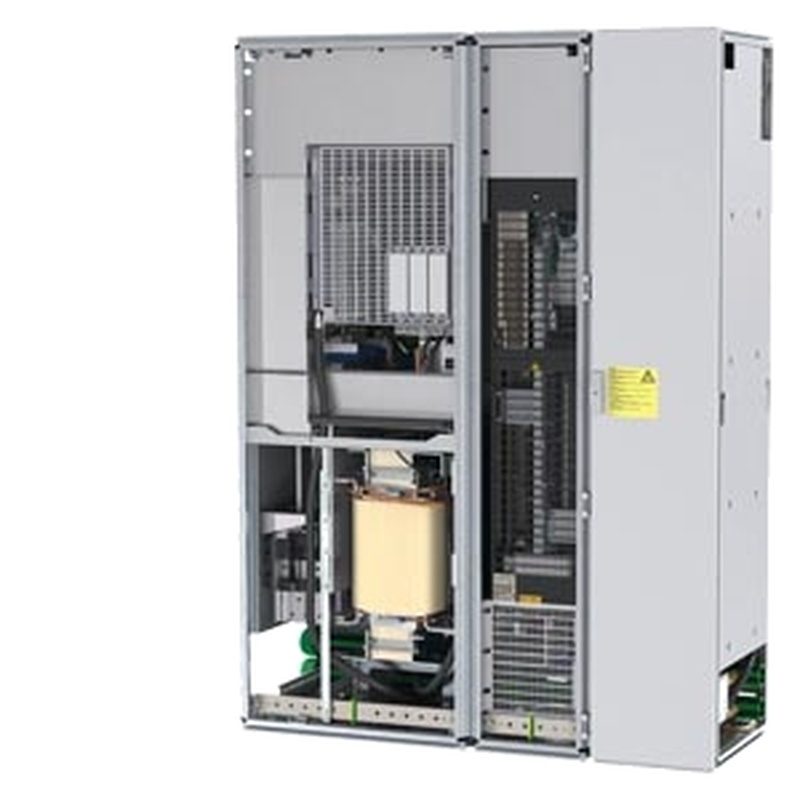













Siemens SQN31.221A2700 High Thrust Spring Return Actuator


The Siemens SQN31.221A2700 High Thrust Spring Return Actuator is a robust and reliable solution engineered for demanding HVAC applications, delivering exceptional control and performance. This actuator is distinguished by its high thrust capacity, precise positioning, and integrated spring return functionality, ensuring fail-safe operation in critical systems. With a powerful output torque of 150 Nm and a stroke length of 40 mm, it is designed to handle demanding damper or valve operations efficiently. The operating voltage range of AC 24 V further enhances its versatility for integration into various building automation systems. Its advanced design incorporates built-in auxiliary switches and an electronic fail-safe function, making it an indispensable component for optimizing energy efficiency and maintaining operational integrity.
Product Specifications
| Feature | Specification |
| :------------------- | :------------------------------------------- |
| Product Type | Spring Return Actuator |
| Model Number | SQN31.221A2700 |
| Thrust Force | 150 Nm |
| Stroke Length | 40 mm |
| Operating Voltage | AC 24 V |
| Control Signal | 3-point |
| Auxiliary Switches | Built-in |
| Fail-Safe Function | Electronic |
| Protection Class | IP54 |
| Ambient Temperature | -20...+50 °C |
| Cable Length | 1.5 m |
Core Features & Market Positioning
The Siemens SQN31.221A2700 actuator stands out in the market due to its high thrust capabilities, essential for operating larger or stiffer dampers and valves that require significant force. The integrated electronic fail-safe function provides a critical layer of operational security, automatically driving the connected equipment to a predefined safe position in the event of a power loss or system malfunction. This feature is paramount in industrial settings where uncontrolled equipment movement could lead to significant damage or safety hazards. Furthermore, its 3-point control signal compatibility ensures seamless integration with a wide range of modern building management systems, offering precise and responsive control. The robust construction and IP54 protection class underscore its suitability for challenging industrial environments, positioning it as a durable and reliable choice for engineers and facility managers seeking long-term performance.
Key Application Scenarios
This high-performance actuator finds its primary application in the precise control of air dampers and valves within commercial and industrial HVAC systems. Its substantial thrust of 150 Nm makes it ideal for managing large air handling units, economizer dampers, and industrial process control valves where significant mechanical force is required for accurate positioning. Facility managers and engineers widely deploy the SQN31.221A2700 in systems demanding reliable fail-safe operation, such as fire and smoke control dampers, ensuring occupant safety and regulatory compliance. It is also a preferred choice for energy optimization initiatives, enabling fine-tuned control of airflow and temperature, thereby reducing energy consumption in diverse sectors including manufacturing plants, large office buildings, and data centers.
Practical System Integration Guidance
Integrating the Siemens SQN31.221A2700 actuator into existing or new control systems is a straightforward process, designed for efficiency. The actuator connects via a standard 3-point control signal, typically comprising two signal wires and a common reference. Wiring should be performed according to the provided terminal designations, paying close attention to the power supply (AC 24 V) and the control inputs. The built-in auxiliary switches can be configured to provide feedback on the actuator's position, enabling advanced interlocks and monitoring within the Building Management System (BMS). For initial setup, manual override capabilities are accessible, allowing for adjustment during installation or maintenance without power. Commissioning typically involves verifying stroke direction and end-point positioning to ensure optimal performance and prevent mechanical strain.
Operation and Risk Mitigation
Operating the Siemens SQN31.221A2700 actuator is designed for reliability and safety. The unit automatically responds to the 3-point control signals, moving to the commanded position while the spring return ensures a failsafe state during power interruptions. A critical aspect of risk mitigation involves ensuring the actuator is correctly sized for the connected load; exceeding its 150 Nm thrust or 40 mm stroke capacity can lead to premature failure or incorrect operation. Regular visual inspections for physical damage or environmental ingress are recommended. While specific error codes are not typically displayed on the unit itself, unusual noises, incomplete stroking, or failure to respond to control signals can indicate operational issues that require immediate attention and diagnosis by qualified personnel. Adherence to the specified operating temperature range of -20 to +50 °C is also vital for preventing damage.
Scalability & Long-Term Value
The Siemens SQN31.221A2700 actuator offers significant long-term value through its robust design and compatibility with established control architectures. Its integration capabilities with various BMS platforms ensure it can be a core component in both new installations and upgrade projects. While not directly an IIoT device, its accurate and reliable positional data, obtainable via auxiliary switches or integration with position feedback modules, can be fed into digital platforms for advanced analytics, predictive maintenance, and energy management strategies. The inherent durability and Siemens' reputation for quality suggest a long operational lifespan, minimizing the need for frequent replacements and reducing total cost of ownership. This makes it a sound investment for facilities aiming for sustained operational efficiency and control system longevity.
Frequently Asked Questions
What is the primary function of the Siemens SQN31.221A2700 actuator?
The Siemens SQN31.221A2700 is primarily used to control air dampers and valves in HVAC systems. It provides precise positioning with high thrust and includes a spring return for fail-safe operation.
This actuator is crucial for maintaining optimal airflow and temperature regulation in commercial and industrial buildings. Its robust design ensures reliable performance even in demanding environments.
It is engineered to move connected equipment to a safe position in case of power failure, a critical safety feature for many applications.
How is the Siemens SQN31.221A2700 actuator controlled?
This actuator utilizes a standard 3-point control signal for its operation. This involves two signal wires and a common reference point for precise positional command.
The 3-point control allows for proportional movement to a specific position, unlike simple on/off signals. This ensures accurate regulation of dampers or valves.
The control signal dictates the actuator's direction and extent of movement, enabling seamless integration with modern Building Management Systems (BMS).
What are the key advantages of the spring return function in the SQN31.221A2700?
The spring return function ensures the actuator automatically moves to a predefined safe position if power is lost. This is critical for safety and system integrity.
This fail-safe mechanism is vital for applications like fire and smoke control dampers, preventing uncontrolled spread of hazardous conditions.
It provides an essential layer of protection for equipment and personnel by ensuring a predictable response to power interruptions.
What is the maximum thrust and stroke of the Siemens SQN31.221A2700?
The actuator provides a maximum thrust of 150 Nm, suitable for operating larger or stiffer dampers and valves. This high force ensures reliable movement even under load.
It has a stroke length of 40 mm, defining the maximum distance the actuator stem can travel. This is a key parameter for matching to valve or damper specifications.
Careful consideration of these specifications is essential to prevent mechanical overload and ensure the actuator functions correctly within its design limits.
Can the Siemens SQN31.221A2700 be used in outdoor applications?
The SQN31.221A2700 actuator has an IP54 protection class rating. This indicates it is protected against dust ingress and splashing water from any direction.
While suitable for many industrial environments, direct exposure to harsh weather conditions might still require additional protective enclosures depending on the specific site.
Always refer to the product's detailed documentation and consult with Siemens or a qualified engineer for suitability in specific environmental conditions.
What type of power supply does the Siemens SQN31.221A2700 require?
This actuator operates on an AC 24 V power supply. It is crucial to ensure the correct voltage is provided for proper and safe operation.
Using a power supply outside of the specified AC 24 V range can damage the actuator or lead to malfunction. Always verify power source compatibility.
Proper wiring and adherence to electrical codes are paramount during installation to ensure a stable and safe AC 24 V supply.
What does the 'electronic fail-safe' feature mean for this actuator?
Electronic fail-safe means the actuator has internal circuitry to manage its return to a safe position during power loss. It's an integrated system function.
This intelligent system ensures a controlled and predictable movement to the designated safe state, unlike simpler mechanical failsafe mechanisms.
This advanced feature enhances reliability and safety, providing confidence in system behavior during unexpected events.
How do the built-in auxiliary switches function on the SQN31.221A2700?
The built-in auxiliary switches act as position indicators. They can be configured to signal when the actuator reaches specific points in its stroke.
These switches are invaluable for providing feedback to a Building Management System (BMS). This allows for monitoring and interlocks, enhancing automation.
By confirming the actuator's position, they enable more sophisticated control strategies and fault detection within the overall HVAC system.
Is the Siemens SQN31.221A2700 compatible with older control systems?
The actuator uses a standard 3-point control signal, which is widely adopted and generally compatible with many existing control systems. This offers flexibility.
Compatibility may depend on the specific voltage and signal logic of the older system. It's always best to verify signal requirements before integration.
Modern systems readily integrate this actuator, but careful planning is needed when interfacing with legacy control infrastructure.
What is the typical lifespan and maintenance requirement for this actuator?
Siemens products are known for their robust construction, suggesting a long operational lifespan under normal conditions. Durability is a key design principle.
Routine maintenance typically involves visual inspections and ensuring the actuator is free from obstructions. No complex internal servicing is usually required.
Adherence to environmental operating parameters and correct installation practices are key to maximizing its service life and minimizing maintenance needs.