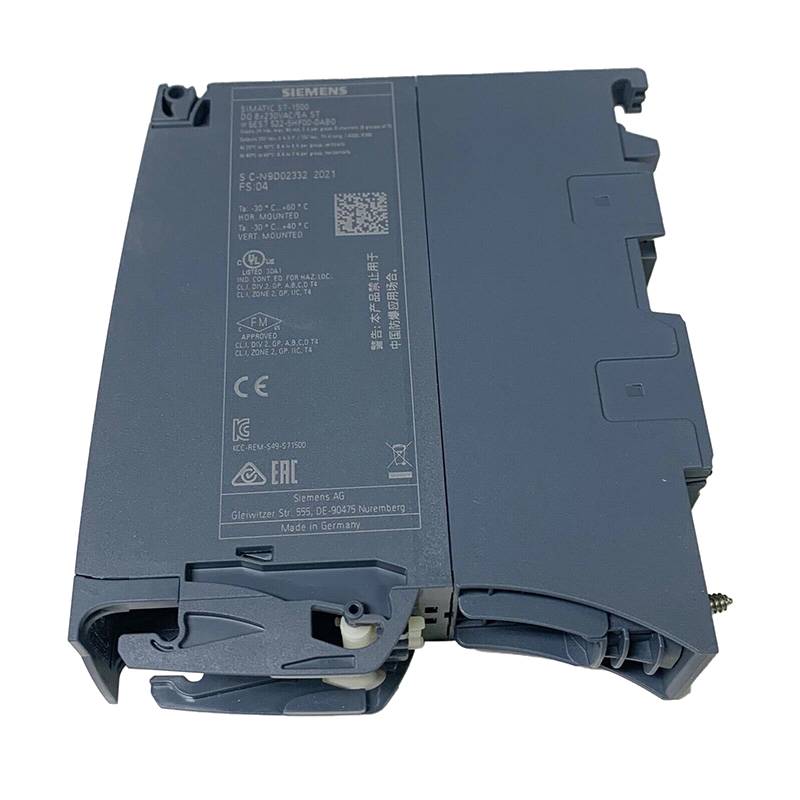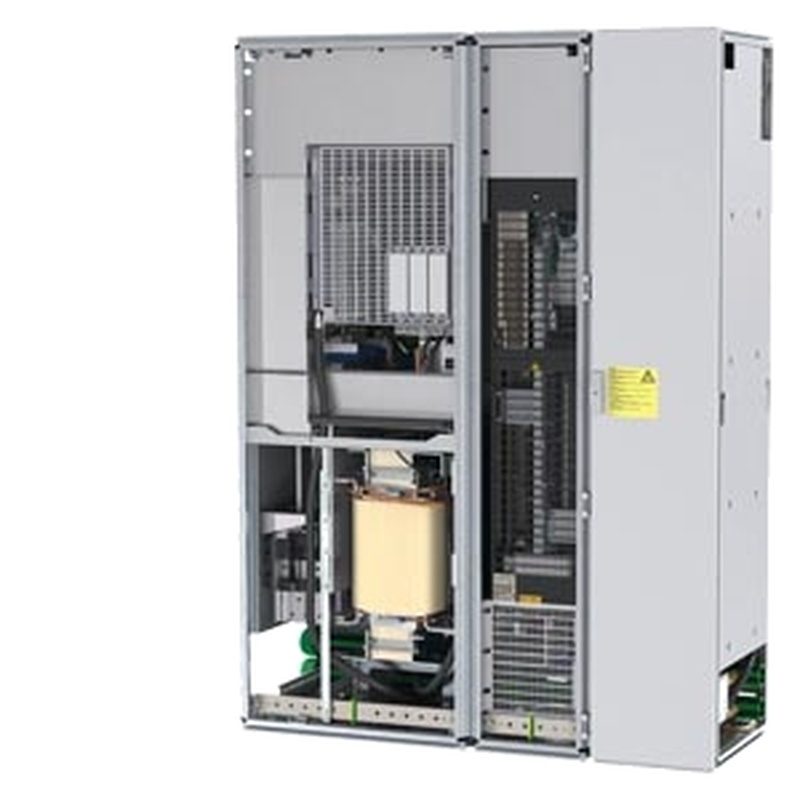
SIEMENS 6SL3735-7TG41-3MA3 SINAMICS S120 Active Line Connection Module 1400kW 1270A Compact No MCB 690V Liquid Cooled Stage


The SIEMENS 6SL3735-7TG41-3MA3 SINAMICS S120 Active Line Connection Module stands as a powerful and advanced solution for high-power motor control applications. This liquid-cooled module boasts a substantial 1400kW power rating and a 1270A current capacity, operating at 690V. Its compact design, coupled with the absence of an integrated MCB (Miniature Circuit Breaker), positions it for sophisticated system integrations where external protection is preferred or already established. The module's active line connection technology ensures superior power quality and efficiency, making it an ideal choice for demanding industrial environments.
Product Specifications
| Parameter | Value |
| :-------------------------- | :---------------------------------------- |
| Product Number | 6SL3735-7TG41-3MA3 |
| Series | SINAMICS S120 |
| Type | Active Line Connection Module |
| Power Rating | 1400 kW |
| Continuous Current | 1270 A |
| Voltage | 690 V |
| Cooling | Liquid Cooled |
| Compact Design | Yes |
| MCB | No (No integrated MCB) |
| Control Unit Compatibility | SINAMICS S120 Control Units |
| Communication Interfaces | PROFINET, PROFIBUS DP (optional) |
| Protection Features | Integrated electronic monitoring |
| Ambient Operating Temperature | -20°C to +45°C (without derating) |
| Dimensions (H x W x D) | Specific dimensions depend on configuration |
| Weight | Specific weight depends on configuration |
Core Features & Market Positioning
The SIEMENS 6SL3735-7TG41-3MA3 distinguishes itself through its robust active line connection, which actively feeds energy back into the grid during regenerative braking, significantly improving overall system efficiency and reducing energy costs. This regenerative capability is a key differentiator in high-cycle applications where energy recovery is substantial. Furthermore, its liquid-cooled design allows for a remarkably compact footprint compared to air-cooled alternatives of similar power, enabling higher power density and simplifying enclosure design. The absence of an integrated MCB offers flexibility for system integrators to implement customized protection schemes tailored to specific application requirements, aligning with advanced industrial automation strategies.
Key Application Scenarios
This high-performance module is engineered for demanding industrial applications requiring precise and powerful motor control. It excels in sectors such as heavy manufacturing, where applications like large conveyors, extruders, and mixers demand continuous, high-torque operation. The SIEMENS 6SL3735-7TG41-3MA3 is also a prime candidate for advanced process industries, including chemical and petrochemical plants, paper mills, and metal processing facilities, where reliable and efficient operation is paramount. Its ability to handle significant regenerative energy makes it ideal for applications with frequent braking cycles, such as those found in port cranes, elevator systems, and automated warehousing.
Practical System Integration Guidance
Integrating the SIEMENS 6SL3735-7TG41-3MA3 requires careful consideration of its liquid cooling system. Ensure a closed-loop cooling circuit with appropriate coolant flow and temperature monitoring is established. Power connections should be made according to the module's specifications and local electrical codes, with attention to the 690V rating. For communication, the module typically interfaces with SINAMICS S120 control units via standard protocols like PROFINET or PROFIBUS, necessitating proper network configuration and parameterization within the Siemens TIA Portal or Startdrive software. External protective devices, such as circuit breakers and fuses, must be selected and installed to meet the 1270A rating and application-specific safety requirements, as the module itself does not include an MCB.
Operation and Risk Mitigation
Safe operation of the SIEMENS 6SL3735-7TG41-3MA3 hinges on adhering to its operating manual and ensuring the liquid cooling system functions optimally. Potential issues can arise from coolant leaks, over-temperature conditions, or incorrect parameter settings. Monitoring diagnostic messages through the connected control unit is crucial for early detection of faults. Common fault codes relate to overcurrent, overvoltage, undervoltage, and communication errors. Implementing a robust preventative maintenance schedule for the cooling system and verifying parameter settings before commissioning are key risk mitigation strategies. Always ensure the system is de-energized before performing any maintenance or inspection.
Scalability & Long-Term Value
The SINAMICS S120 platform, to which the 6SL3735-7TG41-3MA3 belongs, is designed for scalability. Multiple modules can be interconnected to achieve even higher power and current ratings, facilitating system expansion as industrial demands grow. Its compatibility with the broader Siemens automation ecosystem, including PLCs and HMI devices within the TIA Portal, ensures seamless integration into existing or future smart factory initiatives and Industrial Internet of Things (IIoT) solutions. The active line connection technology also contributes to long-term value by maximizing energy efficiency and reducing operational expenditure.
Frequently Asked Questions
What is the primary function of the SIEMENS 6SL3735-7TG41-3MA3?
This module serves as a high-power active line connection for SINAMICS S120 drives. It enables efficient power regeneration back to the grid.
Its core function is to provide a robust interface for high-power motor control applications. It manages power flow and ensures grid compatibility.
The module supports advanced features like regenerative braking, enhancing system efficiency and reducing energy consumption.
What are the key technical specifications of the 6SL3735-7TG41-3MA3?
It features a 1400kW power rating and a 1270A continuous current capacity at 690V. The module is liquid-cooled for optimal thermal management.
Key specifications include its compact design and the absence of an integrated MCB, offering installation flexibility. It utilizes active line connection technology for superior power quality.
This unit is designed for demanding industrial environments requiring high performance and reliability, with specific attention to its cooling and voltage requirements.
How does the liquid cooling system of this module work?
The liquid cooling system uses a circulating coolant to dissipate heat generated by the module's power components. This ensures stable operation at high loads.
Optimal performance is achieved with a properly configured closed-loop cooling circuit, maintaining coolant flow and temperature within specified limits.
Efficient heat transfer is crucial for preventing thermal overload and ensuring the longevity of the SIEMENS 6SL3735-7TG41-3MA3 module.
What types of industrial applications are best suited for this module?
This module is ideal for heavy industry, such as manufacturing, material handling, and mining applications. It handles high torque and continuous operation demands.
It is also well-suited for process industries like paper production and metal processing where reliable, high-power motor control is essential.
Applications with significant regenerative braking, such as cranes and elevators, benefit greatly from its energy recovery capabilities.
What is the advantage of having "No MCB" on this module?
The absence of an integrated MCB allows for greater flexibility in system design and protection. It enables custom protection schemes.
This feature permits integrators to select and install external protective devices that precisely match application-specific safety and operational needs.
It simplifies installation in systems where centralized protection or advanced fault current limiting devices are already in place.
How is the SIEMENS 6SL3735-7TG41-3MA3 integrated into a larger drive system?
It connects to SINAMICS S120 control units, enabling sophisticated motor control functions and communication. Proper wiring is critical for safety.
The module is typically commissioned using Siemens TIA Portal or Startdrive software for parameter configuration and diagnostics. Network setup is essential.
Integration involves careful consideration of power supply, cooling system, and external protective devices according to Siemens guidelines and local regulations.
What safety precautions should be taken when operating this module?
Always operate the module within its specified voltage and current ratings and ensure the cooling system is fully functional. Follow all safety guidelines.
De-energize the system completely before performing any maintenance, inspection, or connection changes to prevent electrical hazards.
Regularly check for coolant leaks and monitor system temperatures to mitigate risks of overheating or system failure.
Can this module be used with older Siemens drive systems?
Compatibility typically extends to other SINAMICS S120 components and control units for optimal performance. Check Siemens documentation.
Integration with significantly older drive platforms might require specific interface modules or system redesign to ensure seamless communication and control.
The SINAMICS S120 platform is part of a modern automation approach; ensure your existing system architecture aligns with its communication and control protocols.
What are common troubleshooting steps for this module?
Check diagnostic messages on the connected control unit for specific fault codes indicating issues like overcurrent or communication loss. Refer to the manual.
Verify the integrity and functionality of the liquid cooling system, including coolant levels, flow rate, and temperature, as thermal issues are common.
Ensure all power and control connections are secure and correctly terminated, and that the module's parameters are correctly configured for the application.
How does the active line connection improve system efficiency?
The active line connection allows energy generated during regenerative braking to be fed back into the power grid, reducing overall energy consumption.
This technology actively controls the power factor, leading to improved power quality and reduced reactive power demand on the grid.
By efficiently managing power flow, it minimizes energy losses within the drive system, contributing to lower operational costs and a reduced carbon footprint.