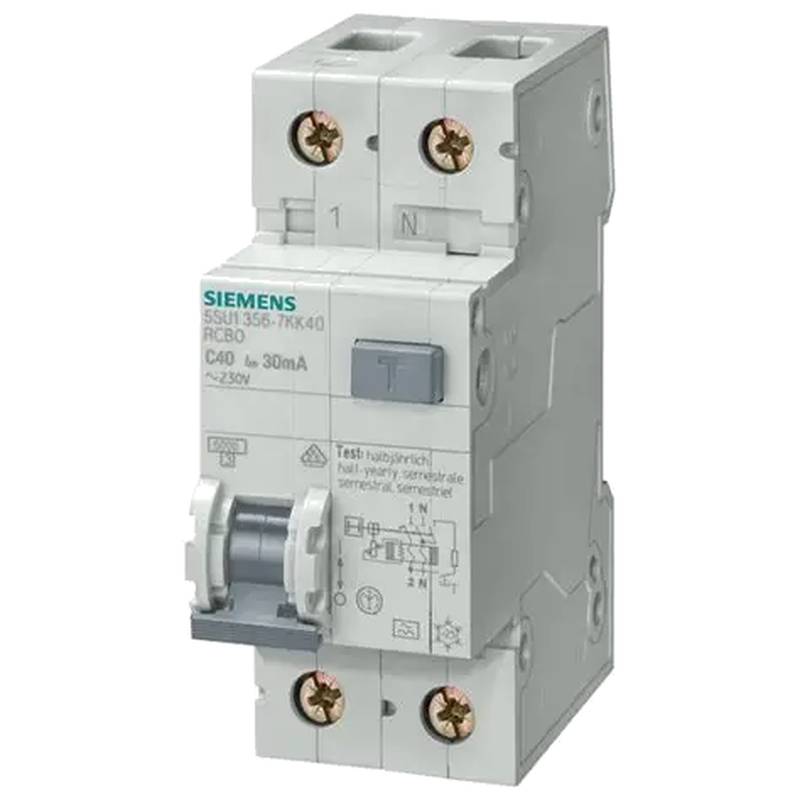













SIEMENS ALG503 SIEMENS ALG Ignition Transformer Replacement


The SIEMENS ALG503 ignition transformer is a crucial component for ensuring reliable ignition in various industrial combustion applications. This unit distinguishes itself with its robust design, high ignition energy output, and exceptional durability, making it a preferred choice for demanding environments. Key technical parameters include an input voltage range of 230/400V AC, an output voltage of 15kV AC, and a continuous duty cycle rating. Its compact form factor and ease of integration simplify installation and maintenance. The ALG503 is engineered for consistent performance, delivering the necessary spark energy for efficient and safe burner ignition across a wide spectrum of industrial heating systems.
Product Specifications
| Feature | Specification |
| :------------------- | :-------------------------------------------- |
| Model | SIEMENS ALG503 |
| Input Voltage | 230/400V AC |
| Output Voltage | 15kV AC |
| Duty Cycle | Continuous |
| Frequency | 50/60 Hz |
| Power Consumption | Varies with application (typically < 100W) |
| Protection Class | IP40 |
| Ambient Temperature | -20°C to +60°C |
| Dimensions (approx.) | 180 x 100 x 80 mm |
| Weight (approx.) | 2.5 kg |
Core Features & Market Positioning
The SIEMENS ALG503 stands out in the industrial ignition market due to its superior ignition reliability, a direct benefit of its high-frequency, high-energy spark generation. This advanced capability ensures a rapid and consistent ignition flame, minimizing burner start-up times and reducing the risk of ignition failure. Its robust construction, designed to withstand the harsh conditions often found in industrial settings—including temperature fluctuations and vibration—positions it as a durable and long-lasting solution. Compared to standard ignition transformers, the ALG503 offers a more stable voltage output and a greater number of ignition sparks per minute, translating to enhanced operational efficiency and reduced maintenance overhead for facility managers and combustion engineers.
Key Application Scenarios
Industrial facilities commonly rely on the SIEMENS ALG503 for critical ignition processes in various equipment. It is extensively employed in industrial boilers and furnaces, ensuring the safe and efficient start-up of combustion for heating processes in manufacturing plants, power generation facilities, and large commercial buildings. Furthermore, the ALG503 finds application in process heaters used in the petrochemical industry and in specialized thermal oxidizers for waste gas treatment. Its ability to provide a strong, reliable spark is essential for incinerators and industrial dryers where consistent ignition is paramount for operational continuity and safety protocols.
Practical System Integration Guidance
Integrating the SIEMENS ALG503 ignition transformer typically involves straightforward electrical connections. The unit requires a stable power supply matching its input voltage specifications (230V or 400V AC, depending on the model variant and site wiring). The high-voltage output terminals must be securely connected to the ignition electrodes, ensuring proper grounding to prevent arcing and ensure effective spark formation. Careful attention should be paid to cable insulation and routing to avoid interference and maintain the integrity of the high-voltage circuit. For optimal performance, the distance between the ignition electrodes and the flame detection sensor should be calibrated according to the burner manufacturer's guidelines.
Operation and Risk Mitigation
Operating the SIEMENS ALG503 ignition transformer demands adherence to strict safety protocols. Before initiating any maintenance or inspection, always disconnect the primary power supply to prevent electrical shock. The high-voltage output can cause severe injury or death if mishandled. Regular visual inspections for signs of wear, damage to insulation, or loose connections are critical for preventing failures. If ignition is consistently failing, check electrode condition, fuel-air mixture, and the transformer's output voltage. A common troubleshooting step involves verifying the input voltage supply and ensuring proper grounding. Fault codes are not typically displayed by the transformer itself; rather, system controls will indicate ignition failure.
Scalability & Long-Term Value
The SIEMENS ALG503 ignition transformer offers significant long-term value through its robust design and compatibility with a wide range of Siemens control systems. Its modular nature allows for straightforward replacement, minimizing downtime during maintenance cycles. While the ALG503 itself is not "upgraded" in the traditional sense, its reliable performance and durability contribute to the longevity of the entire combustion system. Integration with modern IIoT platforms is often achieved indirectly through the control system to which the transformer is connected, enabling remote monitoring of ignition system status and performance, thus facilitating predictive maintenance strategies and contributing to overall plant digitalization initiatives.
---
Frequently Asked Questions
Q1: What is the primary function of the SIEMENS ALG503 ignition transformer?
The SIEMENS ALG503 is designed to generate a high-voltage spark. This spark initiates the combustion process for industrial burners. It converts standard electrical input voltage into the high-energy output needed for reliable ignition.
This transformer plays a vital role in safely starting up boilers, furnaces, and other combustion equipment. Its reliable operation ensures stable flame establishment. It is a critical component in many industrial heating applications.
The high output voltage and energy ensure a quick and effective ignition spark. This reduces the time needed for burner start-up and minimizes the risk of ignition failure.
Q2: What are the key advantages of using the SIEMENS ALG503?
A significant advantage is its robust and durable construction. This makes it suitable for harsh industrial environments. It is built to withstand high temperatures and vibrations.
The ALG503 provides high ignition energy and a stable output voltage. This ensures reliable ignition performance across various conditions. It contributes to efficient and safe burner operation.
Its compact design and ease of integration simplify installation and maintenance. This reduces labor costs and minimizes operational downtime.
Q3: What are the typical input voltage requirements for the SIEMENS ALG503?
The SIEMENS ALG503 typically operates with an input voltage range of 230V AC or 400V AC. This flexibility allows it to be used in different electrical configurations common in industrial settings. It is crucial to match the transformer's input voltage to the available site power supply.
Before installation or operation, verify the specific model's input voltage rating. Incorrect voltage can damage the transformer or the connected control system. Always consult the product documentation or site electrical schematics.
Ensure all electrical connections are made by qualified personnel. Proper wiring according to local electrical codes is essential for safe and reliable operation.
Q4: How does the SIEMENS ALG503 differ from standard ignition transformers?
The ALG503 offers a higher ignition energy output. This results in a more powerful and consistent spark, leading to improved ignition reliability. It generates more sparks per minute.
Its construction is specifically engineered for industrial applications. This means it can withstand tougher operating conditions, such as extreme temperatures and vibrations, compared to basic models.
The transformer's advanced design often translates to longer service life and reduced maintenance needs. This contributes to a lower total cost of ownership over time.
Q5: In which industrial applications is the SIEMENS ALG503 commonly used?
It is widely employed in industrial boilers and furnaces for heating processes. This includes applications in manufacturing, power generation, and large commercial facilities.
The ALG503 is also utilized in process heaters within the petrochemical sector. It's integral to thermal oxidizers used for waste gas treatment.
Other common uses include incinerators and industrial dryers where reliable and immediate ignition is critical for operations.
Q6: What is the typical output voltage and frequency of the SIEMENS ALG503?
The SIEMENS ALG503 delivers a high output voltage, typically rated at 15kV AC. This high voltage is essential for creating a strong spark that can reliably ignite fuel-air mixtures.
The operational frequency for the ALG503 is generally 50 Hz or 60 Hz. This frequency is compatible with standard industrial power grids worldwide.
The combination of high voltage and appropriate frequency ensures efficient and consistent ignition performance across diverse industrial combustion systems.
Q7: What safety precautions should be taken when working with the SIEMENS ALG503?
Always disconnect the primary power supply before any maintenance. The high-voltage output poses a severe risk of electrical shock. Ensure proper grounding of the system to prevent arcing.
Wear appropriate personal protective equipment (PPE), including insulated gloves and eye protection. Never touch the high-voltage terminals or electrodes while the unit is energized.
Follow lockout/tagout procedures during maintenance. Only qualified and trained personnel should perform installation, servicing, or repair work.
Q8: How can I troubleshoot ignition failure when using a SIEMENS ALG503?
First, verify the input power supply to the transformer. Ensure it matches the required voltage (230V or 400V AC). Check for loose or damaged wiring connections.
Inspect the ignition electrodes for wear, damage, or improper gap spacing. Clean or replace them as necessary. Ensure the fuel-air mixture is correct for ignition.
If the above steps do not resolve the issue, the transformer itself may be faulty. Testing its output voltage might be necessary, or it may need to be replaced.
Q9: Is the SIEMENS ALG503 compatible with existing Siemens control systems?
Yes, the SIEMENS ALG503 is designed for seamless integration with a wide array of Siemens industrial control systems. Its electrical characteristics are harmonized with common Siemens automation platforms. This ensures straightforward implementation in existing or new Siemens-based control architectures.
Compatibility extends to integration with burner management systems (BMS) and programmable logic controllers (PLCs) from Siemens. This allows for centralized control and monitoring of the ignition process, as well as fault diagnostics.
When integrating, always refer to the specific control system's documentation and the ALG503's manual for precise wiring diagrams and configuration parameters.
Q10: What is the expected lifespan and maintenance for the SIEMENS ALG503?
The SIEMENS ALG503 is engineered for durability and a long operational lifespan in demanding industrial settings. With proper installation and regular inspections, it can provide many years of reliable service. Key maintenance involves visual checks for physical damage or wear on the unit and its wiring.
Periodic checks of the ignition electrodes for fouling, wear, or correct spacing are crucial for optimal performance and longevity. Ensuring the transformer is kept clean and free from excessive dust or debris can also contribute to its service life.
While the transformer itself requires minimal active maintenance, the overall system's maintenance schedule should include checks on associated components like ignition electrodes and fuel delivery systems.