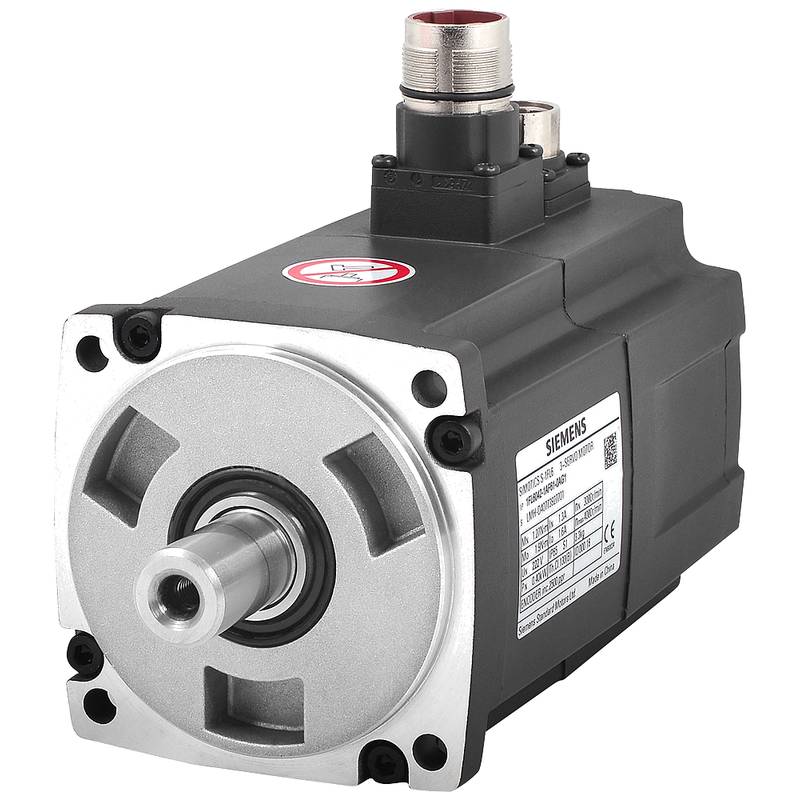













SIEMENS GLB141.1E Rotary Damper Actuator 15Nm HVAC


The SIEMENS GLB141.1E Rotary Damper Actuator is a high-performance HVAC component engineered for precise control of air dampers in a variety of building automation systems. This actuator delivers a robust 15 Nm torque, ensuring reliable operation even under demanding conditions. Its compact design and straightforward integration make it an ideal choice for new installations and retrofits, offering enhanced energy efficiency and superior indoor environmental control. The GLB141.1E is built for durability, featuring a robust construction that guarantees a long service life and minimal maintenance requirements. Its advanced technology ensures accurate positioning, contributing to optimized airflow management and reduced operational costs within commercial and industrial HVAC applications.
The core advantages of the SIEMENS GLB141.1E lie in its precise control capabilities, powerful torque output, and seamless integration into modern building management systems. It offers excellent reliability and a significant contribution to energy savings through optimized airflow. The actuator is designed for easy installation and commissioning, minimizing downtime and setup complexity. Its market positioning is defined by Siemens' reputation for quality and innovation in industrial automation, providing a dependable solution for critical HVAC functions.
| Specification | Value |
| :---------------------------- | :------------------------------------------ |
| Torque | 15 Nm |
| Power Supply | AC 230 V |
| Control Signal | 3-point Floating |
| Running Time | 150 s |
| Protection Rating | IP54 |
| Ambient Temperature Range | -20 to +50 °C |
| Dimensions (W x H x D) | 68 x 157 x 74.5 mm |
| Weight | Approx. 1.2 kg |
| Auxiliary Switches | Optional |
| Manual Override | Yes |
| Spring Return Function | No |
| Direct/Shaft Mounting | Direct, adaptable to shaft sizes 10-20 mm |
Key Application Scenarios
The SIEMENS GLB141.1E rotary damper actuator is exceptionally well-suited for controlling air dampers in variable air volume (VAV) systems, ensuring precise airflow regulation for optimal temperature and air quality. Its robust 15 Nm torque makes it ideal for medium-sized dampers in commercial buildings, such as offices, hotels, and retail spaces, where consistent environmental control is paramount for occupant comfort and energy efficiency. Furthermore, its durable construction and IP54 rating allow for reliable operation in demanding industrial settings, including manufacturing facilities and process ventilation systems, where precise exhaust or supply air control is critical for safety and operational integrity.
Practical System Integration Guidance
Integrating the SIEMENS GLB141.1E into an HVAC system involves straightforward mechanical and electrical connections. Mechanically, the actuator mounts directly onto the damper shaft, accommodating shaft diameters from 10 to 20 mm using its adaptable coupling. Electrical connections are made via screw terminals, typically requiring a 230V AC power supply and a 3-point floating control signal from a building management system (BMS) or controller. The actuator's running time of 150 seconds allows for smooth damper positioning, and optional auxiliary switches can be wired to provide feedback on damper position to the BMS, enabling advanced control logic and monitoring.
Operation and Risk Mitigation
Safe operation of the SIEMENS GLB141.1E relies on adherence to electrical safety standards during installation and maintenance, ensuring the 230V AC power supply is correctly isolated before any work commences. While the GLB141.1E is designed for high reliability, common issues can include incorrect wiring leading to operational faults or mechanical binding of the damper preventing full movement. Regular inspection of the damper and actuator linkage for obstructions or wear is recommended to prevent premature failure and maintain optimal performance, ensuring consistent airflow and preventing potential system imbalances or energy waste.
Scalability & Long-Term Value
The SIEMENS GLB141.1E offers significant long-term value due to its compatibility with established Siemens building automation platforms, allowing for seamless integration into existing or future BMS upgrades. Its robust design and durable components ensure a lengthy operational lifespan, reducing the total cost of ownership through minimized replacement cycles. While not inherently an IIoT device, its ability to be integrated with modern control systems via auxiliary switches and standard control signals facilitates its inclusion in smart building strategies focused on energy optimization and predictive maintenance, enhancing its relevance in evolving digital environments.
Frequently Asked Questions
1. What are the primary benefits of using the SIEMENS GLB141.1E?
The SIEMENS GLB141.1E provides precise damper control, crucial for HVAC energy efficiency. Its 15 Nm torque ensures reliable operation for medium-sized dampers. The actuator is designed for easy installation and long-term durability.
This actuator optimizes airflow management, contributing to better indoor air quality and occupant comfort. Its robust construction minimizes maintenance needs, lowering operational expenses over its lifespan. The unit seamlessly integrates into various building automation systems for centralized control.
The GLB141.1E's advanced technology ensures accurate positioning, preventing energy wastage from uncontrolled airflow. This leads to significant cost savings on heating, ventilation, and air conditioning. Its reliable performance makes it a trusted component in critical building systems.
2. What is the torque rating and why is it important for damper actuators?
The SIEMENS GLB141.1E features a 15 Nm torque rating, indicating its rotational force capacity. This torque is vital for overcoming damper blade resistance and friction. It ensures the actuator can fully open or close the damper against air pressure.
A sufficient torque rating prevents the actuator from stalling or failing under load. This is particularly important in VAV systems where damper position directly affects airflow. The 15 Nm is suitable for a wide range of medium-sized dampers in commercial applications.
Selecting an actuator with the correct torque rating is essential for system performance and longevity. Insufficient torque can lead to erratic damper movement and system instability. The GLB141.1E's 15 Nm provides a reliable balance for many standard HVAC damper applications.
3. How is the SIEMENS GLB141.1E installed and wired in an HVAC system?
Installation involves mounting the actuator directly onto the damper shaft using its adaptable coupling. It accommodates shaft sizes ranging from 10 to 20 mm. Ensure the shaft is clean and free of obstructions for a secure fit.
Wiring requires a 230V AC power supply and a 3-point floating control signal from a BMS or controller. Connect these wires to the designated screw terminals on the actuator. Follow the wiring diagram provided in the product manual carefully.
Optional auxiliary switches can be wired to provide damper position feedback to the control system. This allows for more sophisticated control strategies and monitoring. Always ensure power is disconnected before making any electrical connections for safety.
4. What type of control signal does the GLB141.1E use, and what are its implications?
The SIEMENS GLB141.1E utilizes a 3-point floating control signal. This type of signal sends distinct "open" and "close" commands without a proportional position feedback loop. The actuator moves until it reaches its end stop or the command is removed.
This 3-point control is common in many HVAC applications for its simplicity and cost-effectiveness. It requires a compatible controller that can provide these discrete open/close signals to drive the actuator. The actuator then translates these signals into damper movement.
While simple, 3-point control means the exact damper position isn't directly communicated back to the controller. For applications requiring precise positional accuracy and feedback, other control types or additional sensors might be necessary.
5. Can the SIEMENS GLB141.1E be used in both new installations and retrofits?
Yes, the SIEMENS GLB141.1E is versatile and suitable for both new construction and upgrading existing HVAC systems. Its direct mounting and standard control inputs facilitate easy integration.
For retrofits, its adaptability to common shaft sizes simplifies replacement of older, less efficient actuators. The 230V AC power requirement is also widely available in most commercial buildings.
The actuator's robust design and reliable performance ensure it provides long-term value in either scenario. It helps modernize older systems with precise, energy-efficient control capabilities.
6. What is the IP rating of the GLB141.1E, and what does it mean for its application?
The SIEMENS GLB141.1E has an IP54 protection rating. This means it is protected against dust ingress and splashing water from any direction.
This rating makes the actuator suitable for installations in environments where some dust or moisture might be present. It offers a higher level of protection than standard indoor actuators.
Consider the IP54 rating when selecting an actuator for applications in areas like mechanical rooms, or where exposure to the elements is a concern, ensuring reliable operation.
7. Does the SIEMENS GLB141.1E have a manual override function?
Yes, the SIEMENS GLB141.1E is equipped with a manual override feature. This allows for manual adjustment of the damper position without needing to power the actuator.
The manual override is crucial for maintenance, troubleshooting, or during power outages. It enables technicians to position the damper as needed for system servicing or emergency ventilation.
Typically, a manual override is engaged via a button or lever on the actuator itself. Consult the product documentation for specific instructions on its use.
8. What is the running time of the GLB141.1E, and how does it impact HVAC system performance?
The SIEMENS GLB141.1E has a running time of 150 seconds for full damper travel. This relatively slow running time ensures smooth and controlled damper movement.
A slower running time prevents abrupt air pressure changes in the ductwork. This is beneficial for VAV systems, reducing noise and improving comfort by avoiding sudden airflow fluctuations.
This speed is generally well-suited for standard HVAC applications. For systems requiring extremely rapid damper response, alternative actuators with faster running times would be considered.
9. Are auxiliary switches available for the GLB141.1E, and how are they used?
Yes, auxiliary switches are optional for the SIEMENS GLB141.1E. These switches provide electrical feedback signals indicating the damper's position.
They are typically used to signal end-of-travel (fully open or closed) or intermediate positions to the building management system (BMS). This enables the BMS to monitor damper status accurately.
Auxiliary switches enhance control capabilities by allowing the BMS to implement logic based on actual damper positions, improving system efficiency and diagnostics.
10. What is the long-term value proposition of the SIEMENS GLB141.1E in a building automation context?
The GLB141.1E offers long-term value through its robust Siemens engineering and durable construction. This translates to a long operational life and reduced need for frequent replacements.
Its compatibility with Siemens building automation platforms ensures seamless integration and scalability with future system upgrades. This protects the investment in the actuator and the overall building control system.
The actuator's precise control contributes to ongoing energy savings in HVAC operations. This consistent efficiency improvement offers a significant return on investment over the lifespan of the building.