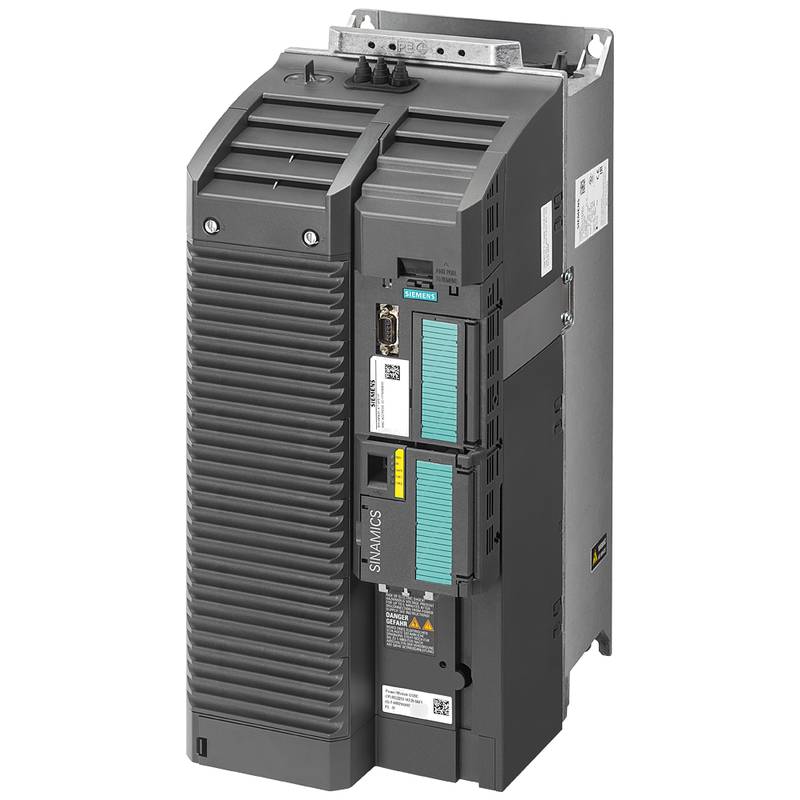












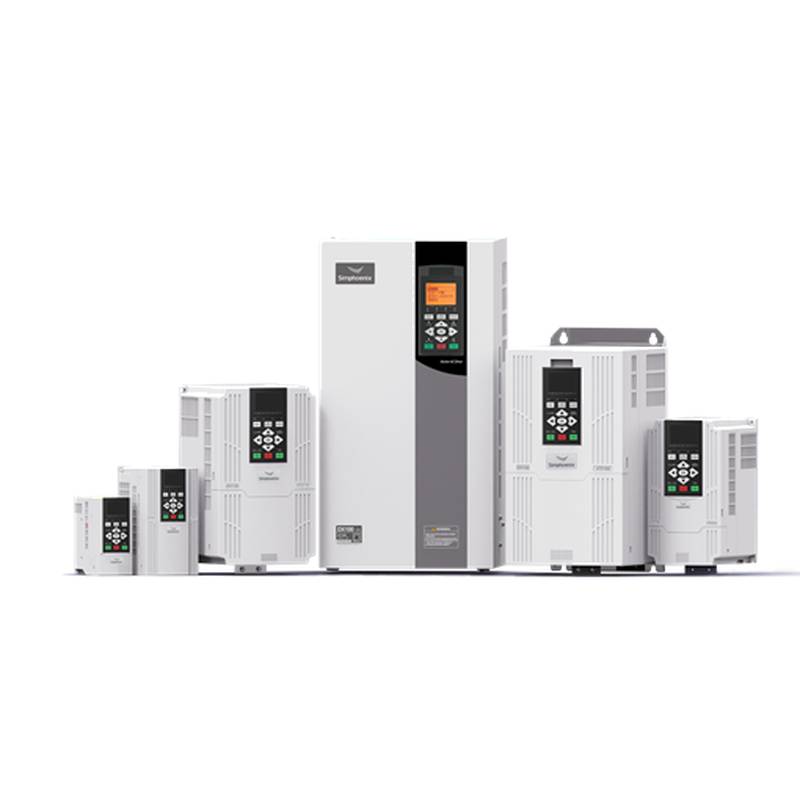
SIMPHOENIX DL100-4T0040B Universal Frequency Drive VFD 4kW


The SIMPHOENIX DL100-4T0040B Universal Frequency Drive (VFD) stands as a robust 4kW solution engineered for precise motor control across a multitude of industrial applications. This VFD distinguishes itself with its advanced vector control capabilities, offering exceptional torque performance and dynamic response essential for demanding operational environments. Its user-friendly interface, coupled with comprehensive protection features, ensures reliable and safe operation, positioning the DL100-4T0040B as a superior choice for engineers and system integrators seeking efficiency and adaptability in their machinery.
Product Specifications
| Feature | Specification |
| :------------------- | :------------------------------------------ |
| Model Number | SIMPHOENIX DL100-4T0040B |
| Power Rating | 4kW (5.5 HP) |
| Input Voltage | 3-Phase, 380-480V AC |
| Output Voltage | 3-Phase, 0-480V AC |
| Output Current | 10.5 A |
| Frequency Range | 0-400 Hz |
| Control Method | V/f control, Vector control |
| Protection Features | Overload, Overvoltage, Undervoltage, Short circuit, Overheating, etc. |
| Communication | Optional modules (Modbus, Profibus, etc.) |
| Operating Temperature| -10°C to +40°C (derating above 40°C) |
| Dimensions (H x W x D)| (Specific dimensions not readily available, but generally compact for its class) |
| Mounting | Wall-mount or DIN rail |
Core Features & Market Positioning
The SIMPHOENIX DL100-4T0040B is engineered with advanced sensorless vector control, providing superior torque output even at low speeds, a critical advantage over basic V/f control drives. This capability allows for precise speed regulation and dynamic load handling, making it suitable for applications requiring rapid acceleration and deceleration. The drive's robust design and comprehensive protection mechanisms, including integrated thermal management and electrical fault detection, ensure extended operational life and reduced downtime. Positioned as a high-performance, cost-effective solution, the DL100-4T0040B competes effectively in markets where reliability and advanced control are paramount, such as in manufacturing, material handling, and HVAC systems. Its ability to support various communication protocols through optional modules further enhances its integration into complex automation architectures.
Key Application Scenarios
The versatility of the SIMPHOENIX DL100-4T0040B makes it an ideal candidate for a wide array of industrial processes. In material handling, it ensures smooth and controlled movement of conveyors and cranes, optimizing throughput and reducing product damage. For pump and fan control, its V/f and vector control modes enable precise flow and pressure regulation, leading to significant energy savings in HVAC and water treatment systems. The drive's robust torque performance is also highly valued in machine tool applications, where it drives spindles and axis movements with high accuracy and responsiveness. Furthermore, its adaptable control options allow seamless integration into packaging machinery, ensuring synchronized operation of various components for efficient production lines.
Practical System Integration Guidance
Integrating the SIMPHOENIX DL100-4T0040B into an existing system is streamlined through its clear terminal layout and intuitive programming interface. Proper wiring is crucial; ensure the input power supply is correctly connected to terminals L1, L2, and L3, and the motor leads are connected to T1, T2, and T3. Grounding the drive and motor chassis is essential for safety and electromagnetic compatibility. For motor parameter configuration, the drive offers auto-tuning functions that simplify the process of matching the VFD to the motor's characteristics, optimizing performance and protection. When implementing communication, ensure the correct optional module is installed and configured according to its specific manual, and the network wiring adheres to the protocol standards (e.g., RS485 for Modbus RTU).
Operation and Risk Mitigation
Safe operation of the SIMPHOENIX DL100-4T0040B is paramount, requiring adherence to electrical safety standards and the drive's operational manual. Before commissioning, verify all connections are secure and the power supply is stable. Avoid making wiring changes while the drive is powered; always disconnect and discharge the capacitors. Common fault codes, such as "OL" (Overload) or "SC" (Short Circuit), indicate specific issues that require immediate attention. An "OL" fault typically points to motor or load issues exceeding the drive's capacity, while "SC" suggests a wiring fault or motor winding problem. Addressing these faults promptly through systematic troubleshooting, including checking motor insulation and load conditions, prevents further damage and ensures operational continuity.
Scalability & Long-Term Value
The SIMPHOENIX DL100-4T0040B offers significant scalability and long-term value through its flexible architecture and compatibility with evolving industrial automation trends. Its modular design allows for the addition of communication cards, such as Profibus or Ethernet/IP, enabling seamless integration into advanced Distributed Control Systems (DCS) and Supervisory Control and Data Acquisition (SCADA) platforms. This adaptability ensures that the VFD can keep pace with upgrades in plant-wide control strategies and support the growing demand for Industrial Internet of Things (IIoT) connectivity and data analytics. The drive’s robust build quality and comprehensive protection features contribute to a prolonged service life, minimizing total cost of ownership and providing a reliable foundation for future system expansions or modifications.
FAQs
What is the maximum input voltage for the SIMPHOENIX DL100-4T0040B?
The SIMPHOENIX DL100-4T0040B is designed for a 3-phase input voltage range of 380 to 480 Volts AC. This allows it to be used in standard industrial power grids across many regions.
Ensuring the power source matches this specification is critical for the drive's correct operation and longevity. Incorrect voltage can lead to malfunctions or permanent damage.
Always consult the local power grid specifications and the VFD's nameplate before connecting the DL100-4T0040B to prevent electrical hazards.
What types of motors can be controlled by the SIMPHOENIX DL100-4T0040B?
This universal frequency drive is capable of controlling standard 3-phase AC induction motors. Its advanced control algorithms, including sensorless vector control, optimize performance for a wide range of motor types.
The DL100-4T0040B can precisely manage motor speed and torque, making it suitable for applications with varying load demands. It is essential to properly configure the motor parameters within the VFD for optimal results.
For specialized motor types, such as permanent magnet synchronous motors, ensure compatibility is confirmed with SIMPHOENIX documentation or support.
How do I perform an auto-tune on the SIMPHOENIX DL100-4T0040B?
Auto-tuning on the DL100-4T0040B calibrates the drive to the specific motor's electrical characteristics. Access the tuning menu via the keypad and initiate the static or rotating auto-tune function.
Ensure the motor is disconnected from the load during the auto-tune process to achieve accurate parameterization. Follow the on-screen prompts to complete the procedure.
After auto-tuning, verify the drive's performance under varying load conditions to confirm optimal operation and torque control.
What are the primary benefits of using sensorless vector control in the DL100-4T0040B?
Sensorless vector control provides precise speed and torque regulation without requiring a motor-mounted encoder. This simplifies installation and reduces overall system cost.
It offers excellent dynamic response, maintaining high torque even at low speeds, which is crucial for applications with rapidly changing loads. This ensures consistent performance.
This advanced control mode significantly improves efficiency and allows for smoother motor operation, reducing mechanical stress and extending equipment life.
What communication protocols does the SIMPHOENIX DL100-4T0040B support?
The base unit supports standard serial communication, often with Modbus RTU as a common option. For enhanced connectivity, optional communication modules are available.
These optional modules can enable protocols such as Profibus DP, DeviceNet, EtherNet/IP, and Modbus TCP, allowing integration into various industrial networks.
Selecting the appropriate communication module depends on the plant's existing infrastructure and the specific requirements of the automation system for data exchange.
What is the typical operating temperature range for this VFD?
The SIMPHOENIX DL100-4T0040B is generally rated for operation in ambient temperatures between -10°C and +40°C. Operating outside this range requires derating.
For environments exceeding 40°C, the drive's output current capacity must be reduced to prevent overheating. Consult the manual for specific derating curves.
Proper ventilation and avoiding direct sunlight are crucial for maintaining optimal operating temperatures and ensuring the longevity of the VFD.
How does the DL100-4T0040B handle overload conditions?
The drive is equipped with built-in overload protection, typically set to trip at 150% of the rated current for 60 seconds or 110% for 600 seconds. This protects the motor from damage.
When an overload condition is detected, the VFD will issue an overload fault code (e.g., OL) and safely stop the motor. The fault parameters can often be adjusted within the drive's settings.
To mitigate overload issues, ensure the motor and driven load are correctly sized for the application and that the VFD is properly configured with the motor's nameplate data.
Can the SIMPHOENIX DL100-4T0040B be used for single-phase motor control?
No, the DL100-4T0040B is specifically designed for 3-phase motor control, operating from a 3-phase power supply and outputting 3-phase power to the motor.
Using this VFD with a single-phase motor or connecting it to a single-phase supply will not function correctly and can lead to severe damage to the drive and motor.
Always ensure your motor is a 3-phase type and your power supply is a stable 3-phase source before connecting the SIMPHOENIX DL100-4T0040B.
What are the key advantages of V/f control compared to vector control on this drive?
V/f control is a simpler method that maintains a constant ratio between voltage and frequency, suitable for basic applications like simple fans or pumps. It's easier to set up.
Vector control, however, offers superior torque control, speed regulation, and dynamic response, especially at low speeds and under varying loads, making it ideal for precise applications.
While V/f is less complex and may require less motor data, vector control provides significantly higher performance and efficiency for demanding industrial tasks.
Where can I find the user manual for the SIMPHOENIX DL100-4T0040B?
The official user manual for the SIMPHOENIX DL100-4T0040B is typically available for download from the SIMPHOENIX official website. Search their product support or documentation section.
If direct download is not immediately apparent, contacting SIMPHOENIX technical support or your authorized distributor will provide access to the necessary documentation.
The manual contains critical information on installation, programming, troubleshooting, and safety procedures essential for the correct operation of the VFD.