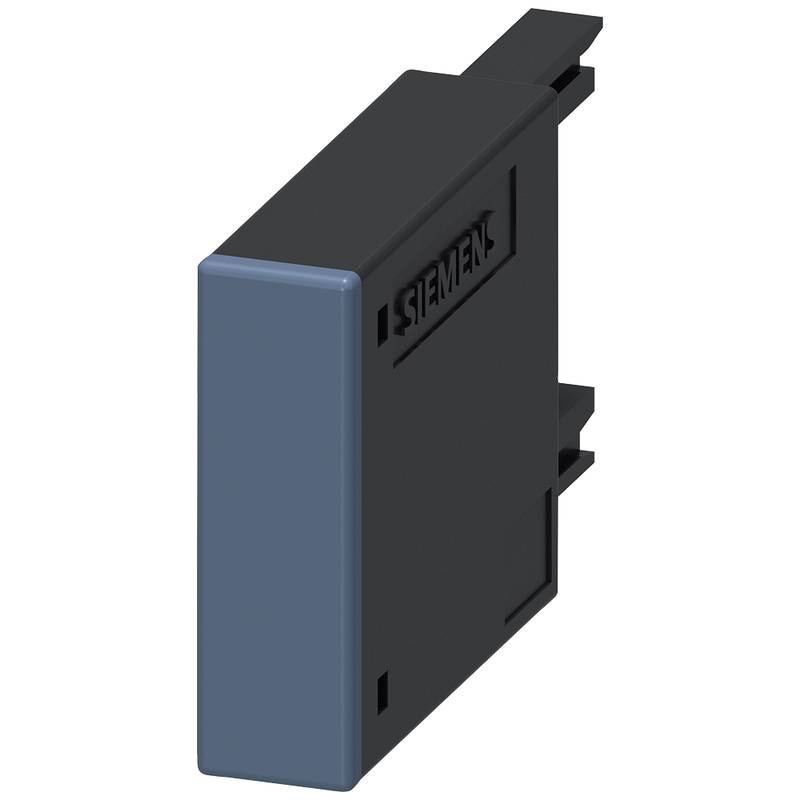












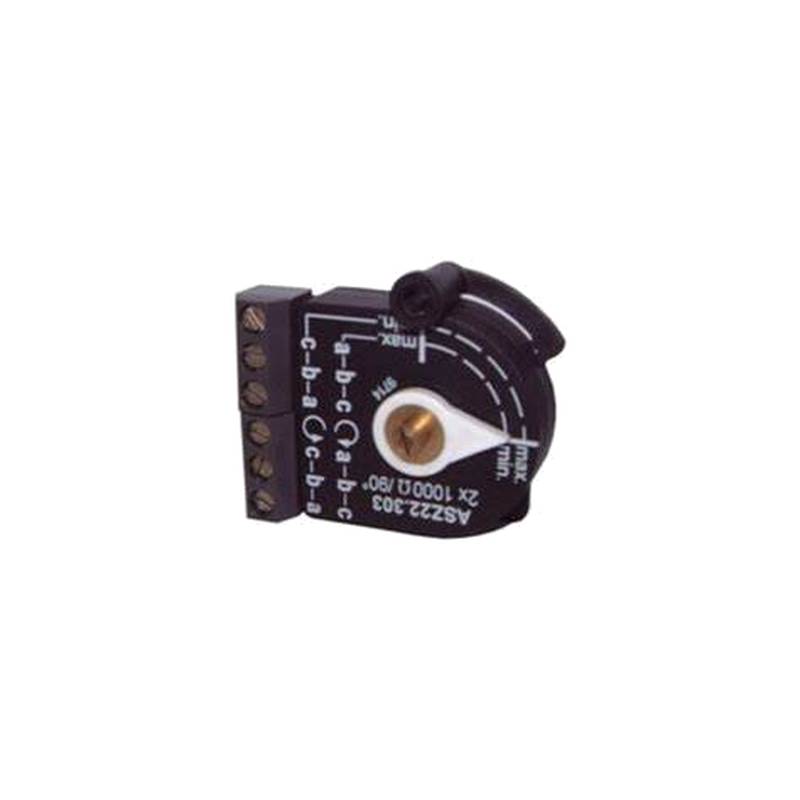
SIEMENS ASZ22.803 Auxiliary Potentiometer 3-Wire Standard


The SIEMENS ASZ22.803 Auxiliary Potentiometer, a 3-wire standard unit, stands out as a critical component for precise control in various industrial automation systems. Its key advantages include exceptional durability, reliable performance in demanding environments, and seamless integration capabilities. Core features encompass a robust construction designed for extended operational life, precise adjustment capabilities, and compatibility with a wide range of SIEMENS control systems. Technical parameters highlight its 3-wire configuration, standard operational range, and suitability for applications requiring accurate analog signal feedback.
| Parameter | Specification |
| :------------------ | :------------------------------ |
| Product Type | Auxiliary Potentiometer |
| Model Number | ASZ22.803 |
| Wiring Configuration| 3-Wire |
| Standard | Standard Industrial |
| Manufacturer | SIEMENS |
Core Features & Market Positioning
The SIEMENS ASZ22.803 distinguishes itself through its high-quality manufacturing and adherence to stringent industrial standards, positioning it as a reliable choice for mission-critical applications. Its market value is derived from its ability to provide accurate and stable analog control signals, essential for maintaining optimal process parameters in sophisticated automation setups. Unlike generic alternatives, the ASZ22.803 offers superior resistance to environmental factors such as dust, moisture, and vibration, ensuring consistent operation and reducing the likelihood of premature failure. This robustness translates directly into reduced downtime and maintenance costs for end-users, a significant competitive advantage in process industries.
Key Application Scenarios
This auxiliary potentiometer finds extensive use in industrial settings where precise manual or semi-automatic control is paramount. It is frequently deployed in motor control applications, enabling operators to fine-tune motor speed or torque with accuracy. HVAC systems utilize the ASZ22.803 for modulating airflow or heating/cooling levels, contributing to energy efficiency and occupant comfort. Furthermore, in process automation, it serves as a reliable feedback mechanism for control loops, allowing for adjustments to valve positions, pump speeds, or other variable parameters that dictate process throughput and quality. Its 3-wire standard configuration facilitates straightforward integration into existing control panels and PLCs.
Practical System Integration Guidance
Integrating the SIEMENS ASZ22.803 auxiliary potentiometer into an industrial control system is a well-defined process. The 3-wire setup typically involves connecting the power supply to one terminal, the signal output to another, and grounding the third. Precise wiring schematics are often provided by SIEMENS for specific control units, but a general understanding involves supplying a stable voltage, reading the variable resistance at the output, and ensuring a common ground. For SIEMENS PLCs, the analog input module would receive the signal, which can then be scaled and utilized within the control logic. Careful consideration of the potentiometer's resistance range and power rating is crucial to prevent damage and ensure accurate signal translation.
Operation and Risk Mitigation
Operating the SIEMENS ASZ22.803 involves manual adjustment of its rotary or linear element to achieve the desired control output. The primary risk during operation is exceeding the potentiometer's specified electrical or mechanical limits, which can lead to component failure. Over-voltage, excessive current draw, or physical over-extension of the adjustment mechanism are common failure modes. To mitigate these risks, it is imperative to adhere strictly to the product's datasheet specifications regarding voltage, current, and environmental operating conditions. Regular visual inspections for wear or damage, alongside periodic testing of its output signal linearity, can preemptively identify potential issues and prevent operational disruptions.
Scalability & Long-Term Value
The SIEMENS ASZ22.803 offers significant long-term value through its compatibility with SIEMENS' broader automation ecosystem. This ensures that as systems evolve or expand, the auxiliary potentiometer can often be retained and integrated with newer control platforms or IIoT-enabled solutions. Its robust design contributes to a long operational lifespan, minimizing the need for frequent replacements. For organizations invested in SIEMENS automation, the ASZ22.803 represents a scalable solution that can be easily replicated across multiple installations without requiring extensive re-engineering or retraining, thereby securing a consistent and reliable control pathway for the future.
Frequently Asked Questions
What is the primary function of the SIEMENS ASZ22.803?
The SIEMENS ASZ22.803 functions as an auxiliary potentiometer, providing a variable resistance that translates into an analog control signal. This signal is crucial for adjusting parameters in automated industrial processes. It enables precise manual or semi-automatic input for control systems.
This component allows operators to fine-tune settings like motor speed, valve positions, or flow rates. Its reliability makes it suitable for critical control loops where accuracy is paramount. The ASZ22.803 is designed for demanding industrial environments.
Its 3-wire configuration facilitates easy integration into various control architectures. It acts as an essential interface for human or system-driven adjustments, ensuring optimal performance.
How do I wire the SIEMENS ASZ22.803 auxiliary potentiometer?
Wiring the ASZ22.803 involves connecting its three terminals appropriately within your control system. Typically, one terminal receives the power supply, another serves as the signal output, and the third is connected to ground. Refer to the specific control unit's manual for exact terminal designations.
Ensure the power supply voltage and current ratings align with the potentiometer's specifications to prevent damage. The signal output terminal provides a variable voltage or resistance that your PLC or control device reads. Proper grounding is essential for signal integrity and safety.
Always consult the SIEMENS documentation for the ASZ22.803 or your specific automation system for detailed wiring diagrams. Incorrect wiring can lead to component failure or inaccurate control signals.
What are the key technical specifications of the SIEMENS ASZ22.803?
The SIEMENS ASZ22.803 is a 3-wire standard auxiliary potentiometer. Its core specification is its ability to provide a variable resistance for analog signal generation. It is built to endure harsh industrial conditions.
Specific technical details often include its resistance range, power rating, and operational temperature limits. These parameters are critical for selecting the correct potentiometer for a given application. The 3-wire setup is standard for many analog control inputs.
The exact resistance value and taper (linear, logarithmic) are crucial for proper signal interpretation by the control system. Always verify these details against your system's requirements.
Where is the SIEMENS ASZ22.803 commonly used in industrial applications?
This auxiliary potentiometer is frequently employed in motor control systems for precise speed or torque adjustments. It's also integral to HVAC systems for managing airflow and temperature settings. Many process automation applications utilize it for modulating equipment like pumps and valves.
Its role is often to provide direct operator input for fine-tuning process variables. This ensures optimal production quality and efficiency. Applications requiring accurate analog feedback are ideal for the ASZ22.803.
The ASZ22.803 is chosen for its durability and reliable performance in environments with dust, moisture, or vibrations. It serves as a robust control interface for various industrial machinery.
What advantages does the SIEMENS ASZ22.803 offer over other potentiometers?
The ASZ22.803 offers superior durability and a design optimized for harsh industrial environments. Its high-quality construction ensures a longer operational lifespan and consistent performance. It boasts reliable signal accuracy.
This unit is built to withstand factors like vibration, dust, and moisture, common in industrial settings. This robustness translates to reduced downtime and maintenance costs. It offers a competitive edge through reliability.
Furthermore, its seamless integration within the SIEMENS automation ecosystem provides scalability and long-term value. It is designed to work effectively with other SIEMENS components.
How can the SIEMENS ASZ22.803 contribute to system scalability?
The ASZ22.803 integrates smoothly with existing SIEMENS automation platforms. This compatibility allows for easy expansion of control systems without major re-engineering. It supports future upgrades and modifications.
Its standardized design means it can be readily deployed across multiple projects or plant areas. This consistent component reduces training needs and simplifies inventory management. Scalability is achieved through modularity.
As IIoT and digital solutions evolve, the ASZ22.803 can often be incorporated into these advanced architectures. Its analog output can be digitized for modern data acquisition and analysis.
What are common troubleshooting steps for the SIEMENS ASZ22.803?
Begin by verifying the wiring connections against the schematic; ensure all three wires are correctly terminated. Check the power supply voltage to confirm it is within the potentiometer's specified range. Test the continuity and resistance of the potentiometer itself.
Inspect the physical condition of the potentiometer for any signs of damage, wear, or obstruction of the moving element. Ensure the control system's input module is functioning correctly and configured to read the potentiometer's signal. Clean any dirt or debris from the adjustment mechanism.
If the potentiometer fails to provide a variable signal, it may need replacement. Refer to the product's datasheet for detailed troubleshooting charts and error code interpretations. Always disconnect power before performing inspections or repairs.
What kind of resistance range can I expect from the ASZ22.803?
The resistance range for the SIEMENS ASZ22.803 auxiliary potentiometer will vary depending on the specific model variant and its intended application. Standard industrial potentiometers often come in ranges such as 1kΩ, 5kΩ, or 10kΩ. It is crucial to consult the product datasheet for the exact resistance values.
The specified resistance range directly impacts the resolution and sensitivity of the control signal. A wider range might offer finer adjustments in certain scenarios, while a specific fixed range is designed to match the input requirements of the connected control system or PLC. Always match the potentiometer's range to the system's capabilities.
Understanding the resistance range is vital for proper system calibration and operation. It determines how the analog input of the controller interprets the potentiometer's output. This ensures accurate feedback for process control.
Is the SIEMENS ASZ22.803 suitable for high-temperature environments?
The suitability of the SIEMENS ASZ22.803 for high-temperature environments depends on its specific industrial rating. While designed for demanding conditions, there are defined operational temperature limits outlined in the product's technical specifications. Exceeding these limits can lead to component degradation and failure.
Industrial-grade components like the ASZ22.803 often have enhanced thermal characteristics compared to consumer-grade electronics. However, for applications with extreme heat, specialized high-temperature potentiometers or remote mounting solutions with cooling might be necessary. Always verify the maximum operating temperature.
Refer to the official SIEMENS datasheet for the ASZ22.803 to ascertain its precise temperature tolerance. If your application environment exceeds these limits, consider alternative solutions or protective measures to maintain reliable operation.
What is the difference between a 3-wire and a 2-wire potentiometer in industrial use?
A 3-wire potentiometer, like the ASZ22.803, typically includes connections for power supply, signal output, and ground. This configuration is standard for generating a variable voltage or resistance signal to an input device. It offers better signal integrity and easier interfacing with many controllers.
A 2-wire potentiometer usually refers to a rheostat configuration where the input is varied by using two terminals, often in series with a load. This can be used as a variable resistor, but it doesn't inherently provide a separate signal output in the same way a 3-wire potentiometer does when connected as a voltage divider. The third wire is key for distinct signal feedback.
The 3-wire setup, used in the ASZ22.803, is common for analog input modules on PLCs, acting as a voltage divider where the wiper's position determines the output voltage relative to the supply and ground. This provides a precise and easily interpretable analog signal for control purposes.