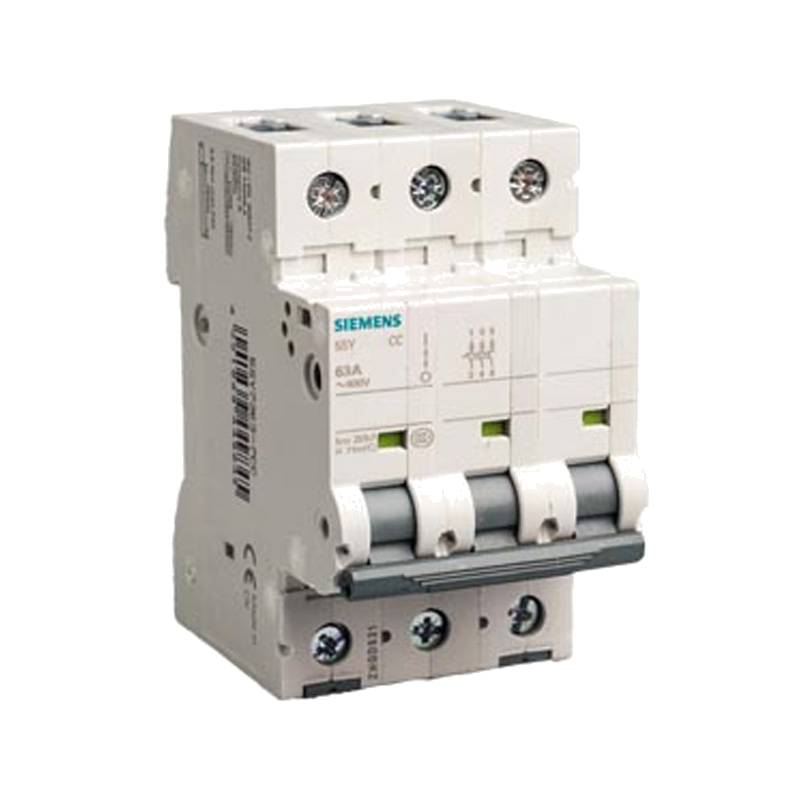












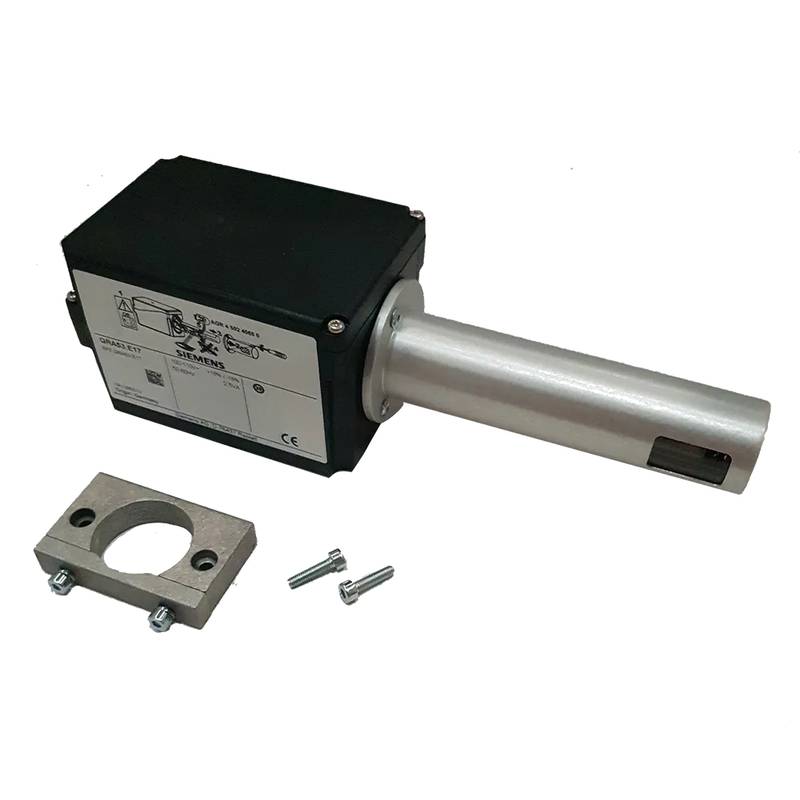
SIEMENS QRA75.A17 UV Flame Detector QRA75 Long Sensor


The SIEMENS QRA75.A17 UV Flame Detector, with its long sensor, stands as a robust solution for industrial combustion monitoring. This flame detector offers exceptional reliability and rapid response times, crucial for ensuring safe and efficient operation in demanding environments. Key advantages include its advanced ultraviolet (UV) sensing technology, robust construction for harsh conditions, and seamless integration capabilities with various burner management systems. Technical parameters highlight its suitability for a wide range of applications, ensuring precise flame detection and safeguarding against combustion failures.
Product Specifications
| Specification | Value |
|---|---|
| Flame Signal Type | Ultraviolet (UV) |
| Sensor Type | Long Sensor |
| Operating Voltage | 20-24 V AC |
| Current Consumption | Max. 1.5 mA |
| Temperature Range | -40 to +60 °C |
| Housing Protection | IP65 |
| Connection | 3-pin connector |
| Dimensions | 120 x 40 x 30 mm |
| Weight | Approx. 150 g |
Core Features & Market Positioning
The SIEMENS QRA75.A17 distinguishes itself through its high-sensitivity UV detection, providing early warning of flame presence or absence. Its long sensor design offers enhanced reach and flexibility in positioning within combustion chambers, a significant advantage over shorter, more restrictive models. This detector is engineered for high-temperature environments and electromagnetic interference resistance, positioning it as a premium choice for critical industrial processes where operational continuity and safety are paramount. The integration of a robust filtering system ensures accurate readings by minimizing false alarms caused by extraneous UV sources.
Key Application Scenarios
Industrial facilities heavily rely on the SIEMENS QRA75.A17 UV Flame Detector for critical applications such as power generation, petrochemical processing, and large-scale heating systems. Its long sensor is particularly beneficial in large furnaces and boilers where extended monitoring range is required to ensure complete flame coverage. It is a standard component in systems that demand immediate and reliable flame failure detection to prevent dangerous fuel accumulation and potential explosions. Sectors requiring continuous operational uptime and strict safety compliance, like chemical plants and industrial incinerators, find this detector indispensable.
Practical System Integration Guidance
Integrating the SIEMENS QRA75.A17 UV Flame Detector involves connecting its 3-pin connector to the corresponding terminals on the burner control unit. Proper wiring is essential; typically, pins are designated for signal output, reference, and a safety interlock. Ensure the detector is mounted securely, with the sensor window unobstructed and oriented to view the flame. Commissioning requires verifying the detector's response to a live flame and its communication with the control system, often through specific diagnostic software provided by SIEMENS or the burner management system manufacturer. Always consult the SIEMENS QRA75 installation manual for detailed wiring diagrams and setup procedures specific to your control system.
Operation and Risk Mitigation
The QRA75.A17 operates by sensing the ultraviolet radiation emitted by a flame. When UV radiation exceeds a predefined threshold, the detector signals the presence of a flame to the burner control system. In the event of flame failure or insufficient UV signal, it triggers a shutdown sequence, mitigating the risk of unburned fuel release. Common troubleshooting involves checking for a clean sensor lens, ensuring proper electrical connections, and verifying that the UV output from the flame is sufficient and not obscured. Fault codes, if indicated by the connected control system, should be cross-referenced with the system's manual for specific error identification and resolution.
Scalability & Long-Term Value
The SIEMENS QRA75.A17 is designed for compatibility with a wide array of SIEMENS burner control systems, such as the LMV series, offering a scalable solution for evolving industrial needs. Its robust design ensures a long operational lifespan, reducing total cost of ownership through minimized maintenance and replacement cycles. For facilities embracing Industry 4.0 initiatives, integration with digital platforms is achievable through compatible control systems, enabling remote monitoring and data analytics for predictive maintenance and process optimization. This ensures that the flame detection infrastructure remains relevant and valuable within a modernized industrial ecosystem.
Frequently Asked Questions
What is the primary function of the SIEMENS QRA75.A17 UV Flame Detector?
This detector's main role is to monitor flames in industrial combustion processes. It specifically uses ultraviolet radiation to confirm the presence of a flame.
Its detection capabilities are critical for ensuring safe burner operation and preventing hazardous conditions. The long sensor variant offers extended monitoring reach.
Early detection of flame status allows control systems to react instantly, optimizing efficiency and preventing fuel waste. This proactive monitoring is key to industrial safety.
How does the long sensor of the SIEMENS QRA75.A17 benefit industrial applications?
The extended sensor length allows for greater flexibility in placement within large combustion chambers. It can monitor flames from a distance, reaching areas shorter sensors cannot.
This enhanced coverage is vital for confirming complete flame establishment in large furnaces, boilers, and incinerators. It ensures reliable detection across the entire combustion zone.
Applications requiring broad monitoring coverage, especially in expansive industrial setups, find this long sensor configuration indispensable for safety and performance.
What are the typical environments where the SIEMENS QRA75.A17 is installed?
It is commonly deployed in industrial boilers, furnaces, and process heaters requiring high reliability. Petrochemical plants and power generation facilities are primary users.
The detector's robust design and IP65 rating make it suitable for harsh conditions, including high temperatures and dusty atmospheres. It withstands demanding industrial settings.
Its immunity to electromagnetic interference also makes it ideal for electrically noisy environments often found in heavy industry. This ensures consistent performance.
How is the SIEMENS QRA75.A17 connected to a control system?
The detector typically uses a standard 3-pin connector for electrical interface. These pins carry the signal output and power.
Wiring involves connecting the detector to the appropriate terminals on the burner management system or PLC. Precise connection depends on the specific control system used.
Always refer to the official SIEMENS QRA75 installation manual for the exact wiring configuration and voltage requirements for your setup.
What is the expected lifespan of a SIEMENS QRA75.A17 UV Flame Detector?
With proper installation and maintenance, these detectors are engineered for long operational lives. They are built to endure continuous industrial use.
Their robust construction and high-quality components contribute to durability and a reduced need for frequent replacement. This lowers long-term operating costs.
Regular cleaning of the sensor window and periodic checks by qualified personnel can further extend the detector's reliable service period.
Can the SIEMENS QRA75.A17 detect flames other than combustion?
No, the QRA75.A17 is specifically designed to detect the ultraviolet (UV) spectrum emitted by combustion flames. It is not intended for other UV sources.
Its internal filtering and response characteristics are tuned to the specific UV wavelengths produced by burning fuels. This ensures accurate flame detection.
Detecting other UV sources would require different sensor technologies and specialized equipment, as this detector is optimized for combustion monitoring.
What technical parameters are most critical for selecting the SIEMENS QRA75.A17?
Key parameters include its operating voltage range (20-24V AC) and its sensitivity to UV radiation. The temperature operating range (-40 to +60 °C) is also crucial.
The IP65 protection rating ensures suitability for dusty and wet industrial environments, a vital consideration for durability. Its current consumption is also important for system design.
Understanding these specifications ensures the detector will function reliably and safely within the intended application's environmental and electrical conditions.
What is the significance of the IP65 rating for the QRA75.A17?
The IP65 rating signifies that the detector is dust-tight and protected against water jets. This makes it highly suitable for industrial environments.
It ensures that the ingress of dust will not interfere with its operation, and it can withstand cleaning with water spray. This is essential for maintenance and longevity.
This protection level is critical for reliable performance in sectors like manufacturing, chemical processing, and power generation where such conditions are common.
How does the QRA75.A17 contribute to industrial safety and efficiency?
It provides rapid and reliable flame detection, preventing dangerous situations like fuel accumulation during flame failure. This directly enhances operational safety.
By confirming stable flame conditions, it allows for optimized combustion control, leading to improved energy efficiency and reduced emissions. This boosts operational efficiency.
Its role is foundational in preventing catastrophic failures, ensuring continuous operation of critical industrial processes and protecting valuable assets and personnel.
Is the SIEMENS QRA75.A17 compatible with older burner management systems?
Compatibility typically depends on the specific interface and signal requirements of the older system. SIEMENS products often maintain backward compatibility to some extent.
While it integrates seamlessly with modern SIEMENS controls, older systems might require specific interface modules or adjustments. Verification with system documentation is recommended.
Consulting SIEMENS technical support or the documentation for both the QRA75.A17 and the existing control system is the best approach to confirm interoperability.