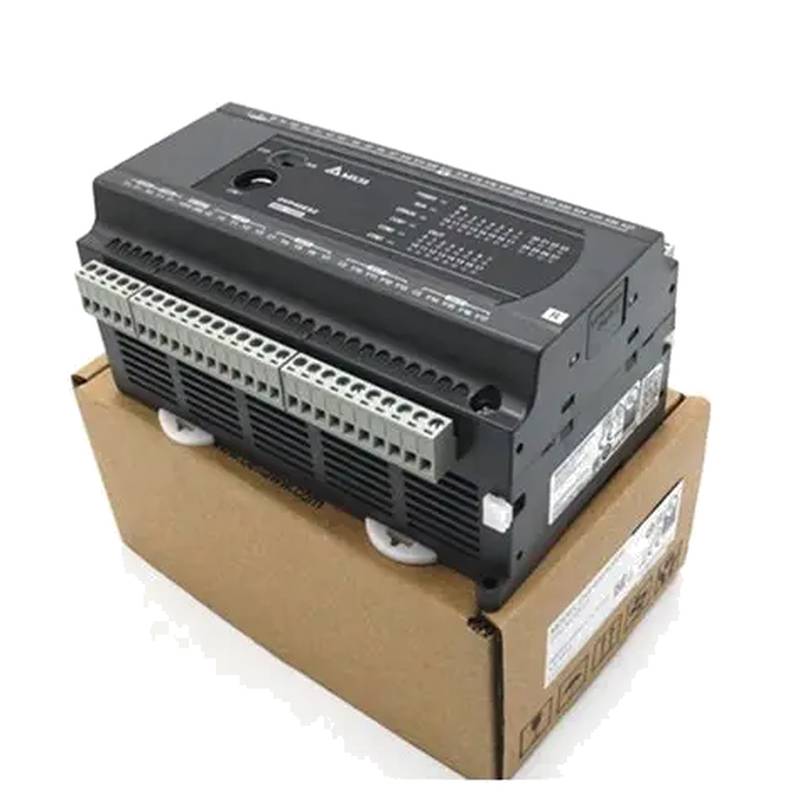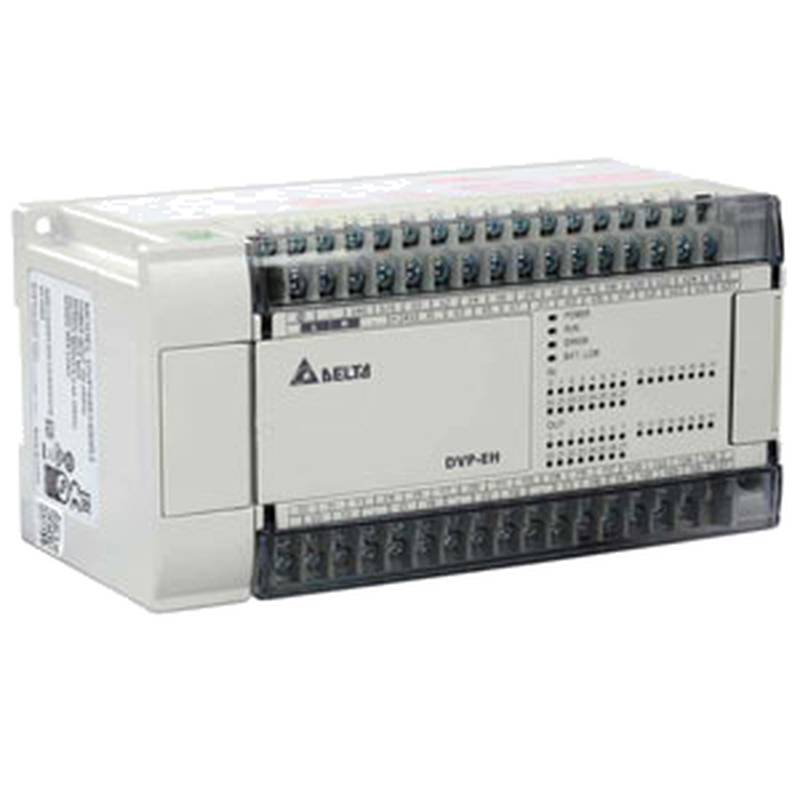












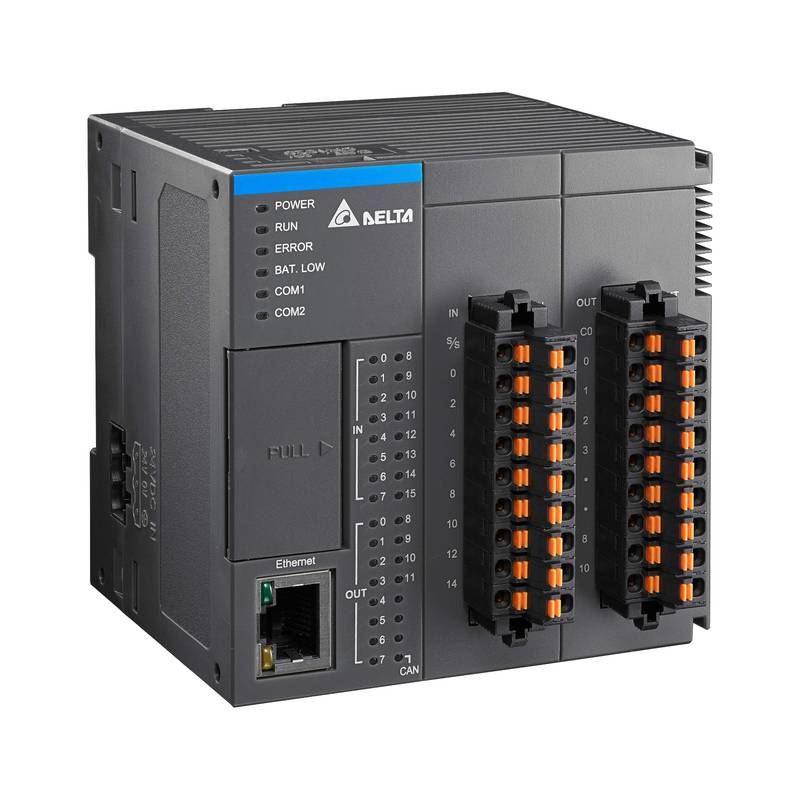
Delta AS148T-A 48-point Large Capacity Transistor Output Module


The Delta AS148T-A 48-point Large Capacity Transistor Output Module stands as a robust solution for demanding industrial automation tasks, offering high density and reliable performance. This module boasts 48 distinct transistor outputs, enabling intricate control over a substantial number of actuators and devices. Its advanced design ensures rapid switching speeds and superior drive capability, making it ideal for high-speed production lines and complex machinery. Key technical parameters include a 48-point transistor output configuration, a typical response time of under 1ms, and compatibility with a wide range of DC voltage inputs.
Product Specifications
| Feature | Specification |
| :------------------------- | :------------------------------------------ |
| Model | AS148T-A |
| Output Type | Transistor (NPN/PNP selectable) |
| Number of Outputs | 48 points |
| Max. Output Current | 0.5A per point |
| Max. Output Voltage | 30V DC |
| Response Time (On/Off) | < 1ms |
| Isolation Method | Photocoupler isolation between groups |
| Common Output Terminals | 4 groups (8 points per group) |
| Power Consumption | Approx. 5W (at rated load) |
| Operating Temperature | 0°C to 55°C |
| Storage Temperature | -20°C to 70°C |
| Humidity | 5% to 95% RH (non-condensing) |
| Dimensions (W x H x D) | 175mm x 140mm x 50mm (approx.) |
| Mounting | DIN rail or screw mounting |
Core Features & Market Positioning
The AS148T-A differentiates itself through its exceptionally high output density, packing 48 transistor outputs into a compact form factor. This high count minimizes the need for multiple modules, reducing panel space and wiring complexity. Its selectable NPN/PNP output configuration provides significant flexibility, allowing seamless integration into diverse control architectures without requiring specialized wiring. The module's rapid response time of less than 1ms positions it as a prime choice for high-speed applications where precise timing is critical. Market positioning focuses on providing a cost-effective, high-performance solution for automation systems requiring extensive output control, competing favorably against lower-density alternatives.
Key Application Scenarios
This module excels in applications demanding extensive digital output control. Sectors such as packaging machinery, assembly lines, and material handling systems frequently leverage its 48-point capacity for controlling a multitude of solenoids, indicators, and small motor starters. Its high-speed switching capability makes it indispensable for high-frequency pulse generation or precise timing sequences in automated processes. Industries requiring granular control over numerous actuators, such as textile manufacturing or automated warehousing, will find the AS148T-A to be a highly efficient and reliable component. Furthermore, its versatility in handling both NPN and PNP configurations simplifies integration into legacy and new systems alike.
Practical System Integration Guidance
Integrating the Delta AS148T-A involves careful attention to wiring and programming. Each group of 8 outputs shares a common terminal, necessitating correct power supply distribution to these common points based on whether NPN or PNP configuration is chosen. For NPN operation, the common terminal is connected to 0V, while for PNP, it is connected to the positive supply voltage. Ensure the total current draw across all active outputs does not exceed the module's overall capacity or the power supply's rating. Programming within a Delta PLC environment typically involves mapping PLC output bits directly to the physical points on the AS148T-A module, often utilizing standard output instructions. Double-check the selected output type (NPN/PNP) in the PLC configuration software to match the physical wiring.
Operation and Risk Mitigation
Safe operation of the AS148T-A module mandates adherence to its electrical specifications. Exceeding the 0.5A per point current limit or the 30V DC voltage limit can lead to module failure and potential damage to connected devices. Proper grounding of the control system is crucial to prevent electrical noise and ensure reliable operation. Over-voltage protection on the input power supply is also recommended. While the module offers internal protection, consistently monitoring load currents and ensuring wiring integrity are key to preventing common issues like output short circuits or open circuits, which can manifest as erratic behavior or system downtime.
Scalability & Long-Term Value
The AS148T-A offers significant long-term value through its inherent scalability and compatibility. Its high output density allows for expansion of control capabilities without requiring extensive rewiring or additional rack space if integrated within Delta's compatible PLC systems. The module's standard communication protocols ensure it can be readily incorporated into larger, more complex automation architectures. For future-proofing, its ability to interface with modern IIoT platforms via a suitable gateway or higher-level PLC makes it a component that can support digital transformation initiatives, enabling data acquisition and remote monitoring of its output status and performance.
Frequently Asked Questions
1. What are the primary benefits of using the Delta AS148T-A module?
The AS148T-A provides high output density, reducing panel space. Its NPN/PNP selectable feature offers great flexibility. The module ensures rapid response times for demanding applications.
This high count minimizes the need for multiple modules, saving costs. Its design simplifies complex wiring scenarios effectively. It is ideal for high-speed automation tasks.
The unit delivers reliable performance in industrial environments. It is engineered for long-term operational stability. This translates to reduced maintenance and increased uptime.
2. How do I select between NPN and PNP output configurations on the AS148T-A?
The NPN/PNP selection is typically made via physical jumpers or software configuration. Consult the module's manual for precise jumper locations or software settings. This setting dictates how the output transistors sink or source current.
For NPN, the common terminal connects to 0V, and the load is connected between the output and the positive supply. For PNP, the common terminal connects to the positive supply, and the load is between the output and 0V. Ensure correct selection before powering up the system.
Proper configuration ensures compatibility with your existing control system's design and sensor/actuator wiring conventions. Incorrect selection may lead to communication errors or device malfunction.
3. What are the maximum current and voltage limitations for each output point?
Each output point on the AS148T-A is rated for a maximum continuous current of 0.5A. Exceeding this limit can cause overheating and permanent damage to the transistor. Always ensure your connected loads draw less than this specified current.
The maximum allowable voltage for each output point is 30V DC. Applying voltages higher than this limit can stress the output circuitry beyond its design parameters. Use appropriately rated power supplies for your actuators and sensors.
Adhering to these specifications is crucial for module longevity and system reliability. Verify the current and voltage requirements of all devices connected to the AS148T-A.
4. Can the Delta AS148T-A module be used with AC loads?
No, the AS148T-A module is specifically designed for DC loads only. It features transistor outputs which are semiconductor devices that can only switch DC current. Attempting to use it with AC loads will result in immediate and severe damage.
AC loads require different types of output modules, such as relay or triac outputs, which are designed to handle alternating current. Ensure that all connected devices operate on DC voltage matching the module's specifications. Verify your load's power requirements carefully.
Always refer to the product datasheet to confirm the output type and voltage compatibility before connecting any load. Misapplication can lead to hazardous conditions and equipment failure.
5. What is the typical response time of the AS148T-A, and why is it important?
The AS148T-A boasts a rapid response time, typically under 1 millisecond for both switching on and off. This speed is critical for applications requiring precise timing and high-frequency operations. It ensures that control signals are executed almost instantaneously.
This fast switching capability is essential in high-speed automation tasks like packaging, sorting, or high-cycle production lines. It allows for accurate control of fast-acting actuators and sensors. Applications demanding tight synchronization benefit greatly.
A quick response time minimizes latency between the PLC's decision and the physical action, improving overall system efficiency and accuracy. It prevents issues like missed steps or out-of-sync operations in complex sequences.
6. How does the AS148T-A handle output grouping and common terminals?
The AS148T-A organizes its 48 outputs into four groups, with each group containing 8 points sharing a single common terminal. This grouping simplifies wiring by reducing the number of required power connections for the outputs. It streamlines the distribution of power to the output circuitry.
The common terminal for each group must be correctly wired to the DC power supply (0V for NPN, +V DC for PNP). This ensures that current can flow through the output devices when activated. Proper connection is vital for the outputs to function as intended.
Understanding these groups is key during installation and troubleshooting. Incorrect wiring of the common terminals is a frequent cause of output failures or unexpected behavior in the system.
7. What are the environmental operating conditions for the Delta AS148T-A module?
The AS148T-A is designed to operate reliably within an ambient temperature range of 0°C to 55°C. Operating outside this range can affect performance and potentially shorten the module's lifespan. Ensure adequate ventilation in control cabinets.
Humidity levels should be maintained between 5% and 95% RH, excluding condensation. Moisture ingress can lead to short circuits or corrosion within the electronic components. Proper enclosure sealing is important in humid environments.
Storage conditions should also be considered, with a range of -20°C to 70°C recommended. These parameters ensure the module's durability and consistent performance across typical industrial settings.
8. How can I integrate the AS148T-A into a larger Delta PLC system?
Integration involves physically mounting the AS148T-A module onto the PLC's expansion rack or backplane, depending on the specific PLC series. Then, establish the communication link between the PLC CPU and the module. This is typically done via the module's backplane connector.
Next, configure the module's parameters within the PLC programming software, such as the NPN/PNP output type and address assignments. Program the PLC logic to control the individual output points mapped to the AS148T-A's digital outputs. This mapping is crucial for control.
Ensure the PLC's power supply can handle the combined load of the CPU, other modules, and the AS148T-A. Proper addressing and logical mapping are key for seamless operation and data exchange.
9. What safety precautions should be taken when installing and wiring the AS148T-A?
Always disconnect power to the PLC system before performing any installation or wiring changes. Verify that the power supply voltage and current ratings are suitable for the AS148T-A and connected loads. Ensure proper grounding of the system.
Double-check all wiring connections for correctness and security. Pay close attention to the correct common terminal wiring for NPN/PNP configuration and polarity. Incorrect wiring can lead to immediate damage or hazardous situations.
Use appropriate tools and follow standard industrial electrical safety practices. If unsure, consult a qualified electrician or refer to the official Delta documentation for detailed safety guidelines.
10. Where can I find the official technical documentation and support for the AS148T-A?
Official technical documentation, including detailed datasheets, user manuals, and programming guides, is available on the Delta Electronics website. Navigate to the Automation or Industrial Automation product sections. Look for the specific module model number.
For technical support, contact your local Delta Electronics representative or authorized distributor. They can provide assistance with product selection, troubleshooting, and application-specific inquiries. Many also offer training resources.
Checking the manufacturer's website regularly is advised for firmware updates or revised documentation that may enhance performance or address specific issues. Reliable support ensures optimal system operation.