











SIEMENS 6ES7321-7RD00-0AB0 SIMATIC S7-300 Digital Input Module


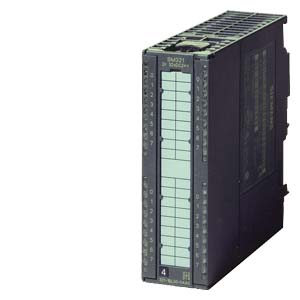
The SIEMENS 6ES7321-7RD00-0AB0 is a SIMATIC S7-300 digital input module designed for robust industrial automation tasks. It provides reliable interfacing for binary signals within an S7-300 programmable logic controller system.
Product Type Definition
This device is classified as a discrete input module, essential for capturing on/off states from sensors and switches in control systems. It operates within the widely adopted SIMATIC S7-300 platform, a standard in many manufacturing and process industries.
Key Specifications
Input voltage: 24 V DC
Number of inputs: 16
Input delay: 1 ms
Isolation: 500 V AC
Parameterization: Via STEP 7 software
Module width: 40 mm
Current consumption: 70 mA at 5 V DC
Technical Highlights & System Integration
High-Speed Acquisition: This module supports rapid signal processing with an input delay of 1 ms, crucial for time-sensitive applications. This ensures that rapid changes in process states are captured and communicated to the PLC efficiently.
Diagnostic Capabilities: Integrated diagnostics provide real-time status information, enabling proactive maintenance and reducing downtime. The module can signal faults such as open circuits or short circuits to the controller.
System Compatibility: Designed for seamless integration into the SIMATIC S7-300 rack system, it utilizes standard backplane connectors for straightforward installation. What is the primary communication protocol used by this module? This module communicates digitally with the S7-300 CPU via the internal backplane bus.
Robust Design: Featuring 500 V AC isolation between the process level and the logic, this module offers enhanced protection against electrical disturbances and surges. This inherent protection is vital for long-term operational reliability in harsh industrial environments.
Key Application Scenarios
Manufacturing Automation: Enables precise control of machinery by accurately reading the status of limit switches, push buttons, and proximity sensors, leading to increased production efficiency.
Process Control Systems: Facilitates reliable monitoring of binary process variables such as pump status, valve positions, and alarm conditions, contributing to stable and safe operations.
Building Automation: Integrates with security systems and HVAC controls by processing signals from door contacts, motion detectors, and thermostat switches, optimizing facility management.
Selection Guidance & Operation
When selecting this module, verify that the 24 V DC input voltage aligns with your field device specifications. Ensure the 16 input channels are sufficient for the required discrete signal points in your automation design.
Operation is managed through Siemens' STEP 7 software, which allows for straightforward parameter configuration and diagnostics. Familiarity with STEP 7 is essential for effective implementation and maintenance of this module.
FAQ
What is the power consumption of the SIEMENS 6ES7321-7RD00-0AB0 module?
The module consumes a maximum of 70 mA at a supply voltage of 5 V DC. This is a standard draw for S7-300 digital input modules. It is designed for energy efficiency within the PLC system.
How are the digital inputs isolated on this module?
Each input channel is optically isolated from the PLC's backplane. This provides 500 V AC of isolation, protecting the controller from electrical interference and overvoltage. This ensures system integrity.
What is the typical response time for a signal change detected by this module?
The input delay is rated at 1 ms, allowing for rapid detection of state changes from connected devices. This fast response is critical for dynamic automation processes. It enables timely control actions.
Can this module be used with other SIMATIC S7 families?
This module is specifically designed for the SIMATIC S7-300 PLC system. It is not directly compatible with other S7 families like S7-1200 or S7-1500. Integration requires the appropriate S7-300 rack and CPU.
What diagnostic information is available from this digital input module?
The module provides diagnostic capabilities for detecting open circuits or short circuits on its input channels. This status is communicated to the CPU via diagnostic interrupts. Proactive fault identification is supported.