











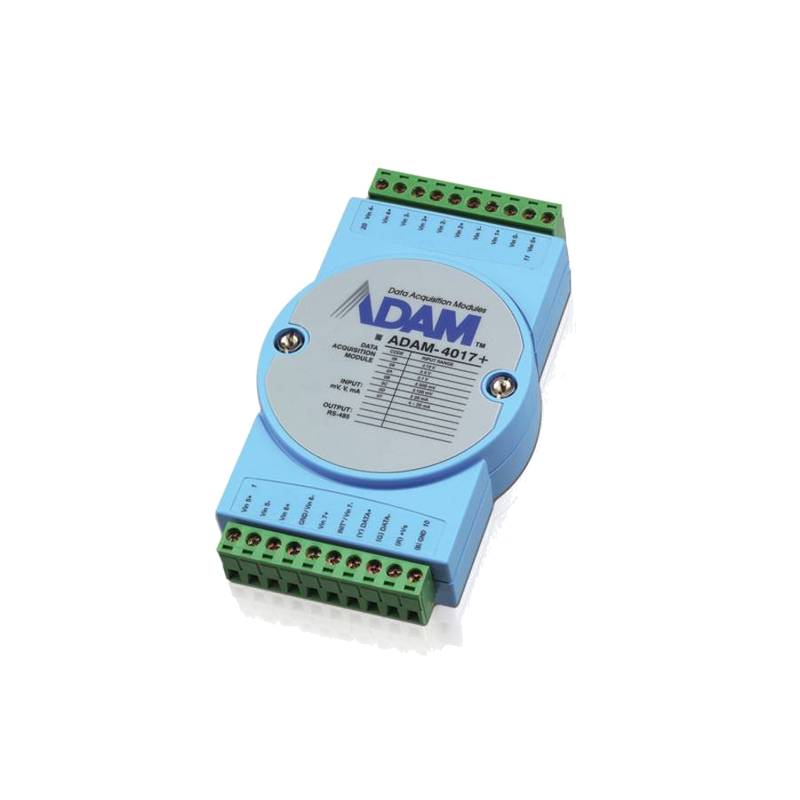
Advantech ADAM-4150-C Industrial Automation Digital I/O Control Module


The Advantech ADAM-4150-C stands as a robust industrial automation digital I/O control module, engineered to enhance operational efficiency and reliability in demanding environments. This module boasts exceptional features, including 16 digital I/O channels, an operating temperature range of -20°C to 70°C, and a compact, panel-mount design ideal for space-constrained applications. Its core functionalities are centered around seamless data acquisition and control, making it a pivotal component in modern industrial automation systems. With its durable construction and advanced capabilities, the ADAM-4150-C offers a compelling solution for integrating digital inputs and outputs into various industrial processes.
Product Specifications
| Feature | Specification |
| :------------------- | :-------------------------------------------------- |
| Digital Input Channels | 8 |
| Digital Output Channels| 8 |
| Input Voltage Range | 0 to 30 VDC |
| Output Voltage Rating| 30 VDC |
| Output Current Rating| 200 mA per channel |
| Isolation Voltage | 3000 VDC |
| Power Consumption | 1.7 W |
| Operating Temperature| -20°C to 70°C (-4°F to 158°F) |
| Dimensions | 120 mm x 70 mm x 33 mm (4.72" x 2.76" x 1.30") |
| Mounting | DIN-rail, Wall, or Panel Mount |
| Communication | RS-485 |
| Protocol | Modbus RTU |
Core Features & Market Positioning
The Advantech ADAM-4150-C distinguishes itself in the industrial automation market through its high channel density and robust isolation capabilities, safeguarding against voltage transients and ground loops. This module's 3000 VDC isolation is a critical differentiator, offering superior protection for connected devices and control systems compared to standard modules. Its wide operating temperature range of -20°C to 70°C ensures dependable performance in harsh industrial settings, from manufacturing floors to outdoor substations. Furthermore, the ADAM-4150-C's integration with the Modbus RTU protocol over RS-485 facilitates easy communication within existing SCADA and PLC networks, positioning it as a versatile and cost-effective solution for expanding I/O capacity.
Key Application Scenarios
The Advantech ADAM-4150-C is ideally suited for a wide array of industrial applications where reliable digital signal management is paramount. It excels in machine control, enabling precise ON/OFF operations for actuators, motors, and indicator lights. In building automation, it can manage alarm systems, HVAC controls, and access security, integrating seamlessly with central management platforms. Furthermore, its durability and environmental resilience make it a strong choice for remote monitoring and control in sectors like oil and gas, water treatment, and environmental sensing, where deploying and maintaining equipment in challenging conditions is routine.
Practical System Integration Guidance
Integrating the Advantech ADAM-4150-C into an industrial system is streamlined due to its standard communication protocols and mounting options. For wiring, digital inputs typically connect to dry contacts or switch closures, requiring careful attention to the polarity and voltage levels to avoid damage. Digital outputs are often used to drive relays, solenoids, or indicator lamps, and the 200 mA current rating per channel must be considered when selecting these loads. Commissioning involves configuring the module's Modbus address and baud rate via software utilities provided by Advantech, ensuring it communicates correctly with the host controller or SCADA system. Example configurations often involve setting up input/output mapping within the supervisory software to align with the physical wiring.
Operation and Risk Mitigation
Operating the ADAM-4150-C requires adherence to its specified voltage and current limits to prevent hardware damage and ensure system stability. Proper grounding is essential for effective isolation and protection against electrical noise. While the module is designed for robustness, common troubleshooting issues may involve communication failures, often resolved by verifying RS-485 wiring polarity (A/B lines) and ensuring correct termination resistors are in place if required for long cable runs. Faults related to digital I/O typically stem from overloaded output channels or incorrect input signal conditioning, necessitating checks of connected devices and signal integrity. The module's inherent protection mechanisms mitigate many risks, but understanding its operational envelope is key to long-term reliability.
Scalability & Long-Term Value
The Advantech ADAM-4150-C offers significant scalability and long-term value by integrating seamlessly with Advantech's broader ADAM-4000 series and other Modbus-compatible devices. This allows for phased expansion of I/O points as project requirements grow, without needing to overhaul the entire system architecture. Its compatibility with modern IIoT platforms and cloud-based data analytics solutions ensures that data collected by the ADAM-4150-C can be leveraged for predictive maintenance, process optimization, and enhanced operational visibility. This forward-looking design ensures the module remains a relevant and valuable component in evolving industrial automation landscapes.
Frequently Asked Questions (FAQs)
What is the maximum voltage for the digital inputs on the Advantech ADAM-4150-C?
The ADAM-4150-C supports a maximum input voltage of 30 VDC. This range allows for flexibility in connecting various types of digital signal sources. Ensure signals do not exceed this limit to prevent potential damage.
This specification is crucial for interfacing with switches, sensors, and control signals within acceptable industrial standards. It simplifies system design by providing a clear operational envelope for input signals.
Adhering to the 30 VDC limit is fundamental for maintaining the longevity and reliability of the digital input channels. Proper signal conditioning might be necessary for sources operating outside this range.
How do I reset the Advantech ADAM-4150-C module to its default settings?
Resetting the ADAM-4150-C typically involves a software-based procedure using Advantech's configuration utility. Consult the module's user manual for specific instructions. This process often requires reconfiguring network settings afterward.
The user manual details the precise steps for initiating a factory reset. This ensures that no hardware manipulation is required, simplifying the process for field technicians.
After a reset, you will need to re-establish communication by setting the Modbus address and baud rate. Always back up configuration data before performing a reset.
Can the Advantech ADAM-4150-C be used in outdoor applications?
Yes, the ADAM-4150-C is designed for industrial environments, including those with outdoor exposure. Its operating temperature range of -20°C to 70°C is a key advantage. However, ensure it is protected from direct rain, dust, and extreme conditions via an appropriate enclosure.
The module's robust construction and wide operating temperature make it suitable for various outdoor scenarios. Proper weatherproofing of the installation site is still essential for optimal performance and longevity.
Consider using an industrial enclosure rated for the specific environmental challenges of the outdoor location. This will further enhance the module's protection against moisture and particulate ingress.
What type of communication protocol does the Advantech ADAM-4150-C use?
The Advantech ADAM-4150-C utilizes the Modbus RTU protocol over an RS-485 serial communication interface. This is a widely adopted standard in industrial automation. It ensures broad compatibility with many PLCs, SCADA systems, and other control devices.
Modbus RTU is known for its simplicity and efficiency in data transmission. The RS-485 physical layer supports multi-drop configurations, allowing multiple devices to share a single communication bus.
Understanding Modbus RTU is key to successful integration. Familiarize yourself with Modbus function codes and register mapping for effective data exchange with the ADAM-4150-C.
What is the maximum output current rating for each digital output channel on the ADAM-4150-C?
Each digital output channel on the Advantech ADAM-4150-C is rated for a maximum current of 200 mA. This current capacity is suitable for driving relays, indicator LEDs, or small solenoid valves. Exceeding this limit can lead to channel failure.
When connecting loads to the digital outputs, always verify their current draw. If the load exceeds 200 mA, an external relay or driver circuit will be necessary.
It is crucial to consider this rating during the design phase to ensure the output channels are not overloaded. This proactive approach prevents equipment damage and system downtime.
How is the Advantech ADAM-4150-C powered?
The Advantech ADAM-4150-C is typically powered by a DC voltage source within a specified range, often between 12 to 48 VDC, though specific voltage requirements should be confirmed with the datasheet. It consumes minimal power, around 1.7W. Proper power supply selection and connection are vital for stable operation.
Ensuring a clean and stable DC power supply is important to avoid operational anomalies. Transient suppressors or filtering may be beneficial in noisy power environments.
Double-check the power input terminals and polarity before applying power to prevent damage to the module. Consistent voltage is key for reliable digital I/O performance.
What are the physical dimensions and mounting options for the ADAM-4150-C?
The ADAM-4150-C has compact dimensions of 120 mm x 70 mm x 33 mm. It supports multiple mounting options, including DIN-rail, wall, and panel mounting. This versatility allows for flexible installation in various control cabinets and enclosures.
The small footprint and adaptable mounting make it easy to integrate into existing or new control panels. DIN-rail mounting is particularly convenient for industrial control cabinets.
Choose the mounting method that best suits your installation environment and accessibility requirements. Ensure secure mounting for reliable mechanical stability.
Does the ADAM-4150-C support hot-swapping?
Hot-swapping capabilities for the Advantech ADAM-4150-C are generally not recommended or supported for its communication interface or power connections. It's best practice to power down the system before connecting or disconnecting the module to prevent electrical surges or data corruption. Always consult the official documentation for definitive hot-swap support.
While some industrial systems allow for hot-swapping of modules, it depends heavily on the specific system architecture and module design. For the ADAM-4150-C, powering down is the safest approach for any physical connection changes.
Unexpected removal or insertion of modules while powered can lead to hardware damage or communication errors on the bus. Always follow established procedures for safe installation and maintenance.
What is the isolation voltage rating of the ADAM-4150-C?
The Advantech ADAM-4150-C features a robust 3000 VDC isolation voltage rating. This high level of isolation protects the module and connected devices from ground loops and damaging voltage transients. It is crucial for ensuring system integrity in electrically noisy environments.
This high isolation is a significant advantage, providing enhanced safety and reliability. It helps prevent damage to sensitive control equipment and ensures accurate signal readings.
The isolation is key for applications where different ground potentials may exist or where high-voltage spikes are a concern. It contributes significantly to the module's ruggedness.
How can I troubleshoot communication issues with the ADAM-4150-C on an RS-485 network?
To troubleshoot RS-485 communication issues, first verify the A/B wiring polarity. Ensure correct termination resistors are used if required by the network length and device count. Check the module's Modbus address and baud rate settings to match the master device.
Inspect the physical integrity of the RS-485 cable and connectors for any damage or loose connections. Using an RS-485 diagnostic tool can help identify signal integrity problems or bus contention.
Confirm that the master controller is configured correctly to communicate with the specific Modbus slave address assigned to the ADAM-4150-C. Verify that no other device on the network is using the same address.