











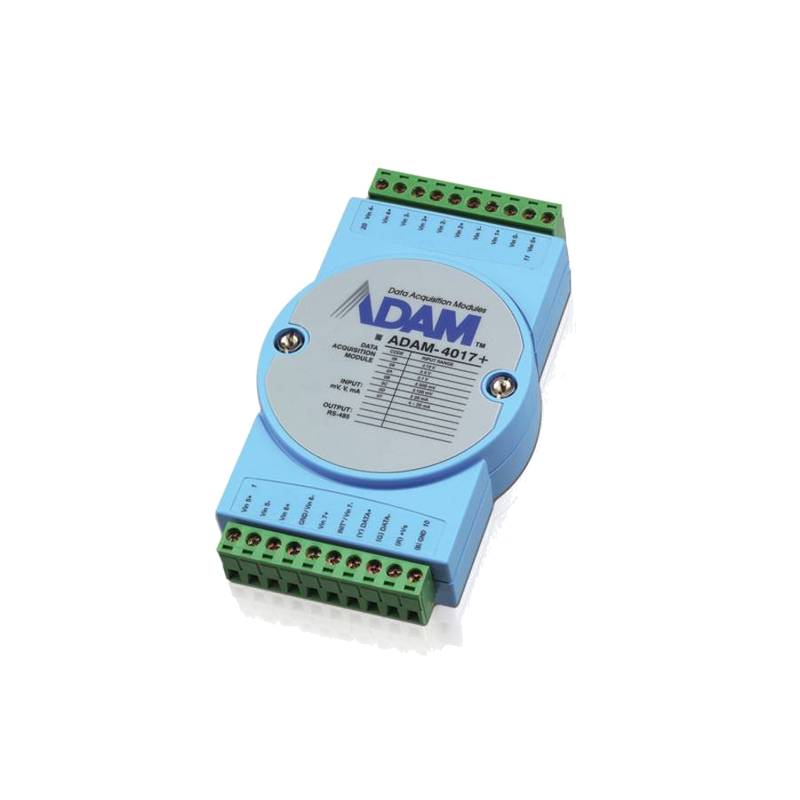
Advantech ADAM-6520L-AE 2-Port Serial to Ethernet Device Server


The Advantech ADAM-6520L-AE 2-Port Serial to Ethernet Device Server is a robust industrial solution designed to bridge legacy serial devices with modern Ethernet networks, offering enhanced connectivity, data accessibility, and operational efficiency. Key advantages include its dual serial port configuration, advanced protocol conversion capabilities, and industrial-grade design for demanding environments. Crucial technical parameters include its support for RS-232/422/485 serial interfaces, 10/100 Mbps Ethernet speeds, and a wide operating temperature range of -40°C to 85°C. The device server ensures reliable data transmission through TCP/IP and UDP protocols, with features like DHCP, static IP, and DNS client support for seamless network integration.
Product Specifications
| Feature | Specification |
| :------------------- | :------------------------------------------ |
| Ethernet Ports | 1 x 10/100 Base-TX |
| Serial Ports | 2 x RS-232/422/485 (selectable) |
| Serial Data Rates | Up to 115.2 kbps |
| Protocol Support | TCP/IP, UDP, DHCP, Static IP, DNS |
| Serial Modes | COM port, TCP Server, TCP Client, UDP |
| Power Input | 9-30 VDC |
| Operating Temperature | -40°C to 85°C (-40°F to 185°F) |
| Mounting | DIN-rail, Wall-mount |
| Dimensions | 115 mm x 85 mm x 30 mm |
Core Features & Market Positioning
The ADAM-6520L-AE distinguishes itself in the industrial automation market through its dual serial interface flexibility, allowing simultaneous connection and conversion for two distinct serial devices to a single Ethernet network. This capability significantly reduces the need for multiple gateway devices, optimizing cost and reducing network complexity. Its robust industrial design, including a wide operating temperature range and rugged enclosure, positions it as a reliable choice for harsh environments where other devices might fail. Furthermore, Advantech's commitment to industrial communication protocols and IIoT readiness ensures that the ADAM-6520L-AE integrates seamlessly into modern smart factory ecosystems, providing a vital link between legacy equipment and advanced control systems.
Key Application Scenarios
This device server is instrumental in modernizing industrial operations by enabling seamless communication between serial-based machinery and Ethernet networks. Common applications include connecting legacy PLCs, SCADA systems, sensors, and industrial instruments to centralized monitoring and control platforms. It's particularly valuable in sectors like manufacturing, where integrating older equipment into an IIoT framework is crucial for data analytics and predictive maintenance. Furthermore, its use in building automation, transportation, and energy management systems allows for remote diagnostics and control of distributed serial devices, enhancing operational oversight and reducing on-site maintenance requirements.
Practical System Integration Guidance
Integrating the Advantech ADAM-6520L-AE into an existing industrial network is straightforward, leveraging its plug-and-play capabilities and versatile configuration options. Installation typically involves DIN-rail or wall mounting, followed by connecting the serial devices to the appropriate RS-232/422/485 ports and the Ethernet port to the network switch. Configuration can be achieved through Advantech’s Device Discovery utility or a web-based interface, allowing users to set IP addresses, serial port parameters (baud rate, data bits, parity, stop bits), and communication modes (TCP Server, TCP Client, UDP). For instance, setting up a TCP Server mode on one serial port involves assigning a specific IP address and port number, enabling serial devices to accept incoming TCP connections from Ethernet clients.
Operation and Risk Mitigation
Operating the ADAM-6520L-AE is designed for stability and reliability within industrial settings. To mitigate risks, it's crucial to ensure proper power supply within the specified voltage range (9-30 VDC) to prevent damage or intermittent operation. Correct wiring of serial interfaces, ensuring proper termination for RS-485 communication, is vital to prevent signal reflection and data corruption. Overheating can be a concern in enclosed industrial cabinets; therefore, ensuring adequate ventilation or operating within the specified temperature range (-40°C to 85°C) is paramount. Regular firmware updates from Advantech can address potential security vulnerabilities and enhance performance, further mitigating operational risks.
Scalability & Long-Term Value
The Advantech ADAM-6520L-AE offers significant scalability and long-term value for evolving industrial environments. Its ability to convert two independent serial connections to Ethernet means that as more serial devices require network integration, additional ADAM-6520L-AE units can be deployed without altering the core network infrastructure. Compatibility with existing industrial Ethernet networks and support for standard protocols ensure it can be integrated into both current and future IIoT platforms. This future-proofing capability, combined with Advantech's reputation for durable industrial hardware, makes the ADAM-6520L-AE a cost-effective solution for long-term industrial automation strategies, facilitating a smooth transition towards more connected and intelligent operations.
Frequently Asked Questions
What is the primary function of the Advantech ADAM-6520L-AE?
This device server connects legacy serial devices to modern Ethernet networks. It acts as a bridge, translating serial data into IP packets for network transmission. This allows older industrial equipment to be monitored and controlled remotely.
It enables the integration of serial-based machinery into IIoT and SCADA systems. The device facilitates real-time data exchange from previously isolated serial devices. This enhances operational visibility and efficiency.
The core purpose is to extend the life of existing serial hardware by making it network-accessible. It supports RS-232, RS-422, and RS-485 interfaces for broad compatibility.
How do I configure the ADAM-6520L-AE for network access?
Configuration can be done via Advantech's Device Discovery utility. Alternatively, a web-based interface provides access to all settings. Users can set IP addresses, subnet masks, and gateway information.
Serial port parameters like baud rate, data bits, parity, and stop bits must be configured. The operating mode, such as TCP Server, TCP Client, or UDP, needs to be selected based on the application.
Secure remote access protocols can be implemented if supported by firmware. This ensures data integrity during transmission over the Ethernet network.
What are the supported serial interface types for the ADAM-6520L-AE?
The device server supports RS-232, RS-422, and RS-485 serial interfaces. These are selectable on each of the two ports. This offers significant flexibility for connecting diverse serial devices.
RS-232 is commonly used for short-distance, point-to-point communication. RS-422 and RS-485 are designed for multi-drop, longer-distance communication in industrial environments.
Proper wiring and termination are essential for reliable operation, especially for RS-485. The selectable nature ensures broad compatibility with a wide range of industrial serial equipment.
Can the ADAM-6520L-AE operate in extreme temperature conditions?
Yes, the ADAM-6520L-AE is designed for harsh industrial environments. It operates reliably within a wide temperature range of -40°C to 85°C. This ensures functionality in diverse climates and industrial settings.
This wide operating temperature capability makes it suitable for outdoor installations or unconditioned factory floors. It minimizes the risk of hardware failure due to thermal stress.
Proper ventilation should still be considered in enclosed spaces, even with its robust design. This guarantees optimal performance and longevity.
What power requirements does the ADAM-6520L-AE have?
The device server requires a DC power input ranging from 9 to 30 VDC. This wide voltage input range provides flexibility in power source selection. It can be powered from various industrial power supplies.
Using a stable and regulated power supply is recommended for consistent operation. Ensure the power source can handle the device's power consumption.
Incorrect voltage can lead to malfunction or damage to the unit. Always refer to the product manual for precise power specifications.
How does the ADAM-6520L-AE handle data transmission over Ethernet?
It supports standard TCP/IP and UDP protocols for Ethernet communication. This ensures compatibility with most industrial networks. Data is encapsulated into IP packets for transmission.
Users can configure it as a TCP Server to accept incoming connections from clients. Alternatively, it can act as a TCP Client to initiate connections to a server. UDP mode is also available for connectionless communication.
The device supports features like DHCP for automatic IP assignment or static IP configuration for predictable network addresses. This simplifies network integration.
What are the physical mounting options for this device server?
The ADAM-6520L-AE can be mounted on a standard 35mm DIN rail. This is a common and convenient mounting method in industrial control cabinets. It also supports wall-mount installations for flexible deployment.
The compact dimensions of 115 mm x 85 mm x 30 mm allow for space-saving integration. This is beneficial in crowded electrical enclosures.
Choosing the appropriate mounting method depends on the specific installation environment and available space. Both options ensure secure physical placement.
Is the ADAM-6520L-AE suitable for IIoT applications?
Absolutely, the ADAM-6520L-AE is well-suited for IIoT integration. It bridges legacy serial devices, enabling them to participate in a networked ecosystem. This facilitates data collection for analytics and IoT platforms.
Its ability to provide Ethernet connectivity to serial sensors and controllers is a key IIoT enabler. This allows for remote monitoring, control, and data logging.
The device supports standard industrial protocols, ensuring interoperability with various IIoT gateways and cloud platforms. This makes it a valuable component for smart manufacturing.
What are the basic troubleshooting steps for connection issues?
First, verify the physical connections for both serial and Ethernet ports. Ensure cables are securely plugged in and undamaged. Check indicator lights on the device for status information.
Next, confirm the IP address and network settings on both the device server and the connected client. Ensure they are on the same subnet or that routing is correctly configured. Verify serial port parameters (baud rate, parity, etc.) match on both ends.
Review the device's operating mode (TCP Server/Client, UDP). Check firewall settings on the network that might be blocking communication ports. Consult the Advantech documentation for specific error codes or LED patterns.
Does the ADAM-6520L-AE support firmware updates?
Yes, firmware updates are typically available for Advantech industrial devices. These updates can improve performance, add features, or patch security vulnerabilities. Check the Advantech support website for the latest firmware for the ADAM-6520L-AE.
The update process usually involves downloading the firmware file and using a specific utility provided by Advantech. This is often done via the Ethernet connection. Proper power stability during the update is critical.
Keeping the firmware up-to-date is a good practice for maintaining security and ensuring optimal operation. Always follow the manufacturer's instructions carefully during the update procedure.