











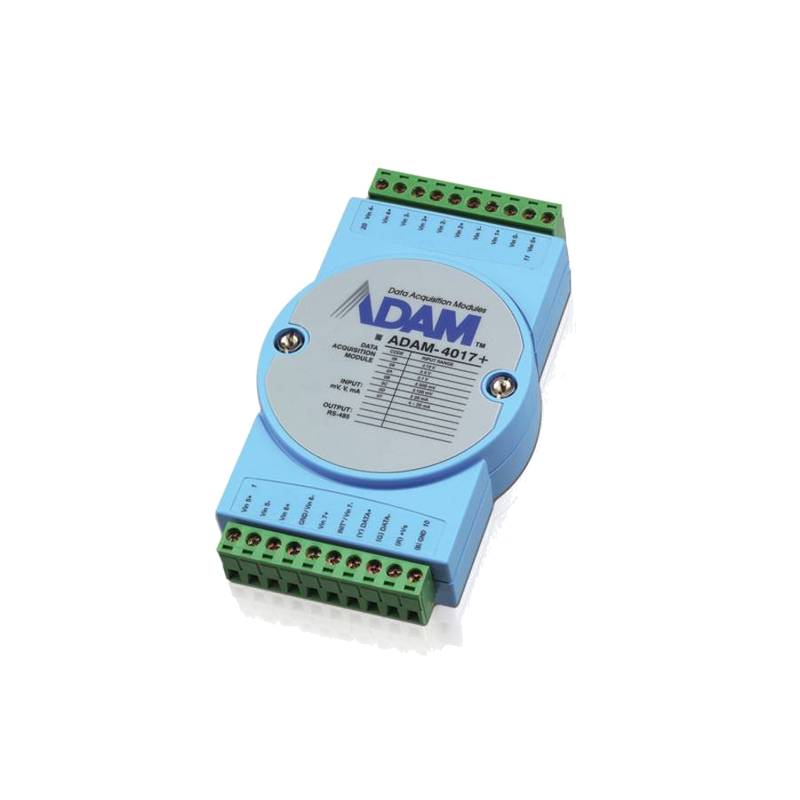
Advantech ADAM-6251-B 16-Channel Ethernet Digital Input Module


The Advantech ADAM-6251-B stands as a robust 16-channel Ethernet digital input module, engineered for seamless integration into industrial automation systems. Its primary advantages lie in its high channel density, remote I/O capabilities via Ethernet, and robust industrial design. Key technical parameters include 16 digital input channels, a 3000 VDC isolation protection, a wide operating temperature range of -25 to 70 °C, and support for Modbus TCP/IP protocol. This module is designed to efficiently collect binary status information from diverse industrial equipment and transmit it reliably over a network.
Core Features & Market Positioning
The ADAM-6251-B differentiates itself through its embedded web server, allowing for straightforward configuration and monitoring without specialized software. Its robust design ensures reliability in harsh industrial environments, a critical factor for plant managers and automation engineers. Advantech's reputation for quality and dependable industrial hardware positions the ADAM-6251-B as a go-to solution for expanding digital input capacity in SCADA, HMI, and PLC-based systems. The module's inherent flexibility and cost-effectiveness make it an attractive option for both new installations and upgrades to existing infrastructure.
Key Application Scenarios
This versatile module finds extensive use in manufacturing, building automation, and environmental monitoring. Applications include tracking the status of machinery (on/off, open/closed), monitoring door or window contacts, detecting the presence or absence of objects, and interfacing with limit switches. In building automation, it can monitor alarm systems or equipment status. For environmental applications, it's ideal for collecting data from simple sensors indicating conditions like water levels or equipment operation. The 16 channels offer significant data acquisition capability from a single, compact unit.
Practical System Integration Guidance
Integrating the ADAM-6251-B is streamlined due to its Ethernet connectivity. Users can connect the module to their existing LAN using standard Ethernet cables. Initial setup typically involves assigning an IP address to the module, often achievable through Advantech's Device Manager utility or by configuring it via its web interface. The digital inputs can be wired directly to dry contact switches or voltage sources within the specified range. Modbus TCP/IP commands are then used by a master system (like a PLC or SCADA software) to poll the status of each input channel. For instance, a common Modbus read holding register command (Function Code 0x03) targeting the appropriate register address for the ADAM-6251-B will return the state of all 16 input channels.
Operation and Risk Mitigation
Operating the ADAM-6251-B requires adherence to its voltage input specifications to prevent damage. Ensuring proper grounding of connected devices and the module itself is crucial for signal integrity and safety. The module's 3000 VDC isolation protection safeguards connected control systems from voltage transients and ground loops, a common cause of equipment failure in industrial settings. While specific fault codes are not extensively documented in basic overviews, abnormal behavior typically stems from incorrect wiring, IP address conflicts, or exceeding voltage input limits. Always refer to the official manual for detailed troubleshooting steps.
Scalability & Long-Term Value
The ADAM-6251-B offers excellent scalability, allowing for the daisy-chaining of multiple modules or the integration of various Advantech ADAM-6000 series devices to expand I/O points as needed. Its Ethernet-based communication is future-proof and aligns perfectly with the growing trend towards Industrial Internet of Things (IIoT) and Industry 4.0 initiatives. Compatibility with standard industrial protocols like Modbus TCP/IP ensures it can be readily integrated into diverse automation platforms, from legacy PLC systems to modern PC-based control solutions, maximizing long-term investment value.
Frequently Asked Questions
What is the primary function of the Advantech ADAM-6251-B?
The ADAM-6251-B serves as a 16-channel Ethernet digital input module. It collects binary status information from industrial equipment. This data is then transmitted over an Ethernet network to a control system.
It is designed for remote I/O applications in automation. The module efficiently monitors on/off states or the presence of signals. Its robust design ensures reliable operation in demanding environments.
This device is crucial for expanding the digital input capacity of PLCs or SCADA systems. It allows for cost-effective data acquisition from numerous sources.
How do I configure the IP address for the ADAM-6251-B?
You can configure the IP address using Advantech's Device Manager utility. This software allows for easy network discovery and parameter setting. Alternatively, you can access the module's embedded web server.
Once connected to the network, navigate to the module's web interface via a browser. Within the web interface, locate the network settings section. Here, you can manually assign a static IP address or configure DHCP settings.
Ensure the assigned IP address is unique on your network and falls within the same subnet as your control system. Proper IP configuration is essential for successful communication.
What types of signals can the ADAM-6251-B detect?
The ADAM-6251-B detects simple on/off or high/low logic states. This includes signals from dry contact switches, pushbuttons, and limit switches. It can also register the presence or absence of voltage within its input range.
It is designed for digital signals, meaning it interprets input as either a binary 0 or 1. It does not measure analog values like temperature or pressure directly. The module converts these binary inputs into digital data for network transmission.
Typical signals include equipment running status, door open/closed indicators, or alarm contacts. Its input voltage range should be carefully matched to the source signal.
What is the isolation protection of the ADAM-6251-B?
The ADAM-6251-B features 3000 VDC isolation protection. This feature safeguards the module and connected control systems. It protects against transient voltage spikes and ground loop issues.
This high level of isolation is critical in industrial settings. It prevents noise and electrical disturbances from propagating between the field devices and the control network. This enhances system reliability and component longevity.
The isolation protects both the digital inputs and the Ethernet communication interface. It ensures that the digital input signals do not electrically interfere with the network.
Can the ADAM-6251-B be used with PLCs from different manufacturers?
Yes, the ADAM-6251-B is compatible with PLCs from various manufacturers. It utilizes the industry-standard Modbus TCP/IP protocol for communication. Most modern PLCs support Modbus TCP/IP.
This protocol allows seamless integration into existing control architectures. You can poll the input status of the ADAM-6251-B from any PLC or HMI that can act as a Modbus TCP/IP master. Ensure your PLC programming software supports Modbus TCP/IP client functionality.
Always consult your specific PLC's documentation for details on configuring Modbus TCP/IP communication drivers. Proper setup ensures reliable data exchange between the module and the PLC.
What is the operating temperature range of this module?
The ADAM-6251-B is designed for industrial environments, with a wide operating temperature range. It can reliably operate between -25 and 70 degrees Celsius. This ensures performance in both cold and moderately hot conditions.
This broad temperature tolerance makes it suitable for deployment in various outdoor or non-climate-controlled industrial locations. It minimizes the risk of component failure due to extreme temperatures. Always ensure adequate ventilation if operating near the upper temperature limit.
Exceeding these temperature limits can lead to reduced lifespan or immediate malfunction of the module. Proper installation should consider ambient temperature conditions.
How many digital input channels does the ADAM-6251-B have?
The Advantech ADAM-6251-B module is equipped with exactly 16 digital input channels. These channels are dedicated to receiving binary signals. Each channel can independently report its status.
These 16 channels allow for the monitoring of numerous devices or events simultaneously. For example, you can monitor the status of up to 16 different machines or sensors. This high density reduces the need for multiple modules in some applications.
The module aggregates the status of all 16 channels into a single data packet for network transmission. This efficient data handling streamlines automation processes.
Does the ADAM-6251-B support remote configuration?
Yes, the ADAM-6251-B supports remote configuration through its embedded web server. This eliminates the need for dedicated software installation on every setup machine. You can access and modify settings via a standard web browser.
Once connected to the network and assigned an IP address, users can log into the module's web interface. From there, network settings, input configurations, and other parameters can be adjusted remotely. This feature greatly simplifies maintenance and troubleshooting.
Remote configuration capabilities are essential for managing distributed industrial assets. It allows for efficient updates and adjustments without physical site visits.
What is the power consumption of the ADAM-6251-B?
The power consumption of the ADAM-6251-B is typically low, which is common for industrial Ethernet modules. While exact figures can vary slightly with network traffic and status, it generally consumes less than 3 watts. Specific power requirements are usually detailed in the product datasheet.
This low power consumption is beneficial for overall system energy efficiency. It also allows the module to be powered via PoE (Power over Ethernet) in some configurations, simplifying wiring. Always check the official specifications for precise power consumption details.
Ensuring a stable power supply within the specified voltage range (e.g., 12-48 VDC) is crucial for reliable operation. Unexpected power fluctuations can cause communication disruptions.
How does the ADAM-6251-B connect to an industrial network?
The ADAM-6251-B connects to an industrial network via its standard Ethernet port. It uses the Modbus TCP/IP protocol for communication. This allows it to integrate seamlessly with most industrial networks and control systems.
You connect the module to your network switch or directly to a computer using an standard Ethernet cable. After IP address configuration, it becomes addressable on the network. This enables remote monitoring and data acquisition.
The Ethernet interface provides a robust and high-speed communication path. It is ideal for applications requiring reliable data transfer from numerous digital input points.