











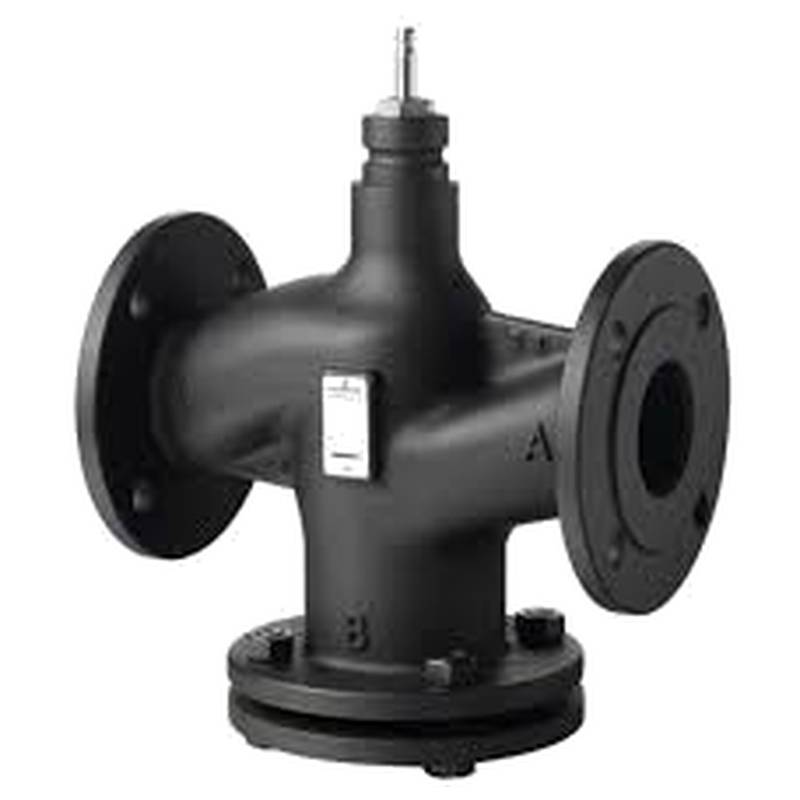
SIEMENS VVF53.15-0.2 Two-Way Low Flow Valve DN15 kvs 0.2


The SIEMENS VVF53.15-0.2 Two-Way Low Flow Valve is engineered for precision control in demanding hydronic systems. This DN15 valve boasts a kvs value of 0.2, making it ideal for applications requiring highly accurate flow regulation. Its robust construction and advanced Siemens technology ensure reliable performance and long-term operational efficiency. The VVF53.15-0.2 excels in applications where minimal flow rates and precise temperature control are paramount, offering a significant advantage in energy management and system stability.
Product Specifications
| Specification | Value |
| :------------ | :---- |
| Product Type | Two-Way Valve |
| Model | VVF53.15-0.2 |
| Nominal Diameter (DN) | 15 |
| Valve Sizing Coefficient (kvs) | 0.2 |
| Connection Type | Threaded |
| Material | Brass |
| Maximum Differential Pressure | 250 kPa (36.3 psi) |
| Temperature Range | 2 to 120 °C (36 to 248 °F) |
| Actuator Compatibility | Siemens actuators (e.g., GLB31.1U, GLB11.1U) |
| Sealing Material | EPDM |
Core Features & Market Positioning
The SIEMENS VVF53.15-0.2 distinguishes itself through its exceptionally low kvs value, enabling ultra-fine flow adjustments essential for maintaining stable room temperatures and optimizing energy consumption in HVAC systems. Its design prioritizes longevity and performance, aligning with Siemens' reputation for high-quality industrial automation components. This valve is positioned as a premium solution for niche applications where standard valves cannot deliver the required precision, setting it apart from competitors offering broader, less specialized flow ranges. The robust brass construction ensures compatibility with various media, while the EPDM seals provide excellent resistance to common hydronic fluids.
Key Application Scenarios
This low-flow valve finds its primary utility in specialized hydronic control circuits within commercial and institutional buildings. It is particularly well-suited for precise temperature regulation in small terminal units, fan coil units, and radiant heating systems where minimal water flow is critical for accurate thermal management. Building management systems (BMS) often integrate the VVF53.15-0.2 to achieve granular control over individual zones, contributing to overall energy efficiency and occupant comfort. Its application extends to laboratory environments and clean rooms where precise environmental control is non-negotiable.
Practical System Integration Guidance
Integrating the SIEMENS VVF53.15-0.2 requires careful consideration of actuator selection and system hydraulics. The valve is designed to be used with compatible Siemens electro-mechanical or electronic actuators, such as the GLB31.1U or GLB11.1U, which provide the necessary travel and force for proper operation. Installation should ensure that the valve is oriented correctly within the piping system to prevent air entrapment and facilitate accurate flow measurement. Proper commissioning involves setting actuator stroke limits and potentially configuring control parameters within the BMS to leverage the valve's low-flow capabilities effectively. Ensure all connections are securely tightened to prevent leaks, and verify compatibility with the system's maximum operating pressure and temperature.
Operation and Risk Mitigation
Safe and efficient operation of the SIEMENS VVF53.15-0.2 hinges on adherence to specified operating parameters and routine maintenance. The valve is designed to operate within a temperature range of 2 to 120 °C and a maximum differential pressure of 250 kPa. Exceeding these limits can lead to premature wear or failure. Potential issues include actuator malfunction, leakage due to seal degradation, or reduced control accuracy if the valve becomes obstructed by debris. Regular system flushing and inspection of valve operation, particularly during seasonal start-ups and shutdowns, can mitigate risks. While specific fault codes are actuator-dependent, a loss of control or unexpected noise may indicate a need for service.
Scalability & Long-Term Value
The SIEMENS VVF53.15-0.2 offers significant long-term value through its integration into Siemens' broader automation ecosystem. Its compatibility with various Siemens actuators and controllers allows for seamless upgrades and expansion of building management systems. This ensures that as facility needs evolve, the hydronic control infrastructure can be adapted without requiring complete system overhauls. For facilities embracing Industrial Internet of Things (IIoT) strategies, this valve, when paired with smart actuators and advanced control platforms, can contribute valuable data points for predictive maintenance and enhanced energy analytics, thereby increasing operational intelligence and return on investment.
Frequently Asked Questions
What is the primary application for the SIEMENS VVF53.15-0.2 valve?
The SIEMENS VVF53.15-0.2 is designed for precision flow control in hydronic systems. It excels in applications demanding accurate regulation of low flow rates, such as terminal units and radiant heating. Its kvs of 0.2 makes it suitable for applications requiring very fine adjustments for optimal temperature stability.
This valve is ideal for zone control in HVAC systems, ensuring precise temperature management in individual areas. It is a key component for maintaining comfort and optimizing energy efficiency in commercial and institutional buildings. Its specialized design addresses scenarios where standard valves cannot deliver the necessary level of control.
The VVF53.15-0.2 is also utilized in sensitive environments like laboratories and clean rooms where precise environmental conditions must be maintained. Its reliable performance contributes to consistent and stable operations in these critical settings.
What are the key technical specifications of the SIEMENS VVF53.15-0.2?
This two-way valve features a nominal diameter of DN15 and a kvs value of 0.2. It has a maximum differential pressure rating of 250 kPa. The operating temperature range is from 2 to 120 °C.
The valve is constructed from brass for durability and media compatibility. It utilizes EPDM seals, which offer good resistance to common hydronic fluids. The connection type is threaded for straightforward installation.
It is designed for compatibility with specific Siemens actuators, such as the GLB31.1U and GLB11.1U, ensuring seamless integration. These specifications highlight its suitability for precise and demanding hydronic control tasks.
How does the low kvs value of 0.2 benefit a hydronic system?
A low kvs value of 0.2 allows for extremely precise control over water flow rates. This is critical for maintaining stable temperatures in applications like fan coil units and radiant panels. It enables fine-tuning of heating or cooling output.
This precision helps to prevent overshooting temperature setpoints, leading to reduced energy consumption and enhanced occupant comfort. It minimizes fluctuations in system performance, ensuring consistent environmental conditions. Such fine control is often unattainable with standard valves.
In systems requiring very low flow rates, a kvs of 0.2 ensures that the valve can modulate effectively without encountering minimum flow issues. This capability is crucial for optimizing system efficiency and preventing performance degradation.
What types of actuators are compatible with the SIEMENS VVF53.15-0.2?
The SIEMENS VVF53.15-0.2 is designed to work with a range of compatible Siemens actuators. Common pairings include electro-mechanical actuators like the GLB31.1U and GLB11.1U. These provide the necessary force and travel for accurate valve operation.
Choosing the correct actuator is crucial for achieving the desired control performance and ensuring the valve operates within its specified parameters. The actuator's signal type (e.g., 0-10 VDC, 4-20 mA) must also match the control system's output.
Always consult the technical documentation for both the valve and the actuator to confirm compatibility and installation requirements. Proper selection ensures reliable and efficient operation of the entire control loop.
What is the maximum operating temperature and pressure for this valve?
The SIEMENS VVF53.15-0.2 valve can operate within a temperature range of 2 to 120 °C (36 to 248 °F). This wide range accommodates various heating and cooling applications. It is important to stay within these limits for optimal performance and longevity.
The maximum allowable differential pressure for this valve is 250 kPa (approximately 36.3 psi). Exceeding this pressure can lead to premature wear, leakage, or mechanical failure of the valve or its components.
Adhering to these operating limits is essential for ensuring the safe and reliable functioning of the valve and the overall hydronic system. Always verify that system conditions are within these specified parameters.
Can the SIEMENS VVF53.15-0.2 valve be used in domestic hot water systems?
While the valve can handle temperatures up to 120 °C, its primary design focus is on hydronic heating and cooling systems, not domestic hot water (DHW) systems. DHW systems often have different requirements regarding flow rates, materials, and water quality.
The EPDM seals offer good resistance to typical HVAC fluids, but long-term compatibility with aggressive water treatment chemicals or specific components in DHW systems should be carefully evaluated. The valve's low kvs is usually more critical for precise HVAC zone control.
For DHW applications, it is generally recommended to use valves specifically designed and certified for potable water service to ensure safety, durability, and compliance with relevant regulations.
What maintenance is required for the SIEMENS VVF53.15-0.2 valve?
Routine maintenance for the SIEMENS VVF53.15-0.2 primarily involves ensuring the system is free from debris that could obstruct the valve. Regular system flushing can help prevent sediment buildup. Periodic inspection of the actuator's function is also recommended.
If control issues arise, such as inaccurate temperature regulation or unusual noise, the valve and its actuator should be inspected. This might involve checking for leaks, actuator stroke, or potential internal damage.
While the valve itself is generally low-maintenance, the overall health of the hydronic system directly impacts its performance. Addressing water quality and ensuring proper system operation will extend the valve's lifespan.
What are the advantages of using a threaded connection on this valve?
Threaded connections, typically NPT or BSP, offer a straightforward and widely understood method for valve installation. This simplifies the assembly process, reducing labor time and the need for specialized tools compared to flanged connections.
Threaded fittings provide a secure mechanical seal when properly installed with appropriate thread sealant or tape. This ensures a leak-free connection, which is critical in hydronic systems to prevent water loss and potential damage.
The DN15 size with threaded connections is common in many smaller-diameter piping applications, making the SIEMENS VVF53.15-0.2 readily compatible with existing infrastructure or standard plumbing components.
How does this valve contribute to energy efficiency in HVAC systems?
The SIEMENS VVF53.15-0.2 contributes to energy efficiency through its precise flow control capabilities. By accurately modulating flow, it prevents over-conditioning of spaces, reducing the energy demand for heating or cooling.
Its low kvs value allows for minimal energy use in maintaining setpoint temperatures, especially in systems with variable flow rates. This precision tuning optimizes the performance of boilers, chillers, and pumps by ensuring they operate closer to their most efficient points.
By enabling granular zone control, the valve ensures that only the necessary amount of energy is delivered to each area, thereby reducing overall building energy consumption and associated operational costs.
What common troubleshooting issues might arise with this valve?
Common issues include loss of control or inaccurate temperature regulation, which could stem from actuator malfunction, incorrect actuator stroke settings, or a faulty control signal. Leaks from the valve body or connections are also possible, often due to improper installation or seal degradation.
Another potential problem is reduced flow or complete blockage, usually caused by system debris accumulating within the valve seat or on the actuator stem. This can manifest as a failure to deliver adequate heating or cooling to a zone.
Unusual noises, such as humming or chattering, might indicate cavitation, excessive turbulence, or actuator problems. In such cases, verifying system pressure, flow rates, and actuator operation is crucial for diagnosis.