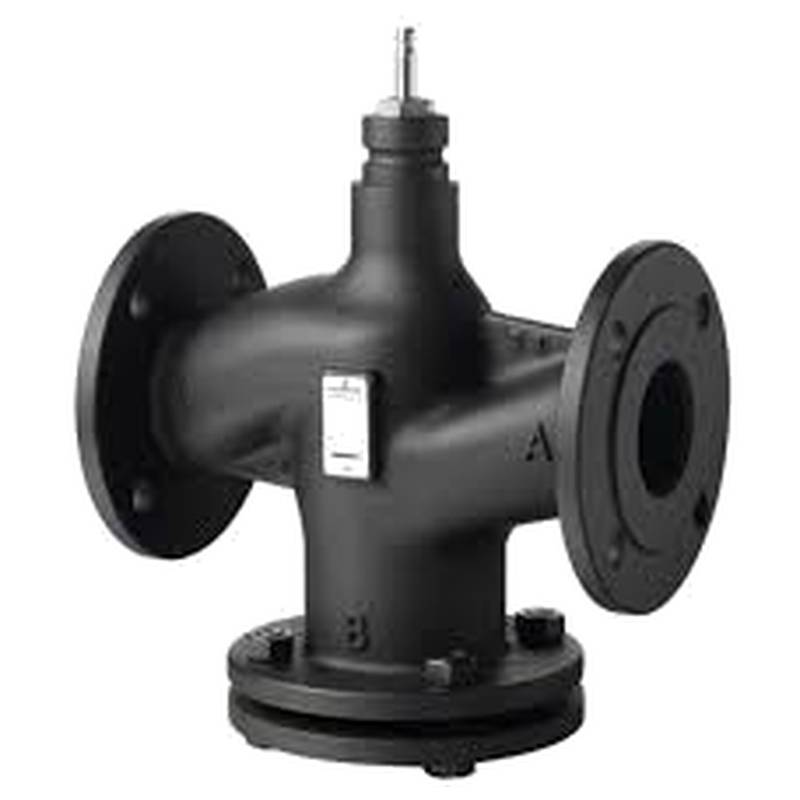
SIEMENS VKF42.150 Flanged Butterfly Valve DN150 SIEMENS


The SIEMENS VKF42.150 Flanged Butterfly Valve DN150 is a robust and reliable control valve engineered for demanding industrial applications, offering precise flow regulation and exceptional durability. Its core advantages lie in its high-performance design, ease of integration, and Siemens' renowned quality assurance, making it a preferred choice for critical process control systems. Key technical parameters include a nominal diameter (DN) of 150mm, a flanged connection type, and a seat material optimized for long service life. The valve boasts a substantial maximum operating pressure and temperature rating, ensuring consistent performance across a wide range of industrial environments.
Product Specifications
| Specification | Value |
| :---------------------- | :------------------------------------- |
| Product Type | Flanged Butterfly Valve |
| Manufacturer | SIEMENS |
| Model | VKF42.150 |
| Nominal Diameter (DN) | 150 |
| Connection Type | Flanged |
| Valve Body Material | Cast Iron (typical, confirm specifics) |
| Seat Material | EPDM (typical, confirm specifics) |
| Maximum Operating Pressure | Up to 16 bar (typical, confirm specifics) |
| Maximum Operating Temperature | Up to 110°C (typical, confirm specifics) |
| Actuator Type | Designed for electric or pneumatic actuators |
| Control Characteristic | Equal percentage (typical, confirm specifics) |
| Leakage Class | Class VI (typical, confirm specifics) |
Core Features & Market Positioning
The SIEMENS VKF42.150 distinguishes itself through its superior sealing technology and robust construction, essential for applications where tight shut-off and extended operational life are paramount. Its design prioritizes minimal maintenance requirements, reducing total cost of ownership for industrial facilities. The valve's compatibility with a broad spectrum of Siemens actuators and control systems positions it as a versatile solution within the industrial automation landscape. This integration capability allows for seamless incorporation into existing plant infrastructure, providing a competitive edge in modern process control. The emphasis on high-quality materials, such as durable cast iron for the body and resilient EPDM for the seat, ensures resistance to corrosive media and abrasive conditions commonly encountered in chemical processing, water treatment, and HVAC systems.
Key Application Scenarios
This DN150 flanged butterfly valve finds extensive utility across various critical industrial sectors. In water and wastewater treatment plants, it reliably controls flow rates in distribution networks and treatment processes, ensuring efficient operation and water quality management. The chemical industry leverages the VKF42.150 for precise regulation of process fluids, where its material compatibility and robust sealing prevent leaks and maintain process integrity. Furthermore, in building services and HVAC systems, it manages hot and chilled water circuits, contributing to optimized energy consumption and stable environmental control within large facilities. Its suitability for high-pressure and high-temperature environments also makes it a strong candidate for power generation and manufacturing processes requiring dependable flow control.
Practical System Integration Guidance
Integrating the SIEMENS VKF42.150 into an industrial control system typically involves selecting an appropriate actuator, such as a Siemens electric actuator (e.g., from the SQX or GLX series) or a pneumatic actuator. Proper flange connection requires adherence to relevant piping standards (e.g., DIN, ANSI) to ensure a secure and leak-free seal, utilizing appropriate gaskets and fasteners. For pneumatic actuators, connection to the compressed air supply and control signals (e.g., 4-20mA or digital inputs) is crucial, often requiring a positioner or solenoid valve for precise control. Electrical actuators require proper power supply and control wiring, typically integrated into a PLC or DCS system via fieldbus communication protocols if supported by the chosen actuator. Commissioning involves valve travel calibration and setting control loop parameters to achieve desired process performance.
Operation and Risk Mitigation
Operating the SIEMENS VKF42.150 butterfly valve requires adherence to specified pressure and temperature limits to prevent over-stressing the valve components and potential failure. Regular visual inspections for external leaks, corrosion, or physical damage are recommended. Periodic functional checks, including full open and closed cycles, help ensure the actuator and valve mechanism remain responsive. In case of operational issues such as reduced flow or actuator malfunction, common troubleshooting steps include verifying actuator power and control signals, checking for blockages in the valve disc or seat area, and inspecting for external obstructions. Fault codes, if generated by a connected actuator, should be cross-referenced with the actuator's specific manual for diagnosis and resolution. Ensuring proper actuator sizing for the required torque is critical to avoid premature wear or failure.
Scalability & Long-Term Value
The SIEMENS VKF42.150 offers significant long-term value through its compatibility with Siemens' broader automation portfolio, facilitating scalability and future upgrades. Its modular design often allows for the replacement or upgrade of actuators to accommodate evolving process demands or to integrate advanced digital control features, such as predictive maintenance capabilities or IIoT connectivity through smart actuators. This interoperability ensures that the valve remains a viable component within evolving plant architectures, minimizing the need for complete system overhauls. The inherent durability and high-quality construction of the SIEMENS VKF42.150 contribute to its extended service life, providing a reliable foundation for sustained operational efficiency and reduced capital expenditure over time.
Frequently Asked Questions
What is the primary function of the SIEMENS VKF42.150 butterfly valve?
The SIEMENS VKF42.150 is designed for precise flow control in industrial fluid systems. It regulates the passage of liquids or gases by rotating a disc within the valve body. Its flanged design ensures a secure, leak-tight connection to piping.
This valve is engineered to provide proportional or on/off control, adapting to various process requirements. It excels in applications demanding accuracy and reliability, such as in water treatment or chemical processing.
Its robust construction and quality materials contribute to a long operational lifespan and minimal maintenance needs, making it a cost-effective solution for continuous industrial use.
What are the typical materials used in the SIEMENS VKF42.150 valve construction?
The valve body is commonly constructed from durable cast iron, providing excellent strength and resistance to common industrial environments. The seat material is typically EPDM (Ethylene Propylene Diene Monomer), known for its resilience and sealing capabilities.
These materials are selected for their compatibility with a wide range of fluids and operating temperatures. EPDM seats offer good chemical resistance and flexibility, ensuring effective shut-off performance.
While cast iron and EPDM are typical, specific applications might require alternative materials for the body or seat; always consult the product's detailed specifications for precise material composition.
How is the SIEMENS VKF42.150 valve controlled or actuated?
This butterfly valve is designed to be operated by external actuators, typically electric or pneumatic. Siemens offers a range of compatible actuators that can be easily mounted to the valve stem.
Electric actuators provide precise, often programmable, control and can be integrated into digital control systems. Pneumatic actuators utilize compressed air for operation and are suitable for environments where electrical power is a concern.
The choice of actuator depends on the specific control requirements, available utilities, and desired level of automation for the application.