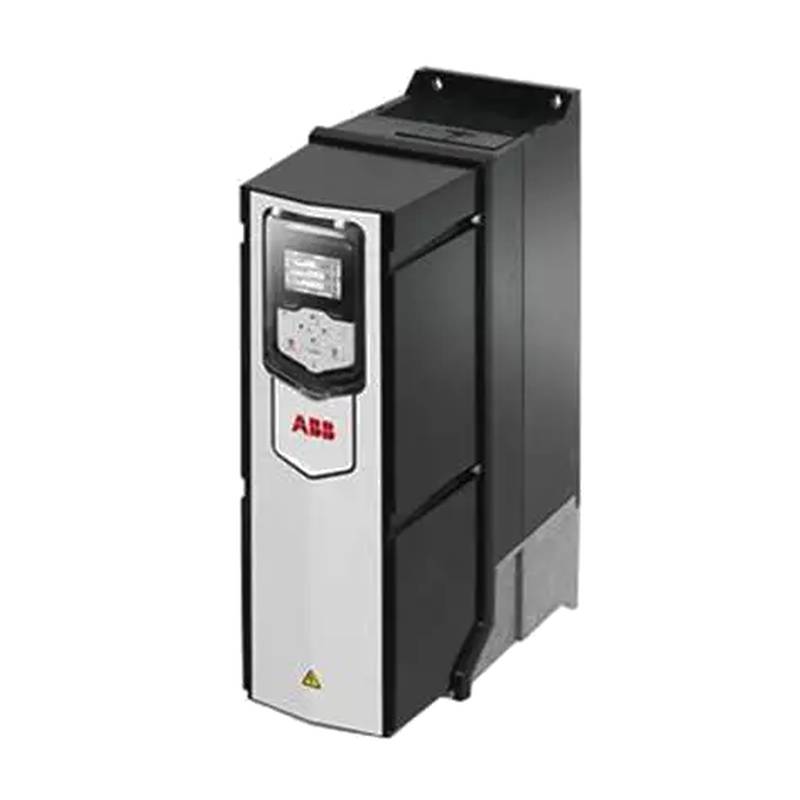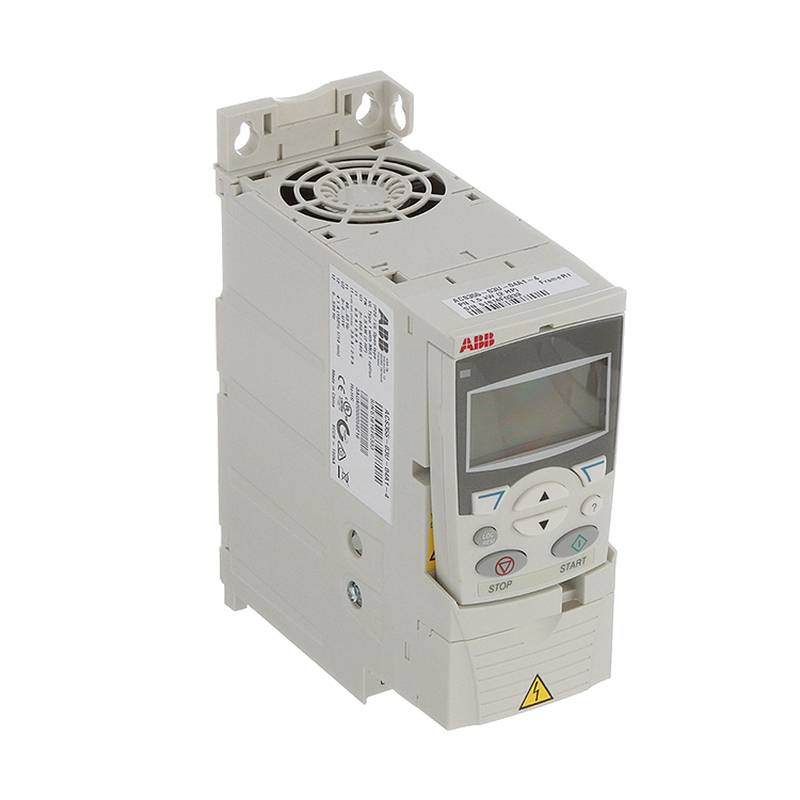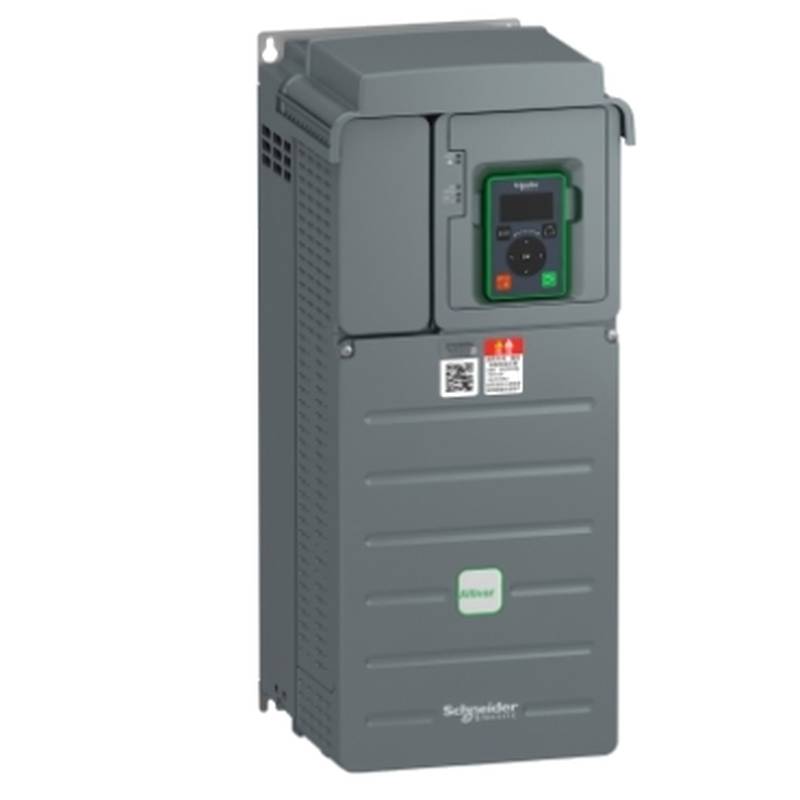












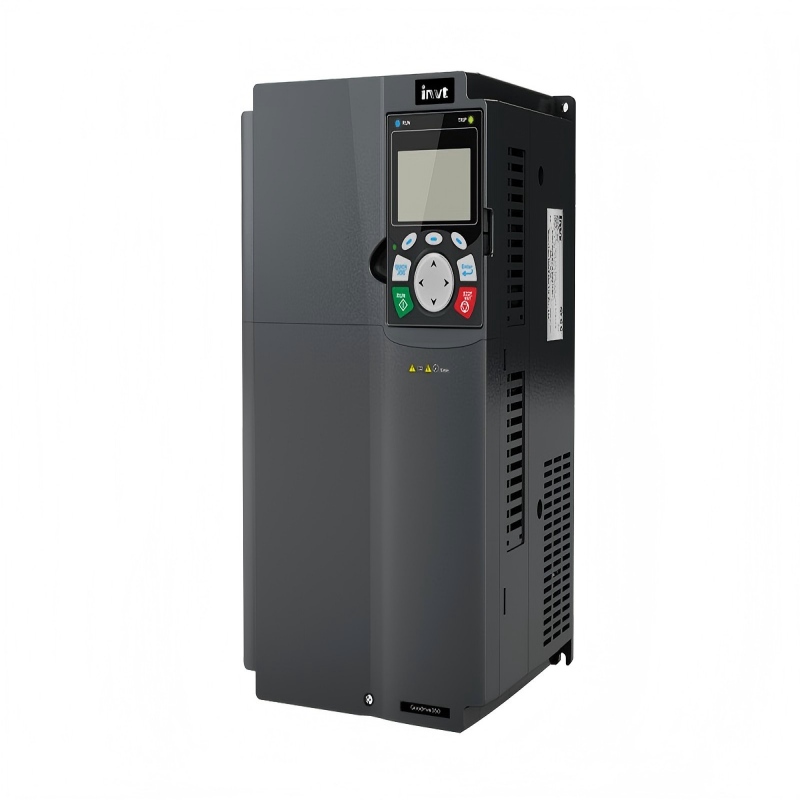
INVT GD350-018G/022P-45-NS Goodrive350 NS Series Inverter 18.5kW to 22kW Dynamic Torque Unit


The INVT GD350-018G/022P-45-NS Goodrive350 NS Series Inverter, a dynamic torque unit ranging from 18.5kW to 22kW, stands as a robust solution for demanding industrial applications. This advanced variable frequency drive (VFD) delivers exceptional performance, precise control, and enhanced energy efficiency. Its core advantages lie in its high dynamic response, superior motor control algorithms, and compact design, making it a preferred choice for optimizing processes across various sectors. Key technical parameters include a rated power output of 18.5kW (standard) to 22kW (heavy-duty), a 45A rated current, and an input voltage range of 3-phase 380-460V, 50/60Hz. The GD350 series excels in applications requiring rapid speed changes and accurate torque regulation, ensuring optimal productivity and reliability.
Product Specifications
| Parameter | Specification |
| :------------------------- | :------------------------------------------------- |
| Model | GD350-018G/022P-45-NS |
| Power Range | 18.5kW (Standard Duty) / 22kW (Heavy Duty) |
| Rated Current | 45A |
| Input Voltage | 3-Phase, 380-460V AC |
| Input Frequency | 50/60 Hz |
| Output Frequency Range | 0-3000 Hz |
| Control Method | Vector Control (SVC, FOC), V/f Control |
| Overload Capacity | 120% for 60s (Heavy Duty), 150% for 60s (Standard Duty) |
| Protection Degree | IP20 |
| Communication Interfaces | RS485 (Standard), Optional Fieldbus Modules |
| Braking Unit | Integrated (for specific models/configurations) |
| Dimensions (H x W x D) | 450mm x 260mm x 214mm (approximate, subject to specific unit) |
| Weight | Approx. 14 kg (subject to specific unit) |
Core Features & Market Positioning
The INVT Goodrive350 NS Series inverter distinguishes itself through its sophisticated motor control capabilities, offering both sensorless vector control (SVC) and field-oriented control (FOC) for precise speed and torque regulation. This advanced control architecture ensures smooth operation, high starting torque, and excellent dynamic response, even under fluctuating load conditions. Its market positioning is that of a high-performance, reliable VFD designed for demanding industrial automation tasks where accuracy and efficiency are paramount. The inclusion of an integrated braking unit in some configurations further enhances its utility for applications with high inertia loads or frequent deceleration requirements.
Key Application Scenarios
The INVT GD350-018G/022P-45-NS inverter finds extensive application in industries requiring dynamic torque control and precise speed management. This includes manufacturing processes such as winding machines, extrusion lines, and printing presses, where consistent tension and speed are critical. It is also well-suited for material handling systems like cranes and elevators, leveraging its robust torque control for smooth acceleration and deceleration. Furthermore, its adaptability makes it a valuable component in pump and fan applications where energy savings through variable speed operation are a primary objective.
Practical System Integration Guidance
Integrating the INVT GD350-018G/022P-45-NS inverter into existing systems involves careful attention to power wiring, control signal connections, and parameter configuration. Ensure the main power input conforms to the specified 3-phase 380-460V AC supply, with proper grounding and protection devices installed. For motor control, connect the motor leads (U, V, W) securely. Control terminals facilitate connections for external start/stop commands, speed reference signals (e.g., 0-10V or 4-20mA analog inputs), and digital inputs for functions like forward/reverse or fault reset. Initial commissioning typically involves setting motor parameters (rated voltage, current, frequency, poles) and selecting the appropriate control mode (SVC or FOC) for optimal performance. Advanced programming of PID controllers, speed loops, and other functions can be accessed via the integrated keypad or through serial communication.
Operation and Risk Mitigation
Safe operation of the INVT GD350-018G/022P-45-NS inverter is paramount. Always ensure power is disconnected before performing any wiring or maintenance. The inverter should be installed in a well-ventilated area, away from excessive dust, moisture, and flammable materials, adhering to environmental specifications. Key operational aspects include monitoring drive status via the display and understanding common fault codes. For instance, OL1 (Overload) faults typically indicate the motor or load exceeds the inverter's capacity, requiring a review of the load or settings. Other common faults like OC (Overcurrent) or OV (Overvoltage) may point to issues with motor parameters, rapid acceleration/deceleration, or the power supply. Proper parameterization, including setting appropriate acceleration/deceleration times and overload protection levels, is crucial for mitigating these risks and ensuring longevity.
Scalability & Long-Term Value
The INVT Goodrive350 NS Series inverter offers significant scalability and long-term value through its modular design and compatibility with advanced industrial communication protocols. It can be easily integrated into supervisory control and data acquisition (SCADA) systems or distributed control systems (DCS) using optional communication modules for fieldbus integration, such as Modbus TCP, Profibus, or EtherNet/IP. This connectivity facilitates remote monitoring, diagnostics, and control, aligning with Industry 4.0 initiatives and enabling predictive maintenance strategies. The robust construction and comprehensive protection features contribute to its durability, minimizing downtime and operational costs over its lifespan. Furthermore, INVT's commitment to product development ensures that firmware updates and ongoing technical support are available, preserving the investment and enhancing future operational capabilities.
Frequently Asked Questions (FAQs)
1. What is the primary advantage of the INVT GD350-018G/022P-45-NS inverter?
This inverter excels in dynamic torque control, providing precise motor speed and torque regulation for demanding applications. Its advanced control algorithms ensure rapid response to load changes.
It also offers high energy efficiency by adjusting motor speed to the actual load requirements, leading to significant cost savings. The robust design and comprehensive protection features enhance reliability and reduce maintenance needs.
The compact form factor and versatile mounting options simplify integration into various industrial control panels and machinery. This makes it a highly adaptable solution for a wide range of automation tasks.
2. How do I select the correct motor parameters for the GD350 inverter?
You must accurately input the motor's nameplate data, including rated voltage, current, frequency, and power. These values are critical for the inverter to perform precise motor control.
It is also essential to input the motor's number of poles and rated speed to ensure correct speed feedback and control accuracy. Incorrect motor data will lead to suboptimal performance and potential faults.
For optimal results, especially in vector control modes, performing an auto-tuning process after entering the motor parameters is highly recommended. This calibrates the inverter to the specific characteristics of your motor.
3. What are common fault codes for the INVT GD350 series and their meanings?
Common faults include OL1 (Overload), indicating the drive's current limit has been exceeded for too long. This often requires investigating motor capacity or load conditions.
OC (Overcurrent) faults signal a rapid surge in current, often related to sudden acceleration or short circuits. Checking motor wiring and acceleration ramps is advised.
OV (Overvoltage) and UV (Undervoltage) faults pertain to the DC bus voltage. These may indicate issues with the power supply or regenerative braking capabilities.
4. Can the GD350-018G/022P-45-NS inverter be used for pump and fan applications?
Yes, this inverter is highly effective for variable speed pump and fan control, offering significant energy savings. It precisely matches motor speed to system demand, reducing wasted energy.
Its PID control functionality allows for automatic adjustment of fan or pump speed to maintain set pressure, flow, or temperature levels. This ensures optimal process conditions and system stability.
The smooth acceleration and deceleration capabilities of the inverter also reduce mechanical stress on pumps and fans, prolonging their operational lifespan and minimizing maintenance.
5. What are the benefits of using SVC (Sensorless Vector Control) with this inverter?
SVC provides precise motor speed and torque control without the need for a motor-mounted encoder. This simplifies installation and reduces overall system cost.
It offers excellent dynamic performance, allowing the motor to respond quickly to changes in load torque. This is crucial for applications requiring high responsiveness.
SVC also enables operation at very low speeds with good torque output, which is beneficial for applications like conveyors or positioning systems.
6. How do I connect the GD350 inverter for remote control?
Remote control typically involves utilizing the digital or analog input terminals for start/stop commands and speed references. External switches or potentiometers can be wired to these terminals.
For more advanced remote control and monitoring, use the integrated RS485 port with Modbus RTU protocol. This allows communication with PLCs or HMIs for comprehensive system integration.
Optional communication modules can be added to support various fieldbus protocols like Profibus, DeviceNet, or EtherNet/IP, enabling seamless integration into existing plant-wide control networks.
7. What is the typical overload capacity of the GD350-018G/022P-45-NS?
For the standard duty (GD350-018G), it can handle 150% of its rated current for 60 seconds. This allows for momentary overloads common in some industrial processes.
For the heavy-duty (GD350-022P) configuration, it provides 120% overload capacity for 60 seconds. This rating is suitable for applications with sustained high loads.
It's important to refer to the specific model designation (e.g., "-018G" or "-022P") to confirm the exact overload rating and duration applicable to your unit.
8. Does the GD350 inverter support braking resistors?
Many models within the Goodrive350 series are equipped with integrated braking units, capable of handling regenerative energy. This is crucial for applications with high inertia loads that require rapid deceleration.
For applications generating significant regenerative energy beyond the capacity of the internal braking unit, external braking resistors can be connected. These dissipate excess energy as heat.
Consulting the product manual for your specific GD350-018G/022P-45-NS model is essential to determine if it has an internal braking unit and the specifications for connecting external braking resistors.
9. What are the environmental considerations for installing this inverter?
The inverter requires installation in a clean, dry environment with adequate ventilation to prevent overheating. Avoid areas with excessive dust, corrosive gases, or high humidity.
Ensure the ambient temperature remains within the specified operating range, typically between -10°C and +40°C (or higher with derating), to maintain optimal performance and longevity.
Proper clearance around the inverter is necessary for heat dissipation. Refer to the installation manual for precise spacing requirements to ensure safe and efficient operation.
10. How can I improve the energy efficiency using this inverter?
By operating motors at variable speeds that match the actual load demand, instead of running them at full speed constantly, significant energy savings are achieved. This inverter's V/f and vector control modes facilitate this.
Implementing features like a built-in PID controller can automatically adjust motor speed to maintain specific process parameters (e.g., pressure, flow), preventing over-consumption of energy.
Utilizing the inverter's sleep/wake-up functions for pumps and fans can further optimize energy usage by putting the motor into a low-power state during periods of low demand.