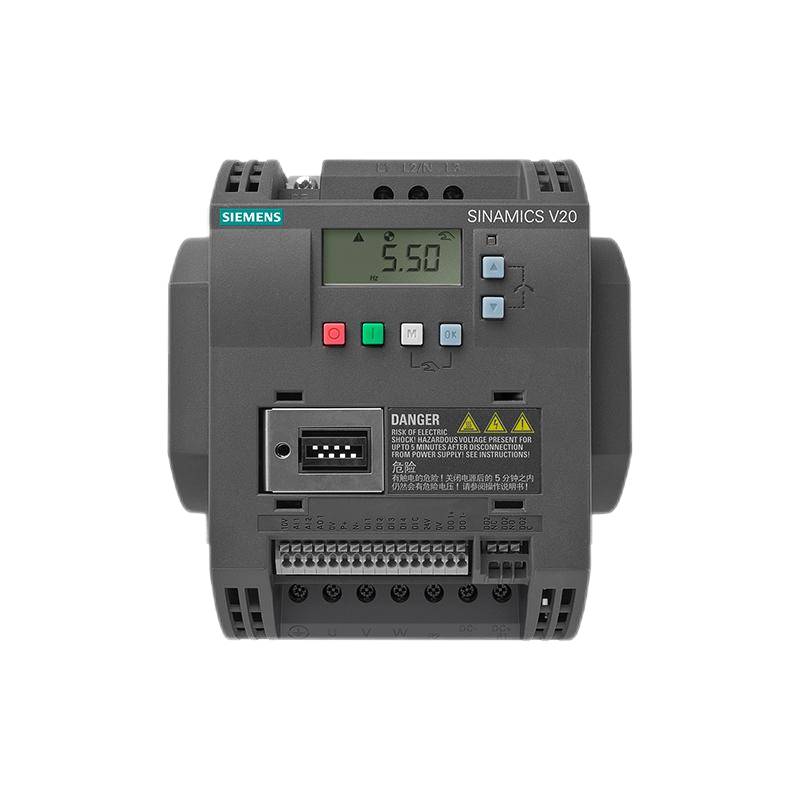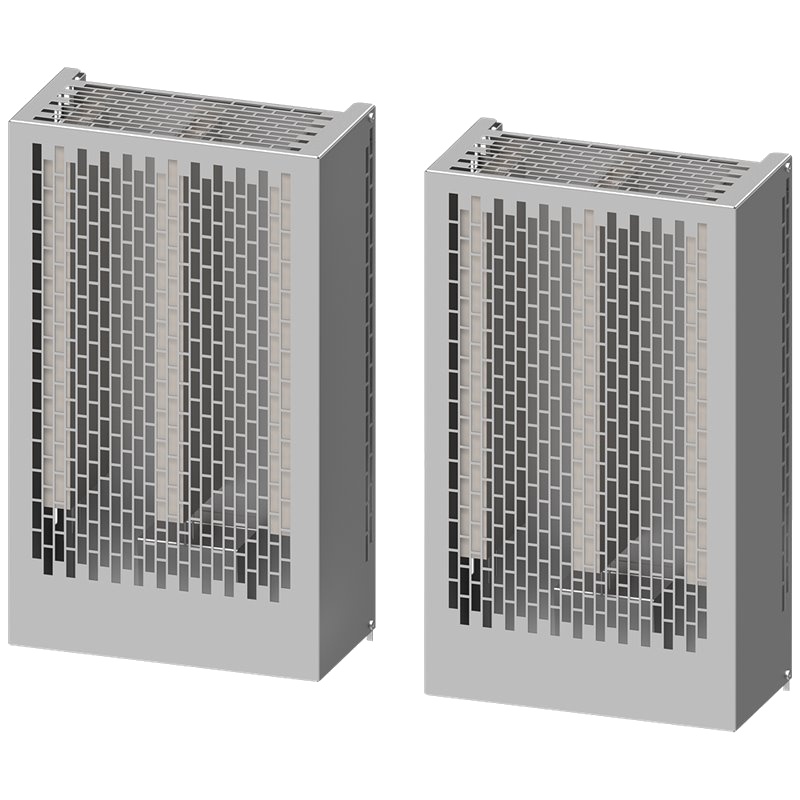
SIEMENS JJY:023424020001 SINAMICS G120 Braking Resistor for Power Module FSC 0.75kW 1.5kW


The SIEMENS JJY:023424020001 SINAMICS G120 Braking Resistor is a critical component for power modules, specifically designed for 0.75kW and 1.5kW applications, enhancing control and safety in variable speed drive systems. This braking resistor is engineered to dissipate excess energy generated during regenerative braking, thereby protecting the drive and ensuring stable operation. Its robust construction and high-quality materials guarantee reliable performance in demanding industrial environments.
Product Specifications
| Parameter | Value |
| :----------------- | :------------------------------------------ |
| Manufacturer | Siemens |
| Product Number | JJY:023424020001 |
| Product Line | SINAMICS G120 |
| Type | Braking Resistor |
| Compatibility | Power Module FSC (0.75kW, 1.5kW) |
| Rated Power | Varies with application (typically up to 1kW) |
| Resistance Value | Varies (e.g., 40 Ohm, 80 Ohm) |
| Duty Cycle | Intermittent |
| Protection Class | IP20 |
| Operating Temperature | -20°C to +55°C |
| Dimensions (H x W x D) | Varies (e.g., 100mm x 100mm x 50mm) |
Core Features & Market Positioning
The SIEMENS JJY:023424020001 excels by offering superior thermal management, crucial for applications involving frequent braking cycles. Its integration with the SINAMICS G120 platform signifies a commitment to modularity and seamless system expansion, a key differentiator in the competitive industrial automation market. This resistor’s design minimizes downtime and maintenance by preventing thermal overload, positioning it as a reliable, long-term solution for drive control. Siemens' reputation for quality engineering further solidifies its market standing as a dependable choice for critical applications.
Key Application Scenarios
This braking resistor is indispensable in applications requiring precise deceleration and rapid stopping of motor loads. Common use cases include material handling systems, such as conveyor belts and cranes, where loads must be controlled quickly and safely. It is also vital in pump and fan applications where energy regeneration can occur during process slowdowns, preventing overvoltage within the drive system. Manufacturing automation, particularly in assembly lines and packaging machinery, benefits from the enhanced control and protection offered by the SINAMICS G120 braking resistor.
Practical System Integration Guidance
Integrating the SIEMENS JJY:023424020001 braking resistor with a SINAMICS G120 drive is straightforward. The resistor connects directly to the braking chopper terminals on the compatible Power Module FSC. Ensure the resistor's resistance value and power rating are correctly selected based on the drive's motor size and the expected braking energy. Proper grounding of the resistor and the drive system is essential for safety and electromagnetic compatibility. Refer to the SINAMICS G120 control unit's parameters to enable and configure the braking resistor function, typically involving setting parameter groups related to motor data and braking control.
Operation and Risk Mitigation
Proper operation of the SIEMENS JJY:023424020001 braking resistor is paramount to prevent drive faults and ensure personnel safety. Continuous monitoring of the resistor's temperature is advised, although the SINAMICS G120 drive inherently manages thermal protection. Avoid exceeding the resistor's intermittent duty cycle or rated power to prevent overheating and premature failure. Common fault codes related to braking resistors, such as overvoltage or overtemperature, can often be mitigated by verifying the resistor's connection integrity, correct parameterization, and ensuring the resistor's specifications match the application's demands.
Scalability & Long-Term Value
The SIEMENS JJY:023424020001 offers significant long-term value through its compatibility with the broader SINAMICS G120 product family, allowing for easy scalability. As system requirements evolve, additional braking modules or larger power modules can be integrated without compromising the existing resistor setup, provided the overall system design remains within specified limits. This modular approach, coupled with Siemens' robust engineering, ensures the braking resistor remains a reliable component throughout the lifecycle of an automated system, supporting integration with emerging IIoT and digitalization initiatives through its intelligent drive platform.
FAQs
What is the primary function of the SIEMENS JJY:023424020001 SINAMICS G120 braking resistor?
Its main purpose is to dissipate excess energy generated during regenerative braking events. This prevents overvoltage within the SINAMICS G120 drive. It ensures the safe and stable operation of the motor and the drive system.
This protective function is crucial for preventing damage to the drive's electronic components. It allows for controlled deceleration of loads. The resistor acts as a load for the excess energy.
The resistor's effectiveness is tied to its resistance value and power rating. These must be matched to the specific motor and application requirements. Proper selection ensures optimal performance and longevity.
How do I correctly install the SIEMENS JJY:023424020001 braking resistor?
Connect the resistor to the designated braking chopper terminals on the compatible SINAMICS G120 Power Module FSC. Ensure all connections are secure and properly insulated. Verify the resistor's resistance value matches the requirements for your 0.75kW or 1.5kW application.
Before powering on, confirm that the braking resistor is correctly grounded according to electrical safety standards. Consult the SINAMICS G120 documentation for specific wiring diagrams and torque specifications. Proper installation minimizes electrical hazards and ensures optimal heat dissipation.
Always ensure the ambient temperature and ventilation around the resistor are within the specified operating limits. This prevents premature overheating and extends the resistor's lifespan. Proper installation is the first step to reliable operation.
What are the key technical parameters to consider for the JJY:023424020001 resistor?
Consider the resistance value (e.g., 40 Ohm, 80 Ohm) and the rated power dissipation capacity. These must align with the specific SINAMICS G120 Power Module FSC and the motor's characteristics. Accurate matching is vital for effective braking and preventing faults.
The duty cycle of the resistor is also critical, as it is designed for intermittent use. Understand how frequently and for how long braking will occur in your application. Overloading the resistor beyond its duty cycle can lead to overheating and failure.
Lastly, the operating temperature range (-20°C to +55°C) and protection class (IP20) dictate where the resistor can be safely and effectively installed. Ensure the environmental conditions meet these specifications for reliable performance.
What causes a SINAMICS G120 drive to fault when using a braking resistor?
Common causes include improper or loose connections between the resistor and the power module. This can lead to intermittent contact or complete open circuits, triggering overvoltage faults. Ensure all terminals are clean, tight, and correctly wired.
Another frequent issue is selecting a braking resistor with an incorrect resistance value or power rating for the application. If the resistor is too low in resistance or insufficient in power capacity, it cannot dissipate the regenerative energy effectively, causing overvoltage or overheating. Always verify specifications against motor data and braking requirements.
Finally, an internal fault within the braking resistor itself, or a fault in the drive's braking chopper circuit, can cause issues. Performing diagnostic checks on the drive and visually inspecting the resistor for any signs of damage or overheating is recommended.
How does the SIEMENS JJY:023424020001 resistor handle heat dissipation?
The resistor is constructed with materials that have high thermal resistance, allowing it to absorb and dissipate electrical energy as heat. Its design typically incorporates fins or a robust housing to aid in convective cooling. The heat is generated as current flows through the resistive element.
When the SINAMICS G120 drive regenerates power, this excess energy is directed to the braking resistor. The resistor converts this electrical energy into thermal energy. The rate at which it can dissipate this heat depends on its power rating and the ambient conditions.
For optimal heat dissipation, the resistor must be installed with adequate airflow. Avoid enclosing it in a confined space without ventilation. The SINAMICS G120 drive's control unit monitors for over-temperature conditions related to the braking circuit.
Can this braking resistor be used with SINAMICS G120 drives other than those for 0.75kW and 1.5kW?
This specific SIEMENS JJY:023424020001 braking resistor is explicitly rated and recommended for SINAMICS G120 Power Module FSC variants designed for 0.75kW and 1.5kW motors. Using it with larger or smaller power modules may result in improper performance or drive faults. Always adhere to manufacturer specifications for compatibility.
For other SINAMICS G120 drive sizes, Siemens offers a range of different braking resistors. It is essential to consult the SINAMICS G120 system documentation or Siemens' selection tools to identify the correct braking resistor model for your specific power module and application requirements. Compatibility is key.
Using an incorrect resistor can lead to system instability, premature component failure, and safety hazards. Ensure the chosen resistor is listed as compatible for your specific SINAMICS G120 control unit and power module combination.
What is regenerative braking, and why is a resistor needed for it?
Regenerative braking occurs when a motor acts as a generator, typically when an overhauling load slows down the motor. The motor then feeds energy back into the drive system. This process converts kinetic energy into electrical energy.
Without a mechanism to absorb this regenerated energy, the DC link voltage within the SINAMICS G120 drive would rise uncontrollably. This overvoltage can trigger a drive fault and potentially damage the drive's power electronics. The braking resistor provides a safe path for this excess energy.
The SIEMENS JJY:023424020001 braking resistor converts the electrical energy fed back from the motor into heat, dissipating it harmlessly into the environment. This maintains the DC link voltage within acceptable limits, allowing for controlled deceleration and preventing drive shutdown.
How can I configure the SINAMICS G120 drive to use the braking resistor?
Configuration involves accessing the drive's control parameters via the SINAMICS G120 operator panel or commissioning software like STARTER. You will need to activate the braking resistor function and set the appropriate parameters related to the resistor's characteristics.
Key parameters typically include enabling the braking chopper, setting the switching frequency for the chopper, and defining the overvoltage trip level. You must also ensure the drive is aware of the connected braking resistor's resistance value and power rating for proper monitoring and control.
Refer to the specific SINAMICS G120 control unit manual for exact parameter numbers and settings, as they can vary slightly between firmware versions. Correct parameterization ensures the drive effectively utilizes the braking resistor for safe and efficient operation.
What is the typical lifespan of a SIEMENS SINAMICS G120 braking resistor?
The lifespan of the SIEMENS JJY:023424020001 braking resistor is generally very long and depends heavily on the application's operating conditions and duty cycle. If operated within its specified limits for resistance, power, and duty cycle, it can last for many years. Regular maintenance and monitoring are advised.
However, frequent or prolonged braking cycles that push the resistor close to its thermal limits can shorten its lifespan. Overloading, environmental factors like excessive dust or humidity, and physical damage can also lead to premature failure. It is crucial to match the resistor to the application accurately.
Siemens is known for high-quality components, so under normal conditions, expect reliable performance over an extended period. When replacement is needed, ensure you use an identical or manufacturer-approved equivalent part to maintain system integrity.
Are there any specific safety precautions when working with this braking resistor?
Always ensure the SINAMICS G120 drive and the connected power supply are completely de-energized and locked out before performing any installation, maintenance, or inspection on the braking resistor. The resistor can store a significant electrical charge even after power is removed.
Verify the resistor is properly grounded to prevent electrical shock. Ensure all wiring connections are secure and insulated to avoid short circuits or arcing. Always wear appropriate personal protective equipment (PPE), including safety glasses and insulated gloves.
Be mindful of the heat generated by the resistor during operation. Avoid touching the resistor when it is hot to prevent burns. Ensure the area around the resistor is clear of flammable materials and has adequate ventilation for safe operation.