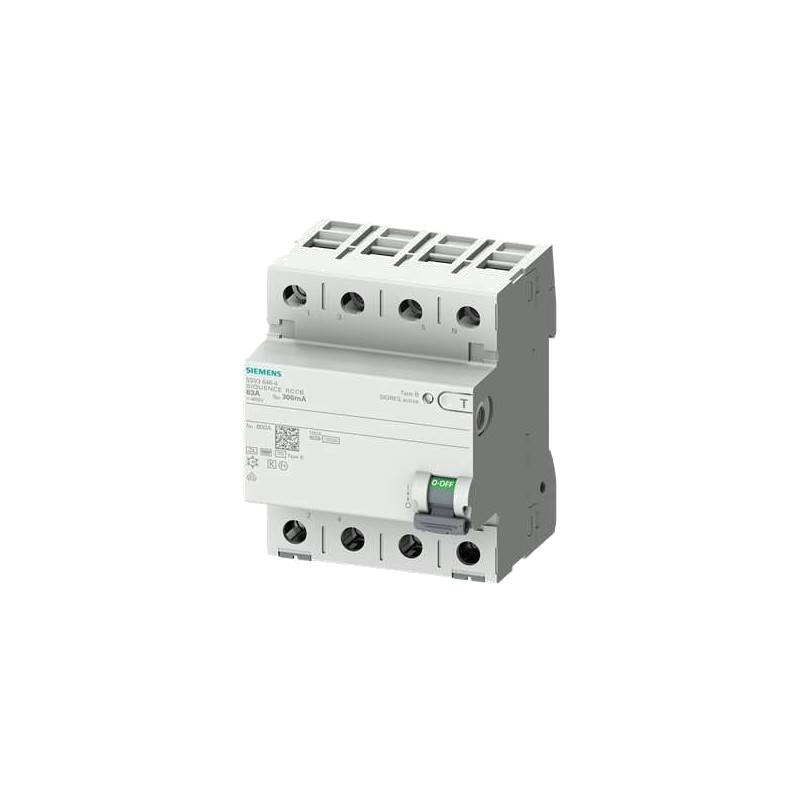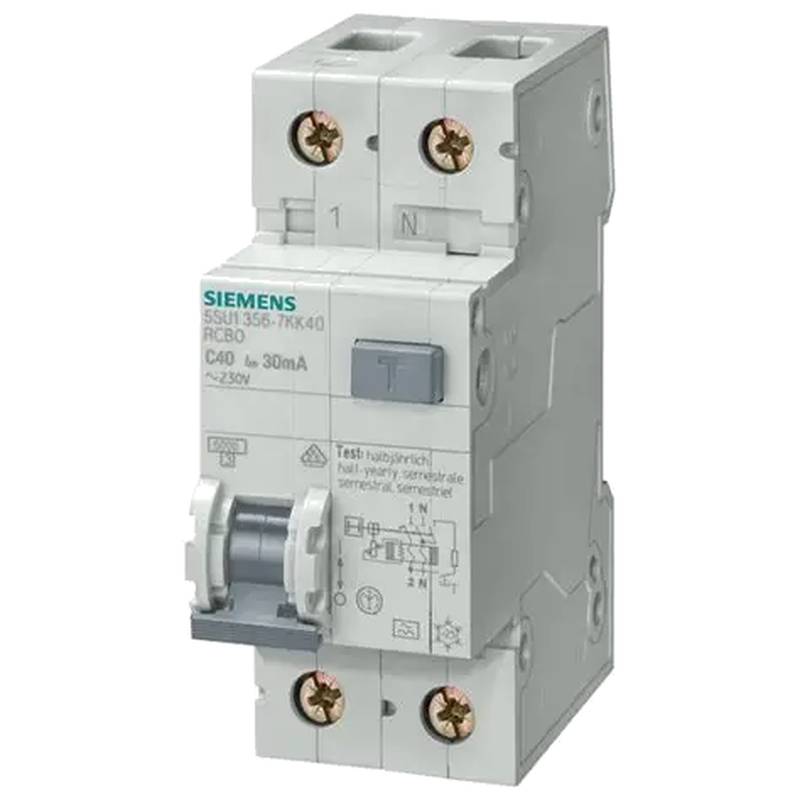












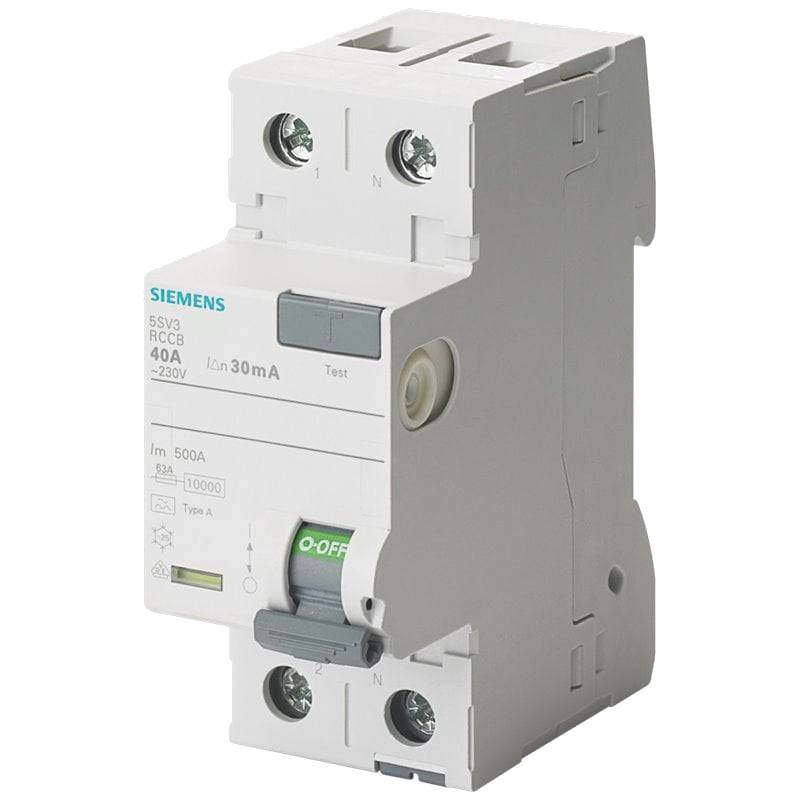
Siemens 5SV3314-6 5SV3 Series Earth Leakage RCBO 2P 40A 30mA


The Siemens 5SV3312-6KK12, a prominent member of the 5SV3 Series, stands as a robust 2-pole Residual Current Device (RCD) protection module engineered for demanding industrial environments. This 25A, 30mA device offers critical overcurrent and earth-fault protection, ensuring operational safety and equipment longevity. Its high breaking capacity and reliable tripping mechanism make it an indispensable component for safeguarding electrical installations against hazardous leakage currents. The 5SV3312-6KK12 embodies Siemens' commitment to delivering advanced, dependable protection solutions for a wide array of industrial applications.
Product Specifications
| Feature | Specification |
| :-------------------------- | :---------------------------------------------- |
| Product Type | RCD Protection Module |
| Series | 5SV3 |
| Poles | 2 |
| Rated Current (In) | 25A |
| Rated Residual Operating Current (IΔn) | 30mA |
| Rated Voltage (Ue) | 230/400V AC |
| Frequency | 50/60 Hz |
| Breaking Capacity (Icn) | 6kA |
| Tripping Type | Type AC (for alternating residual currents) |
| Terminal Type | Screw Terminal |
| Mounting Type | DIN rail (35mm) |
| Ambient Temperature Range | -25°C to +45°C |
| Protection Class | IP20 (device), IP40 (enclosure) |
| Compliance | IEC/EN 61008-1 |
Core Features & Market Positioning
The Siemens 5SV3312-6KK12 excels in its precise and rapid detection of residual currents, a critical factor in preventing electrical shocks and fires. Its Type AC classification ensures effective protection against alternating leakage currents, commonly encountered in industrial machinery and power distribution systems. The 6kA breaking capacity provides substantial fault current handling capability, safeguarding downstream equipment and wiring from catastrophic damage during short circuits. Positioned as a reliable and cost-effective solution, the 5SV3312-6KK12 offers industrial users a high level of safety and compliance with international standards like IEC/EN 61008-1, making it a preferred choice for general-purpose electrical safety applications.
Key Application Scenarios
This Siemens RCD protection module is integral to a wide range of industrial electrical systems. It is frequently deployed in control cabinets, machine tools, and distribution boards within manufacturing plants to protect personnel and equipment from earth faults and leakage currents. Applications include safeguarding motor circuits, lighting installations, and auxiliary power supplies where reliable and immediate protection is paramount. Industries such as manufacturing, automation, and processing plants benefit significantly from the dependable safety provided by the 5SV3312-6KK12, ensuring continuous operation and minimizing downtime due to electrical faults.
Practical System Integration Guidance
Integrating the Siemens 5SV3312-6KK12 into existing or new electrical systems is straightforward due to its standard DIN rail mounting and accessible screw terminals. For a 2-pole installation, connect the phase and neutral conductors to the designated input terminals of the RCD. The output terminals then feed the protected circuit. Ensure proper torque is applied to the screw terminals to maintain a secure connection and prevent overheating. It is crucial to wire the RCD in series with the load it is protecting, ensuring all current flows through both the phase and neutral poles for correct operation. Always adhere to local electrical codes and standards during installation.
Operation and Risk Mitigation
The 5SV3312-6KK12 operates by continuously monitoring the balance of current flowing in the phase and neutral conductors. If an imbalance exceeding 30mA occurs, indicating a leakage current to earth, the RCD rapidly trips, disconnecting the power supply. This swift action is vital for mitigating the risk of electric shock to personnel. In the event of persistent tripping, common causes include insulation faults in connected equipment, moisture ingress, or incorrect wiring. Thorough inspection of the protected circuit and connected devices is recommended to identify and rectify the fault. Regular testing of the RCD's functionality using its integrated test button is a critical risk mitigation practice.
Scalability & Long-Term Value
The Siemens 5SV3312-6KK12 is designed for straightforward integration within modular electrical panel systems, allowing for easy expansion or modification of protection schemes. Its compatibility with other Siemens industrial control and distribution components ensures seamless integration into broader automation architectures. While the 5SV3312-6KK12 itself is a fixed-spec device, its value is amplified within a well-designed electrical infrastructure that may incorporate more advanced Siemens protection and control devices for enhanced monitoring and diagnostics, supporting future upgrades and digital integration initiatives within the plant.
Frequently Asked Questions
What is the primary function of the Siemens 5SV3312-6KK12?
The Siemens 5SV3312-6KK12 is primarily a residual current device (RCD). Its main function is to protect electrical circuits and individuals from the dangers of earth leakage currents. It achieves this by monitoring the current flowing in and out of a circuit and tripping rapidly if an imbalance is detected.
This rapid tripping mechanism is essential for preventing electric shocks and mitigating fire hazards caused by faults. The device provides safety for both people and equipment, ensuring compliance with electrical safety regulations in industrial settings.
The 5SV3312-6KK12 is specifically designed for alternating residual currents (Type AC) and offers a rated residual operating current of 30mA. This sensitivity makes it suitable for general protection against indirect contact.
How does the 25A rating of the 5SV3312-6KK12 affect its application?
The 25A rated current signifies the maximum continuous load current the device can safely handle. This rating determines the size of the circuits and the overall electrical load that the RCD can protect. It is crucial to select an RCD with a current rating that matches or exceeds the maximum expected load.
Applying the 5SV3312-6KK12 to circuits with a continuous load significantly higher than 25A could lead to overheating and premature failure of the device, compromising safety and operational integrity. Conversely, using it on very low-load circuits is also permissible but may not be the most cost-effective choice if lower-rated devices are available.
Careful consideration of the load profile, including potential inrush currents and peak demands, is necessary to ensure proper sizing and reliable operation. This 25A rating makes it well-suited for medium-sized distribution circuits in industrial environments.
What type of fault does the 30mA residual current sensitivity detect?
The 30mA residual current sensitivity is specifically calibrated to detect leakage currents to earth that pose a significant risk of electric shock. When current flows through an unintended path to the ground, it creates an imbalance between the phase and neutral conductors.
If this imbalance reaches 30mA, the RCD will quickly disconnect the power supply, typically within milliseconds, thus protecting a person from severe injury or electrocution. This sensitivity level is standard for general-purpose RCDs offering protection against indirect contact.
It's important to note that 30mA RCDs are primarily for personal protection. For protection against fire, or for circuits where higher leakage currents are expected (e.g., due to capacitive loads), RCDs with higher residual current ratings (like 100mA or 300mA) might be used for selectivity or fire protection purposes.
Can the Siemens 5SV3312-6KK12 be used in residential or commercial buildings?
While the Siemens 5SV3312-6KK12 is designed and marketed for industrial applications, its technical specifications allow for its use in certain commercial and even high-end residential electrical installations. The core function of residual current protection is universally beneficial for safety across all building types.
However, the decision to use an industrial-grade RCD like the 5SV3312-6KK12 in a residential or commercial context would depend on local electrical codes, specific application requirements, and cost-effectiveness compared to standard residential RCDs. Industrial devices may have more robust construction or different certifications that are not strictly necessary for a home environment.
For standard domestic circuits, specifically designed residential RCDs (often within consumer units) are typically more common and easier to source. Always consult with a qualified electrician to ensure compliance with all relevant building regulations and safety standards for your specific location and application.
What are the advantages of using a 2-pole RCD like the 5SV3312-6KK12?
A 2-pole RCD, such as the 5SV3312-6KK12, is designed to interrupt both the phase and the neutral conductors simultaneously. This ensures that the circuit is completely isolated from the power supply when a fault occurs, providing a higher level of safety than single-pole devices.
By disconnecting both conductors, it prevents a hazardous situation where the neutral conductor might still be live, even if the phase is switched off, due to improper wiring or neutral faults. This is particularly important in systems where the neutral is solidly earthed.
The 2-pole configuration is standard for many single-phase industrial and commercial applications where full isolation is required for safety and maintenance purposes. It ensures that no residual voltage remains on the protected circuit after tripping.
What is the breaking capacity (Icn) of the 5SV3312-6KK12, and why is it important?
The Siemens 5SV3312-6KK12 has a breaking capacity (Icn) of 6kA. This specification indicates the maximum fault current the RCD can safely interrupt without sustaining damage to itself or its internal components. It is a critical safety parameter that protects the device and the electrical installation from catastrophic failure during severe short-circuit events.
A higher breaking capacity is essential in installations where the potential for high fault currents exists, such as those close to the main power source or where there are large transformers. If the actual fault current exceeds the device's breaking capacity, the RCD could fail to clear the fault, potentially leading to fire, equipment damage, or injury.
Selecting an RCD with an appropriate breaking capacity, as specified by the upstream overcurrent protection devices (like circuit breakers) and the overall system design, is crucial for ensuring reliable and safe operation. The 6kA rating of the 5SV3312-6KK12 is suitable for many standard industrial and commercial distribution circuits.
How is the Siemens 5SV3312-6KK12 installed onto a DIN rail?
Installation onto a standard 35mm DIN rail is a key feature of the Siemens 5SV3312-6KK12 for easy panel mounting. The device is equipped with a clip mechanism at the bottom that allows it to be securely attached to the rail.
To install, simply align the clip at the top of the RCD with the DIN rail and press down firmly. The clip will engage with the rail, securing the device in place. Ensure the RCD is oriented correctly, typically with terminals facing upwards for easier wiring.
For removal, a flat-head screwdriver or similar tool can be inserted into the designated slot on the clip mechanism to disengage it from the DIN rail, allowing the device to be lifted off. This ease of installation and removal facilitates maintenance, upgrades, and system modifications.
What does "Type AC" signify for the 5SV3312-6KK12 RCD?
"Type AC" indicates that the Siemens 5SV3312-6KK12 residual current device is designed to detect and respond to alternating residual currents. This is the most common type of RCD for general use in installations where the power supply is standard AC mains.
This type of RCD is effective against sinusoidal alternating earth fault currents, which are typically generated by insulation faults in resistive or inductive loads. It operates by detecting the difference in current between the phase and neutral conductors.
It is important to note that Type AC RCDs are not suitable for detecting pulsating DC residual currents or pure DC residual currents. For applications involving electronic equipment that might generate these types of fault currents (e.g., variable speed drives, some power supplies), Type A, Type F, or Type B RCDs would be required.
Where is the 5SV3312-6KK12 typically used in an industrial electrical panel?
The Siemens 5SV3312-6KK12 is commonly installed in industrial electrical distribution boards and control cabinets. It serves as a protective device for individual circuits or groups of circuits branching off from the main distribution.
Its role is to provide residual current protection for specific loads, such as motor circuits, lighting circuits, socket outlets, or control power supplies. It is wired in series with the circuit it protects, ensuring that any leakage current is immediately detected and interrupted.
By placing these RCDs at strategic points in the panel, engineers can compartmentalize protection, improving safety and reducing nuisance tripping. This allows for localized fault isolation, minimizing the impact on the overall plant operation.
What are the key benefits of using Siemens RCDs for industrial safety?
Siemens RCDs, including the 5SV3312-6KK12, offer a high level of reliability and performance, crucial for demanding industrial environments. They are built to stringent international standards, ensuring consistent and effective protection against electrical hazards.
The brand's reputation for quality engineering and robust manufacturing processes means that Siemens RCDs are designed for longevity and dependable operation, even under harsh conditions. This translates to reduced downtime, lower maintenance costs, and enhanced safety for personnel and assets.
Furthermore, Siemens provides a comprehensive range of protection devices that can be integrated into a cohesive electrical system. This ensures compatibility and allows for sophisticated protection strategies tailored to specific industrial needs, offering peace of mind for facility managers and engineers.