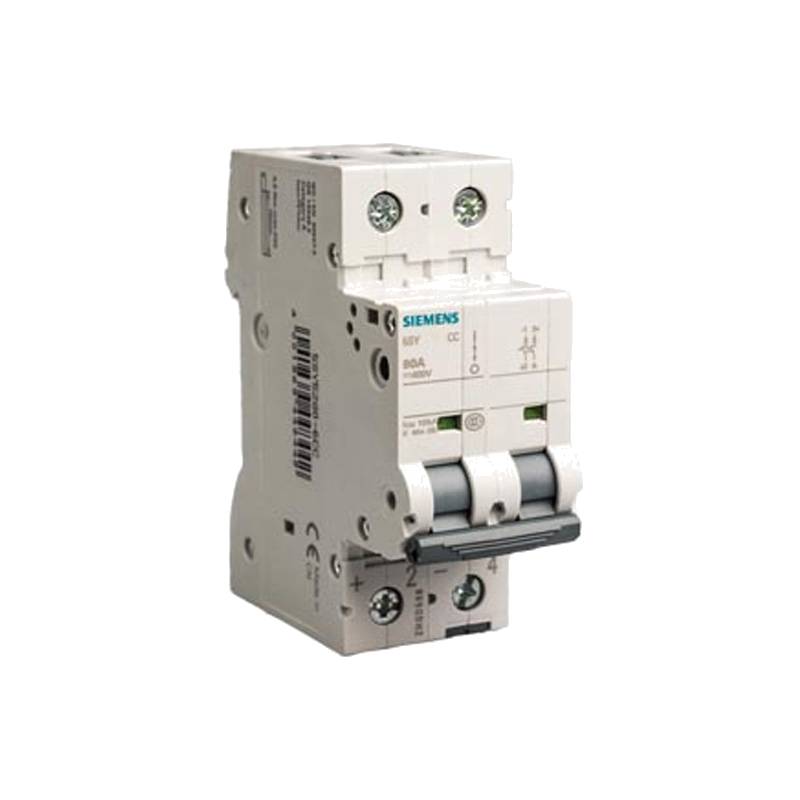












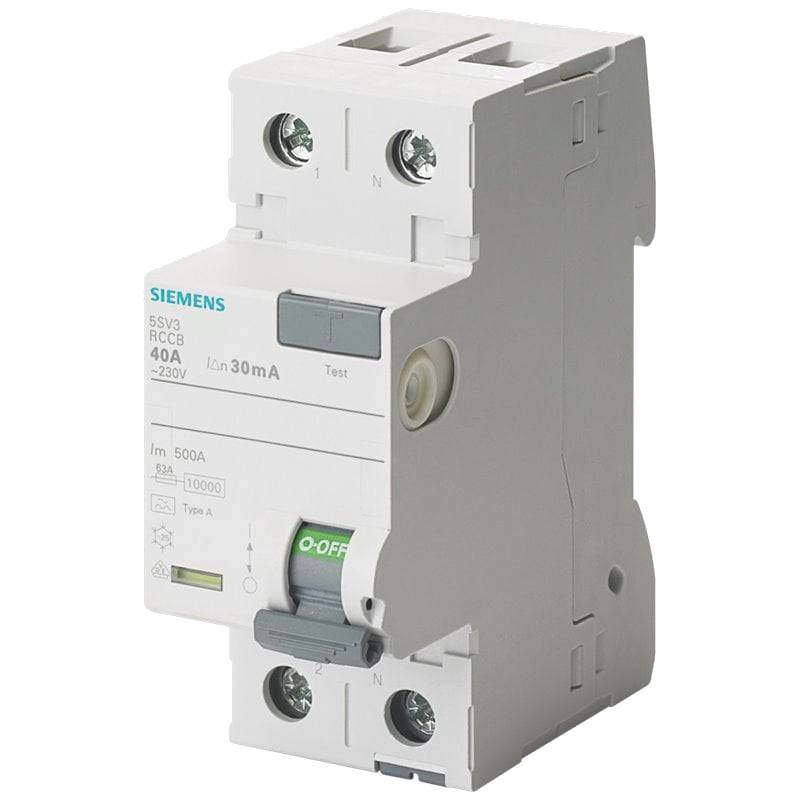
Siemens 5SV4111-0 RCBO Circuit Breaker 2P 16A 10mA


The Siemens 5SV4111-0 RCBO (Residual Current Circuit Breaker with Overcurrent Protection) stands as a critical safety and control device for modern electrical installations. This 2-pole, 16A rated breaker with a 10mA residual current sensitivity offers robust protection against overcurrents, short circuits, and dangerous earth leakage currents. Its compact design and advanced tripping mechanisms ensure reliable operation and enhanced safety for personnel and equipment. With a tripping characteristic of B, it is ideal for applications requiring rapid response to common fault conditions.
Siemens 5SV4111-0 RCBO: Product Specifications
| Specification | Value |
| :---------------------------- | :----------------- |
| Product Type | RCBO |
| Number of Poles | 2 |
| Rated Current (In) | 16 A |
| Residual Current (IΔn) | 10 mA |
| Tripping Characteristic | B |
| Rated Voltage (Ue) | 230/400 V AC |
| Rated Breaking Capacity (Icn) | 6 kA |
| Frequency | 50/60 Hz |
| Protection Class | IP20 |
| Operating Temperature | -25 to +45 °C |
| Mounting Type | DIN Rail |
| Compliance | IEC/EN 61009-1, IEC/EN 60898-1 |
Core Features & Market Positioning
The Siemens 5SV4111-0 RCBO is engineered for superior protection and operational efficiency, positioning it as a premium choice in the circuit protection market. Its integrated functionality, combining MCB and RCD, simplifies installations and reduces component count, offering a cost-effective solution without compromising safety. The B-type tripping curve ensures rapid disconnection for inductive loads with low inrush currents, a common requirement in residential and light commercial settings. Siemens' reputation for quality and reliability further enhances its market appeal, assuring users of long-term performance and reduced maintenance. This RCBO exemplifies Siemens' commitment to delivering advanced safety solutions that meet stringent international standards.
Key Application Scenarios
This RCBO is exceptionally well-suited for protecting circuits in residential buildings, small commercial spaces, and areas where enhanced personal safety is paramount. Its 10mA residual current sensitivity makes it ideal for circuits supplying socket outlets, bathrooms, and kitchens, effectively safeguarding against electric shock from direct or indirect contact. Furthermore, it provides crucial protection for sensitive electronic equipment that could be damaged by overcurrents or earth faults. The 6 kA breaking capacity is sufficient for most standard distribution board applications, ensuring robust protection against short circuits.
Practical System Integration Guidance
Integrating the Siemens 5SV4111-0 RCBO into existing electrical systems is straightforward due to its standard DIN rail mounting and familiar terminal layout. For installation, ensure the main power supply is isolated. Connect the line conductor to the upper terminal marked 'L' and the neutral conductor to the upper terminal marked 'N'. The outgoing load conductors are then connected to the lower terminals, ensuring correct polarity. Double-check all connections for tightness to prevent overheating. The clearly marked toggle lever facilitates easy operation for switching and testing. Regular testing of the RCD function via the integrated test button is recommended to ensure continued operational integrity.
Operation and Risk Mitigation
The Siemens 5SV4111-0 RCBO provides dual protection: overcurrent (overload and short circuit) and residual current. When an earth fault occurs, the device detects an imbalance in current between the live and neutral conductors and trips rapidly to de-energize the circuit, preventing electric shock. Overcurrents cause thermal or magnetic tripping, depending on the fault type and magnitude. To mitigate risks, always ensure the correct RCBO is selected for the load and circuit rating. Regularly perform functional tests using the built-in test button (typically labeled 'T') to confirm the residual current protection is active. In case of persistent tripping, investigate the circuit for faults or excessive leakage current rather than simply resetting the breaker.
Scalability & Long-Term Value
The Siemens 5SV4111-0 RCBO is designed for compatibility within Siemens' extensive range of electrical distribution components, allowing for seamless integration into existing or new distribution boards. While this specific unit offers a fixed set of protective functions, its value lies in its robust build quality and adherence to international standards, ensuring a long operational lifespan. For systems requiring advanced monitoring or remote control capabilities, consideration might be given to Siemens' smart home or industrial automation solutions, which can often be integrated alongside traditional protection devices like the 5SV4111-0. Its dependable performance contributes to the overall stability and safety of the electrical installation, minimizing downtime and potential damage.
---
Frequently Asked Questions (FAQs)
1. What is the primary function of the Siemens 5SV4111-0 RCBO?
This device combines an MCB and an RCD for comprehensive circuit protection. It safeguards against overcurrents, short circuits, and dangerous earth leakage currents. This dual protection minimizes risks of fire and electric shock.
2. Can the Siemens 5SV4111-0 be used in a domestic kitchen?
Yes, its 10mA sensitivity is ideal for areas with higher shock risk. Kitchens and bathrooms benefit greatly from this enhanced protection against earth faults. It ensures appliance safety and user well-being.
3. What does the "B" in the tripping characteristic signify?
A B-type breaker trips between 3 and 5 times the rated current. This makes it suitable for circuits with low inrush currents. It is common in residential lighting and socket circuits.
4. How do I test the residual current function of the 5SV4111-0?
Locate the test button on the front of the RCBO, usually labeled 'T'. Press this button while the circuit is energized. The RCBO should trip, indicating the RCD function is operational.
5. What is the breaking capacity of the Siemens 5SV4111-0?
This RCBO has a rated breaking capacity of 6 kA. This indicates it can safely interrupt fault currents up to 6000 amperes. It is adequate for most standard residential and commercial distribution boards.
6. Is the Siemens 5SV4111-0 suitable for industrial machinery?
For many light industrial applications, it can be suitable. However, industrial machinery often requires higher breaking capacities or different tripping curves (e.g., C or D). Always consult specific load requirements.
7. What is the difference between an RCBO and an RCD?
An RCD only detects earth leakage currents. An RCBO integrates both earth leakage detection and overcurrent protection. It offers complete circuit protection in a single device.
8. How often should I test the RCBO's functionality?
Regular testing, typically monthly, is recommended. This ensures the residual current detection remains sensitive and operational. Always follow local electrical codes and manufacturer guidelines.
9. Can I replace an existing MCB with this RCBO?
Yes, if the existing MCB is a 2-pole device with similar current and voltage ratings. Ensure the new RCBO's tripping characteristics and residual current sensitivity are appropriate for the circuit.
10. What are the advantages of using a 2-pole RCBO like the 5SV4111-0?
A 2-pole RCBO switches both live and neutral conductors simultaneously. This provides complete isolation for the circuit. It enhances safety during maintenance and fault conditions.