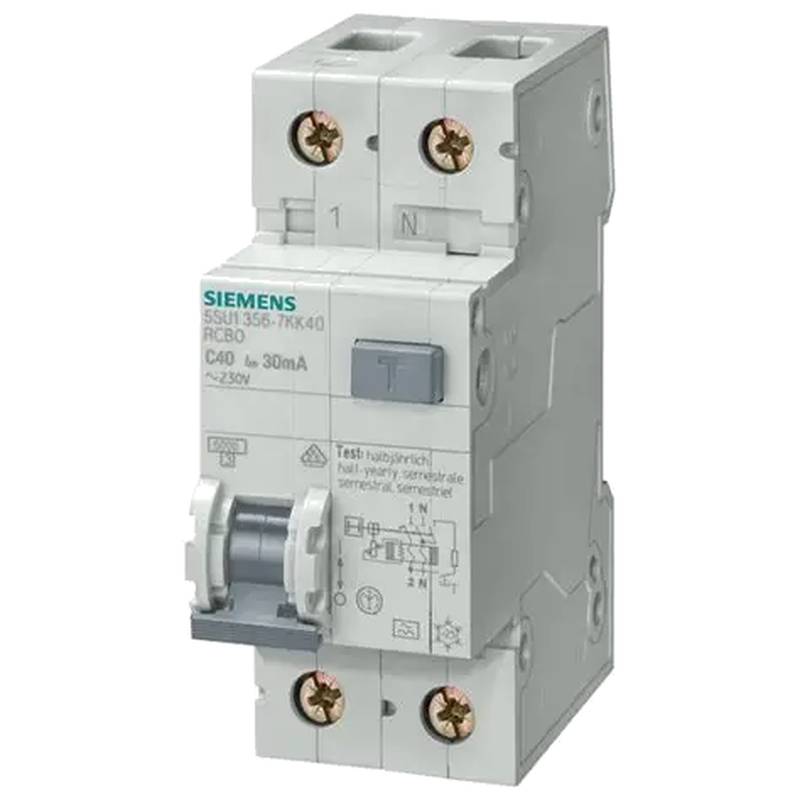












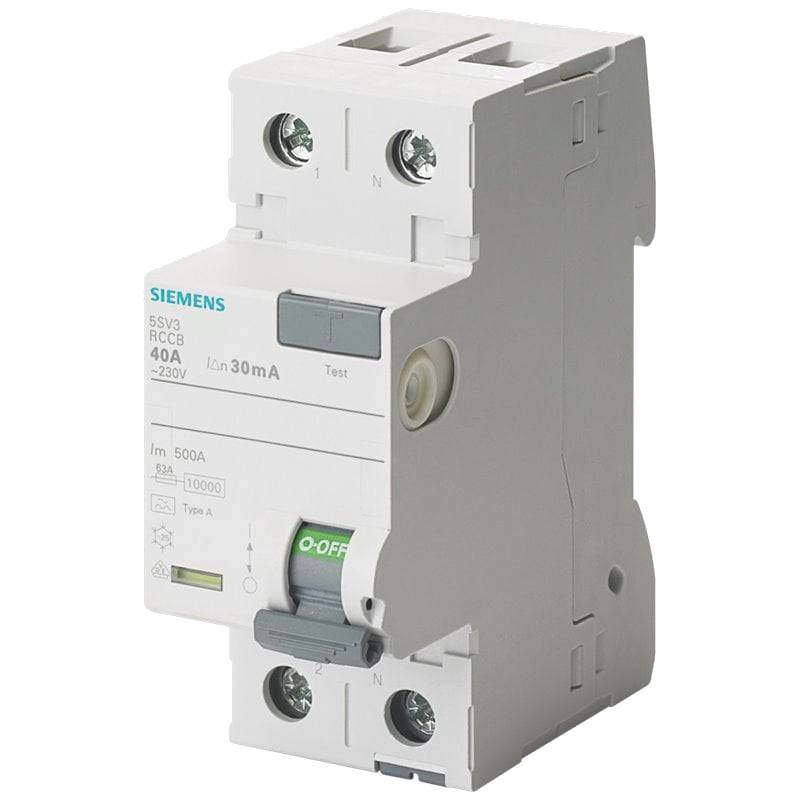
Siemens 5SV4317-0 Earth Leakage RCBO 2P 80A 30mA


The Siemens 5SV4317-0 is a 2-pole, 80A Earth Leakage RCBO with a 30mA sensitivity, designed to provide advanced residual current and overcurrent protection in electrical installations. This sophisticated device combines the functions of an Miniature Circuit Breaker (MCB) and a Residual Current Device (RCD) into a single, compact unit, simplifying panel building and enhancing safety. Its key advantages include superior fault detection capabilities, robust construction for demanding industrial environments, and compliance with stringent international safety standards. The 5SV4317-0 offers a rated breaking capacity of 6kA, ensuring reliable performance during short-circuit events, and features a Type A RCD for detecting both sinusoidal alternating currents and pulsating direct currents.
Product Specifications
| Parameter | Value |
| :------------------------ | :----------------------------- |
| Product Type | Residual Current Circuit Breaker with Overcurrent Protection (RCBO) |
| Number of Poles | 2P |
| Rated Current (In) | 80 A |
| Rated Residual Current (IΔn) | 30 mA |
| Rated Breaking Capacity (Icn) | 6 kA |
| Tripping Characteristic | Type A |
| Voltage | 230/400 V AC |
| Frequency | 50/60 Hz |
| Terminal Type | Screw Terminal |
| Mounting | DIN Rail (35mm) |
| IP Protection Class | IP20 |
| Operating Temperature | -25 to +45 °C |
| Standard | IEC/EN 61009-1 |
Core Features & Market Positioning
The Siemens 5SV4317-0 stands out in the market for its high reliability and comprehensive protection capabilities, making it a preferred choice for safety-conscious engineers and specifiers. Its integrated design significantly reduces installation complexity and space requirements within electrical panels compared to separate MCB and RCD installations. The Type A residual current detection mechanism is crucial for modern installations, as it reliably detects fault currents that can arise from electronic equipment, which standard Type AC devices might miss. This positions the 5SV4317-0 as a forward-thinking solution, ensuring compliance with evolving safety regulations and offering enhanced protection against electric shock and fire hazards, particularly in commercial and light industrial settings.
Key Application Scenarios
This RCBO is ideally suited for a broad spectrum of applications where precise earth leakage and overcurrent protection are paramount. It is extensively used in distribution boards for residential, commercial, and light industrial buildings to protect circuits supplying lighting, sockets, and fixed appliances. Specific use cases include protecting circuits in areas with a higher risk of electric shock, such as bathrooms, kitchens, and outdoor installations, where the 30mA sensitivity offers crucial personnel protection. Furthermore, the 80A rating makes it suitable for circuits with higher load demands, ensuring reliable operation for HVAC systems, pumps, and machinery in manufacturing environments. Its compatibility with standard 35mm DIN rails facilitates easy integration into existing or new electrical panels.
Practical System Integration Guidance
Integrating the Siemens 5SV4317-0 into an electrical system is a straightforward process due to its modular design and standard terminal configuration. The device connects to the power supply via the line (L) and neutral (N) terminals, typically from an upstream busbar or cable. The load circuits are then connected to the corresponding output terminals. Proper wiring is essential: ensure that the line and neutral conductors are connected to the correct terminals to guarantee correct RCD operation and earth leakage protection. For systems requiring coordinated protection, the 5SV4317-0's 6kA breaking capacity should be considered in conjunction with upstream overcurrent protective devices. Always ensure that the neutral conductor is switched and bonded correctly for the RCD to function as intended.
Operation and Risk Mitigation
The Siemens 5SV4317-0 operates by continuously monitoring the balance of current flowing through the line and neutral conductors. If an imbalance, indicating a leakage current to earth exceeding 30mA, is detected, the RCBO will rapidly trip, interrupting the circuit and preventing potential electric shock or fire. This sensitive detection mechanism is vital for mitigating risks associated with faulty insulation, accidental contact with live parts, or damage to electrical equipment. In the event of an overcurrent or short circuit, the integrated MCB function triggers a disconnection based on its internal tripping characteristics. Regular testing of the residual current function using the built-in test button is recommended, typically monthly, to ensure the device remains operational and capable of protecting against hazardous earth leakages.
Scalability & Long-Term Value
The 5SV4317-0 RCBO is designed for robust performance and long-term value within Siemens' comprehensive electrical protection portfolio. Its compatibility with the broader range of Siemens low-voltage switchgear and distribution systems ensures seamless integration and future expandability. While the RCBO itself is a fixed-specification device, the overall electrical system's scalability is enhanced by the consistent design language and reliable performance associated with Siemens products. This ensures that as facility requirements evolve, existing Siemens installations can be readily expanded or upgraded with compatible components, maintaining a high level of safety and operational efficiency. The inherent durability and adherence to international standards also contribute to a reduced lifecycle cost, minimizing the need for premature replacements.
FAQs
Q1: What is the primary function of the Siemens 5SV4317-0 RCBO?
This device offers combined earth leakage and overcurrent protection. It safeguards against dangerous fault currents to earth.
It also provides overcurrent and short-circuit protection for electrical circuits. This dual functionality enhances safety and simplifies panel design.
The RCBO is crucial for preventing electric shock and mitigating fire risks in various installations. It ensures operational continuity and equipment protection.
Q2: What does "2P 80A 30mA" mean for this RCBO?
"2P" signifies that the RCBO has two poles: a line and a neutral conductor. This is essential for comprehensive protection.
"80A" indicates the rated current capacity of the device, meaning it can handle circuits up to 80 amperes. It must be selected based on load current.
"30mA" denotes the rated residual operating current. This is the sensitivity for detecting earth leakages, crucial for personal safety.
Q3: What types of earth leakages can the 5SV4317-0 detect?
The Siemens 5SV4317-0 is a Type A residual current device. This means it detects sinusoidal AC currents and pulsating DC currents.
Type A is more versatile than Type AC, commonly found in modern installations with electronic equipment. It offers enhanced protection against specific fault types.
This sensitivity is vital for protecting against earth leakages arising from rectifiers and variable speed drives. It ensures better safety compliance.
Q4: What is the breaking capacity of this RCBO?
The RCBO has a rated breaking capacity of 6 kA (kiloamperes). This is the maximum fault current it can safely interrupt.
This 6kA rating ensures the device can effectively and safely clear short-circuit faults. It prevents extensive damage to the electrical system.
It's important to ensure the upstream protective devices have a sufficient breaking capacity to coordinate with this RCBO. This ensures reliable protection.
Q5: How do I install the Siemens 5SV4317-0?
Installation involves mounting the RCBO onto a standard 35mm DIN rail. Ensure a secure fit for reliable operation.
Connect the incoming power supply (line and neutral) to the top terminals. Then, connect the outgoing load conductors to the bottom terminals.
Always ensure correct polarity and that the neutral conductor is properly connected for the residual current function to work correctly. Test after installation.
Q6: What is the role of the test button on the RCBO?
The test button simulates an earth leakage fault condition. It allows for periodic verification of the RCD function.
Regularly pressing the test button (e.g., monthly) ensures the tripping mechanism is still operational. This is a critical safety check.
If the device does not trip when the test button is pressed, it indicates a fault and the RCBO needs replacement immediately. Do not use without a functioning test.
Q7: Can this RCBO be used in both residential and industrial settings?
Yes, its versatility makes it suitable for both residential and commercial applications. It meets general protection requirements.
In industrial settings, it's typically used for lighter loads or specific circuits requiring higher sensitivity. Heavy industrial loads might need higher rated devices.
Its 30mA sensitivity is ideal for personal protection in any environment where electric shock is a risk. This includes workshops and laboratories.
Q8: What standards does the Siemens 5SV4317-0 comply with?
The device complies with international standards such as IEC/EN 61009-1. This standard covers RCBOs.
Compliance ensures the product meets rigorous safety and performance requirements. It guarantees reliability and interoperability.
Adherence to these standards is crucial for regulatory approval and ensuring electrical safety in installations. It reflects product quality.
Q9: How does this RCBO protect against fire hazards?
Earth leakages, if undetected, can lead to overheating and ignition. The 30mA sensitivity quickly interrupts these faults.
By swiftly disconnecting faulty circuits, it prevents sustained arcing or resistive heating that could cause fires. This minimizes fire risk.
The overcurrent protection feature also prevents fires caused by excessive current that can damage wiring insulation. It offers comprehensive fire prevention.
Q10: What is the operational temperature range for this RCBO?
The Siemens 5SV4317-0 operates reliably within a temperature range of -25 °C to +45 °C. This is a wide operating window.
This range ensures consistent performance in most common environmental conditions, from cold storage to warmer climates. It's built for varied use.
Exceeding these temperature limits can affect the device's lifespan and performance. Proper ventilation in enclosures is advised.