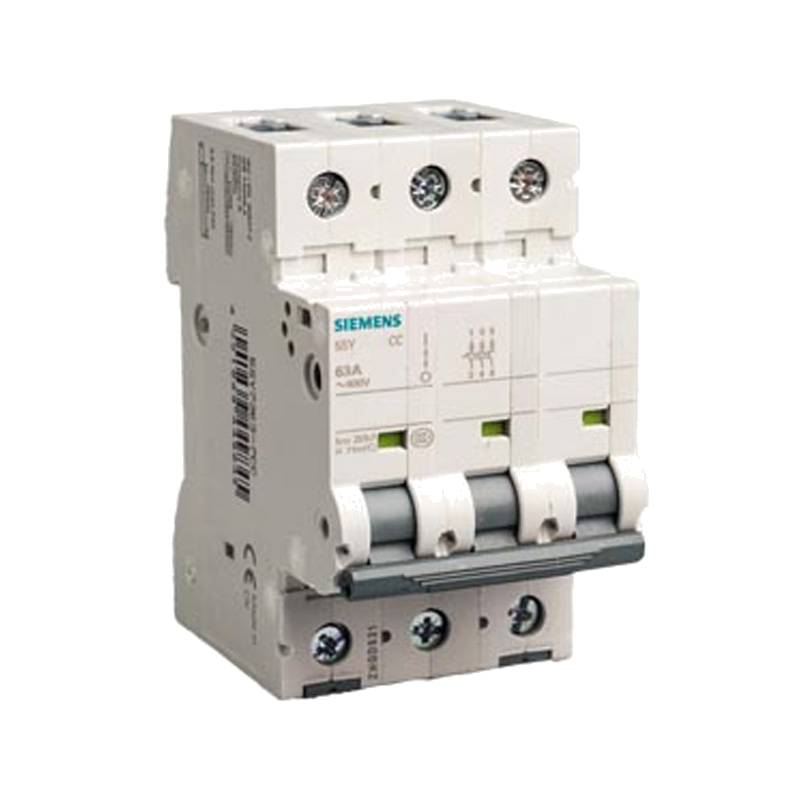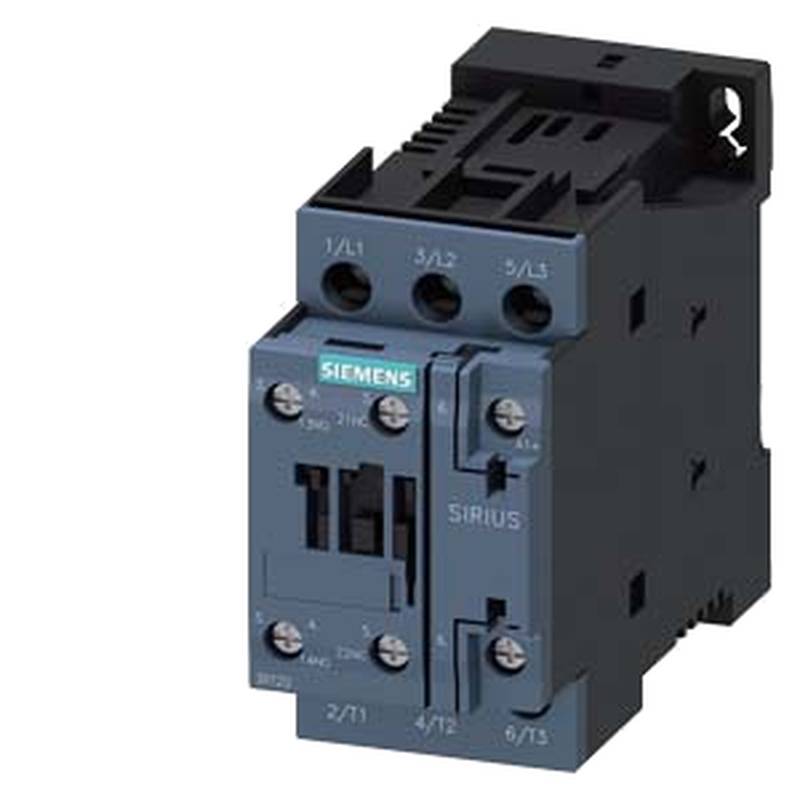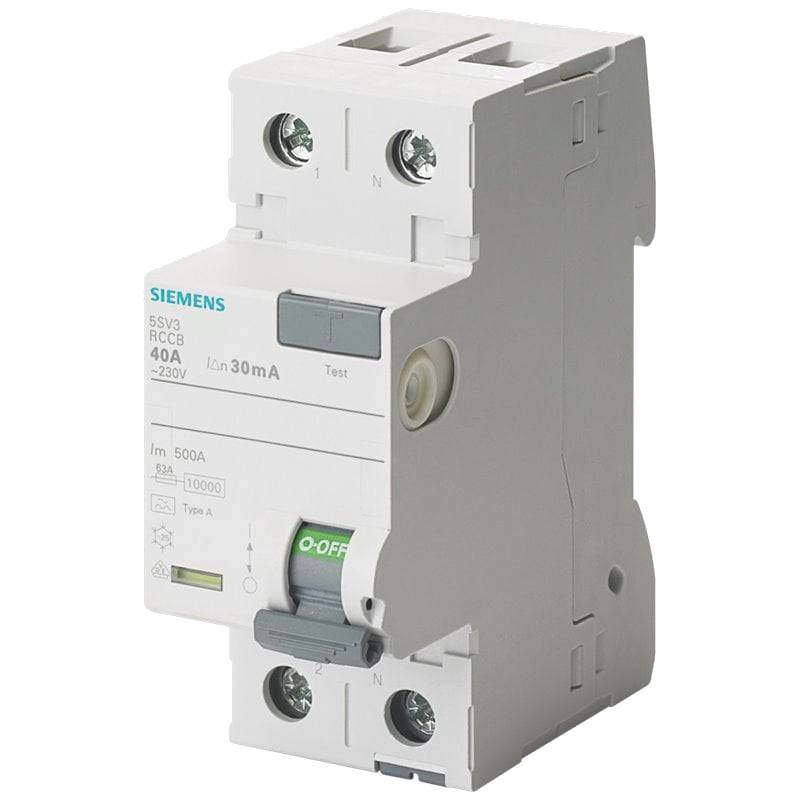
Siemens 5SV4614-0 Surge Overvoltage Protection Module 2P 40A 300mA


The Siemens 5SV4614-0 Surge Overvoltage Protection Module 2P 40A 300mA is a critical component for safeguarding electrical installations against transient overvoltages, ensuring operational continuity and equipment longevity. This module offers robust protection with a 2-pole configuration, a 40A nominal current rating, and a 300mA residual current sensitivity, making it suitable for diverse industrial and commercial applications. Its advanced surge suppression technology and reliable fault current detection provide a comprehensive safety solution.
Product Specifications
| Specification | Value |
| :-------------------------- | :------------------------------------- |
| Product Type | Surge Overvoltage Protection Module |
| Manufacturer | Siemens |
| Model Number | 5SV4614-0 |
| Number of Poles | 2P |
| Nominal Current (In) | 40A |
| Residual Current (IΔn) | 300mA |
| Rated Impulse Withstand Voltage (Uimp) | 4 kV |
| Rated Voltage (Un) | 230/400 V |
| Maximum Continuous Operating Voltage (Uc) | 275 V AC |
| Degree of Protection | IP20 |
| Mounting Type | DIN Rail |
| Operating Temperature Range | -25°C to +55°C |
| Standards Compliance | IEC/EN 61643-11, IEC/EN 61009-1, IEC/EN 60898-1 |
Core Features & Market Positioning
The Siemens 5SV4614-0 distinguishes itself through its integrated functionality, combining residual current device (RCD) protection with surge protection in a single unit. This dual-action capability simplifies panel design and installation while enhancing overall system safety. The module's high energy absorption capacity effectively dissipates transient overvoltages caused by lightning strikes or switching operations, protecting sensitive downstream equipment. Its robust construction and adherence to stringent international standards underscore Siemens' commitment to reliability and performance in demanding industrial environments. The 300mA sensitivity is ideal for general circuit protection, offering personnel safety against indirect contact and fire prevention.
Key Application Scenarios
This surge overvoltage protection module is extensively deployed in industrial facilities, commercial buildings, data centers, and telecommunication infrastructure where reliable power supply and equipment protection are paramount. Its application is crucial for safeguarding control systems, PLCs, variable frequency drives (VFDs), and sensitive electronic instrumentation from the disruptive effects of power surges. In areas prone to thunderstorms or with significant industrial switching activity, the Siemens 5SV4614-0 acts as a vital first line of defense. It is also employed in residential and agricultural settings where enhanced protection against transient overvoltages is required for critical appliances and machinery.
Practical System Integration Guidance
Integrating the Siemens 5SV4614-0 into existing electrical systems is straightforward due to its standard DIN rail mounting and two-pole configuration. For optimal surge protection, it should be installed as close as possible to the point of power entry or upstream of sensitive equipment. Wiring connections should be made according to local electrical codes and the manufacturer's instructions, ensuring secure termination of live and neutral conductors. The module's residual current function requires correct phasing of line and neutral for proper operation. It is often recommended to coordinate surge protective devices (SPDs) in a cascade for layered protection, with the 5SV4614-0 serving as the primary protection stage.
Operation and Risk Mitigation
The Siemens 5SV4614-0 operates by diverting excess voltage to ground when it exceeds the module's threshold (Uc). Simultaneously, its integrated RCD function monitors the balance of current flowing in the live and neutral conductors; any imbalance greater than 300mA triggers a rapid disconnection, preventing electrical shocks and fires. Risk mitigation is achieved through regular visual inspection of the surge indicator (if present) and periodic testing of the RCD function using a dedicated test button or instrument. Failure to trip during testing indicates a potential malfunction requiring immediate replacement. Proper installation in accordance with safety regulations is crucial to prevent hazards associated with overcurrent or surge events.
Scalability & Long-Term Value
The Siemens 5SV4614-0 offers excellent long-term value by extending the operational lifespan of connected equipment and minimizing downtime caused by electrical disturbances. Its robust design ensures durability even under frequent surge events. While the module itself is not typically field-upgradable in terms of its core protection parameters, its compatibility with the broader Siemens SENTRON protection device portfolio allows for seamless integration into larger protection schemes. This compatibility facilitates the creation of scalable protection strategies, accommodating evolving system requirements and the integration of digital monitoring solutions within intelligent electrical networks.
Frequently Asked Questions (FAQs)
1. What is the primary function of the Siemens 5SV4614-0 surge protection module?
This module's main role is to protect electrical circuits from damaging voltage spikes. It effectively diverts excess energy to ground during transient overvoltage events.
It safeguards sensitive electronic equipment and prevents costly failures. The module ensures a more stable and reliable power supply to connected loads.
The integrated residual current detection also provides personnel and fire protection. It trips the circuit when it detects dangerous current leakage.
2. How does the 300mA residual current sensitivity benefit my electrical installation?
The 300mA sensitivity is designed for general circuit protection and fire prevention. It is highly effective in detecting earth faults that could lead to fires.
It offers enhanced safety against indirect contact for people in the vicinity. This level of sensitivity is standard for many commercial and industrial applications.
A 300mA trip current ensures that potentially hazardous leakage currents are quickly interrupted. This minimizes risk and prevents damage to the installation.
3. Can the Siemens 5SV4614-0 be used for both single-phase and three-phase systems?
The 5SV4614-0 is a 2-pole device, making it suitable for single-phase AC circuits. It is designed for use with 230V nominal voltage systems.
For three-phase systems, you would typically use multiple 2-pole modules or dedicated three-phase surge protective devices. Proper selection depends on the system configuration.
Always consult the system's electrical diagram and relevant standards to ensure correct application and configuration. This prevents improper installation and ensures effective protection.
4. What are the key technical parameters for installing the 5SV4614-0?
Ensure the rated voltage (Un) of your system matches the module's 230/400V rating. The maximum continuous operating voltage (Uc) of 275V AC is crucial for proper surge suppression.
Consider the nominal current (In) of 40A; it must be appropriately rated for the protected circuit's load. The rated impulse withstand voltage (Uimp) of 4 kV indicates its surge handling capability.
Installation must comply with IEC/EN 61643-11 and local electrical regulations. Proper wiring and grounding are essential for effective operation and safety.
5. Where is the Siemens 5SV4614-0 typically installed within an electrical panel?
This module is usually installed at the main distribution board, near the point of power entry. It serves as the primary surge protection for the entire installation.
It's essential to mount it on a standard 35mm DIN rail for secure and compliant installation. Close proximity to the incoming power source maximizes its effectiveness.
For enhanced protection, it can be combined with downstream surge protective devices for different zones. Always ensure adequate clearance for ventilation and maintenance.
6. What is the expected lifespan and maintenance requirement for this surge protector?
Siemens products are known for their durability and long service life under normal operating conditions. The lifespan depends heavily on the number and severity of surge events experienced.
Regular visual inspection of the surge indicator (if applicable) and periodic testing of the RCD function are recommended. A test button is usually included for this purpose.
If the RCD fails to trip during testing or if the surge indicator shows a fault, the module should be replaced immediately to maintain protection. Follow manufacturer guidelines for testing frequency.
7. Does this module offer protection against overcurrents?
The 5SV4614-0 combines surge protection with residual current protection. It does not inherently provide overcurrent protection like a miniature circuit breaker (MCB).
For overcurrent protection, it must be installed in series with an appropriately rated MCB or fuse. This ensures comprehensive protection against all common electrical faults.
The 40A rating refers to the nominal current handling capacity, not overcurrent tripping. Always pair it with suitable overcurrent protective devices for complete safety.
8. How does the 5SV4614-0 differentiate from a standard RCD or SPD?
This module uniquely integrates both surge overvoltage protection and residual current detection into a single device. Standard devices typically offer only one of these functions.
This integration simplifies installation, reduces panel space, and lowers overall system complexity. It offers a comprehensive protection solution in a compact form factor.
It provides robust defense against transient overvoltages while simultaneously monitoring for dangerous leakage currents. This dual functionality is its key advantage.
9. What are the implications of exceeding the 40A nominal current rating?
Operating the module above its 40A nominal current rating can lead to overheating and potential damage. It may also compromise the effectiveness of its protection functions.
Ensure that the protected circuit's maximum load current does not exceed this rating. Overcurrent protection devices (MCBs) upstream should be sized accordingly.
Consistent overloading can shorten the lifespan of the module and increase the risk of electrical faults or failure. Always adhere to the specified operational limits.
10. Are there specific wiring requirements for optimal surge protection?
For optimal surge protection, keep the surge protective device's connection conductors as short and thick as possible. This minimizes impedance and allows for efficient surge energy diversion.
Ensure that the live and neutral conductors connected to the module are properly identified and terminated. Incorrect wiring can negate the protective effect or cause nuisance tripping.
Refer to the installation manual and local wiring regulations for precise connection diagrams and safety guidelines. Proper grounding of the SPD is critical for its effectiveness.