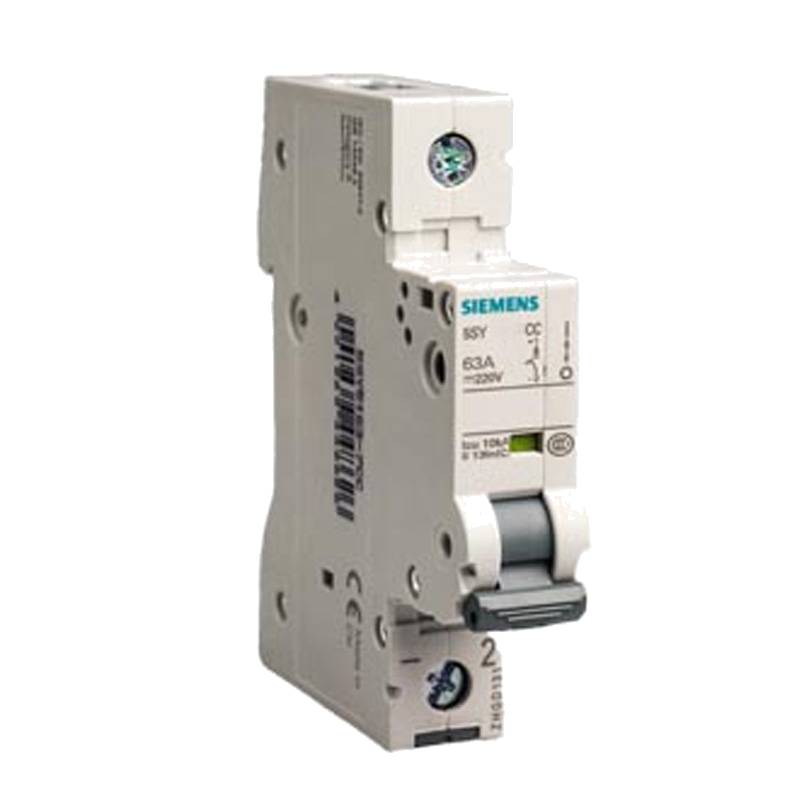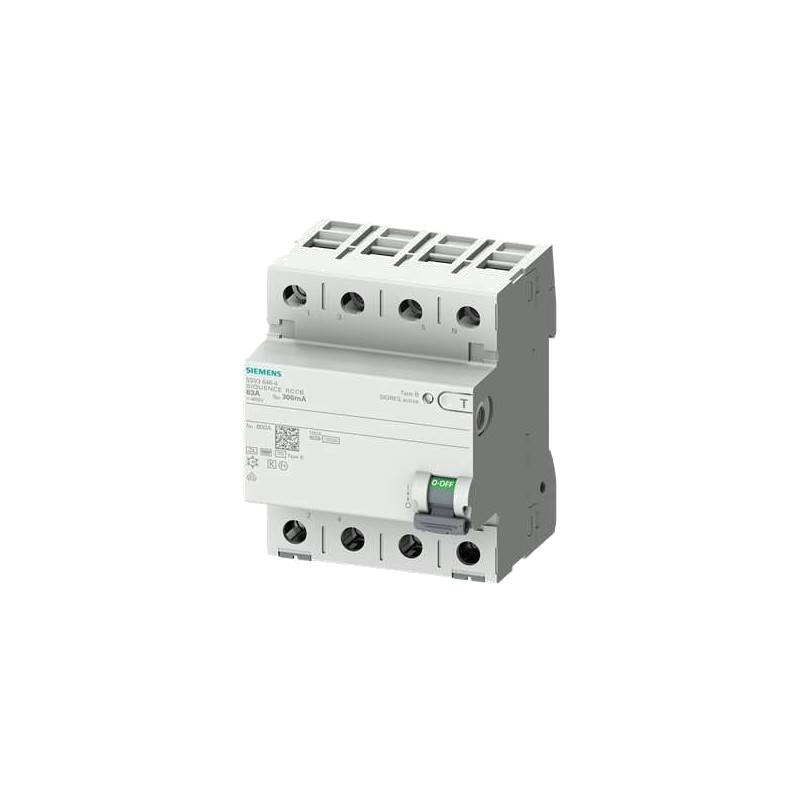
Siemens 5SV3344-6KK12 Residual Current RCBO Module 4P 40A 30mA


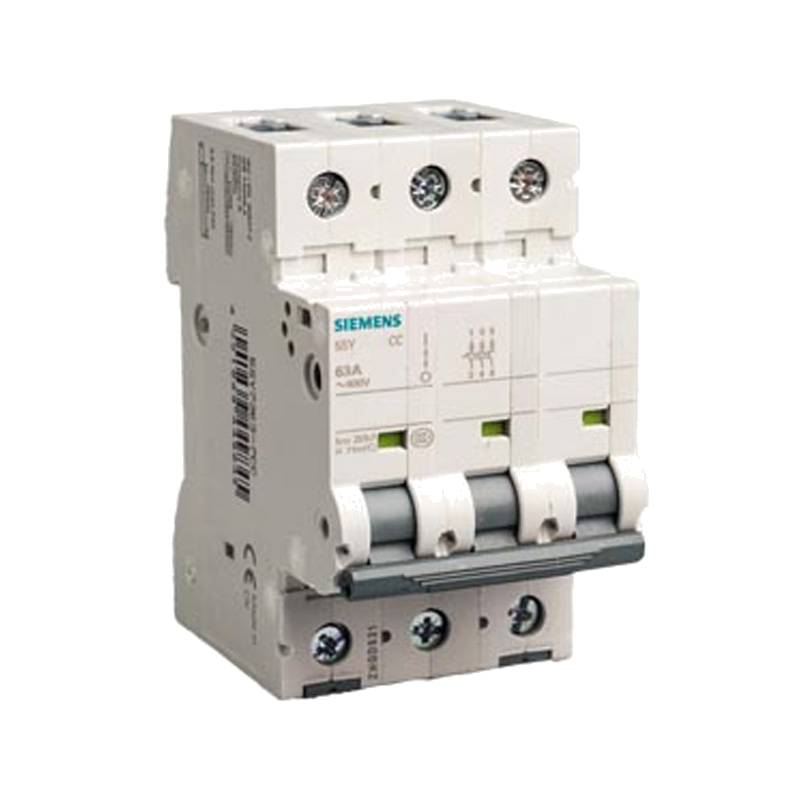
The Siemens 5SV3344-6KK12 Residual Current RCBO Module stands as a critical component for advanced electrical safety, offering robust protection against residual currents, overcurrents, and short circuits in single-phase applications. This 4-pole, 40A, 30mA device is engineered for reliability and ease of integration, making it a preferred choice for safeguarding sensitive equipment and personnel. Its core advantages lie in its comprehensive protection capabilities, compact design, and Siemens' renowned commitment to quality and safety standards. Key technical parameters include a rated current of 40A, a residual current sensitivity of 30mA, and a 4-pole configuration, ensuring broad applicability across various industrial and commercial settings.
Siemens 5SV3344-6KK12: Product Specifications
| Feature | Specification |
| :---------------------- | :------------------------------------------ |
| Product Type | Residual Current RCBO Module |
| Manufacturer | Siemens |
| Model Number | 5SV3344-6KK12 |
| Number of Poles | 4 |
| Rated Current (In) | 40A |
| Rated Residual Current | 30mA |
| Breaking Capacity (Icn) | 6kA (IEC 60898-1) |
| Voltage Rating (Ue) | 230/400V AC |
| Frequency | 50/60 Hz |
| Tripping Type | Type AC |
| Terminal Type | Screw Terminals |
| Mounting Type | DIN Rail (35mm) |
| Operating Temperature | -25°C to +45°C |
| Protection Class | IP20 |
| Conformance Standards | IEC 61009-1, IEC 60898-1, IEC 60947-2 |
Core Features & Market Positioning
The Siemens 5SV3344-6KK12 distinguishes itself through its combined functionality, integrating residual current device (RCD) and miniature circuit breaker (MCB) capabilities into a single, space-saving unit. This dual protection is paramount for meeting stringent safety regulations in industrial environments where equipment failure or human error can lead to hazardous situations. Its Type AC sensitivity is specifically designed to detect sinusoidal alternating residual currents, providing essential protection against electric shock and fire hazards caused by insulation faults. The 4-pole design offers enhanced safety for three-phase systems, ensuring complete isolation of all active conductors, including the neutral, which is a significant advantage over 2-pole devices in certain applications. Siemens' reputation for manufacturing excellence and adherence to rigorous testing protocols positions this RCBO module as a reliable, high-performance solution for critical power distribution networks.
Key Application Scenarios
This Siemens RCBO module is ideally suited for a wide array of demanding applications where enhanced electrical safety is non-negotiable. In manufacturing plants, it provides crucial protection for machinery, control panels, and power distribution boards, mitigating risks associated with motor faults, damaged wiring, or operator contact. It is also extensively used in commercial buildings, data centers, and healthcare facilities to safeguard sensitive electronic equipment and prevent disruptions caused by electrical faults. Furthermore, its application extends to specialized industrial settings such as renewable energy installations (e.g., solar inverters) and water treatment plants, where exposure to environmental factors can increase the likelihood of insulation degradation and the need for reliable residual current protection. The 40A rating and 6kA breaking capacity make it suitable for circuits with moderate to high current demands.
Practical System Integration Guidance
Integrating the Siemens 5SV3344-6KK12 into existing or new electrical systems is straightforward due to its standard DIN rail mounting and clearly marked terminal connections. For installation, ensure the main power supply is de-energized. The line (input) terminals are typically positioned at the top, and the load (output) terminals at the bottom, for correct connection of live, neutral, and phase conductors. For a 4-pole RCBO, all four conductors must be correctly terminated according to the system's phase and neutral configuration. Wiring diagrams provided by Siemens or local electrical codes should be consulted for specific circuit arrangements. After physical installation, a functional test of the residual current trip function using the integrated test button is mandatory to verify correct operation before energizing the circuit.
Operation and Risk Mitigation
The primary function of the Siemens 5SV3344-6KK12 is to provide automatic disconnection of electrical circuits in the event of a fault, thereby minimizing risks of electric shock, fire, and equipment damage. The 30mA residual current sensitivity is calibrated to trip quickly, offering effective protection against direct contact with live conductors. The integrated MCB function protects against overloads and short circuits, preventing damage to downstream equipment and wiring, and reducing the risk of fire due to excessive heat. In operation, the device will trip (indicated by the toggle lever moving to the OFF position) if a fault condition is detected. If the RCBO trips repeatedly, it indicates an ongoing electrical fault that requires immediate investigation by a qualified electrician to diagnose and rectify the underlying issue, rather than attempting to reset the device without addressing the cause.
Scalability & Long-Term Value
The Siemens 5SV3344-6KK12 is designed for integration within Siemens' broader industrial automation and electrical distribution ecosystems, offering significant long-term value. Its compatibility with standard modular components and busbar systems ensures seamless integration into existing Siemens power distribution boards and control cabinets. While this specific RCBO module is a fixed-rated device, scalability in terms of system protection can be achieved by utilizing other Siemens protection devices in conjunction with it or by planning for future upgrades using higher-rated or more advanced Siemens RCBOs or circuit breakers as system requirements evolve. For industrial facilities leveraging Siemens' IIoT platforms, such as MindSphere, integration with smart metering or remote monitoring systems can provide valuable insights into power quality and fault occurrences, enhancing predictive maintenance strategies and overall operational efficiency.
FAQs
Q1: What is the primary function of the Siemens 5SV3344-6KK12?
A1: It provides protection against electric shock.
A2: It also guards against fire hazards from electrical faults.
A3: It combines RCD and MCB functions in one unit.
Q2: Can this RCBO module be used in residential applications?
A1: Yes, it can be used for enhanced safety in homes.
A2: It's typically for industrial or commercial uses.
A3: Check local codes for suitability in residential settings.
Q3: What does the '30mA' rating signify?
A1: It indicates the device's sensitivity to leakage current.
A2: 30mA is the threshold for tripping the circuit.
A3: This level aids in preventing electric shock hazards.
Q4: How do I install the Siemens 5SV3344-6KK12?
A1: Mount it on a standard 35mm DIN rail.
A2: Connect input wires to top terminals, load to bottom.
A3: Ensure power is off before wiring and installation.
Q5: What causes the RCBO to trip?
A1: Residual current exceeding the 30mA limit.
A2: Overload conditions on the protected circuit.
A3: Short-circuit faults within the wiring or connected load.
Q6: Is the 4-pole configuration necessary for all systems?
A1: It's vital for isolating all conductors in 3-phase systems.
A2: It offers complete disconnection of L and N poles.
A3: For single-phase, 2-pole might suffice, but check needs.
Q7: What is the breaking capacity of this module?
A1: It has a breaking capacity of 6kA.
A2: This rating is based on IEC 60898-1 standards.
A3: It ensures protection against severe short circuits.
Q8: How do I test the functionality of the 5SV3344-6KK12?
A1: Use the integrated test button on the device.
A2: Pressing the test button simulates a fault trip.
A3: Regular testing is crucial for safety assurance.
Q9: What maintenance is required for this RCBO module?
A1: Regular visual inspection for damage.
A2: Periodic functional testing using the test button.
A3: Keep the unit clean and free from dust/moisture.
Q10: Can this RCBO be used with Type A or Type B RCD protection?
A1: This model is Type AC, for alternating currents.
A2: Type A or B are for pulsating DC fault currents.
A3: Choose the correct type based on specific fault risks.